

Is your chosen aftercare ointment actually suffocating your new ink before it even has a chance to settle? It's a common concern for collectors who have invested significant time and hundreds of A$ into a piece of permanent art. Most people feel overwhelmed by the sea of conflicting advice found online, fearing that one wrong application of aquaphor could lead to infection or blurred lines during the critical scabbing phase. You deserve a recovery process that's as precise as the needlework itself.
Key Takeaways
- Understand the clinical science behind semi-occlusive barriers and how aquaphor functions as a specialized skin protectant to facilitate the body's natural healing process.
- Evaluate the "breathability factor" to determine whether traditional pharmaceutical-grade ointments or modern, artist-vetted balms are better suited for your specific skin type.
- Master the professional "Grain of Rice" application protocol to ensure optimal ink retention and skin integrity throughout the critical 14-day recovery window.
- Learn the importance of sourcing high-performance aftercare from trusted Australian distributors to prioritize long-term dermal health and safety.
Understanding Aquaphor: The Role of Healing Ointments in Tattoo Aftercare
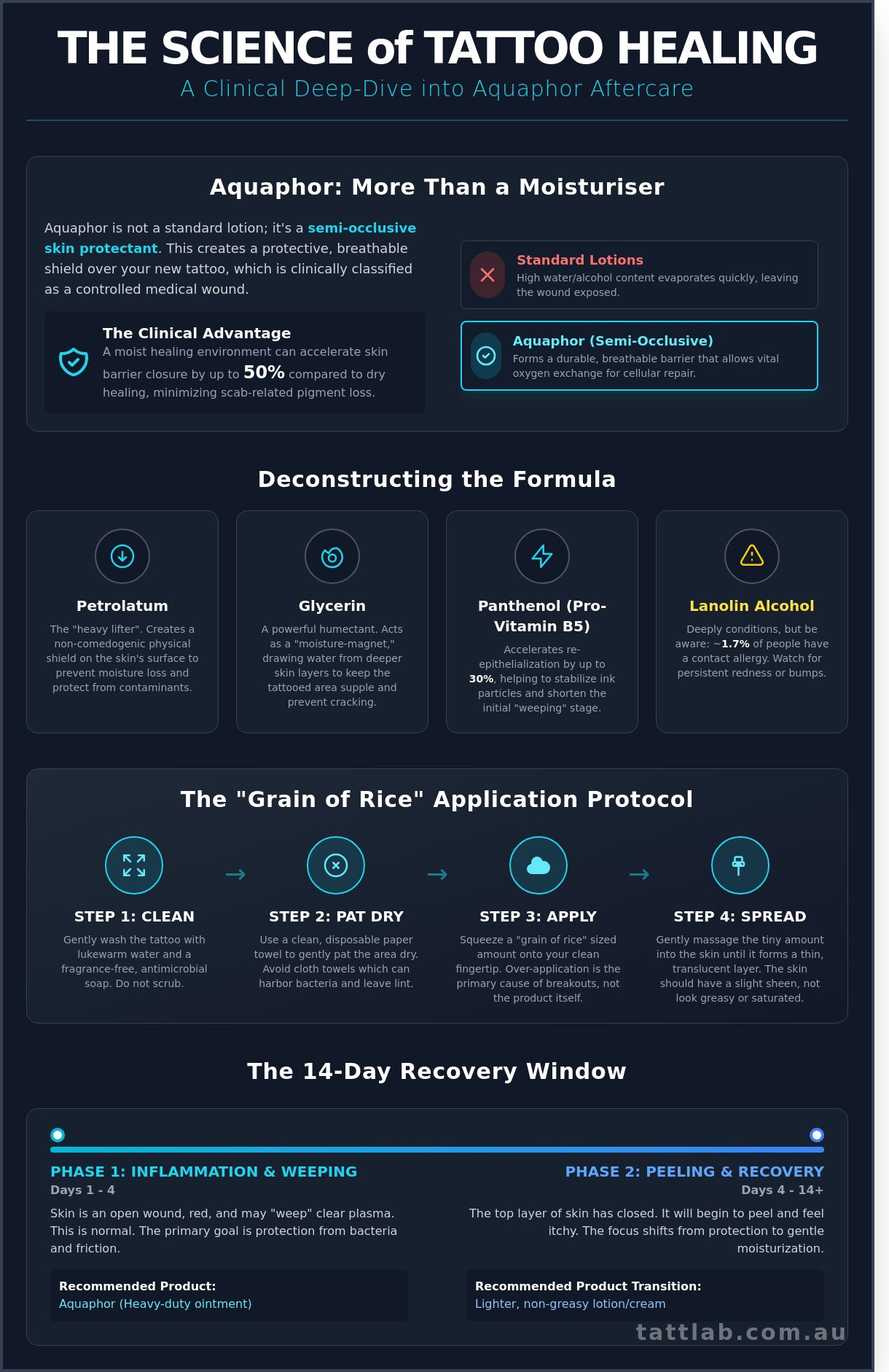
Aquaphor is often mistaken for a standard moisturiser, but its function in the tattoo studio is far more technical. It's a semi-occlusive skin protectant. This means it creates a protective shield that remains on the skin surface while still allowing oxygen to reach the wound. In the Australian tattoo industry, this product transitioned from a niche pharmaceutical find to a shop staple over the last two decades. Artists across Melbourne and Sydney began recommending it because it offered a level of consistency that generic products lacked.
The formulation differs significantly from basic Petroleum jelly. While both use petrolatum as a base, Aquaphor integrates ingredients like lanolin alcohol and glycerin. These additions transform the ointment from a simple sealant into a humectant that draws moisture into the skin. For a fresh tattoo, this prevents "dry healing," a process where the skin becomes brittle, cracks, and eventually forms heavy scabs that can pull pigment out of the dermis. Maintaining this delicate balance of moisture is the first step in your skin’s journey toward recovery.
The "Lab" Perspective on Skin Integrity
From a clinical standpoint, a fresh tattoo is a controlled medical wound. The needle creates thousands of microscopic punctures that reach the dermal layer, triggering an immediate inflammatory response. Our focus at the Lab is always on the lymphatic system’s role in healing and how external topicals support this biological process. Maintaining a moist wound-healing environment is essential. Research in wound care shows that moist environments can accelerate the closure of the skin barrier by up to 50 percent compared to air-exposed healing. This speed is vital for long-term ink clarity; the faster the skin heals, the less chance there is for external trauma to blur the lines of your design.
Aquaphor vs. Standard Moisturisers
Standard lotions often fail during the critical first 48 hours of tattoo aftercare. Most commercial moisturisers contain high water content and alcohols that evaporate quickly, leaving the raw skin vulnerable to the air. Aquaphor provides a durable barrier function that shields the open wound from environmental contaminants and friction from clothing. The thickness of the ointment is its primary advantage during the "weeping" phase. You should use this heavy-duty ointment during the initial inflammatory window. Once the skin has successfully closed and the peeling phase begins, usually around day four, it's time to transition to a lighter, non-greasy cream to avoid clogging the pores.
The Clinical Composition: How Aquaphor Interacts with Fresh Ink
Understanding how aquaphor functions on a molecular level is essential for anyone serious about skin integrity. It operates as a semi-occlusive barrier, a technical term that describes its ability to protect the wound while remaining "breathable." Unlike heavy, fully occlusive waxes that can trap heat and anaerobic bacteria against the skin, this formulation allows for vital oxygen exchange. This gas permeability is a critical factor during the initial 48 hours of healing, as oxygen is a primary fuel for cellular repair and the synthesis of new tissue.
The inclusion of Panthenol, or Pro-Vitamin B5, provides a biological advantage during the inflammatory phase. Clinical studies have shown that Panthenol can accelerate re-epithelialization, the process where the skin heals its top layer, by up to 30 percent compared to untreated skin. By supporting the migration of fibroblasts, it helps the dermis stabilize the newly deposited ink particles more efficiently. This reduces the duration of the "weeping" stage, ensuring the tattoo moves quickly into a stable recovery phase.
The Role of Petrolatum and Glycerin
Petrolatum serves as the heavy lifter in the formula, creating a physical shield against the harsh Australian environment. Whether you are dealing with the dry heat of the interior or the salt-laden air of the coast, this barrier prevents transepidermal water loss. Glycerin complements this by acting as a powerful humectant. Humectants act as moisture-magnets for the skin barrier. By drawing water from the deeper dermal layers toward the surface, glycerin ensures the tattoo remains supple, preventing the tight, cracking sensation that often leads to premature scabbing and pigment fallout.
Lanolin and Skin Sensitivity
Lanolin alcohol is a refined wax derived from sheep's wool, prized for its emollient properties that closely mimic human sebum. However, it's a point of contention in some studios. While it provides deep conditioning, roughly 1.7% of the population experiences a contact allergy to lanolin. Signs of a reaction include persistent redness beyond the initial 72-hour window or the appearance of small, itchy bumps known as contact dermatitis. If your skin is historically hypersensitive, practitioners often suggest switching to a fragrance-free, lanolin-free alternative to maintain optimal skin health during the journey.
A common misconception is that the petrolatum in aquaphor will clog pores and cause "tattoo acne." In reality, the pharmaceutical-grade petrolatum used here has a non-comedogenic rating. It doesn't penetrate the pores; instead, it sits on the surface to provide protection. Breakouts usually occur from over-application or trapped sweat rather than the product itself. Applying a thin, translucent layer ensures the skin breathes while remaining fully hydrated.
Aquaphor vs. Dedicated Tattoo Balms: Evaluating the Best Choice
Choosing between a pharmaceutical staple and a niche specialist product often comes down to the specific needs of your skin's recovery phase. Aquaphor functions as a heavy-duty occlusive; it seals the wound. While this is excellent for preventing external contaminants from entering the broken skin, it lacks the targeted nutritional profile found in modern tattoo balms. Specialist products are designed to support the skin's inflammatory response rather than just shielding it from the air. The breathability factor is where modern formulations often win. Ointments can trap body heat and limit oxygen flow, which is essential for cellular repair. If the skin can't breathe, the risk of localized heat rashes or "bubbling" increases.
A common concern among the community is whether heavy ointments pull ink out of the skin. This is largely a misunderstanding of dermal biology. Since tattoo pigment resides in the dermis, a topical ointment cannot physically reach or extract it. Most perceived ink loss is actually the natural shedding of the epidermis or the result of over-application. When too much aquaphor is used, it can soften scabs prematurely. This leads to weeping that carries some pigment with it, but the ointment itself isn't the solvent. It's a matter of application technique rather than chemical composition.
From a cost-effectiveness perspective, a large tube of pharmaceutical ointment is significantly cheaper, often costing under A$20 for a 100g supply. However, the professional choice often justifies its higher price point through concentrated performance. You use less product per application, and the inclusion of active healing agents can reduce the total healing time by several days.
Specialist Aftercare: The Modern Standard
When to Choose a Pharmaceutical Ointment
There are specific scenarios where a heavy protectant is superior. High-friction areas, such as the inner thigh or areas where clothing rubs constantly, benefit from the thick barrier aquaphor provides. It acts as a lubricant that prevents the fabric from irritating the fresh wound. This is particularly important for those in active trades; for example, you can discover White Wear for premium Australian painters' clothing that combines professional durability with the comfort needed during recovery. If you're dealing with extreme dry patches or stubborn scabbing that feels brittle, a thin layer of pharmaceutical ointment can provide the necessary pliability to prevent cracking. Keeping a tube in your medical kit is practical for its versatility with minor abrasions beyond the tattoo studio. It remains a reliable fallback for those with highly sensitive skin who may react to the essential oils found in boutique balms.
Application Protocol: Mastering the 14-Day Healing Window
The success of your new ink depends entirely on the environment you create during the first fortnight. Before any ointment touches your skin, the surface must be surgically clean. Wash your hands for 20 seconds with fragrance-free, antimicrobial soap. Gently cleanse the tattoo area using lukewarm water to remove dried lymph and excess fluid. Pat the area dry with a fresh paper towel; don't rub the skin or use a communal cloth, as these harbor bacteria that can lead to infection.
The most common error in tattoo aftercare is over-saturation. At Tatt Lab, we advocate for the "Grain of Rice" method to maintain skin integrity. For a standard 10cm x 10cm tattoo, use a portion of aquaphor no larger than a single grain of rice. Spread it until the skin has a slight sheen but doesn't look greasy. If the skin appears "wet" or shiny after application, you've used too much. You should apply this thin barrier 2 to 3 times daily, balancing hydration without suffocating the tissue.
Watch for these specific signs of over-application:
- Small white pimples or bumps (folliculitis) around the tattoo site.
- A "weeping" sensation where the ink looks like it's bubbling under the ointment.
- Excessive softening of scabs, which can lead to premature falling and pigment loss.
Day 1 to 3: The Inflammatory Phase
During the initial 72 hours, your skin is an open wound. It will naturally expel plasma and fragments of tattoo ink as part of the body's innate immune response. Use only clean hands or medical-grade applicators to apply your thin layer of aquaphor. This creates a semi-occlusive barrier that prevents pathogens from entering while allowing oxygen to reach the wound, which is critical for cellular repair.
Day 4 to 14: The Peeling and Itching Phase
As the dermal layer regenerates, you'll likely experience an intense "itch" phase. Resistance is vital; scratching or picking at the area can pull pigment out of the deeper layers, resulting in permanent gaps in your design. Peeling is a natural part of the skin’s evolution. Once the heavy scabbing subsides, usually around day 5 or 6, transition from the heavy consistency of the ointment to a lighter, fragrance-free lotion to maintain hydration without clogging pores.
Optimising the Recovery Journey: Professional Recommendations
The Tatt Lab approach treats every new tattoo as a controlled dermatological event. We prioritise skin health above all else because the integrity of the dermal layer directly determines the final clarity of your ink. This scientific rigor means looking past marketing trends to find products that support the body's natural inflammatory response without compromising the skin's ability to breathe. It's about precision rather than just protection.
When selecting your tools, sourcing tattoo supplies from reputable Australian distributors is a non-negotiable step. Local standards ensure that the products you apply to an open wound meet strict safety benchmarks. This oversight is vital in preventing adverse reactions that can lead to pigment migration or scarring.
The final verdict on Aquaphor remains clear: it's a "Trusted Specialist" recommendation, provided it's used with clinical precision. Its occlusive nature is a double-edged sword; it protects the barrier but can stifle the skin if over-applied. We recommend aquaphor for the initial 48 to 72 hours of the healing journey before transitioning to lighter, breathable lotions. Always consult your artist to refine this timeline based on your specific skin type and the saturation of the piece.
Building Your Aftercare Kit
A successful recovery requires more than a single tube of ointment. You should establish a dedicated aftercare shelf to maintain a sterile environment. Essential items include fragrance-free antimicrobial cleansers, high-quality paper towels for patting dry, and a reliable barrier cream. The use of professional medical supplies for tattoo artists within the studio prevents cross-contamination, and you must mirror this discipline at home. Consistency in your routine reduces the risk of secondary infections significantly compared to haphazard care.
The Tatt Lab Commitment
We act as your dedicated partner in skin health and ink longevity. Every product in our range undergoes a vetting process for clinical performance and safety. We don't believe in quick fixes; we believe in the evolution of your skin. By choosing professional-grade solutions, you're investing in the long-term vibrancy of your collection. Explore our curated range of professional aftercare solutions to ensure your next piece heals with the clarity and detail it deserves.
Securing the Longevity of Your Skin Art
Your tattoo's evolution depends on the precision of your aftercare during the critical 14-day healing window. While aquaphor remains a staple for its occlusive properties, maintaining skin integrity requires a balance between hydration and cellular respiration. Success in our Lab is measured by how well you protect the dermal layer while the ink settles into the dermis. By following a structured application protocol, you reduce the risk of environmental contamination and ensure the long-term clarity of your piece. Every choice made during these first two weeks dictates whether your ink remains vibrant or suffers from premature fading.
Choosing the right medium for recovery is a clinical decision that directly affects the lifetime of your art. Tatt Lab provides an artist-vetted aftercare range designed to meet rigorous clinical-grade safety standards. This ensures your skin receives the exact nutrients it needs without unnecessary additives that can clog pores. We provide express nationwide shipping across Australia to support your recovery journey from day one, because we know that immediate care is non-negotiable. It's about more than just healing; it's about the long-term health of your skin.
Shop Professional Tattoo Aftercare Solutions at Tatt Lab
Your skin deserves a recovery process that's as intentional and precise as the art itself. For those who want to support their physical healing with a mindful approach to wellness, Yoga with Adam provides expert guidance on maintaining the body's natural balance during the recovery journey.
While focusing on topical care and wellness, don't forget that fueling your body is just as important; a bold meal from Tacoverse is an excellent way to refuel and reward yourself after a long session.
Frequently Asked Questions
Is Aquaphor better than Bepanthen for tattoo healing?
Aquaphor and Bepanthen serve different roles in the healing journey. While Bepanthen Antiseptic is a common Australian pharmacy staple, its 0.5% chlorhexidine content can sometimes be too harsh for fresh ink. Aquaphor creates a semi-occlusive barrier that allows 100% oxygen transfer, which is vital for cellular regeneration. Many artists recommend it because it lacks the heavy fragrance found in some Bepanthen variants, supporting skin integrity without unnecessary irritation.
Can I put Aquaphor on a fresh tattoo immediately?
You shouldn't apply any ointment immediately after your session. Wait at least 2 to 4 hours until the initial plasma weeping has subsided and you've performed the first wash. Applying an occlusive ointment too early traps heat and fluid against the skin, which can lead to complications. Once the skin is clean and dry, a thin layer of Aquaphor helps protect the new wound from environmental contaminants.
Does Aquaphor cause tattoo pimples?
Over-application of Aquaphor is a primary cause of localized folliculitis, often called tattoo pimples. When the ointment is applied too thickly, it blocks the pores and traps sebum and bacteria. To prevent this, use only a grain-of-rice sized amount for an area the size of your palm. If you notice small white bumps, stop using the product for 24 hours to let the skin breathe and recover.
How many times a day should I apply Aquaphor to my tattoo?
You should apply a thin layer of Aquaphor 2 to 3 times daily during the first 3 to 5 days of healing. Consistency is more important than quantity in maintaining skin health. If your skin feels tight or looks dull before your next application, you might need to adjust the frequency. Always ensure the tattoo is cleaned with a pH-balanced soap before adding a new layer to avoid trapping bacteria.
Will Aquaphor fade my tattoo ink?
Aquaphor won't fade your tattoo ink because the pigment is deposited in the dermis, while the ointment sits on the epidermis. However, excessive moisture can cause the skin to macerate, which might lead to ink fallout during the scabbing phase. Scientific studies on wound healing show that a moist environment preserves 50% more color compared to dry healing. Proper application ensures the long-term vibrancy of the final result.
When should I stop using Aquaphor and switch to lotion?
Switch from Aquaphor to a fragrance-free lotion once the tattoo begins to peel or flake, typically between day 4 and day 6. This transition marks the end of the initial inflammatory phase. Lotions are less occlusive and provide the hydration needed for the secondary healing stage. Using a heavy ointment for too long can prevent the natural shedding of dead skin cells, slowing down the evolution of your new ink.
Is Aquaphor safe for people with sensitive skin or allergies?
Aquaphor is generally safe for sensitive skin, though it contains lanolin alcohol which affects approximately 1.7% of the population. If you have a known wool allergy, you should perform a patch test on a small area of healthy skin first. The formula is free from fragrances and preservatives, making it a reliable choice for most clinical settings. It's designed to soothe irritation while supporting the skin's natural barrier function.
Can I use Aquaphor on a face tattoo?
You can use Aquaphor on a face tattoo, but you must apply it with extreme precision. Facial skin has a higher density of sebaceous glands, making it more prone to breakouts from occlusive products. Use the smallest amount possible to avoid clogging pores. For facial work, many specialists suggest switching to a lighter, non-comedogenic lotion sooner than you would for a tattoo on the limbs or torso to maintain clarity.


Comments (0)
There are no comments for this article. Be the first one to leave a message!