

What if the most critical moment for your new ink isn't the hours spent under the needle, but the silent biological process that begins the second you leave the studio? Most collectors assume healing is simply about avoiding infection, but true success lies in how you manage cellular recovery and pigment retention from day one. It's natural to feel anxious when faced with conflicting advice, especially when you're navigating the discomfort of the peeling phase and the fear of ink fallout. Finding the best tattoo aftercare Australia offers is more than a retail choice; it's a commitment to preserving a permanent investment in your body's narrative.
We understand that the vulnerability of a fresh wound requires a sophisticated blend of clinical protection and empathetic support. This 2026 guide reveals the professional-grade protocols and bioactive products used by the country's leading artists to ensure crisp lines and perfect saturation. We'll demystify the science behind modern recovery methods, helping you transition from barrier protection to long-term skin integrity. You can expect a clear, methodical roadmap that replaces uncertainty with a sense of controlled progress, ensuring your healing experience is as comfortable as it is successful.
Key Takeaways
- View your tattoo as a controlled medical wound that follows a specific biological timeline of inflammation, proliferation, and remodeling.
- Select the best tattoo aftercare Australia provides by looking for professional-grade formulations that avoid the heavy occlusive nature of petroleum.
- Compare the clinical outcomes of "wet healing" using modern second-skin technology against the risks associated with traditional dry healing techniques.
- Master a structured 14-day protocol designed to minimize discomfort and ensure your lines remain crisp throughout the peeling phase.
- Establish a long-term maintenance routine to protect your pigment from the harsh Australian climate and ensure your art remains vibrant for years.
The Biology of Skin Recovery: Why Tattoo Aftercare Matters
A new tattoo is far more than a lifestyle statement; it's a controlled medical wound that requires specific physiological support to heal correctly. When the needle penetrates the skin, it bypasses the protective epidermis to deposit pigment into the dermis. This trauma triggers an immediate immune response. To ensure your art remains as crisp as the day it was finished, you must provide the skin with the precise environment it needs to recover. Using the best tattoo aftercare Australia provides means moving beyond basic lotions and adopting a clinical approach to skin integrity.
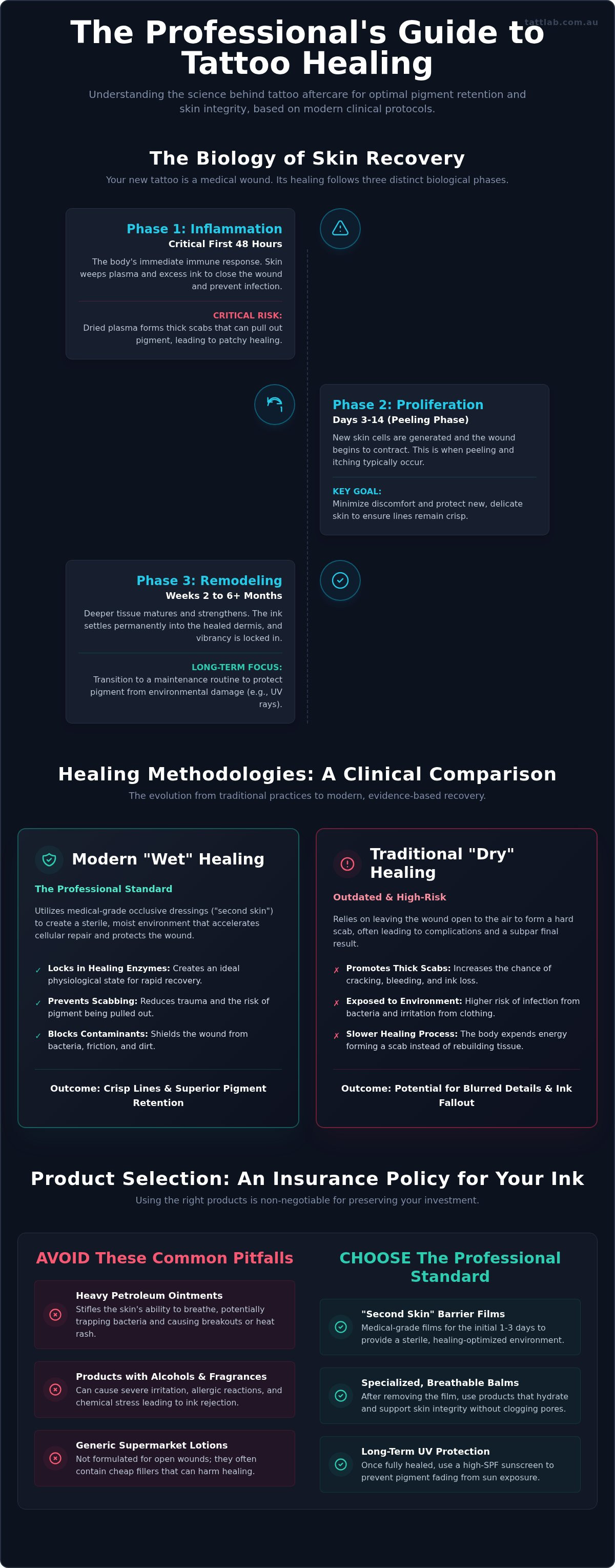
The body manages the tattooing healing process through three distinct phases. It starts with Inflammation, where the body works to close the wound and prevent infection. This is followed by Proliferation, the stage where new skin cells are born and the wound begins to contract. Finally, Remodeling occurs over several months as the tissue matures and the ink settles permanently. If this cycle is interrupted by poor-quality products, such as supermarket lotions containing heavy petroleum or synthetic fragrances, the skin's respiration is stifled. This often leads to blurred edges and a loss of fine detail.
Phase 1: The Critical First 48 Hours
During the initial two days, your skin will weep plasma and excess ink. This is a natural part of the inflammatory phase, but it must be managed with precision. If plasma is allowed to dry and harden on the surface, it forms thick scabs that can physically pull pigment out of the dermis as they eventually flake off. Maintaining a sterile environment with professional medical supplies is vital here. Early-stage care isn't just about comfort; it dictates the final saturation levels of your tattoo.
Why 'Cheap' Aftercare Costs More in the Long Run
It's common for collectors to try and save money by using generic moisturisers, but this often leads to expensive touch-ups later. Cheap products frequently contain alcohols and fragrances that can trigger allergic reactions in open dermal wounds. This irritation leads to "ink fallout," where the body rejects the pigment due to the chemical stress on the site. Professional-grade products act as an insurance policy for your investment. They provide bioactive hydration that supports the skin without the risk of patchy healing or infection. Choosing the best tattoo aftercare Australia offers ensures that your ink remains vibrant and your skin integrity is never compromised.
Medical-Grade Barriers vs. Traditional Healing Methods
The methodology of tattoo recovery has undergone a significant evolution in recent years, moving away from the traditional reliance on simple air exposure. Historically, "dry healing" was the standard, requiring the client to leave the wound open to the air to form a scab. However, modern clinical evidence suggests that this approach often leads to unnecessary trauma and pigment loss. In the contemporary Australian tattoo industry, "wet healing" using medical-grade occlusive dressings has become the preferred choice for those seeking the best tattoo aftercare Australia can provide. This method maintains a controlled environment that accelerates cellular repair while protecting the site from external stressors.
The rise of "second skin" technology, such as Saniderm, has transformed the first 72 hours of recovery. These transparent, adhesive films act as a synthetic epidermis, shielding the fresh wound from environmental contamination, clothing friction, and opportunistic bacteria. Maintaining high standards of Tattoo safety and healing is easier when the wound is physically sealed off from the elements. While traditional cling wrap was a temporary fix, these advanced medical films are designed for multi-day wear, allowing the body to heal without the constant risk of accidental abrasion or infection.
The Science of Occlusive Dressings
Occlusive dressings like Saniderm are engineered to mimic the skin's natural barrier function. By sealing the wound, these films lock in the body's natural healing enzymes and white blood cells, which would otherwise be lost through evaporation or absorbed into a bandage. This creates an ideal physiological state where the skin can focus entirely on remodeling. Moist wound healing is the gold standard for dermal recovery. This process ensures that the transition from a fresh wound to a settled tattoo is fluid, reducing the likelihood of thick, itchy scabs that can compromise the integrity of the ink.
Breathability and Skin Integrity
While occlusion is vital during the initial inflammatory stage, a tattoo must eventually transition to a more breathable environment once the weeping phase concludes. There is a delicate balance to strike; over-applying heavy, petroleum-based ointments can "suffocate" the pores and lead to heat rashes or breakouts. As the skin begins to tighten and enter the peeling phase, switching from a barrier film to a specialized, breathable balm is essential. Tatt Lab carefully selects professional medical supplies and aftercare products that prioritize oxygen exchange, ensuring the skin remains hydrated without the risk of maceration or clogged follicles. This methodical transition from a sealed barrier to a breathable hydrator is what separates professional healing from amateur results.
Evaluating the Best Tattoo Aftercare Products in Australia
Selecting the right topical solution is a critical decision in the recovery timeline. While supermarket shelves are often stocked with petroleum-based ointments, professional artists distinguish between generic hydration and bioactive support. Petroleum jelly, while a classic barrier, is occlusive in a way that often traps heat and stifles dermal respiration. In contrast, plant-based lipids like Shea Butter and Mango Butter offer a superior alternative. These ingredients mimic the skin's natural oils, allowing for deep penetration without clogging pores. Finding the best tattoo aftercare Australia offers involves balancing these global standards with local innovations that respect the skin's need to breathe.
An objective look at the leading options, including Hustle Butter, Dr Pickles, and Balm Tattoo, reveals a shift toward specialized ingredients. The choice between a thick balm and a quick-absorbing lotion often depends on your specific skin type and the environment. Balms provide dense, long-lasting protection ideal for dry climates or the initial peeling phase. Lotions are often preferred for daily maintenance once the skin's primary barrier has reformed. Using the best tattoo aftercare Australia provides ensures your ink is supported by formulations that prioritize long-term skin integrity over quick fixes.
Hustle Butter Deluxe: The Global Gold Standard
Hustle Butter Deluxe is widely regarded as a pinnacle of vegan-friendly aftercare. It replaces petroleum-based fats with a rich blend of mango, cocoa, and shea butters. This formulation isn't just for the client; many artists use it during the tattooing process to reduce redness and maintain skin pliability. Its anti-inflammatory properties help soothe the area immediately, bridging the gap between the studio and home care. For a deeper look at how these ingredients impact the skin, consult our resource on Mastering Tattoo Aftercare: The Professional Guide to Skin Integrity and Healing.
Dr Pickles Tattoo Balm: The Australian Essential
Specifically formulated for the local climate, Dr Pickles has become a staple in studios across the country. It utilizes D-Panthenol, also known as Pro-Vitamin B5, to target the symptoms of "tattoo flu" and localized irritation. The inclusion of Australian-grown ingredients ensures the balm remains stable even in high-humidity conditions. It's particularly effective for heavy saturation and large-scale pieces where the skin has undergone significant trauma and requires intensive soothing.
Numbing Creams and Specialty Care
The use of numbing agents, such as TKTX, can influence early healing outcomes. While these products provide comfort during the session, they should only be used under professional guidance to ensure they don't interfere with pigment reception. Understanding how these topicals interact with the dermis is vital for long-term clarity. You can learn more about how different substances affect pigment in The Professional Guide to Tattoo Ink: Science, Safety, and Selection.
The 14-Day Professional Aftercare Protocol
To achieve the results promised by the best tattoo aftercare Australia provides, you must follow a disciplined day-by-day checklist. The first 14 days represent the most volatile period for pigment retention; it's the window where your body decides whether to accept or reject the ink. By adhering to a structured clinical protocol, you replace guesswork with a predictable recovery path. This timeline ensures your skin remains supple, your lines stay sharp, and your immune system isn't overwhelmed by environmental stressors.
The First Wash: A Step-by-Step Guide
If your artist applied a medical-grade barrier film, you'll typically leave it in place for the first 24 to 72 hours. Once it's time for removal, or if you're using traditional dressings, the first wash is a critical milestone. Follow this precise method to maintain skin integrity:
- Wash your hands thoroughly with antibacterial soap before touching the area.
- Use lukewarm water and an antimicrobial, fragrance-free soap to cleanse the site, removing plasma and excess ink without stripping the skin's natural moisture.
- Employ the "pat dry" technique using disposable medical-grade paper towels; never use cloth towels, as they harbor latent bacteria.
- Apply a very thin layer of professional tattoo balm, ensuring the skin looks hydrated but not "wet" or greasy.
Managing the Itch and Peeling
Between day four and day seven, your tattoo will enter the proliferation phase. This is often characterized by intense itching and the beginning of the peeling process. While it's tempting to scratch, doing so can physically pull pigment out of the dermis before it has settled. Slapping the area gently is a much safer alternative for preserving fine lines, as it provides relief without abrasive friction. It's vital to recognize that ink rejection is an inflammatory response where the body pushes out pigment, whereas standard shedding is just the top layer of skin exfoliating naturally.
From day eight to day 14, the "milky" or "silver skin" phase begins. The heavy peeling has subsided, but the tattoo may look slightly dull. Continue with light hydration, but don't over-saturate. Once you pass the 14-day mark, the primary wound has closed, but the remodeling phase continues beneath the surface. In the harsh Australian climate, long-term maintenance is essential. Transitioning to a daily routine that includes high-quality hydration and sun protection will prevent the UV-induced pigment breakdown that causes premature fading.
Securing the right supplies before your session is the most effective way to ensure a seamless recovery. Explore our range of professional aftercare products to secure your healing supplies today.
Maintaining Long-Term Ink Integrity and Vibrancy
The completion of the initial 14-day protocol marks the end of the acute recovery phase, but it represents the beginning of a lifelong commitment to skin integrity. In the Australian climate, your ink faces a constant environmental challenge from high UV indices that can lead to premature pigment degradation. Maintaining vibrant, crisp lines requires a shift in perspective; you're no longer treating a wound, but protecting a permanent investment in your dermis. Utilizing the best tattoo aftercare Australia provides means integrating long-term hydration into your daily wellness routine to ensure your art remains as striking as the day it was finished.
Solar exposure acts as a catalyst for phagocytosis, where the body’s immune cells break down and transport smaller ink particles away from the site. The longevity of your piece is heavily dependent on the initial quality of the tattoo ink used during your session. High-quality pigments are engineered to resist this breakdown, but even the best formulations require topical support. Daily application of a professional-grade moisturizer ensures that the epidermis remains translucent and healthy, allowing the underlying colors to remain deep and saturated rather than looking dull or ashy.
Sun Protection for Tattoos
SPF 50+ is a non-negotiable requirement for anyone living under the Australian sun. UV rays are the primary cause of "ink spread" and color shifting over time. When choosing a protector, physical sunscreens containing zinc oxide or titanium dioxide are often preferred for tattooed skin as they sit on the surface to reflect rays rather than being absorbed. It's vital to remember that sunscreen should never be applied to a fresh tattoo. You must wait until the skin has fully closed and the peeling phase is complete, typically around day 14 to 21, before introducing sunblock to the area. This ensures you aren't introducing chemicals into a healing dermal wound.
Why Professionals Trust Tatt Lab
Achieving a result that lasts decades depends on the quality of the tools and topicals used from the very first needle strike. We provide artist-vetted tattoo supplies that meet the rigorous standards of the modern Australian industry. As an artist-owned specialist, we select products based on clinical efficacy and biological compatibility, ensuring you have access to the same medical-grade equipment used in the country’s leading studios. Our commitment to your skin's integrity extends from the initial procedure to the final, settled result. Using the best tattoo aftercare Australia offers is the most reliable way to secure your narrative of personal transformation.
Shop the full Tatt Lab aftercare collection today to preserve the vibrancy of your ink for years to come.
Securing the Future of Your Body Art
Successful tattoo recovery is a deliberate journey of controlled healing, moving from initial occlusion to long-term dermal hydration. By understanding the science of skin remodeling and adopting a disciplined 14-day protocol, you transform a vulnerable medical wound into a permanent masterpiece. Choosing the best tattoo aftercare australia is the most effective way to ensure that your ink remains as saturated and crisp as the moment you left the studio. Your ink is an investment.
At Tatt Lab, we bridge the gap between clinical precision and artistic vision. As an artist-owned and operated specialist, we provide the same medical-grade quality standards used in the country's top studios. Whether you're managing the initial "second skin" phase or protecting your work from the intense Australian summer, our curated selection offers the professional edge your body deserves. We ensure you're never without the right tools, offering express nationwide shipping to get supplies to your door quickly.
Secure Your Ink: Shop Australia's Best Aftercare Bundles
Your tattoo is a lifelong narrative of personal transformation. By prioritizing physical integrity and holistic wellness today, you're ensuring your art remains vibrant for decades to come.
Frequently Asked Questions
What is the best tattoo aftercare product in Australia for 2026?
The benchmark for professional recovery in 2026 remains a choice between Hustle Butter Deluxe and Dr Pickles. Hustle Butter is preferred for its vegan-friendly, anti-inflammatory profile, while Dr Pickles is engineered specifically for the Australian climate. These products represent the best tattoo aftercare Australia provides, offering bioactive hydration that supports the skin's natural remodeling phase without the risks associated with generic, petroleum-based alternatives found in supermarkets.
Can I use Bepanthen on my new tattoo?
While it was a common historical recommendation, we don't advise using Bepanthen on modern tattoos. It's a nappy rash cream containing high concentrations of petroleum and lanolin, which can easily clog pores and trap heat. This lack of breathability often leads to irritation or "suffocated" skin. Professional-grade balms are specifically formulated to support dermal respiration, ensuring that the pigment remains trapped in the dermis without being disrupted by heavy, occlusive barriers.
How long should I leave my 'second skin' bandage on?
You should typically leave the initial "second skin" film on for approximately 24 hours. This allows the body to manage the heaviest plasma weeping. After a gentle wash, a second application can remain in place for an additional 3 to 5 days. This extended period facilitates moist wound healing, which is the gold standard for dermal recovery. It minimizes scabbing and protects the site from environmental contaminants during the most vulnerable stage of the process.
Is it normal for my tattoo to look blurry under the film?
It's entirely normal for your ink to look dark or blurry under the bandage. This phenomenon, often called an "ink sack," is a natural accumulation of plasma, excess pigment, and fluid. This mixture acts as a nutrient-rich environment that helps the skin regenerate. As long as the bandage remains sealed and doesn't leak, this fluid is a sign that your body's inflammatory response is working correctly and facilitating cellular repair.
How often should I apply tattoo cream during the day?
Once you transition away from barrier films, you should apply a thin layer of balm 2 to 3 times per day. The key is to maintain a supple texture without over-hydrating the site. If the skin looks shiny or feels greasy, you've likely applied too much. A light, consistent application ensures the skin can still breathe while receiving the essential lipids required to prevent the area from becoming dry, brittle, or itchy.
Can I swim or go to the beach after getting a tattoo in Australia?
You must avoid swimming and beach activities for at least 14 to 21 days. Submerging a fresh tattoo in salt water or chlorinated pools can introduce harmful bacteria into the open wound, increasing the risk of infection. Additionally, the abrasive nature of sand and the intensity of the Australian sun can cause significant pigment fading during the early healing stages. Wait until the peeling phase is completely finished before exposing your new ink to these environments.
What are the signs of a tattoo infection I should look out for?
Signs of infection include persistent, spreading redness, localized heat, and yellow or green discharge. While some swelling and tenderness are expected in the first 48 hours, symptoms that worsen over time require attention. Look out for red streaks extending from the tattoo or a foul odor coming from the site. If these symptoms are accompanied by a fever or general malaise, you should consult a medical professional immediately to protect your health and your art.
Why is my tattoo still itchy after two weeks?
Itching after two weeks is quite common as the deeper dermal layers continue their remodeling phase. Although the surface skin appears healed, the underlying tissue is still maturing and regenerating. This process can cause a lingering sensation of tightness or irritation. Transitioning to a high-quality daily moisturizer will help manage this discomfort. If the itch is accompanied by a raised, red rash, it may indicate a localized reaction to environmental factors or specific topical ingredients.


Comments (0)
There are no comments for this article. Be the first one to leave a message!