

Give a fresh tattoo at least 48 hours before strenuous exercise or workouts that cause heavy sweating. After that, ease back into exercising after getting a tattoo only if movement won’t rub, stretch or put pressure on the tattooed skin. The placement and how calmly it’s healing matter as much as the workout itself.
It’s understandable to want a clear date for returning to training, but pushing through irritation can complicate aftercare. This guide explains how to resume exercise, clean your tattoo after a workout, and approach swimming and saunas while your skin heals. You’ll also learn which changes may call for medical advice, so you can protect your skin and return to your routine with more confidence.
Key Takeaways
- After a workout, clean the tattoo gently and keep friction and shared gym surfaces in mind while the skin heals.
- Swimming and sauna sessions can wait until the tattoo has fully healed; exercise-related sweat, stretching and rubbing can also affect recovery.
- Ease back into training in stages, choosing movements that don’t press on or stretch the tattooed area.
- Learn which changes during healing may need medical attention, and how suitable aftercare supports a calmer recovery.
1. Should I wash my tattoo after the gym?
Yes. After exercising after getting a tattoo, wash the area promptly to remove sweat and surface grime. A fresh tattoo is broken skin, and sweat, bacteria and friction can irritate it and contribute to infection. Sweat itself doesn’t leach ink from the skin, but a sweaty workout can still aggravate a healing tattoo.
After training, wash your hands and remove any workout cover. Gently clean the tattoo with clean water and unscented soap or a cleanser suitable for sensitive skin. Don’t scrub, exfoliate or stretch the skin to reach every crease. Pat the area dry with a clean towel, then apply a thin layer of aftercare cream. Let the skin breathe instead of covering it with tight, non-breathable material that traps sweat.
Gym equipment adds another exposure point. Benches, pads and mats may carry bacteria, so wipe each surface before and after use. A sleeve or strap rubbing around the tattoo can also cause friction, disturb scabs and prolong irritation. During the first 48 hours, avoid strenuous activity and heavy sweating; when you return, choose movements and clothing that keep equipment and fabric from pressing against the healing area.
Watch for changes beyond mild, temporary sensitivity. Spreading redness, increasing heat, swelling or pus may indicate infection and warrant medical attention. Persistent irritation can also result from repeated rubbing or pressure, so stop the movement that aggravates the skin and clean the area gently. Sunlight can fade tattoo pigment, while picking scabs or exposing healing skin to unnecessary friction may disrupt the surface. Keep the tattoo out of direct sun and let scabs fall away naturally. Washing promptly after the gym removes sweat, but it can’t undo damage from repeated friction or pressure.
2. Can I swim or use the sauna after training with a new tattoo?
Swimming and sauna sessions can expose healing skin to soaking, heat and contamination. Avoid swimming for at least 2 weeks after getting tattooed. A tattoo is usually ready for swimming, sauna use and contact sports only when fully healed, often 2 to 3 weeks after the session. The skin’s condition matters more than the calendar: wait if it’s still peeling, scabbed or open.
Pool chemicals may irritate a fresh tattoo, while lakes and oceans can expose broken skin to bacteria. Soaking can also disrupt healing and affect the ink. Avoid saunas, steam rooms and hot yoga until the tattoo has fully closed, as they bring heat and heavy sweating. A regular workout is different from prolonged immersion, but sweat and friction can still aggravate the tattooed area.
In the first few days, movements that stretch the skin or clothing that rubs across the tattoo can increase irritation. Heavy sweating may soften scabs, and friction from a strap or tight sleeve can disturb them. Tattoo size, placement and healing response all affect recovery. A larger design or one over a bending area may need more time before training feels normal.
Second-skin healing film can stay in place during light training as long as its seal remains intact. Heavy sweating may loosen the adhesive, so stop if the film lifts or leaks. Follow your tattoo artist’s instructions on how long to keep the dressing on, and don’t change the timing to fit a workout. For outdoor exercise, protect the fresh tattoo from sunlight with loose clothing. Healing skin is especially sensitive, and sun exposure can fade pigment.
Choose indoor movement if sun protection is difficult, and keep sessions gentle if sweat or rubbing develops around the tattoo. A steady tattoo aftercare routine helps you care for the skin while you pause swimming and heat exposure.
3. Can You Work Out After Getting a Tattoo?
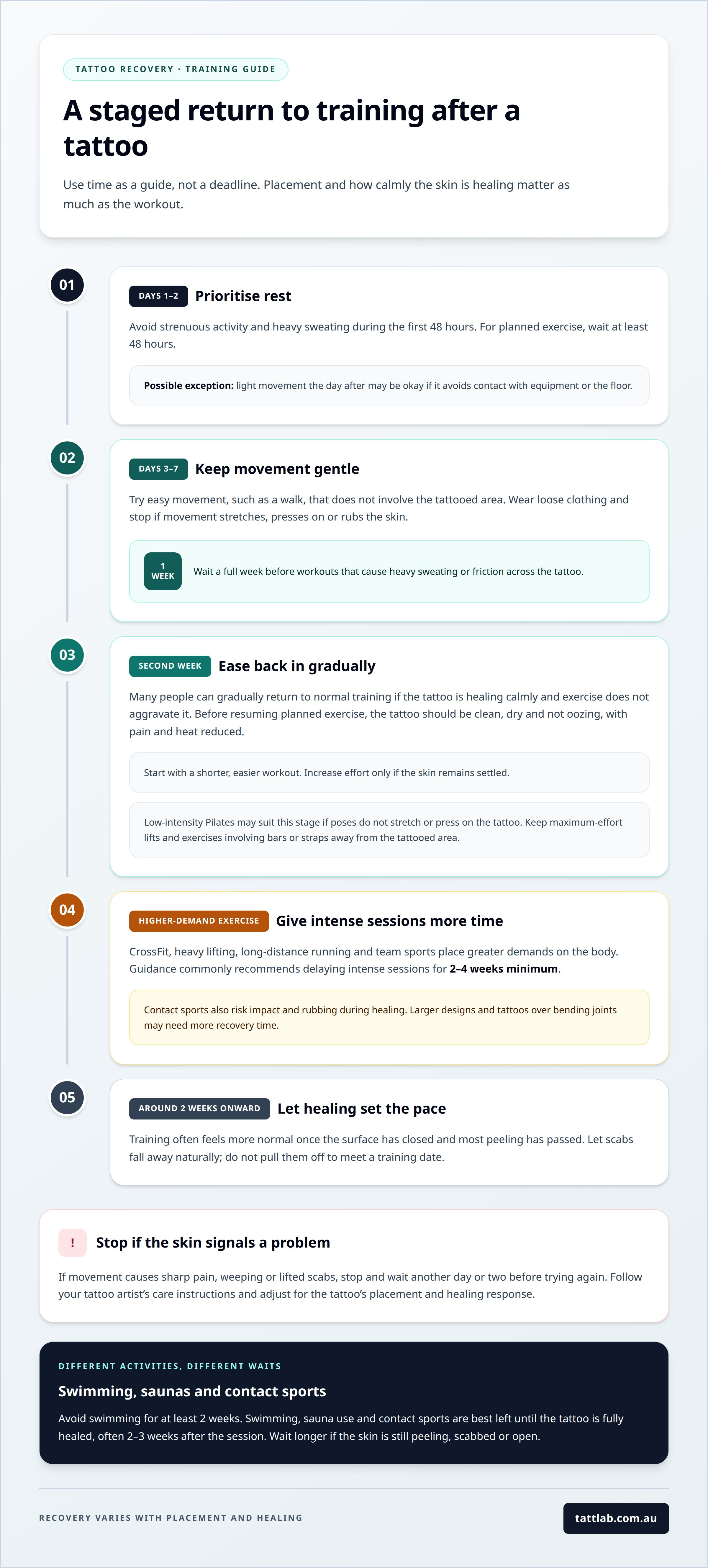
Light movement the day after a tattoo may be possible if it avoids contact with equipment or the floor. For planned exercise, wait at least 48 hours, then resume only when the tattoo is clean, dry and not oozing, with pain and heat reduced.
During days 1 and 2, prioritise rest and avoid strenuous activity or heavy sweating. From days 3 to 7, try gentle movement away from the tattooed area, such as an easy walk. Choose loose clothing and stop if movement stretches, presses or rubs the skin. Wait a full week before workouts that cause heavy sweat or friction across the tattoo.
In the second week, many people can gradually return to normal training if the tattoo is healing calmly and exercise doesn’t aggravate it. Low-intensity Pilates may suit this stage if poses don’t stretch or press on the tattoo. Keep maximum-effort lifts and exercises involving bars or straps away from the tattooed area. Larger designs and tattoos over bending joints may need more recovery time.
Build back in stages rather than jumping straight into a full session. Start with a shorter, easier workout, then increase effort if the skin remains settled. CrossFit, heavy lifting, long-distance running and team sports place greater demands on the body; guidance commonly recommends delaying intense sessions for 2-4 weeks minimum. Contact sports also risk impact and rubbing during the healing process. Once you are cleared to resume active court sessions like padel, opting for breathable performance apparel from Pulco Studios can help manage sweat and prevent irritating fabric friction.
After around two weeks, training often feels more normal if the surface has closed and most peeling has passed. Let scabs fall away naturally rather than pulling them off to meet a training date. Your tattoo artist’s care instructions and the tattoo’s placement can help guide your return. If a movement causes sharp pain, weeping or lifted scabs, stop and wait another day or two before trying again.
4. Tattoo aftercare and professional advice
In Australia, take a cautious approach to returning to training: follow your tattoo artist’s aftercare instructions, avoid heavy sweating and friction during early healing, and seek medical advice if you notice signs of possible infection. There’s no single return date that suits every fresh tattoo. Placement and how your skin responds both matter.
A tattoo creates hundreds of tiny puncture wounds, so aftercare helps protect the skin and isn’t an optional extra. Wash your hands before touching the dressing, follow your artist’s instructions on when to remove it, and clean the tattoo gently after a workout. Don’t work out through sharp pain, weeping skin or scabs lifting during movement. Stop the activity and give the area another day or two before trying again.
Heavy sweating and rubbing can irritate healing skin. Wait at least a full week before doing exercise that causes heavy sweat or friction over the tattoo. Then return gradually, choosing movements that don’t stretch, compress or scrape it. A loose top can reduce rubbing over a shoulder tattoo; if a strap presses across it, modify the workout.
Surface healing doesn’t mean every layer has finished recovering. A tattoo wound generally takes 4 to 6 weeks to heal, while deeper layers can continue settling for a few weeks after the surface appears healed. Size, placement and ongoing peeling or scabbing help determine when training feels comfortable. Keep the tattoo out of direct sun for at least 4 weeks, and don’t pick at scabs.
Spreading redness, heat, swelling, pus, or persistent pain and redness days after a session can signal a problem. Seek medical advice if these signs appear rather than treating them as ordinary workout irritation. For practical skin-care support during recovery, explore tattoo aftercare essentials.
Tatt Lab: Tattoo Aftercare
Tatt Lab offers Tattoo Aftercare products to support your care routine while your skin heals. Use them as part of the aftercare steps provided by your tattoo artist, particularly when planning a gradual return to training and keeping a fresh tattoo clean and cared for.
Aftercare products support skin care, but they don’t replace medical advice. If you notice spreading redness, heat, swelling, pus or persistent pain, seek advice from a health professional rather than relying on aftercare products alone.
If you’re ready to choose tattoo aftercare for your routine, contact Tatt Lab.
Build a steady return to training
Returning to exercise can be part of a considered recovery, not a test of discipline. Let your skin’s condition guide your next step, and adjust your routine if a movement causes discomfort or friction. A short pause can help you approach exercising after getting a tattoo with more care and less guesswork.
For tattoo artists and studios, Tatt Lab offers Tattoo Aftercare, Traditional Needles and Tattoo Cartridges. These products support different parts of tattoo practice, while aftercare remains important for newly tattooed skin.
If you’d like advice about tattoo care or the products that support it, contact Tatt Lab for tattoo advice. Take your recovery one thoughtful step at a time, then return to training when your skin is ready.
Frequently Asked Questions
Can You Work Out After Getting a Tattoo?
Yes, but choose an activity that suits the tattoo’s condition and location. When exercising after getting a tattoo, begin with gentle movement that doesn’t press, stretch or rub the treated skin. A walk is easier to adapt than a workout involving floor contact or equipment. Stop if the tattoo becomes sharply painful, starts weeping or has scabs lifting during movement.
Working Out After Tattoo: How Long Should You Wait?
Wait at least 48 hours before light exercise, and longer before strenuous activity or heavy sweating. The tattoo’s size, location and healing response influence the pace of your return. A session on the upper arm, for example, may be aggravated by movements that a leg workout wouldn’t involve. Don’t use a target date to override discomfort or visible irritation.
What types of workouts are OK with a new tattoo?
Once you’ve rested for at least 48 hours, gentle activity can be a suitable starting point if it leaves the tattoo undisturbed. Walking is easy to modify; choose a route and pace that won’t cause clothing to rub the area. Avoid contact sports and exercises that put the tattoo against a mat, bench or strap. Increase intensity gradually as healing progresses.
Can I go to the gym with second skin on?
Light training can be appropriate while second-skin film remains sealed, but that doesn’t make a strenuous gym session a good idea. Heavy sweating can loosen the adhesive, and gym equipment may press or rub against the dressing. If an edge lifts or the film leaks, stop training and follow your tattoo artist’s dressing instructions. Keep to the dressing’s specified timing rather than changing it for exercise.
Can I lift weights with a new tattoo?
Delay weight training if a lift stretches the tattoo, presses a bar or strap against it, or causes heavy sweating. With a forearm tattoo, a barbell grip may create direct contact; with a back tattoo, a bench can add pressure. After the initial rest period, start with a lighter, modified session and leave out any lift that irritates the skin.
Can I swim or use the sauna after training with a new tattoo?
No, not until the tattoo has fully healed. Swimming exposes healing skin to prolonged soaking and, in pools or natural water, potential irritants or bacteria. Sauna heat and sweat can also aggravate a tattoo that hasn’t closed. Don’t judge readiness by whether a workout feels comfortable. Wait until peeling and scabbing have passed and the surface has closed.


Comments (0)
There are no comments for this article. Be the first one to leave a message!