

Why does your once-crisp, jet-black ink eventually settle into a dull, hazy grey? It's a common frustration for the 30% of Australians who have invested in body art, especially when our harsh UV environment seems determined to bleach every fine detail. You've likely encountered a confusing array of contradictory advice, leaving you anxious about your expensive investment losing its clarity. Understanding how to keep black tattoos from fading isn't just about surface moisture; it's about managing the biological relationship between the pigment and your skin's natural turnover.
We agree that your tattoos are more than just ink. They're a narrative of personal transformation that deserves meticulous preservation. In this professional guide, you'll discover the clinical protocols and practical steps needed to maintain deep saturation while preventing the dreaded blur. We'll demystify the science of ink aging and provide a clear, results-oriented framework for sun protection and skin health. From the precision of the initial application to the long-term maintenance of your dermal integrity, we'll help you navigate the path to lasting, vibrant blackwork.
Key Takeaways
- Understand the biological mechanisms behind pigment migration and how epidermal masking can cloud the clarity of your ink.
- Learn the clinical protocols for how to keep black tattoos from fading during the critical first thirty days of dermal healing.
- Protect the carbon structure of your pigment from UV-induced breakdown by managing both direct and incidental sun exposure.
- Maintain deep saturation through targeted dermal hydration and nutritional support to ensure your skin remains a transparent window for the ink.
- Identify the precise moment a professional touch-up is required versus when a specialized skincare protocol can restore your tattoo's depth.
Understanding the Science of Black Ink Degradation
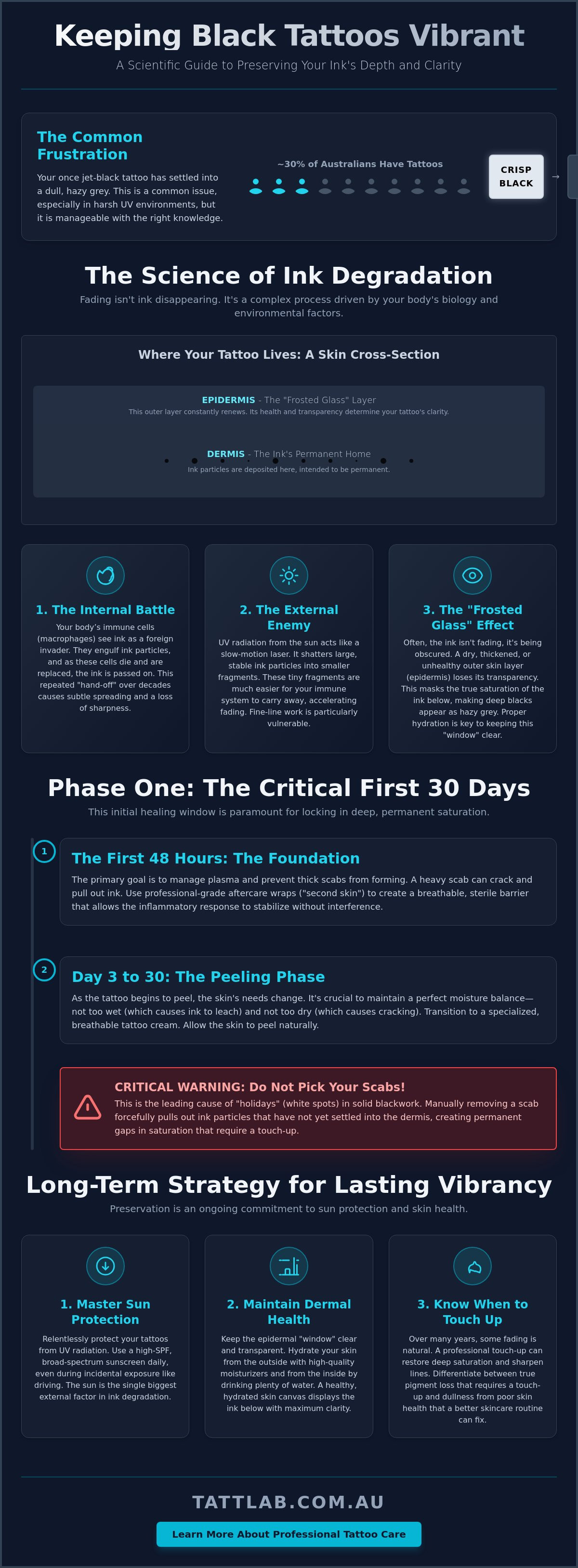
To understand how to keep black tattoos from fading, we must first look beneath the surface at the biological reality of your skin. Fading is rarely a case of the ink simply disappearing. Instead, it's a complex interaction between pigment migration and epidermal masking. While we often view a tattoo as a static image, the tissue holding it is a dynamic, living environment. Understanding the physiological process of tattooing is essential for anyone looking to maintain the clinical "jet black" saturation of their art over several decades. The ink particles are deposited into the dermis, the skin's second layer, which serves as their permanent home. However, the body's natural defenses don't see this as decoration; they see it as a foreign intrusion that needs to be cleared.
Your immune system is the primary driver of internal fading. Specialized white blood cells called macrophages are the body's clean-up crew. They are constantly attempting to engulf and transport ink particles to the lymph nodes for disposal. Because most high-quality carbon pigments are too large for these cells to move, the macrophages simply hold the ink in place. As these cells naturally reach the end of their life cycle and die, they release the pigment, which is then captured by a new generation of macrophages. This "hand-off" process occurs repeatedly over years, leading to the subtle shifting and spreading of ink that we identify as a loss of sharpness or detail.
The Biology of Ink Aging
Over time, the structural integrity of ink particles begins to change. External factors, particularly UV radiation, act like a slow-motion version of a removal laser, breaking down large pigment clusters into smaller fragments. These tiny fragments are much easier for your immune system to carry away. This is why fine-line blackwork often shows signs of aging faster than solid tribal or blackout pieces. In delicate designs, there's less pigment density to begin with, so even minor migration or particle breakdown can significantly impact the visual clarity of the work. It's a progressive narrative of change that requires a proactive maintenance protocol to manage effectively.
Why Black Ink Turns Grey
The transition from deep black to a hazy grey is often a result of what's happening above the ink, not just within it. The epidermis, your outermost layer of skin, acts as a filter. As skin cells turn over and the epidermis thickens or becomes dehydrated, it loses its transparency. This creates a "frosted glass" effect that masks the true saturation of the black ink sitting in the dermis below. Additionally, light scattering plays a significant role in how we perceive color depth. The Tyndall Effect is the scattering of light by particles in a colloid or suspension. This scientific phenomenon explains why black ink can appear blue or green over time; as the ink settles deeper and light has to travel through more tissue, shorter blue wavelengths are scattered back to the eye more than longer red ones. Maintaining skin health is the most effective way to keep this "window" clear and ensure your ink retains its intended depth.
Phase One: Critical Aftercare for Maximum Saturation
The first 30 days of a tattoo's life are transformative. This window determines the "depth" of the black pigment for the next decade. During this phase, your primary objective is to prevent inflammatory pigment loss. This occurs when the body's healing response is too aggressive or compromised by infection. A sterile cleaning routine isn't just a suggestion; it's a clinical necessity. If you're wondering how to keep black tattoos from fading, the answer begins with maintaining perfect moisture balance. We want to avoid "wet healing," which can lead to bubbling and ink leaching, as well as "crackling," which occurs when the skin is so dry that it splits and takes the pigment with it.
Picking scabs remains the leading cause of "holidays," or white spots, in solid blackwork. When you manually remove a scab, you aren't just removing dead skin; you're often pulling out ink particles that haven't yet settled into the dermis. This creates permanent gaps in the saturation that require costly touch-ups. A methodical approach to healing ensures that the carbon particles remain exactly where the artist intended.
The First 48 Hours: Setting the Foundation
The immediate aftermath of the procedure involves managing hemostasis and plasma oozing. If plasma is allowed to pool and dry on the surface, it forms a thick, heavy scab that is prone to cracking. We recommend utilizing professional-grade tattoo aftercare to soothe the initial trauma and create a breathable barrier. Whether you use a traditional wrap or a modern "second skin" film, the goal is to protect the site while allowing the inflammatory response to stabilize. Following established tattoo aftercare guidelines ensures that you don't trap bacteria against the open wound, which is the most common cause of premature pigment migration.
Day 3 to Day 30: The Peeling Phase
As the tattoo begins to peel, typically around day three, the skin's needs shift. This is the time to transition from heavy protective layers to specialized, breathable creams like Dr Pickles Tattoo Balm. During this period, you'll encounter the "silver skin" phase. Your tattoo might look dull or slightly milky; this is normal. It's simply the new layer of skin forming over the ink. To protect this delicate new tissue, avoid restrictive clothing that creates friction. Constant rubbing can irritate the site and cause premature peeling, which compromises the final saturation. For those committed to long-term results, investing in high-quality Tattoo Aftercare products is the most reliable way to secure your art's future.
Phase Two: Defending Against UV-Induced Pigment Breakdown
The sun is the single greatest external threat to your tattoo's longevity. While we previously discussed how your immune system moves ink internally, UV radiation attacks from the outside by physically dismantling the pigment. Ultraviolet rays act like a low-intensity version of a removal laser, penetrating the epidermis and striking the carbon particles stored in your dermis. This process, known as photolysis, causes the large ink clusters to shatter into smaller fragments. Research into the science of tattoo ink degradation confirms that these smaller particles are significantly easier for your body to clear away, leading to a visible loss of saturation. If you want to master how to keep black tattoos from fading, you must treat UV protection as a non-negotiable daily protocol.
Black ink is particularly vulnerable because of its thermal properties. Dark pigments absorb a broader spectrum of light and heat energy compared to lighter shades. This increased energy absorption accelerates the molecular breakdown of the ink. Most people only consider protection during a day at the beach, but the damage is cumulative. Incidental exposure, such as the sun hitting your arm while driving or walking to the shop, accounts for a significant portion of long-term fading. Over years, these brief moments of exposure add up to a noticeable shift from deep black to a washed-out grey.
The Australian UV Factor
Australia’s UV environment is uniquely harsh, often reaching extreme levels even on overcast days. Our proximity to the ozone hole means the radiation is more intense than in the Northern Hemisphere, making the local UV index a critical metric for tattoo owners. Don't be fooled by the "winter sun" in cities like Brisbane or Perth; the UV levels can remain high enough to damage ink year-round. While SPF is essential, physical barriers like UPF-rated clothing offer the most reliable defense for large-scale blackwork. A physical layer provides a 100% block that doesn't wear off or require reapplication, making it the gold standard for outdoor workers and enthusiasts alike.
Sunscreen Best Practices for Tattoos
When choosing a sunscreen, physical blockers containing zinc oxide or titanium dioxide are generally superior for tattooed skin. These minerals sit on top of the skin and reflect UV rays like a mirror, whereas chemical sunscreens absorb the rays and convert them into heat within the skin. To prevent clogging pores or creating a dull film over your art, apply a thin, even layer and ensure it's fully rubbed in. It’s a biological reality that even a healed tattoo is a scar that requires higher SPF protection than surrounding "virgin" skin. Reapplication every two hours is vital during outdoor activities, as sweat and friction will inevitably compromise the protective barrier. By maintaining this clinical level of defense, you preserve the sharp contrast that defines high-quality blackwork.
Phase Three: Optimising Dermal Health for Long-Term Clarity
The visual quality of your tattoo is inextricably linked to the health of the tissue that holds it. While we have addressed the internal and external forces of pigment breakdown, the final pillar of preservation is maintaining the transparency of your epidermis. When the skin is dehydrated, it becomes opaque and rough, creating a visual barrier that makes black ink appear grey or muddy. This isn't necessarily a permanent loss of pigment; often, it's simply a lack of clarity in the "window" through which you see the art. Understanding how to keep black tattoos from fading requires a holistic approach that prioritizes dermal integrity over quick fixes or misleading vibrancy serums.
Maintaining this clarity involves a careful balance of internal and external factors. Diet and systemic hydration are fundamental to skin elasticity and cell health. When you're chronically dehydrated, your skin loses the plumpness that keeps fine lines looking sharp and solid blackwork looking dense. Similarly, excessive exfoliation or the use of harsh, alcohol-based body washes can prematurely thin the epidermis. This stripping of natural oils compromises the skin barrier, leaving the tattoo vulnerable to environmental stressors and making it appear dull and lifeless.
Daily Maintenance Rituals
Consistency is the foundation of long-term ink preservation. A daily moisturiser that supports the skin barrier is essential for keeping the epidermis supple and transparent. Look for formulations enriched with vitamins A, C, and E. These antioxidants support dermal integrity and combat the oxidative stress that can lead to premature aging of both the skin and the pigment. Many clients find that a "dull" tattoo instantly regains its jet-black appearance simply by restoring proper hydration levels, proving that skin health is the most effective vibrancy booster available.
Lifestyle Factors That Impact Ink
Your daily habits play a significant role in the biology of ink aging. Rapid changes in weight can alter the geometry and density of a tattoo, stretching the pigment particles and making the black appear less saturated. Circulation also matters; smoking, for example, reduces blood flow to the skin, which can impair the body's ability to maintain healthy dermal tissue around the pigment. Environmental factors like frequent exposure to chlorine or saltwater can also be problematic. These elements strip moisture from the skin and can irritate both new and aged tattoos if not properly rinsed and re-hydrated. For those seeking the highest standard of protection, using a dedicated Tattoo Aftercare routine is the most reliable way to ensure your skin remains a perfect canvas for years to come.
Professional Solutions for Restoring and Maintaining Blackwork
There comes a point where even the most disciplined skincare routine cannot compensate for the natural biological migration of pigment. Distinguishing between a tattoo that is "masked" by dry skin and one that has suffered genuine pigment loss is the first step in restoration. If a thorough hydration protocol doesn't restore the depth of your ink, it's likely that the carbon particles have broken down or moved deep into the dermis. While many enthusiasts are quick to seek a touch-up, understanding how to keep black tattoos from fading often involves looking back at the initial application. The longevity of your art was largely decided the moment the needle met your skin.
The foundation of a permanent "jet black" finish lies in the chemical composition of the pigment used. High-performance artists prioritize high-quality tattoo ink brands like Panthera, which are renowned for their high molecular density and stability. Unlike some acrylic-based blends that can take on a synthetic, plastic-like sheen or shift towards blue tones, pure carbon-based inks offer a deep, organic saturation that ages with more grace. The artist's technique is equally vital; if the needle depth is too shallow, the ink sits in the shedding layers of the epidermis. If it's too deep, the pigment spreads into the subcutaneous fat, causing a "blowout" that looks like a permanent bruise around your lines.
The Role of Professional Supplies
Consistent saturation requires more than just a steady hand; it requires precision equipment. Professional artists utilize specific tattoo cartridges designed for maximum ink flow and minimal skin trauma. A cleaner application with less "chewing" of the skin leads to a smoother healing process and better pigment retention. Furthermore, maintaining medical-grade studio safety is a fundamental component of ink longevity. Preventing minor infections or excessive inflammation during the procedure ensures that the body doesn't aggressively reject the pigment during the initial inflammatory phase. Budget inks and unvetted supplies often lack the particle size consistency needed for a truly permanent, light-fast result.
Planning for the Future
Patience is a virtue when it comes to "freshening up" old work. We recommend waiting at least 12 months before considering a professional touch-up. This allows the skin to fully settle and the pigment to reach its final resting depth. When you do consult your artist, be clear about whether you want a simple re-saturation or a structural adjustment. In cases where the original work has blurred significantly or the "blackness" has faded beyond repair, a blast-over or a comprehensive cover-up may be a more effective clinical solution than a simple touch-up. Over-working the same area too frequently can lead to dermal scarring, which actually makes it harder for the skin to hold pigment in the future.
Securing the Longevity of Your Blackwork
Preserving the deep saturation of your ink is a continuous narrative of care that extends far beyond the initial procedure. By managing the biological hand-off of pigment within the dermis and maintaining a clear epidermal window through consistent hydration, you can prevent the premature greying of your art. We've established that the combination of sterile aftercare and rigorous UV defense is the only clinically proven way to maintain sharp contrast. Understanding how to keep black tattoos from fading allows you to take control of your skin's transformation, ensuring your personal narrative remains as bold as the day it was written.
At Tatt Lab, we're dedicated partners in your journey toward physical integrity. As an artist-owned and operated specialist facility, we offer a curated range of specialist-vetted professional inks and medical supplies designed for superior results. Whether you're a professional seeking high-performance cartridges or an enthusiast looking for premium aftercare, we provide express nationwide shipping across Australia to support your goals. Explore Professional Tattoo Aftercare & Supplies at Tatt Lab today. Your ink is an investment in self-assurance; give it the clinical protection it deserves.
Frequently Asked Questions
Why does my black tattoo look grey after it has healed?
Your tattoo appears grey because the new epidermis forming over the ink acts as a natural filter. This "silver skin" is slightly opaque during the final stages of healing. Once the skin fully matures and you maintain proper hydration, the transparency improves, allowing the deep black ink in the dermis to become more visible again.
Can I use normal body lotion to keep my tattoo from fading?
Most standard body lotions contain synthetic fragrances and alcohols that can compromise the skin barrier. To understand how to keep black tattoos from fading, you should prioritize specialized, pH-balanced aftercare. These professional formulas are designed to provide moisture without the harsh chemicals that can lead to dermal irritation or premature dulling of the pigment.
How often should I apply sunscreen to my black tattoos?
You should apply a broad-spectrum sunscreen every two hours when your tattoo is exposed to the sun. Given the intensity of the Australian UV index, this frequent reapplication is necessary to prevent UV rays from shattering the carbon pigment particles. Consistent protection is the most effective way to ensure your blackwork doesn't shift toward a hazy grey over time.
Does drinking water actually help keep my tattoo looking sharp?
Systemic hydration is vital for maintaining the transparency of the epidermis. When you drink enough water, your skin remains supple and clear, which allows the black ink underneath to shine through with maximum contrast. Dehydrated skin becomes thick and opaque, creating a frosted-glass effect that makes even the best tattoos look dull and blurry.
Is it normal for black ink to "spread" or become blurry over time?
Minor pigment migration is a normal biological consequence of the body's immune response. As macrophages naturally die and release ink particles, the new cells that capture them may settle in slightly different positions. While this causes a subtle softening of lines over decades, using high-quality cartridges and proper technique during the initial application significantly limits this spreading.
What is the best type of black ink for long-term saturation?
High-density carbon pigments are widely considered the best choice for permanent black saturation. Professional brands like Panthera are favored by specialists because they offer superior molecular stability compared to acrylic-based blends. These carbon inks provide a deep, organic black that resists the common blue or green shifts associated with lower-quality supplies.
Can I use an exfoliator on my tattooed skin?
You can use a gentle exfoliator once the tattoo is completely healed, which typically takes four to six weeks. Removing the buildup of dead skin cells can improve the clarity of the artwork by clearing the epidermal window. Avoid harsh chemical peels or aggressive scrubbing, as these can irritate the tissue and potentially thin the protective skin layer.
Will a touch-up make my old grey tattoo look jet black again?
A professional touch-up can restore the jet-black depth by depositing fresh pigment into areas where the original ink has faded or migrated. It's a reliable method for how to keep black tattoos from fading when skincare alone isn't enough to maintain saturation. If the original lines have blurred significantly, your artist might suggest a blast-over to redefine the structure of the piece.


Comments (0)
There are no comments for this article. Be the first one to leave a message!