

Isopropyl alcohol for tattooing has a limited role: diluted alcohol can be used to cleanse intact skin before shaving, but products containing isopropyl alcohol or glycerin shouldn’t be used to clean a fresh tattoo. The product described for studio use is 70% isopropyl alcohol. Keep it away from newly tattooed skin while it heals.
It’s easy to think of alcohol as a general-purpose disinfectant, especially in a studio where clean hands and surfaces matter. But safe use depends on where it’s applied and its intended purpose. This guide explains how to use isopropyl alcohol appropriately around a tattoo procedure, reduce cross-contamination through careful handling, and protect fresh tattooed skin with suitable aftercare. You’ll also learn where alcohol-free options fit into the cleaning process, so each step supports a controlled studio routine.
Key Takeaways
- Keep products containing isopropyl alcohol or glycerin off a fresh tattoo; use suitable, gentle aftercare as the skin heals.
- Use diluted isopropyl alcohol only for the appropriate studio skin-preparation step, such as cleansing intact skin before shaving.
- Keep hand hygiene and surface or skin preparation as distinct parts of your routine to help limit cross-contamination.
- Understand how isopropyl alcohol and green soap differ in purpose before choosing what belongs at each stage of a tattoo procedure.
Avoiding isopropyl alcohol and glycerin on a fresh tattoo
For tattoo aftercare, choose an alcohol-free, unscented witch hazel astringent instead of products containing isopropyl alcohol or glycerin. Keep both ingredients away from fresh tattooed skin: they shouldn’t be used to clean a new tattoo.
- Keep isopropyl alcohol and glycerin out of products used to clean a fresh tattoo. This includes wipes, sprays and lotions that list either ingredient. A product intended for studio preparation isn’t automatically suitable for healing skin. Check the ingredient label before applying anything directly to the tattoo, especially during the first aftercare wash.
- If an astringent is part of your aftercare, choose an alcohol-free, unscented witch hazel astringent. Don’t combine it with alcohol-based cleaning. After removing a Saniderm bandage, wash gently with mild soap, preferably fragrance-free. Rinse the tattoo and avoid scrubbing.
- Follow the dressing sequence if you use Saniderm. Replace the first bandage within 24 hours. After removing it, wash the tattoo with mild, preferably fragrance-free soap. If applying aftercare moisturiser before another Saniderm bandage, use a thin layer. Keep this step distinct from cleaning, and don’t substitute alcohol for moisturiser.
- Stop applying Saniderm once scabbing or flaking has begun; don’t apply further bandages at that stage. Don’t use alcohol to remove flakes or residue. Continue gentle washing with mild soap, preferably fragrance-free, and keep products containing isopropyl alcohol or glycerin away from the tattoo.
- Keep products for intact-skin preparation separate from those used for tattoo aftercare. Alcohol may have a role before shaving, but that doesn’t make it suitable for a fresh tattoo. Keep the alcohol bottle, glycerin-containing products and aftercare cleanser clearly separated at the workstation to reduce the risk of choosing the wrong product.
Cross-contamination and health and safety
- Use isopropyl alcohol for tattooing only for the specific preparation and hand-hygiene steps described in the product directions. A product description recommends washing tattooists’ hands before and after direct contact with a client. Treat each contact as a separate point in the routine, rather than assuming one wash covers the whole appointment.
- Build handwashing into the sequence around client contact. Wash before direct contact begins, then wash again when it ends. If you move between the client and a workstation task, pause and wash before returning to the client. This deliberate reset helps prevent transferring residue or contaminants between surfaces and skin.
- Keep the bottle separate from fresh tattoo aftercare products. Isopropyl alcohol for tattooing has a limited studio role; it isn’t a cleanser for newly tattooed skin. It’s flammable and has a strong odour, so handle the container carefully. Don’t spray it around an active work area or apply it to a fresh tattoo.
- Organise the workstation to keep clean and used items apart. Store the alcohol bottle in a consistent place, away from aftercare products and items that will touch the client. After handling used equipment or touching another surface, return to the handwashing routine before resuming direct contact. A clear setup makes the next step easier to follow.
- Make the process repeatable for every client. Use a clear sequence: wash hands before direct contact, complete the task, then wash again afterwards. Keep the product label accessible, and store the container in its designated place. A considered routine for isopropyl alcohol for tattooing helps keep preparation distinct from aftercare and supports careful supply handling. Explore tattoo studio supplies as you organise your workstation.
Isopropyl alcohol in tattoo studios
- In Australian studios, use alcohol-based skin antiseptics according to their product directions, and keep skin preparation separate from tattoo aftercare. Diluted isopropyl alcohol can be used to cleanse intact skin before shaving. It isn’t for cleaning a fresh tattoo.
- Check the concentration and intended use on the label before preparing skin. The product described for studio use is 70% isopropyl alcohol. Don’t assume every bottle has the same concentration or directions. Follow the specific product instructions, and don’t dilute or combine it with another preparation unless its label directs you to do so.
- Use the skin-preparation product before shaving, not as a substitute for other steps in the tattoo procedure. Apply it only to the area being prepared, then continue with the planned shaving and skin preparation. Keep it away from broken or newly tattooed skin, where it isn’t an appropriate aftercare cleanser.
- Handle the bottle with its chemical properties in mind. Isopropyl alcohol is colourless, flammable and has a strong odour. Keep it away from ignition sources during use, close the container after dispensing, and store it in a stable place. These steps reduce avoidable exposure and spill risks in a working studio. As part of comprehensive workplace safety when handling flammable liquids, keeping emergency burn care products from Burn-Fix in the studio's first-aid station ensures staff are prepared for unexpected accidents.
- Keep the preparation area organised. Store alcohol separately from aftercare products and tattoo materials so it isn’t mistaken for a cleanser for healing skin. Use a clean dispensing method, avoid contaminating the bottle opening, and return the container to its designated storage place after skin preparation.
- Remember what the name describes: isopropyl alcohol is a secondary alcohol because its structure attaches to two other carbon atoms. That chemical identity doesn’t determine every safe use in a studio. Use the 70% product only for its intended preparation step, and keep fresh tattoo care alcohol-free.
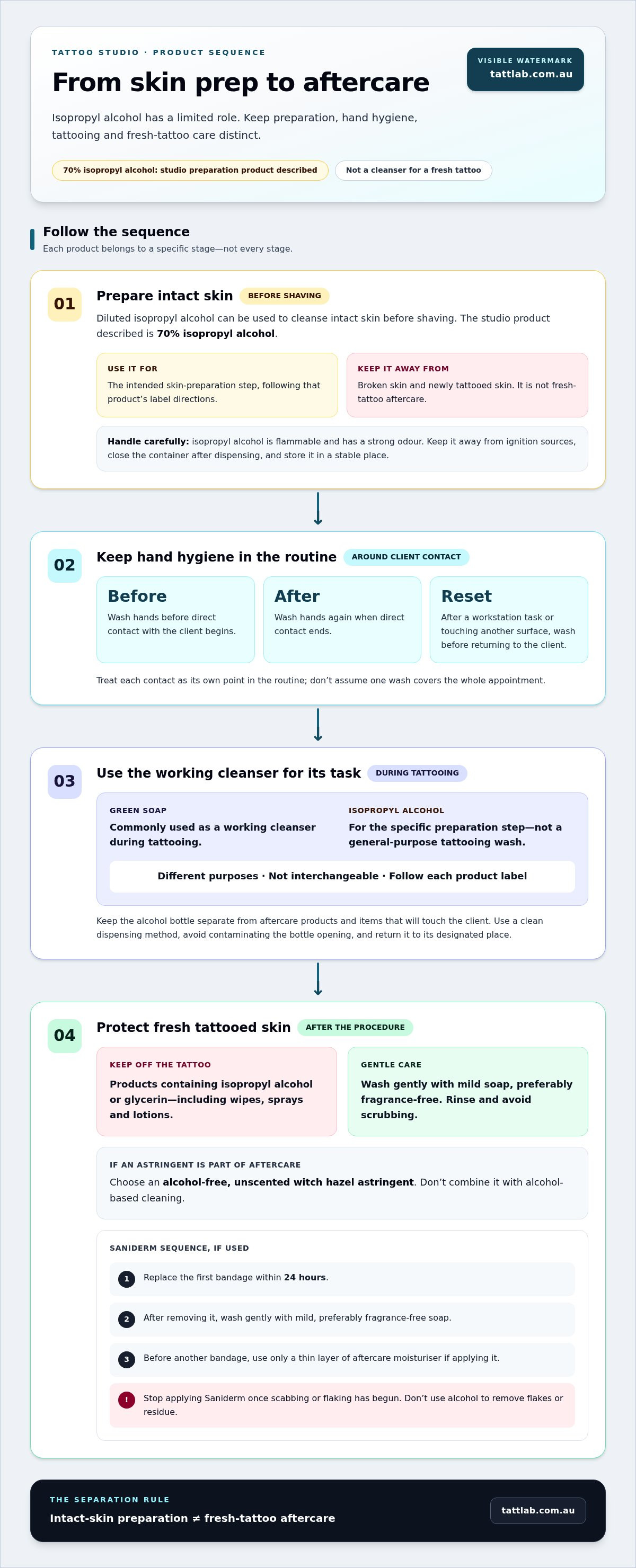
How does isopropyl alcohol compare with green soap for tattooing?
- Keep each product to its intended task. Diluted isopropyl alcohol can be used to cleanse intact skin before shaving, while green soap is commonly used as a working cleanser during tattooing. They aren’t interchangeable. Use each at the appropriate stage and follow its label directions.
- Use alcohol before shaving, not as a general-purpose tattooing wash. The studio product described for this purpose is 70% isopropyl alcohol. Apply it only to intact skin being prepared, then proceed with the planned shave. Don’t transfer that preparation step to fresh tattooed skin or use alcohol to clean the tattoo during aftercare.
- Keep green soap in its intended role. If it’s the cleanser used during a tattoo procedure, prepare and use it according to the product directions. Don’t assume it’s suitable for every skin-care stage. In particular, don’t use green soap or alcohol instead of the mild, preferably fragrance-free soap used to wash skin after removing a Saniderm bandage.
- Choose a product for the task, rather than assuming one product is simply stronger. Skin preparation before shaving and cleansing during tattooing are different steps. Keep their containers separate and labelled at the workstation. This helps prevent reaching for alcohol when the procedure calls for its designated cleanser.
- Keep fresh tattoo aftercare separate from both products. Products containing isopropyl alcohol or glycerin shouldn’t be used to clean a fresh tattoo. Use gentle washing with mild soap, preferably fragrance-free, after removing a Saniderm bandage. For the appropriate supplies to support your studio routine, explore tattooing essentials.
Tatt Lab: Tattoo Aftercare
Tatt Lab offers Tattoo Aftercare for tattoo artists and studios seeking products for the healing stage, distinct from alcohol used during skin preparation. Keeping those roles separate helps maintain a clear routine: use preparation products only at their intended stage, then follow appropriate aftercare guidance once tattooing is complete. Studios can also explore Traditional Needles, Tattoo Catridges and Tattoo Inks as part of their equipment and material planning. Choose supplies according to the task at hand, and keep aftercare products separate from studio preparation products to avoid confusion. When you’re organising tattoo aftercare alongside your studio essentials, visit Tatt Lab at tattlab.com.au.
Build a studio routine that stays consistent
Make product use clear throughout the appointment. A simple written workflow can identify which products belong to preparation, tattooing and aftercare, helping artists follow the same sequence without relying on memory. Keep product labels accessible and include each product’s intended use when organising supplies. This makes it easier to review the setup when products change or team members join.
Choosing isopropyl alcohol for tattooing means understanding its place in the workflow, not treating it as a catch-all studio solution. Tatt Lab offers tattoo aftercare, traditional needles and cartridges for distinct parts of tattoo practice. Match each supply to its task, and keep aftercare decisions centred on the skin’s needs.
For questions about tattoo supplies and aftercare, contact Tatt Lab. A thoughtful routine helps keep each stage clear, so you can move into your next appointment with greater confidence.
Frequently Asked Questions
Is isopropyl alcohol safe to use on skin before a tattoo?
Isopropyl alcohol can be used for a limited preparation step on intact skin before shaving, following the product directions. Safe use depends on keeping skin preparation separate from aftercare. Don’t use the preparation product as a cleanser during healing. Its intended use and the condition of the skin determine where it fits.
What concentration of isopropyl alcohol is used for tattoo skin preparation?
The product described for studio use is 70% isopropyl alcohol, used diluted to cleanse skin before shaving. Don’t assume every bottle has this concentration or the same directions. Read its label before use, and don’t change its concentration or mix it with another preparation unless the product instructions direct you to. This keeps the preparation step tied to the specific product.
How do tattoo artists use isopropyl alcohol during tattooing?
Use it for the specific preparation and hand-hygiene steps described in the product directions, not as a general-purpose wash throughout the appointment. A product description recommends washing hands before and after direct contact with a client. Keep handwashing separate from skin preparation before shaving, and don’t use alcohol to clean a tattoo during aftercare.
Can isopropyl alcohol be used to clean a fresh tattoo?
No. Products containing isopropyl alcohol shouldn’t be used to clean a fresh tattoo. If using an astringent, choose an alcohol-free, unscented witch hazel astringent. After removing Saniderm, wash the tattoo with mild soap, preferably fragrance-free. Keep aftercare products separate from studio-preparation alcohol so the product you choose suits the stage of healing.
What are the risks of using isopropyl alcohol on a tattoo or healing skin?
The key risk is applying a product to fresh tattooed skin when it shouldn’t be used to clean that area. Avoid products containing isopropyl alcohol or glycerin for this purpose, and don’t treat studio skin preparation as aftercare. Isopropyl alcohol is also flammable and has a strong odour, so handle and store its container carefully in the studio.
Is isopropyl alcohol suitable for disinfecting tattoo equipment and surfaces?
Don’t assume isopropyl alcohol is suitable for disinfecting equipment or surfaces just because it’s used for skin preparation. Its specific described uses include cleansing intact skin before shaving and handwashing around direct client contact. For equipment and surfaces, choose a product labelled for that purpose and follow its directions. Keep this step separate from skin preparation and aftercare.


Comments (0)
There are no comments for this article. Be the first one to leave a message!