
What if effective studio protection depends less on buying one product and more on planning for every point where contamination could travel? Choosing ppe for tattoo artists can feel complicated when gloves, barrier film and disposable covers all have different roles. Start by matching each item to the task and likely exposure.
You want equipment that protects you and your client without overlooking machines, furniture or work surfaces. Buying more isn’t automatically better: material, fit and cover format all affect how well a product suits your workflow, including during tattoo and PMU procedures.
This guide compares practical PPE options and explains what each is designed to protect. Use the selection checks to build a buying list for gloves, masks, aprons, barrier films and disposable covers. PPE supports a clean workflow, but it doesn’t replace hand hygiene, cleaning or procedures that help prevent cross-contamination.
Key Takeaways
- Choose ppe for tattoo artists by identifying the procedure and the person, equipment or surface that needs a barrier.
- Use five practical checks before buying to compare fit, intended use and how each item works in your studio workflow.
- Compare gloves, Medicom® Barrier Film and disposable covers by their role, rather than assuming one option protects every touchpoint.
- Avoid choosing PPE by colour or price alone; make fit and intended use part of your purchasing checklist.
- Review the PMU PPE collection to compare relevant categories and current product listings for your studio’s needs.
PPE for Tattoo Artists: What Each Layer Is Designed to Protect
Good studio protection starts with a simple question: what could be exposed during this task? Personal protective equipment (PPE) is clothing or equipment worn by a person to reduce exposure to hazards. Barriers placed over equipment or surfaces protect those touchpoints instead. This distinction helps clarify ppe for tattoo artists, where gloves, aprons and masks have different roles from barrier film and disposable covers.
The general category includes items worn to reduce occupational exposure, as outlined in Personal Protective Equipment (PPE). In a tattoo or PMU studio, the right layer depends on the procedure and its points of contact. A glove protects the covered hand, not a machine, chair or work surface. A barrier on equipment doesn’t protect clothing or hands.
Which tattoo studio tasks call for different PPE?
During client-facing tattoo or PMU work, consider the artist’s hands and clothing, along with equipment and surfaces likely to be touched. Gloves provide hand protection. An apron adds a clothing layer, while masks are another PPE category used in studio workflows. Hair may also need consideration when planning coverage for the task, but no single item is a complete solution.
Equipment preparation involves different touchpoints. Consider which items will be handled, where they’ll sit, and whether a disposable cover or barrier film suits the particular surface or equipment. During workstation reset, remove and discard used single-use barriers as part of the studio’s established procedure. Match protection to each contact point rather than assuming a glove or cover controls every possible route of contamination.
PPE versus cleaning and infection-control procedures
PPE supports a hygiene process; it doesn’t replace cleaning, hand hygiene or other procedures relevant to the work. A fresh barrier over a surface doesn’t make the underlying surface clean, and wearing gloves doesn’t remove the need for appropriate hand hygiene. Keep these steps distinct so a protective layer is never mistaken for a cleaning step.
Disposable covers and barrier film provide single-use protection for selected equipment or surfaces when the product and task suit that purpose. Remove and replace them according to the studio’s procedure rather than reusing them between clients or tasks. Select gloves and aprons for their intended use, and build appropriate changes into the work sequence. Requirements can vary across Australia, so follow the applicable local guidance for your procedures.
For a wider view of how supplies fit into a considered studio workflow, the article Medical Supplies for Tattoo Artists: The Professional Studio Safety Guide (2026) covers related professional supplies. Keep the core distinction in focus: worn protection addresses the artist, while environmental barriers address selected equipment and surfaces. Both sit alongside, not in place of, consistent hygiene procedures.
How to Choose PPE for Tattoo Artists: Five Checks Before You Buy
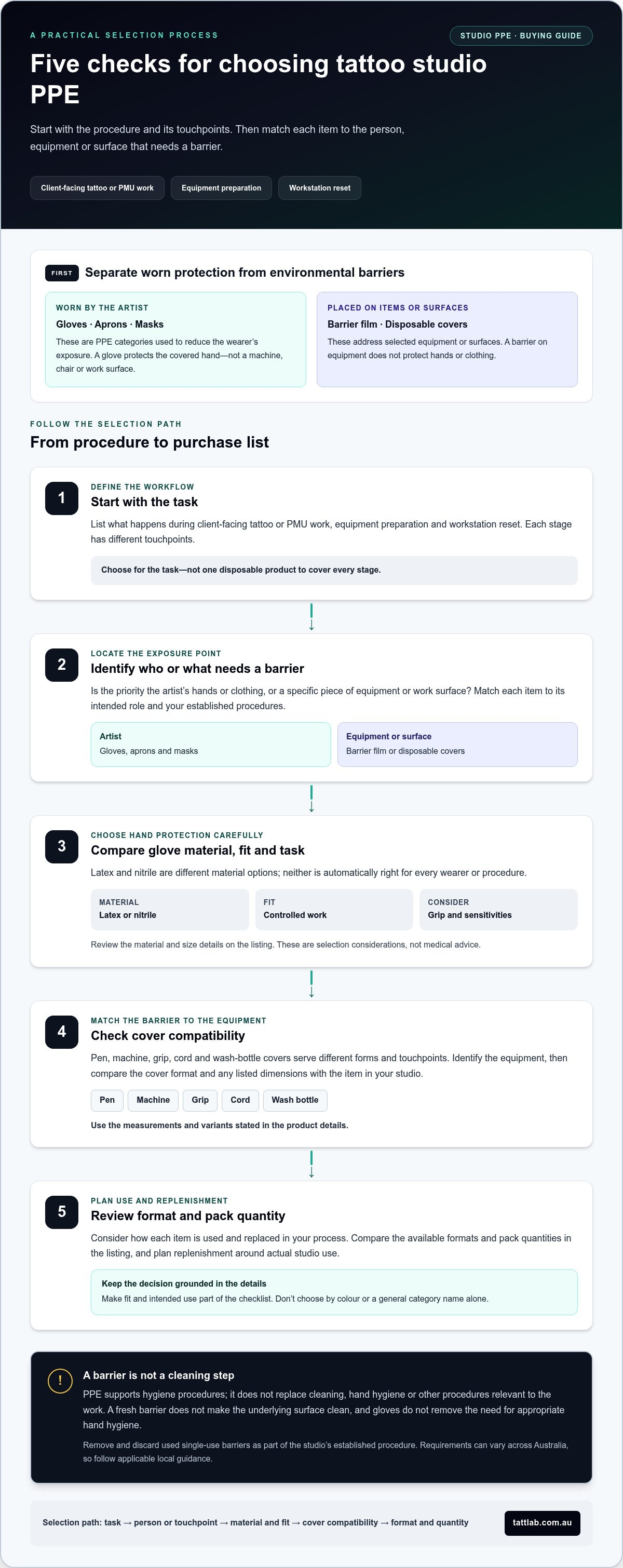
A useful buying decision starts with the procedure, not the product category. For ppe for tattoo artists, map the task first, then decide whether protection is needed for the artist, equipment or a work surface. These five checks turn that assessment into a practical list without assuming one item suits every workflow.
- Start with the task. Write down what happens during client-facing tattoo or PMU work, equipment preparation and workstation reset. Each stage involves different touchpoints. A glove may be relevant for hand protection, while a cover or film may suit a particular item or surface. Choose for the task rather than buying one disposable product to cover every stage.
- Identify who or what needs a barrier. Is the priority the artist’s hands or clothing, or a specific piece of equipment or work surface? This distinction helps avoid gaps and unnecessary duplication. Masks and aprons are PPE categories for studio workflows; barrier film and disposable covers are environmental barriers. Choose each for its intended role and your established procedures.
- Compare glove material with fit and task. Latex and nitrile are different material options, and neither is automatically right for every wearer or procedure. Consider the fit needed for controlled work, the grip that feels appropriate for the task, and any individual material sensitivities. These are selection considerations, not medical advice. Review the material and size details on the listing rather than assuming all gloves share the same specifications.
- Check cover compatibility. Identify the equipment a disposable cover needs to fit. Pen, machine, grip, cord and wash-bottle covers serve different forms and touchpoints, so compare the format and any listed dimensions with the equipment in your studio. A cover that doesn’t suit the item may not fit your workflow. Use the measurements and variants stated in the product details.
- Review format and pack quantity. Consider how each item is used and replaced in your process, then compare available formats and pack quantities in the listing. This helps you plan replenishment around actual studio use instead of relying on colour or a general category name. Keep product selection aligned with your procedures and applicable Australian guidance.
For broader background on blood-exposure controls, the OSHA Bloodborne Pathogens Standard is a United States resource, not Australian law. Australian requirements and guidance vary by jurisdiction, so use relevant local sources for compliance decisions.
Once you’ve mapped the task, wearer and touchpoints, compare PPE options for your studio against your checklist and the current product details.
Tattoo Artist PPE Compared: Gloves, Barrier Film, and Disposable Covers
These products address different touchpoints in a studio setup. Gloves are worn on the hands; barrier film and equipment sleeves are selected for particular surfaces or items. Comparing them by intended use makes buying decisions clearer and avoids expecting one disposable layer to do every job. Neither gloves nor film makes a workstation sterile or replaces established hygiene procedures.
A barrier is a useful match only when its format suits the surface or item it’s intended to cover. Use the table to compare product roles, then consider the listing details and how each option fits your workflow.
| Use | Product | Selection point |
|---|---|---|
| Hand protection | Medicom® SafeTouch™ Textured Black Latex Gloves | Compare the latex material and available size details with the wearer’s fit needs and task. |
| Hand protection | Medicom® SafeTouch™ Advanced Guard Black Nitrile Gloves | Compare the nitrile material and available size details; consider individual material sensitivities and fit. |
| Equipment or surface covering | Medicom® Clear and Blue Barrier Film | Choose the film option and format that suits the intended surface or equipment. These films are easy to apply and remove without sticky residue. |
| Pen covering | Pink Pen Machine Covers; Black Pen Covers | Compare the named cover format with the pen or equipment being covered and review the product listing. |
| Equipment sleeves | Biodegradable clip cord sleeves; biodegradable pen machine sleeves; tattoo machine sleeves; grip sleeves | Match the sleeve type to the item: clip cord, pen machine, tattoo machine or grip. |
| Other studio items | Pink Waterproof Pads; Disposable Pink Hair Nets | Consider whether the named item fits a specific need in your setup, and consult its product details. |
Gloves and surface barriers: different roles in the setup
Medicom® SafeTouch™ Textured Black Latex Gloves and Medicom® SafeTouch™ Advanced Guard Black Nitrile Gloves are distinct glove options, with different materials. Compare their listed material, sizing and fit for the person wearing them. Individual sensitivities matter, so don’t choose by colour alone. Barrier film has another role: Medicom® Clear and Blue Barrier Film covers selected surfaces or equipment, not hands.
Equipment and client-area covers worth comparing
Pink Pen Machine Covers and Black Pen Covers are named pen-cover options. The biodegradable clip cord, pen machine, tattoo machine and grip sleeves correspond to different equipment, so check the item name and product details against what you use. Pink Waterproof Pads and Disposable Pink Hair Nets are further options in the collection. Consider their intended place in your workflow rather than assuming they replace another protection layer.
For ppe for tattoo artists, the useful comparison isn’t simply glove versus cover. Ask which touchpoint needs attention and which product format is intended for it. Review product details before choosing, then incorporate selected disposables into your studio’s established hygiene procedures.
Common Tattoo PPE Buying Mistakes and a Practical Studio Checklist
A well-planned PPE cupboard is built around the work, not appearance or a quick price comparison. For ppe for tattoo artists, a mismatch between a cover and the equipment it’s meant for can make the item awkward to use. Review each purchase against your setup, and keep product choice distinct from the hygiene procedures that guide how it’s used.
Mistakes that make PPE harder to use consistently
Choosing by colour or price alone can distract from more useful details, such as glove fit, material, cover format and intended item. A sleeve designed for a pen machine isn’t automatically the right format for a cord or grip. Buying a surface barrier without identifying the surface it needs to cover can also leave a touchpoint out of your plan. Match each product to a task and item, then review its listing rather than assuming products in the same category share specifications.
Another avoidable mistake is treating a product purchase as a complete safety procedure. Gloves and disposable covers have specific roles; they don’t replace hand hygiene, cleaning or other steps in your studio workflow. Product selection also doesn’t establish regulatory compliance. Australian workplace health and safety requirements and guidance can involve state or territory regulators, so verify the requirements relevant to your location and services through appropriate official sources.
Build a repeatable purchasing and restocking checklist
Keep the checklist practical. Before ordering or replenishing, compare the product listing with what your studio uses. Record the product format, relevant size or variant, and pack quantity so future purchases can be reviewed consistently. Use this framework as a planning aid, not a substitute for applicable local requirements or established procedures.
- Hand protection: Note the glove material and sizes needed for the artists who use them. Check listing details and consider fit and individual material sensitivities.
- Surface barriers: Identify which work surfaces or equipment need a barrier in your workflow. Record the film or barrier format and review its listed details.
- Equipment covers: List each item to be covered, such as a pen machine, tattoo machine, grip or cord. Match the sleeve or cover format to the equipment, then check any listed size or dimensions.
- Client-area items: Identify relevant disposable items for your setup, such as pads or hair nets. Review the intended product type and current pack quantity before restocking.
A simple stock review can surface gaps before the next procedure. Compare what’s on hand with the checklist, note which formats are running low, and confirm replacements still match the equipment and tasks in use. For broader context, read this checklist alongside your tattoo studio safety guide and tattoo supplies pillar, keeping buying decisions connected to the wider studio workflow.
Once your checklist is clear, compare current PMU PPE options for your studio by category, format and listing details.
Shop Tatt Lab’s PMU PPE Collection for Your Studio Workflow
Once you’ve mapped the tasks and touchpoints in your studio, product discovery becomes more focused. Tatt Lab’s PMU PPE collection brings together gloves, masks, aprons, barrier film, disposable covers and other protective items. Use your workflow to decide which types are relevant, then compare the current listings with your setup.
This is a practical approach to ppe for tattoo artists: choose products for their intended role and use them within the hygiene procedures that guide your work. PPE and disposable barriers support a workflow, but don’t replace cleaning, hand hygiene or applicable procedures.
Standout products to compare in the collection
For hand protection, compare the listed Medicom® SafeTouch™ Textured Black Latex Gloves and Medicom® SafeTouch™ Advanced Guard Black Nitrile Gloves. Review each listing’s material and size details against the needs of the wearer and task. Neither material is a universal choice for every person or procedure.
For selected surfaces or equipment, compare Medicom® Clear and Blue Barrier Film. The film is easy to apply and remove without sticky residue. Review the listing details and decide whether its format suits the surface or equipment in your workflow.
Other options include Pink Waterproof Pads, biodegradable sleeves and pen covers. Each serves a different place in a studio setup: pads are a distinct disposable item, while sleeves and pen covers are selected for the equipment they’re intended to cover. Compare the product name and listing details with the item you use rather than assuming one cover format fits another.
Turn your PPE checklist into a considered order
Use your checklist as a filter. If a task doesn’t call for a particular product category in your workflow, there’s no need to add it simply because it appears alongside other supplies. Focus on filling specific gaps and replacing items with formats that suit your studio.
- Gloves: Compare the listed material and sizes with your intended use and wearer needs.
- Barrier film: Review the product details and consider which surfaces or equipment you plan to cover.
- Sleeves and pen covers: Match the cover format to the equipment, and review any listed dimensions or variants.
- Other disposable items: Check the intended item, current variants and pack quantity before adding it to your order.
Product listings can change, so use the current details to compare sizes, dimensions, variants and pack quantities before deciding. A deliberate selection keeps your order connected to your studio workflow instead of treating PPE as a one-size-fits-all kit. When you’re ready to compare options, explore the PMU PPE collection.
Make Your PPE Choices Part of a Living Studio Workflow
Your studio setup will evolve as equipment, procedures and day-to-day needs change. Treat your PPE buying list as a working document and revisit it when your workflow changes. This helps ensure the products you keep on hand still suit the tasks and touchpoints you’ve identified, and makes purchasing more considered than reactive.
For ppe for tattoo artists, the next step doesn’t need to be a large order. Use your checklist to compare what your studio needs with current product listings, then choose formats that fit your work. Tatt Lab is an artist-owned Australian supplier of tattoo equipment and medical supplies, with a PMU PPE collection to explore.
Browse Tatt Lab’s PMU PPE collection and compare options for your studio workflow.
Frequently Asked Questions
What PPE do tattoo artists need for a studio appointment?
Choose PPE according to the procedure and likely exposure points. A studio appointment may call for gloves, an apron and other protective items such as a mask, alongside disposable covers for selected equipment or surfaces. For example, a task involving a wash bottle may call for a different cover from one involving a pen machine. Build the setup around the work being performed and follow applicable studio procedures.
Are nitrile or latex gloves better for tattoo artists?
Neither material is the best choice for every artist or task. Consider how each glove fits, feels during controlled work and suits the wearer’s individual material sensitivities. Compare the listing for the specific material and available size rather than choosing by colour or assuming two gloves perform identically. If you have concerns about a material sensitivity, seek appropriate health advice rather than relying on product descriptions to assess it.
Do tattoo artists need barrier film as well as gloves?
Gloves and barrier film serve different roles, so one doesn’t automatically replace the other. Gloves cover the wearer’s hands, while film may be used on selected equipment or surfaces in the work area. Whether film belongs in a particular setup depends on the items handled during the procedure and the studio’s established infection-control process. Use products as directed, and don’t treat a barrier as proof that a surface is clean.
Can tattoo machine covers replace cleaning procedures?
No. A disposable machine cover is a protective layer for the covered item, not a cleaning or disinfection step. Follow the equipment manufacturer’s instructions and your studio’s applicable cleaning procedures, including how equipment is handled after use. Remove and dispose of the cover according to your workflow; it doesn’t make the machine sterile or remove the need to address the equipment itself.
How do tattoo artists choose the right size of disposable equipment cover?
Match the cover to the specific item, such as a pen machine, grip or cord. Compare the equipment’s dimensions with any measurements in the product listing, and consider the item’s shape and the cover format. Don’t assume that a cover labelled for one piece of equipment will suit another. If dimensions aren’t provided, use the product’s stated intended item as your guide and avoid forcing an unsuitable fit.
What PPE is used for permanent makeup procedures?
PMU artists can consider gloves, masks, aprons, barrier film and disposable covers according to the procedure and its touchpoints. Identify which items the artist will handle and which equipment or surfaces are part of the setup, then select relevant protective layers. The exact combination depends on the work and applicable local procedures. PPE supports those procedures; it doesn’t replace hand hygiene, cleaning or other infection-control steps.
Do Australian tattoo studios have specific PPE requirements?
Requirements and guidance can vary across Australian states and territories, so there isn’t one simple answer for every studio. Check current official guidance relevant to your location and services, including applicable public health and workplace safety information. Local councils may also have a role in matters such as registration or inspection. Treat general buying advice as a starting point, not a substitute for verifying requirements with the relevant authority.


Comments (0)
There are no comments for this article. Be the first one to leave a message!