

What if the best way to keep tattoo ink workable is to limit its exposure, rather than try to rescue it once it thickens? Ink drying in caps can interrupt a session, and it’s understandable to wonder whether leftover ink can be saved. Preventing ink from drying out starts with clean handling and careful control of how long dispensed ink is exposed to air.
For professional artists, consistency matters, but keeping ink fluid should never come at the expense of hygiene. A change in appearance can have different causes: pigment may settle, ink may dry, or contamination may be a concern. Each calls for a different response, and guessing can put safe studio practice at risk.
This guide explains why ink dries, how to keep dispensed ink workable for the task at hand, and what to do with what remains when a session ends. It also covers storing original bottles according to the manufacturer’s instructions, distinguishing settled pigment from dried or potentially contaminated ink, and recognising when ink should be discarded rather than reused.
Key Takeaways
- Preventing ink from drying out starts with controlling its exposure during the session while maintaining clean handling.
- Learn how drying, pigment settling and suspected contamination differ, and why appearance alone can’t confirm ink is safe to use.
- Preparing only the ink needed for immediate work can help keep your setup practical and reduce unused dispensed ink.
- Follow a repeatable studio workflow, from station preparation through to disposing of leftover dispensed ink.
- Store original bottles closed and according to the manufacturer’s instructions, as storage needs can vary by formulation.
Why Does Tattoo Ink Dry Out During a Session?
A cap of ink can become thicker while you work, especially if it sits exposed during setup or between passes. The basic mechanism is evaporation: some of the liquid portion at the exposed surface can escape into the air. As that balance shifts, the ink may feel less fluid or become harder to work with. The rate and visible effect vary, so there’s no single timeline that applies to every ink.
Tattoo inks contain pigments carried in a liquid medium, but ingredients and proportions differ between formulations. For an overview of these components, see Tattoo ink composition and properties. A change in workability may be consistent with surface drying, but it doesn’t reveal exactly what has changed chemically or establish whether the ink is safe to use. Follow the product manufacturer’s handling instructions rather than assuming all inks respond identically.
Prevent drying by limiting exposure; don’t try to rehydrate ink once it has dried. Prevention means controlling conditions before the liquid portion evaporates. Attempting to restore dried ink is not a substitute for following the manufacturer’s directions.
What changes when tattoo ink is exposed to air?
Air contacts the ink’s exposed surface, where evaporation may gradually reduce some of the liquid. The effect is easiest to notice in a small, open cap: the surface is accessible to surrounding air, and the amount of ink is limited. As the liquid balance changes, the ink may thicken or feel less workable. That’s a possible change in consistency, not a universal chemical outcome or a reliable test of ink safety.
Formulations vary, so one artist’s experience with a particular ink shouldn’t be treated as a rule for another. Check the label or manufacturer’s current instructions for product-specific handling guidance. This gives your studio a consistent reference point without relying on assumptions about how every pigment and carrier behaves.
Which studio conditions can speed up drying?
Time exposed matters. Ink left open through a long setup or sitting unused between passes has more opportunity to lose liquid from its surface than ink dispensed shortly before it’s needed. Exposure also depends on the setup: a broad, shallow pool presents more surface area to the air than a smaller, deeper amount. These factors can influence drying, though their effect varies with the ink and studio conditions.
Direct airflow from a fan, air-conditioning vent or other moving-air source may carry evaporated liquid away from the surface, while nearby heat can encourage faster evaporation. Avoid placing open caps in a direct stream of air or close to a heat source. These are practical ways to limit exposure, not a way to assess questionable ink.
For preventing ink from drying out, focus on what you can control: how long a cap stays open, how much ink is exposed, and whether airflow or heat is directed toward it. Keeping these variables in mind helps explain why ink may thicken during a session and supports a clean, repeatable workflow.
Dry Ink, Settled Pigment, or Contamination: How to Tell the Difference
A change in a cap of ink can have different causes, and they shouldn’t be treated as interchangeable. Drying involves a change in the liquid portion as it evaporates. Settling is a visible separation or concentration of pigment that may occur in some formulations. Contamination is a hygiene concern that can’t be ruled out by appearance alone. The distinction matters: a visual change doesn’t tell you by itself whether ink is suitable to use.
How can settled pigment differ from dried ink?
Pigment may appear to separate or collect differently depending on the formulation and how the product is stored. That can look unlike a surface that has thickened through exposure, but appearance alone isn’t a reliable test. Don’t assume shaking or mixing makes changed ink suitable again. Follow the product label for any approved mixing or handling directions, and avoid improvising with added liquid.
Adding liquid isn’t a reliable way to restore dried tattoo ink. Rehydrating it may not return the product to its intended consistency or condition, and it doesn’t establish that the ink is appropriate for use. For professional practice, rely on the manufacturer’s directions rather than trying to correct a change by eye.
When should an artist avoid using questionable ink?
Set ink aside if it has an unexpected change in texture or appearance, if contamination is suspected, or if you can’t establish how it was handled. Don’t rely on colour, smell or a quick visual check to confirm sterility, quality or safety. A clean-looking cap can’t provide that assurance. Follow your studio hygiene procedures and the manufacturer’s guidance; when the product’s condition or handling history is unclear, don’t use it.
It helps to separate three questions: has the ink dried, has pigment visibly settled, or is there a concern about contamination? The first describes a possible change in the liquid portion, the second describes visible separation, and the third concerns whether unwanted material may have entered the ink. One appearance can’t confirm which explanation is correct. These categories aren’t a substitute for the manufacturer’s instructions or established hygiene practice.
For broader context on handling and safety considerations, the FDA guidelines on tattoo ink safety discuss potential concerns such as contamination and allergic reactions. The source is US guidance, so use it as background reading rather than a substitute for Australian requirements or the product manufacturer’s directions. Tatt Lab’s professional tattoo ink guide offers further context on ink science, safety and selection.
Careful handling supports preventing ink from drying out, but it can’t resolve uncertainty about a particular cap. Keep visual checks in perspective, use clear handling procedures, and choose professional tattoo inks from a specialist supplier as part of a considered studio workflow.
Which Ink-Drying Prevention Methods Work Best in a Tattoo Session?
The most reliable approach is a simple workflow, not a trick for rescuing ink after it thickens. Match the amount dispensed to the work immediately ahead, keep the original bottle closed between dispensing moments, and arrange the station so open caps aren’t sitting in direct airflow or near heat. These steps reduce unnecessary exposure without adding extra handling or improvised equipment.
Each method has a different role. Smaller working quantities help limit waste, while closing the bottle protects the remaining supply from unnecessary exposure. Adjusting the station can reduce air movement around open caps, but it doesn’t remove the need for hygienic handling. Your product’s instructions and studio procedures remain the reference points for using and disposing of ink.
Dispense ink in amounts suited to the work
Begin with a measured, task-appropriate amount rather than filling caps well ahead of use. For example, dispense what you expect to need for the immediate part of the tattoo, then assess the workflow before preparing more. A smaller working quantity can reduce waste if ink dries before it’s used. The right amount depends on the task and formulation, so keep your approach flexible.
Preparing less at a time may mean dispensing again, but it avoids treating a large open supply as a time-saving solution. Keep the bottle nozzle from contacting caps, skin or other surfaces, and close the bottle promptly once dispensing is complete. Use clean handling practices each time; reducing exposure should never mean compromising hygiene.
Manage exposure without disrupting clean handling
Position open caps away from direct airflow and nearby heat, and keep the original bottle closed when you aren’t dispensing. These are low-effort changes that address exposure without introducing extra objects into the work area. Improvised covers can create additional handling or cleanliness concerns, so don’t rely on them unless they’re part of the manufacturer’s instructions and your studio’s established procedures.
- Dispense as needed: This suits changing task requirements and helps limit the amount left exposed, though it requires deliberate replenishment.
- Close the bottle between dispensing: This reduces unnecessary exposure of the main supply. Handle the nozzle carefully to avoid contact with contaminated surfaces.
- Adjust the workstation: Keep caps away from direct airflow and heat without adding equipment or extra handling.
Don’t reuse ink dispensed for a session, and don’t add water or another liquid to extend its usability. Once ink has been dispensed, follow studio procedures for disposal rather than returning leftovers to the original bottle. This keeps the unused supply separate from ink that has been exposed during work.
Consistent habits make preventing ink from drying out more manageable: prepare what the immediate work calls for, protect the original supply, and keep the setup clean. For professional tattoo inks and studio supplies, explore Tatt Lab’s professional tattoo supplies.
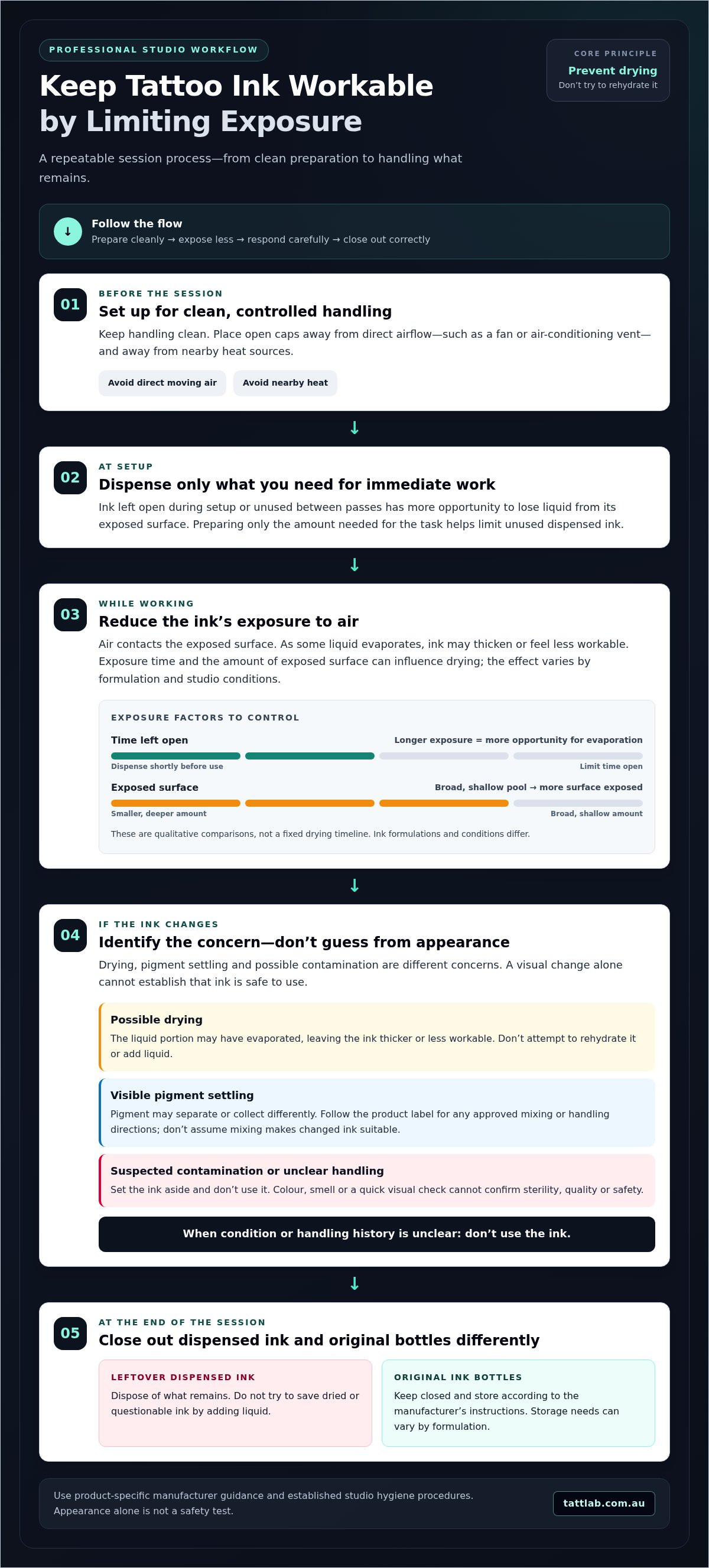
How to Prevent Tattoo Ink from Drying Out: A Repeatable Studio Workflow
A consistent sequence makes ink handling easier to repeat, even when a session’s pace changes. Keep two things distinct: the original bottle, which should be handled and stored according to its manufacturer’s instructions, and ink dispensed into caps for the current session. The steps below support preventing ink from drying out while keeping clean studio practice central.
Before the session: prepare ink and workspace
Set up the station before dispensing. Check the instructions for the specific ink, prepare clean single-use caps, and position them away from direct airflow and unnecessary heat. This reduces avoidable exposure without relying on improvised covers or adding extra handling.
- Review the product instructions. Check the label or manufacturer’s guidance for the ink you’ll use. Formulations and handling directions can vary, so don’t assume a method suitable for one bottle applies to another.
- Prepare the work area. Set out clean, single-use ink caps as part of the workstation setup. Arrange the station so caps are accessible for the task but not directly in the path of a fan, vent or nearby heat source.
- Dispense a practical starting amount. Begin with an amount suited to the immediate work, rather than filling caps well in advance. Needs vary by design and session, so use your judgement and replenish with fresh ink if more is required.
- Close the source bottle promptly. Once you’ve dispensed ink, close the original bottle and return it to the storage conditions specified by its manufacturer. Keep the bottle nozzle from touching caps or other surfaces, preserving separation between the source supply and the session setup.
During and after the session: limit exposure and handle leftovers
As the session progresses, keep the caps in a clean, controlled part of the station. Refresh the working amount when needed instead of trying to revive ink that has dried or changed. At the end, deal with leftover dispensed ink separately from the bottle supply.
- Keep caps clear of direct airflow and heat. If your setup changes during the session, reposition open caps rather than leaving them beside an active airflow source or heat-producing equipment.
- Replenish with fresh dispensed ink. If you need more for the next task, dispense a suitable amount from the closed source bottle. Don’t add water or another liquid to extend the working life of ink in a cap.
- Dispose of unused dispensed ink. Follow your studio’s established procedures for leftover ink and used caps. Ink dispensed for a session should never be returned to its bottle.
This workflow keeps the original supply separate from session-dispensed ink, limits unnecessary exposure, and makes end-of-session handling clear. For professional tattoo inks and supplies to support your studio setup, shop Tatt Lab tattoo inks.
How to Store Tattoo Ink Between Sessions and Choose a Reliable Supply
Between sessions, responsible storage protects the original bottle and helps you keep product information available for studio records. Close bottles promptly after dispensing and follow the label for storage conditions, expiry information and any instructions that apply after opening. Requirements can vary by ink, so avoid applying a universal temperature or shelf-life rule. The manufacturer’s current directions should guide how you store each specific product.
What to check on the ink bottle before storing it
Before putting a bottle away, check its stated storage conditions and any expiry or post-opening guidance. Keep the container closed as directed, and store it in the conditions specified by the manufacturer rather than relying on general advice for other inks. If information is unclear or the bottle has changed unexpectedly, don’t guess about its condition or suitability for use.
Keep the product identification and batch details legible. These details support studio records and help you identify the ink later, especially if bottles of similar colours or formulations are stored together. Where it suits your inventory process, record the date a bottle is opened and rotate stock so older stock is used first, while still observing its label instructions. Opening-date tracking is a practical record, not a replacement for the manufacturer’s expiry guidance.
Choosing professional tattoo ink for a consistent workflow
A reliable workflow begins with product information you can understand and follow. Look for clear manufacturer instructions on handling and storage, and consider whether the ink is suitable for your intended application and established studio practice. Don’t assume that colour, consistency or a familiar bottle format means products from different manufacturers should be handled in the same way. For more context on ingredients and safety, explore tattoo ink ingredients and safety.
Good stock management also keeps unopened or in-use bottles distinct from ink dispensed into caps for a session. Record keeping and rotation apply to the original supply; leftover session-dispensed ink should be handled under your studio’s disposal procedures, not returned to the bottle. That separation supports clean handling and makes it easier to keep track of what remains in your inventory.
For preventing ink from drying out, storage starts with the bottle’s own instructions and continues with consistent studio habits: close it promptly, retain readable product details, and monitor stock without making assumptions about shelf life. Tatt Lab is an artist-owned Australian supplier of professional tattoo inks and studio supplies. Explore professional tattoo supplies for your studio workflow.
Make Better Ink Handling Part of Your Next Session
Turn your ink-handling routine into a deliberate part of session preparation. A few consistent choices can help you work with greater confidence: use the product as directed, keep your station organised, and treat uncertainty about ink condition as a reason to pause rather than improvise. Over time, that thoughtful approach makes preventing ink from drying out part of a broader commitment to clean, responsible practice.
Your setup is personal, so choose professional tattoo supplies that fit the way you work and the applications you undertake. Tatt Lab is an artist-owned and operated Australian supplier of professional tattoo inks and studio supplies, with online shopping and nationwide shipping for artists across Australia.
Refine your studio setup with supplies suited to your work. Explore professional tattoo supplies from Tatt Lab.
Frequently Asked Questions
Can dried tattoo ink be rehydrated?
No. Adding water or another liquid isn’t a reliable way to restore dried tattoo ink. Formulations differ, and an unapproved addition could change the product or compromise its intended use. Follow the manufacturer’s instructions and don’t use ink that has dried or changed unexpectedly. This doesn’t rule out a product-specific mixing medium: use one only if the manufacturer explicitly approves it and directs how it should be used.
How long can tattoo ink stay in an ink cap before it dries?
There’s no universal time that guarantees ink in a cap will remain workable. The rate can vary with the formulation, exposed surface area, airflow and surrounding conditions. As part of preventing ink from drying out, prepare caps for the task ahead, check them as the session progresses, and dispense a fresh working amount when needed. Don’t treat a particular number of minutes as proof that ink remains suitable to use.
What happens if tattoo ink dries during a session?
Dried or thickened ink may no longer behave as intended for your work, but appearance alone can’t confirm its performance or safety. Don’t try to thin it with an unapproved liquid or return it to the source bottle. Set questionable ink aside, follow the manufacturer’s guidance, and prepare a fresh working amount in a clean cap using your studio’s established procedures. Avoid making a decision based only on how the ink looks.
Can I put leftover ink from an ink cap back into the bottle?
No. Once dispensed for a session, leftover ink shouldn’t go back into its original bottle because it has been exposed to the workstation environment and its handling history has changed. Keep the source bottle closed except when dispensing, and take a moment to estimate the amount needed before filling caps. Dispose of any unused cap ink according to your studio’s procedures, keeping it separate from the unused bottle supply.
Does shaking tattoo ink prevent it from drying out?
No. Shaking doesn’t prevent evaporation from an open cap or replace appropriate bottle storage. Some inks may have manufacturer-provided mixing instructions, so follow the directions for that specific product rather than assuming every formulation needs the same treatment. Keep the bottle closed between dispensing moments. Mixing instructions apply to normal product handling, not to restoring ink that has already dried or changed unexpectedly.
How should tattoo ink be stored after opening?
Store opened tattoo ink according to its label and the manufacturer’s instructions. Close the bottle promptly after dispensing, and keep its product identification and batch details readable for studio records. Don’t assume different inks share the same storage conditions or usable period after opening. If a bottle looks unexpectedly changed or you’re unsure how it was handled, follow the manufacturer’s guidance rather than deciding it’s suitable from appearance alone.
Can airflow from a fan make tattoo ink dry faster?
Direct airflow can contribute to faster evaporation from exposed ink, although the effect depends on the formulation and surrounding conditions. Keep caps out of unnecessary drafts, such as the direct path of a fan or air-conditioning vent, while maintaining your studio’s established ventilation and hygiene requirements. The aim is to reduce avoidable exposure around the cap, not to switch off appropriate ventilation or compromise the workspace.


Comments (0)
There are no comments for this article. Be the first one to leave a message!