

A tattoo’s ultimate legacy is not determined by the precision of your needle, but by the molecular stability of the pigment left behind in the dermis. You understand the quiet frustration of seeing a realism piece lose its tonal depth within eighteen months because of subpar saturation. It’s a challenge every professional faces; balancing the need for smooth pigment flow with the absolute necessity of long term skin health. When selecting tattoo inks, the risk of inconsistent gradients or the threat of counterfeit supplies can undermine your reputation and the healing journey of your clients.
We believe that mastery over your medium is the foundation of artistic evolution. This guide explores the technical science of pigment selection to help you achieve superior saturation and permanent vibrancy in every piece. You'll learn to identify high performance staple blacks, master the rheology required for seamless realism, and verify the latest safety standards for the Australian market. By the end of this analysis, you’ll have the clinical knowledge to choose pigments that respect the skin’s integrity while ensuring every piece heals with the clarity and confidence your clients expect.
Key Takeaways
- Master the science of pigment-to-carrier ratios to achieve one-pass saturation, significantly reducing skin trauma and improving dermal retention.
- Compare the technical advantages of pre-dispersed formulas against traditional pigments to streamline your workflow and ensure consistent results.
- Identify the specific pigment properties needed for various aesthetics, from the "perfect black" for lining to high-vibrancy palettes for colour realism.
- Navigate the shift toward EU REACH compliance and the critical role of vegan-friendly tattoo inks in meeting modern Australian safety standards.
- Discover how sourcing artist-curated pigments from a specialist Australian partner can protect both your professional reputation and your client’s skin health.
The Science of Saturation: Why Tattoo Ink Quality Defines Your Work
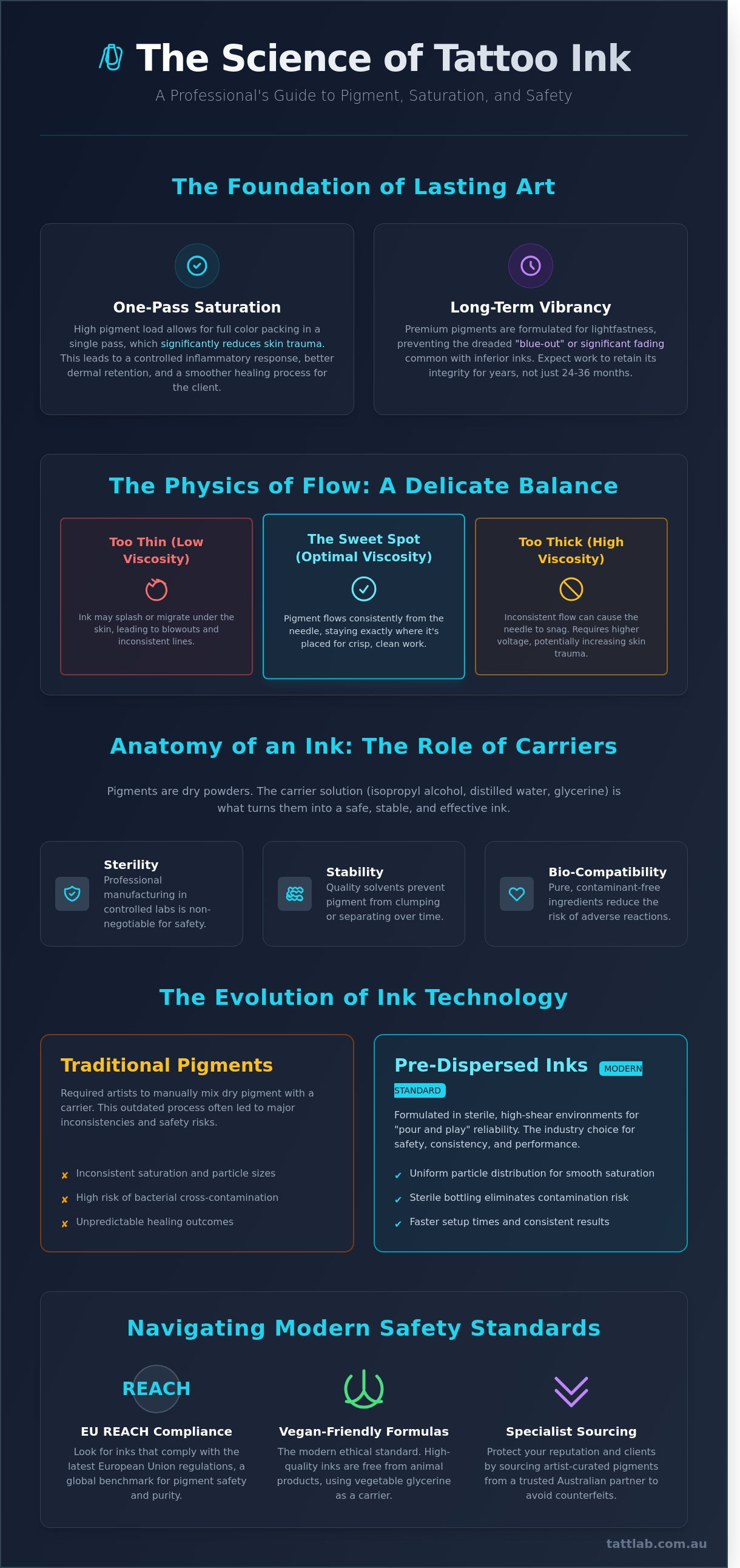
Professional tattoo inks aren't just liquid colours; they're sophisticated carrier-pigment suspensions engineered specifically for permanent dermal retention. Achieving "one-pass" saturation depends entirely on the pigment load within the bottle. High-quality inks allow artists to pack colour efficiently, which reduces the time spent overworking a single area of tissue. When you minimize skin trauma, the inflammatory response remains controlled. This leads to a smoother healing journey and better clarity in the final result. Understanding the chemical composition of tattoo pigments is essential for any specialist who prioritizes long-term skin health. Poorly formulated inks often suffer from lightfastness issues, leading to "blue-out" or significant fading within 24 to 36 months. By selecting premium pigments, you ensure the work retains its integrity as the skin ages, preventing the blurred evolution seen with inferior products.
Pigment Load vs. Flow Rate
The relationship between pigment concentration and flow rate is a delicate balance of physics. A higher pigment load creates a thicker viscosity, which often requires adjustments to machine voltage to ensure the needle carries enough ink into the dermis without snagging. If the ink is too thin, it may splash or migrate. If it's too thick, it won't flow consistently through the tube. Finding the "sweet spot" ensures the pigment stays exactly where it's placed. For a deeper dive into these technical dynamics, consult The Professional Guide to Tattoo Ink. Many artists find that certain brands require a higher voltage to maintain a steady rhythm, especially when working with dense blacks or vibrant opaques.
The Role of Carriers and Solvents
Pigments are dry powders that require a delivery system to enter the skin. Carriers like isopropyl alcohol, distilled water, and vegetable glycerine keep the suspension stable. They prevent pigment clumping and ensure the ink remains sterile during the tattooing process. Isopropyl alcohol acts as a disinfectant while also thinning the liquid to improve skin penetration. Glycerine provides the necessary slip, preventing the ink from drying out mid-session.
- Sterility: Professional manufacturing in controlled environments is non-negotiable for safety.
- Stability: Quality solvents prevent the separation of pigment and liquid over time.
- Bio-compatibility: Pure ingredients reduce the risk of adverse reactions during the healing phase.
In professional Australian studios, sterile manufacturing is a baseline requirement. Pure ingredients don't just look better; they support the body's natural recovery process. When tattoo inks are free from heavy metal contaminants, the lymphatic system can manage the healing phase with much less stress. This methodical approach to choosing your medium ensures your work evolves beautifully while respecting the biological reality of the skin.
Comparing Pigment Types: Pre-Dispersed vs. Traditional Ink Technology
The evolution of tattoo chemistry has shifted from manual pigment grinding to the precision of pre-dispersed technology. Traditional pigments once required artists to mix dry powder with a carrier solution like glycerin or alcohol. This process often led to inconsistent saturation and unpredictable particle sizes. Modern tattoo inks are almost exclusively pre-dispersed. These formulations are blended in sterile, high-shear environments to ensure every drop contains a uniform distribution of pigment. This level of precision is vital for maintaining skin integrity and ensuring predictable healing outcomes.
When ink enters the dermis, the body's immune response begins immediately. Macrophages, the white blood cells responsible for cleaning the skin, attempt to engulf the foreign particles. Larger pigment clusters remain trapped in the dermal layer, while microscopic particles are often processed through the lymphatic system. Adhering to FDA safety standards for tattoo pigments ensures that these formulations prioritize biocompatibility. High-quality brands focus on stable suspension, which prevents the pigment from settling or clumping inside the bottle or the skin.
The Rise of Pre-Dispersed Pigments
Artists favor pre-dispersed options for their "pour and play" reliability. World Famous True Black (AUD 19.95) has become an industry standard because it eliminates the guesswork of pigment-to-carrier ratios. This consistency is essential for large-scale realism where a color match must remain identical over multiple sessions. Because these tattoo inks are bottled in controlled facilities, they significantly reduce the risk of cross-contamination compared to hand-mixed powders. This shift toward pre-mixed palettes allows the artist to focus on the technical execution of the journey rather than chemical formulation.
- Uniform particle distribution for smoother saturation
- Reduced risk of bacterial contamination from open-air mixing
- Faster setup times in a high-volume studio environment
When to Use Mixing Solutions
While pre-dispersed inks are ready for use, customization often requires a dedicated carrier. Dynamic Color #00 Mixing Solution (AUD 24.95) allows artists to dilute concentrated blacks into smooth greywashes without compromising the ink's stability. Using distilled water or unverified additives can cause the pigment to "fall out" or clump. This leads to uneven healing and patchy results. A professional mixing solution maintains the suspension, ensuring the flow rate remains predictable during long sittings. For those looking to expand their professional kit, you can browse our curated selection of professional pigments to find the right match for your style.
Choosing the right technology is the first step in a successful transformation. Whether you're aiming for high-contrast blackwork or soft, illustrative shading, the science behind the suspension determines the longevity of the art. Understanding how these pigments interact with the lymphatic system helps maintain the clarity of the tattoo for years to come.
Selecting the Right Palette for Your Style: Blackwork to Colour Realism
Choosing tattoo inks is a technical decision that impacts skin health and the long-term evolution of the art. In Australia, where high UV exposure can accelerate pigment degradation, selecting high-quality formulations is vital. Professional artists must match their pigment choice to the specific requirements of the style, whether they're executing fine-line Melbourne minimalism or heavy traditional work. This precision ensures that the "journey" of the tattoo, from the first needle pass to a fully settled result, remains predictable and safe.
The Blackwork Essentials: Lining and Packing
Achieving a permanent, deep black requires an understanding of pigment density and viscosity. Dynamic Color Black (A$44.95) is a global staple for crisp lining because its fluid consistency flows effortlessly through tight needle groupings. When the design calls for solid fill, Intenze Zuper Black (A$24.95) provides the concentrated pigment load necessary for deep packing without excessive skin trauma. For artists specialising in heavy saturation or blackout projects, World Famous Blackout is the preferred choice for its intense, light-absorbing finish. To ensure these inks perform as intended, it's crucial to pair them with the right hardware; refer to The Ultimate Guide to Tattoo Needles & Cartridges for technical pairing advice.
Greywash Sets vs. Manual Dilution
Manual dilution often results in slight variations that become visible once the skin heals. Pre-made sets, such as the Dynamic Greywash series featuring #20, #40, #60, and #80 (A$34.95 each), provide a lab-controlled gradient. These specific ratios allow for smooth transitions in black and grey realism, preventing the "peppered" or "grainy" shading that occurs with inconsistent mixes. Using standardised sets is especially important for large-scale work spanning multiple sessions. It guarantees that the shade used on the shoulder in January matches the shade applied to the forearm in March, maintaining the visual integrity of the entire piece.
Vibrant Colours and Traditional Palettes
Traditional styles demand iconic, high-impact hues that stand the test of time. World Famous Sailor Jerry Red (A$19.95) delivers the classic, warm-toned punch required for Americana styles, while Intenze Bright Red offers a cooler, more clinical purity for modern colour realism. Building a versatile kit requires a foundation of burgundy, deep reds, and high-opacity whites for highlights. Modern professional pigments are developed with a focus on pigment stability and safety regulations, which helps the body’s lymphatic system process the application more effectively. This scientific approach to colour theory ensures that vibrant tones remain clear and distinct across various skin tones, prioritising long-term clarity over temporary brightness.
Safety Standards and Pigment Stability in the Professional Studio
The global landscape for tattoo inks shifted significantly following the 2022 EU REACH regulations. These strict limits on specific chemicals and pigments set a new benchmark for safety that Australian artists now demand. While Australia's AICIS (Australian Industrial Chemicals Introduction Scheme) regulates chemical imports, professional studios prioritize REACH-compliant brands to ensure the highest level of skin health. Modern pigments are increasingly vegan and cruelty-free, replacing animal-derived glycerine with plant-based alternatives. This choice isn't just ethical; it often results in a more stable, predictable product that interacts better with the body's immune system.
Counterfeit products pose a genuine threat to client safety. Authentic bottles feature tamper-evident seals, holographic labels, and traceable batch numbers. You can protect your inventory by storing bottles in a climate-controlled environment between 15 and 25 degrees Celsius. Direct sunlight degrades pigment molecular structures, which leads to premature fading before the ink even reaches the dermis. Always check expiry dates, as degraded carriers can harbour bacteria or lose their shelf stability.
Skin Integrity and Allergic Reactions
High-quality pigments minimize inflammatory responses by using highly refined carrier liquids. This stability is vital for the long-term evolution of the art. Proper healing is a partnership between the artist's choice of ink and the client's diligence. You can guide this process by sharing our guide on Mastering Tattoo Aftercare. Studios must also maintain current Material Safety Data Sheets (MSDS) for every pigment. These documents provide the clinical data needed if a rare adverse reaction occurs, ensuring you can act with professional authority.
Sterility and Cross-Contamination
Maintaining a sterile field requires more than just clean needles. Use single-use, medical-grade ink cups and avoid touching the bottle tip to the cup during pouring. This "cool but clinical" mindset extends to the entire workstation setup. For a deep dive into necessary equipment, see our guide on Medical Supplies for Tattoo Artists. Once a bottle passes its expiry date or shows signs of separation that won't homogenize, dispose of it immediately. Contaminated tattoo inks are a liability that no professional studio should risk.
Build your professional kit with confidence by exploring our range of premium tattoo inks designed for safety and longevity.
Sourcing Premium Pigments: The Tatt Lab Curated Collection
Tatt Lab operates as a dedicated specialist partner for Australian studios. We aren't just a supplier; we're an artist-owned collective that understands the technical demands of the modern tattooist. Choosing the right source for your tattoo inks is as critical as the technique itself. Our presence in the Australian market ensures that local artists have access to world-class pigments without the uncertainty of international customs or long wait times.
Studio-wide savings are accessible through our Ink Bundle concept. These curated sets allow you to stock up on essential shades and lining blacks while reducing your overall expenditure. It's a strategic way to maintain a full palette of tattoo inks without the financial strain of individual bottle markups. This approach helps studios maintain a consistent aesthetic across their entire team, ensuring every artist has the tools needed for high-end results.
Logistics shouldn't be a headache for a busy artist. We provide express nationwide shipping to ensure your station is never empty. Every order over A$100 includes free shipping, making it easier to manage your inventory from any corner of Australia. Whether you're in a boutique Melbourne studio or a high-volume shop in Perth, our delivery network is designed for speed and reliability. We treat your supply chain with the same precision you apply to your linework.
Why Tatt Lab Only Stocks Industry Leaders
Our selection process is clinical and uncompromising. We've vetted every brand in our inventory, including industry giants like Dynamic, World Famous, and Intenze, ensuring they meet the highest safety standards. High-quality pigments are an investment in your brand's longevity. When a tattoo heals with crisp edges and vibrant saturation, it drives client referrals. We guarantee 100% authentic, sterile-sealed products because we prioritize skin health above all else. This commitment to quality reduces the risk of adverse reactions and ensures a smoother recovery process for every client.
Ready to Upgrade Your Palette?
The 2026 studio environment requires tools that match the evolution of the craft. Our collection features the latest formulations designed for maximum biocompatibility and visual impact. These products are selected for their ability to stay true to tone over years of wear. Take the next step in your professional journey by choosing pigments that reflect your commitment to excellence and safety. Our curated range provides the clarity and reliability your clients deserve.
Explore the Full Tattoo Ink Collection at Tatt Lab
Elevating Your Artistry Through Pigment Precision
The shift toward advanced tattoo inks in 2026 reflects a deeper industry commitment to both biological safety and visual saturation. Your choice of pigment dictates how a piece evolves over decades, not just days. By prioritizing pre-dispersed technology and artist-vetted formulations, you minimize skin trauma while maximizing the clarity of every line and shade. This methodical selection process is what separates a standard application from a masterpiece that maintains its integrity through the natural aging process.
Tatt Lab supports your professional evolution with a collection specifically curated for the modern Australian studio. We provide express nationwide delivery and free shipping on all orders over A$100, ensuring you have access to premium brands without logistical delays. Every bottle in our range has been tested for pigment stability and compliance with current safety standards. It's time to refine your toolkit with the same precision you bring to your machines. We're here to help you create work that stands the test of time.
Shop the Professional Tattoo Ink Collection
Frequently Asked Questions
How long does professional tattoo ink last once opened?
Most professional tattoo inks remain viable for 12 months after you break the factory seal. While the pigment itself doesn't expire, the carrier fluid's sterility decreases over time as it's exposed to the environment. Using ink beyond this 1 year window increases the risk of bacterial contamination and poor healing. Always check the manufacturer's label for the "Period After Opening" symbol to ensure your client's skin health remains the priority during their transformation.
Is there a difference between lining black and packing black ink?
Lining black and packing black differ significantly in their pigment density and viscosity. Lining inks are formulated with a lower pigment concentration to flow quickly from the needle, allowing for crisp, 1mm to 3mm lines. Packing or "filling" blacks contain a much higher pigment load, designed to saturate the dermis efficiently during solid fill work. Choosing the correct formulation ensures the lymphatic system can process the carrier fluid while the pigment stays locked in place for long term clarity.
Can I mix different brands of tattoo ink together?
Mixing different brands of tattoo inks isn't recommended because each manufacturer uses a proprietary blend of carriers and surfactants. Combining disparate chemical compositions can lead to pigment clumping or uneven settling within the skin. If you must mix colours, stay within the same product line to maintain chemical stability. This precision prevents unpredictable healing outcomes and ensures a more reliable fading journey if the client chooses removal in the future.
What makes an ink 'vegan-friendly' and why does it matter?
Vegan-friendly inks replace animal-derived ingredients like bone char, shellac, and tallow-based glycerin with plant-based or synthetic alternatives. This shift matters because animal-based components can occasionally trigger higher rates of inflammatory responses in sensitive skin. In Australia, roughly 12% of the population identifies as vegetarian or vegan, making these formulations a standard expectation for modern, inclusive studios. Choosing vegan options supports skin integrity without compromising on pigment vibrance.
Why is my tattoo ink drying out in the cup during a session?
Ink dries in the cup because the carrier fluids, often isopropyl alcohol or distilled water, evaporate when exposed to air. This process increases the pigment-to-liquid ratio, making the ink too thick for the needle to pick up effectively. You can prevent this by adding 1 or 2 drops of a specialized pigment sealer or distilled water during long sessions. Maintaining the correct viscosity is essential for smooth fragmentation and consistent delivery into the dermal layer.
How do I know if the tattoo ink I'm buying is authentic?
Authenticity is verified through security features like holographic seals, unique batch codes, and tamper-evident packaging. Only purchase from authorized Australian distributors to avoid the 15% to 20% of counterfeit inks found on unverified third-party marketplaces. Counterfeit products often contain heavy metals like lead or arsenic, which pose severe risks to skin health. Cross-referencing the batch number on the manufacturer's official website provides the clinical certainty required for professional practice.
What is the best white tattoo ink for bright highlights?
High-opacity whites with a high concentration of Titanium Dioxide (TiO2) are the gold standard for bright highlights. Brands like Eternal Ink White Knight or Dynamic White are preferred for their ability to stay bright against the skin's natural undertones. These pigments are denser, requiring precise application to avoid muddying adjacent colours. Successful highlights provide the necessary contrast that defines a tattoo's evolution over time, ensuring the art remains legible for years.
How should I store my tattoo inks to prevent pigment separation?
Store your tattoo inks in a cool, dark environment away from direct UV light to prevent chemical degradation. Temperatures should remain stable between 15 and 25 degrees Celsius to maintain the suspension's integrity. Pigment separation is a natural occurrence, so shaking each bottle for 30 to 60 seconds before use is a mandatory part of the lab process. Proper storage ensures the ink remains sterile and the pigment remains evenly distributed for every procedure.


Comments (0)
There are no comments for this article. Be the first one to leave a message!