

Did you know that while nearly every new tattoo undergoes a visible shedding phase, clinical studies from 2025 show that only 1% to 6% of individuals actually experience a true infectious complication? This statistical gap often leads to unnecessary panic during the recovery window. Understanding the nuances of tattoo peeling vs infection is essential for protecting both your physical health and the long-term vibrancy of your ink. When your skin begins to flake, it's easy to worry that your investment is literally falling off. However, this biological transition is usually a sign of successful regeneration rather than a medical emergency.
We understand the vulnerability you feel when your body art enters the "ugly phase" of healing. It's stressful to see scabs or pigment-heavy flakes and wonder if you're witnessing normal ink fallout or a deeper barrier failure. This guide provides the clinical clarity you need to move forward with confidence. We'll outline a definitive checklist to identify the warning signs of bacterial intrusion, validate the natural stages of dermal repair, and provide actionable steps to maintain the integrity of your skin. By demystifying the science of the healing process, we help you replace anxiety with a controlled, predictable path toward a perfectly healed result.
Key Takeaways
- Learn why the epidermis acts as a sacrificial layer during healing and why colored flakes in your peeling skin are a sign of regeneration, not ink loss.
- Discover the definitive visual and tactile markers of tattoo peeling vs infection, including how to use the "temperature test" to identify localized fever.
- Understand how mechanical trauma from tight clothing and the risks of over-moisturising can lead to skin maceration and "tattoo bubbling."
- Implement a professional-grade aftercare protocol using pH-balanced cleansers and sterile drying techniques to protect your skin's biological integrity.
- Establish a clear threshold for when to consult your tattoo artist for aesthetic "silver skin" concerns versus when to seek a GP for clinical symptoms.
Understanding the Biological Process of Tattoo Peeling
Peeling isn't a failure of the healing process; it's a deliberate biological requirement. After the initial inflammatory phase subsides, your body begins the meticulous task of repairing the skin barrier. Distinguishing between tattoo peeling vs infection starts with respecting this regenerative timeline. Typically, you'll notice the first signs of flaking between days three and seven. During this window, the outermost layer of skin, which was traumatized during the procedure, begins to dehydrate and lift away. This is a controlled exfoliation that allows the body to shed damaged cells while the deeper layers stabilize the pigment.
Many clients experience anxiety when they see "ink milk" or colored flakes shedding from their new art. It's vital to understand that these flakes are not your tattoo falling out. Instead, they are dead epidermal cells that happen to contain a small amount of excess pigment. The biological process of tattoo healing ensures that the permanent ink remains trapped within the dermis, while the sacrificial top layer clears the path for new, healthy tissue. While the visual of flaking skin can trigger concern, knowing the mechanics of tattoo peeling vs infection ensures you don't mistake a healthy biological transition for a clinical issue.
The Role of the Epidermis in Regeneration
During the tattooing process, the needle bypasses the epidermis to deposit pigment into the dermis. This leaves the outer layer of skin compromised. The body treats this damaged epidermis as a temporary biological dressing. As the new skin forms underneath, this old layer must be shed. Once the peeling concludes, you'll often see a "silver skin" phase. This is a thin, slightly shiny layer of new tissue that protects the settling ink. It may look dull or hazy, but this is a sign of successful dermal integrity, not a loss of vibrancy. Your skin is simply in a state of high-precision repair.
Why Some Tattoos Peel More Than Others
The intensity of your peeling phase depends heavily on the technical execution of the piece. A delicate fine-line tattoo involves minimal skin trauma and may only result in light, dandruff-like flaking. In contrast, heavy blackout work or high-saturation traditional pieces require more passes, leading to a more substantial shedding phase. Several factors influence this scale:
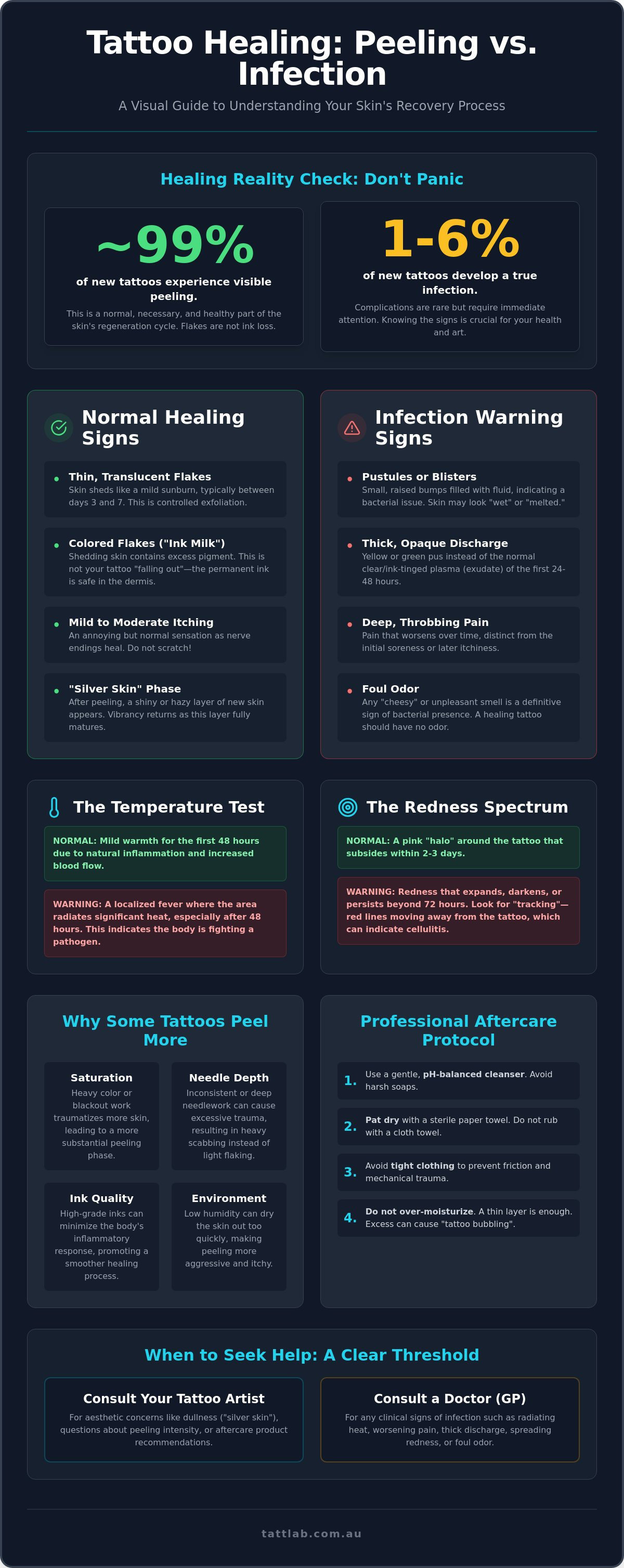
- Saturation Levels: More pigment density often correlates with a thicker "scab" layer.
- Ink Quality: Using high-grade professional tattoo ink can minimize the body's inflammatory response, leading to a smoother transition.
- Needle Depth: Consistent, professional depth prevents excessive trauma that can cause heavy, painful scabbing.
- Environmental Factors: Low humidity can cause the skin to dry out too quickly, making the peeling feel more aggressive or itchy.
Clinical Signs: Tattoo Peeling vs. Infection
Distinguishing between tattoo peeling vs infection requires an objective eye for clinical markers. While peeling presents as thin, translucent flakes similar to a mild sunburn, infection introduces aggressive visual disruptions. Look for pustules, which are small, raised bumps filled with fluid, or thick, yellow-to-green discharge. A healthy healing site remains relatively flat as it sheds, whereas an infected site often appears swollen, distorted, and increasingly angry. If the skin looks "wet" or "melted" rather than dry and flaky, the barrier has likely been compromised.
The "Temperature Test" is a reliable diagnostic tool you can perform at home. It's normal for a fresh tattoo to feel slightly warm to the touch during the first 48 hours due to increased blood flow. However, if the area develops a localized fever that radiates heat even through clothing, this suggests your immune system is struggling with a pathogen. Pair this with your sensory experience. A normal healing phase involves a persistent, annoying itch. In contrast, an infection produces a deep-seated, throbbing pain that often worsens rather than improves over time. Additionally, a healthy tattoo should never have a distinct odour; a foul or "cheesy" smell is a definitive indicator of bacterial presence.
The Redness Spectrum: Inflammation or Cellulitis?
Initial redness is expected. This "halo" of pink skin usually surrounds the tattoo and fades within two to three days. If the redness begins to expand or persists beyond the 72-hour mark, it warrants closer inspection. The most critical warning sign is "tracking," which appears as thin, red lines moving away from the tattoo site toward your heart. This can indicate cellulitis or a spreading infection. Utilizing professional tattoo aftercare is your primary insurance policy against these escalating inflammatory responses.
Discharge and Exudate: What is Normal?
Exudate is the body's natural fluid response during the initial inflammatory phase. This clear or slightly amber plasma is common in the first 24 hours and helps the skin begin its repair. However, you must differentiate this from pus. Cloudy, thick, or foul-smelling discharge is a sign of a staph infection or other bacterial intrusion. It's also possible to confuse an infection with a pigment allergy; while both cause redness, an allergy usually presents as a bumpy, itchy rash localized to a specific color, whereas an infection feels systemic and painful. For more detailed guidance on tattoo safety and infection, government resources provide comprehensive data on identifying contaminated inks and secondary complications.
Mechanical Trauma and Over-Care: The Grey Area
While the biological process of shedding is predictable, external interference often creates a confusing grey area in the healing narrative. Mechanical trauma occurs when environmental forces, such as tight clothing or abrasive fabrics, interfere with the skin's delicate repair cycle. When denim or restrictive activewear rubs against a fresh site, it can "force" peeling by prematurely detaching epidermal flakes that are still anchored to the dermis. This often leads to "ink fallout," where pigment is pulled out before the underlying tissue has stabilized. Understanding the difference between tattoo peeling vs infection requires acknowledging that some redness or irritation isn't biological; it's friction-based.
Picking at a "hanging" flake is one of the most common ways to invite a clinical complication. When you manually remove a piece of peeling skin, you risk creating a micro-tear in the protective barrier. This creates an immediate entry point for opportunistic bacteria. It's also essential to distinguish between a localized "ink rejection" allergy and a true infection. An allergy typically presents as a raised, itchy texture specifically on one pigment color, whereas a bacterial intrusion feels systemic, painful, and hot. Maintaining physical integrity means resisting the urge to intervene in the body's natural exfoliation.
The Maceration Risk: Too Much Aftercare
A common misconception is that keeping a tattoo "wet" with ointment accelerates healing. In reality, over-moisturising leads to skin maceration, a state where the tissue becomes soggy and weak. This often results in "tattoo bubbling," where the ink appears to sit under a raised, fluid-filled blister. Excessive ointment traps heat and bacteria against the skin while clogging pores, potentially leading to folliculitis. Adopting a breathable tattoo aftercare protocol is vital. This ensures the skin can respire while maintaining just enough moisture to prevent cracking without suffocating the pores.
Environmental and Friction Damage
Your immediate environment acts as a variable in the tattoo peeling vs infection equation. Bedsheets and gym clothes are frequently overlooked abrasives that can scrub away healing layers during sleep or exercise. Beyond friction, household contaminants like pet dander or dust can settle into a peeling tattoo, causing secondary irritation that mimics the early stages of an infection. Sun exposure is another critical risk; UV rays can turn a standard peeling phase into a painful, inflammatory event that damages the settling pigment. Following established tattoo risks and precautions helps mitigate these external threats, ensuring your art remains a permanent success rather than a medical concern.
Professional Protocol to Prevent Complications
Precision is everything. While the biological process of shedding is inevitable, the clinical outcome of your healing journey depends entirely on the sterility of your environment. Maintaining a controlled recovery requires more than just passive observation; it demands a structured hygiene protocol. By following a methodical approach, you can effectively manage the transition of tattoo peeling vs infection, ensuring your skin barrier remains resilient against external pathogens.
- Step 1: The Sterile Wash. Use only fragrance-free, pH-balanced cleansers. Avoid harsh chemicals that can strip the skin’s natural lipids, as this causes premature drying and cracking.
- Step 2: Controlled Drying. The pat-dry technique is the essential method for removing moisture without disturbing the delicate epidermal flakes. Use only disposable paper towels to eliminate the risk of cross-contamination.
- Step 3: Minimalist Moisture. Apply a thin, breathable layer of specialised tattoo balm. The goal is to support elasticity, not to create a suffocating seal over the pores.
- Step 4: Daily Monitoring. Perform a "Look, Feel, Smell" audit every morning. If the visual texture shifts from dry flakes to wet pustules, or if a scent develops, your protocol needs immediate clinical review.
Cleaning Standards for Skin Integrity
Home hygiene must mirror the rigor of a professional studio. Bar soaps and shared cloth towels are primary vectors for studio-acquired infections because they harbor bacteria in their porous surfaces. High-end results are built on a foundation of safety, which is why the use of professional medical supplies for tattoo artists is so critical during the initial procedure. To maintain that same standard at home, you must treat your healing tattoo as an active recovery site that requires fresh, single-use materials for every cleaning cycle.
Optimising the Healing Environment
Biological repair is a resource-intensive process. To ensure a smooth transition through the peeling phase, you must support your body from the inside out. High hydration levels and nutrient-dense meals provide the cellular energy required for dermal stabilization. You must avoid swimming, saunas, and excessive sweating for at least 14 days to prevent moisture from trapped under the skin. Embracing the "Air-Time" strategy allows for natural desquamation, preventing the "tattoo bubbling" mentioned previously. For the highest level of protection, ensure you are using artist-vetted tattoo aftercare to maintain skin integrity throughout the entire 28-day regenerative cycle.
When to Seek Professional Help and How Tatt Lab Supports Healing
Understanding the boundary between tattoo peeling vs infection is the final step in protecting your physical integrity. Most concerns during the shedding phase are purely aesthetic and are best managed through a conversation with your artist. For instance, if you notice "silver skin" looking slightly dull or have questions about how the pigment is settling in a specific area, your artist can provide reassurance. They can assess if a minor touch-up is required once the full 28-day regenerative cycle concludes. However, if your symptoms shift from localized itching to systemic distress, the situation requires immediate clinical intervention.
You should contact a GP immediately if you experience a fever, persistent chills, or unusual fatigue. These are indicators that a localized bacterial intrusion has moved beyond the skin barrier. Spreading redness that expands daily or pain that feels deep-seated and throbbing are clinical red flags that require professional diagnosis. Choosing high-quality supplies is the best insurance policy for your body art; medical-grade aftercare significantly reduces the statistical likelihood of these complications before they begin.
Preparing for a Medical Consultation
If you suspect an infection, documentation is your most valuable tool. We recommend taking daily photos of the site under consistent lighting to track the progression of redness or swelling. This visual evidence helps a doctor distinguish between a slow-healing wound and an active infection. When you meet with a healthcare professional, be prepared to provide the following information:
- Onset of Symptoms: Note exactly when the pain shifted from an itch to a throb.
- Systemic Changes: Document any instances of chills, sweats, or swollen lymph nodes.
- Procedure Details: Mention the artist's hygiene protocol and the ink type used if that information is available.
The Tatt Lab Standard of Aftercare
At Tatt Lab, we view ourselves as a dedicated partner in your healing narrative. We only stock products that have been rigorously tested and used by professional Australian artists who value skin integrity above all else. Our commitment to quality ensures that every balm, cleanser, and piece of medical-grade PPE meets a standard of clinical excellence. By providing access to the same tattoo supplies used in high-end studios, we help you maintain a sterile environment from the initial interaction to the final result. This meticulous approach replaces the uncertainty of the "ugly phase" with a sense of controlled, predictable progress, ensuring your personal transformation remains both safe and vibrant.
Securing Your Skin’s Biological Integrity
Navigating the recovery phase of a new tattoo requires a balance of patience and clinical vigilance. The distinction between tattoo peeling vs infection often comes down to the difference between a natural epidermal shedding and a systemic immune response. By respecting the biological timeline and avoiding the pitfalls of mechanical trauma or over-moisturising, you ensure that your body art settles into the dermis with maximum vibrancy. Your skin is a sophisticated organ capable of incredible repair; it simply needs the right environment to complete its narrative of transformation without interference.
To ensure your skin remains a healthy canvas for years to come, you can discover Pellis Medispa for professional restoration treatments that maintain dermal integrity and vitality.
We're here to provide that environment. Tatt Lab is artist-owned and operated, ensuring that every product we stock is vetted for professional-grade performance. Our range of specialized medical-grade supplies acts as the primary insurance policy for your physical integrity and aesthetic outcome. With express nationwide shipping across Australia, you can access the tools you need to maintain a sterile healing process without delay. Protect your art with artist-vetted tattoo aftercare from Tatt Lab and move forward with the confidence that your healing is in expert hands. We're proud to be your partner from the first needle stroke to the final, settled result.
Frequently Asked Questions
Is it normal for my tattoo to peel and look faded?
Yes, it's completely normal for a tattoo to look dull or hazy during the peeling phase. This happens because a layer of "silver skin" is forming over the settling pigment to protect the site. Once this new tissue matures and the dead epidermis fully sheds, the original vibrancy and clarity of your art will return.
Can a tattoo get infected after it starts peeling?
Yes, a tattoo remains vulnerable to infection throughout the entire peeling process. If you pick at flakes or expose the area to household contaminants, you create micro-tears in the healing barrier. These openings allow bacteria to bypass the surface and enter the dermis, potentially causing a secondary infection even days after the procedure.
How can I tell if my tattoo is infected or just irritated?
Irritation typically presents as localized redness or a persistent itch that subsides with basic care. In the context of tattoo peeling vs infection, the primary differentiator is the presence of systemic distress. An infection involves deep-seated throbbing, radiating heat, or spreading red streaks that move away from the tattoo site toward the heart.
What does a staph infection look like on a new tattoo?
A staph infection often manifests as small, fluid-filled pustules or a distinct honey-colored crusting on the skin's surface. You might also notice aggressive swelling or sores that appear "wet" and refuse to scab over normally. If the area produces thick, cloudy discharge, it's a sign of a significant bacterial intrusion that requires a GP's review.
Should I put lotion on a peeling tattoo?
You should apply a minimalist amount of lotion only when the skin feels uncomfortably tight or brittle. Use a specialized, fragrance-free balm to support elasticity without suffocating the pores. Avoid over-moisturising, as trapping too much fluid can lead to maceration and the "tattoo bubbling" risks that compromise the final aesthetic result.
Is it okay to pull off the peeling skin if it's hanging?
No, you should never manually remove hanging skin from a healing tattoo. Pulling these flakes can prematurely drag pigment out of the dermis before the tissue has stabilized, resulting in permanent "ink fallout" and patchy spots. Let the flakes detach naturally during your daily sterile wash to protect the integrity of the work.
What should I do if my tattoo smells bad while peeling?
If your tattoo produces a foul or "cheesy" odor, you should seek medical advice immediately. A healthy healing site is odorless throughout every stage of the recovery. A noticeable scent is a definitive clinical marker of bacterial activity and suggests that the local microbiome has been compromised by an infection.
How long does the peeling stage usually last?
The active peeling stage generally lasts between seven and ten days, depending on the tattoo's saturation and location. While the visible flaking concludes relatively quickly, the deeper biological repair continues for a full 28-day cycle. Consistent use of professional tattoo peeling vs infection protocols ensures this entire transition remains smooth and predictable.


Comments (0)
There are no comments for this article. Be the first one to leave a message!