

A practical tattoo studio budget template can do more than total expenses. It can help you turn changing bookings into a clearer view of expected income, upcoming costs and cash available to set aside. When income varies from month to month, routine supply orders and recurring overheads can make it harder to plan owner pay or future spending.
A budget won’t make every month predictable. It gives you a way to prepare for different outcomes and spot patterns before they become problems. The useful habit is to track income and expenses consistently, then compare your forecast with what actually happened.
This guide includes a copyable framework for organising studio income and costs, from consumables and rent to software, insurance and other overheads. You’ll also find a repeatable process for updating figures, checking cash flow and using purchasing records to plan supplies. Treat the budget as a working tool that changes as your bookings and needs change.
Key Takeaways
- Use a tattoo studio budget template to organise income, setup costs, overheads, variable expenses, reserves and actual results.
- Build conservative, expected and stronger booking scenarios using your studio’s history and confirmed commitments, not guaranteed assumptions.
- Review the budget monthly: enter actual figures, check variances and flag unexpected supply spending or recurring costs.
- Use purchase history and upcoming appointments to plan stock replenishment while keeping enough working cash available.
- Treat the budget as a decision-making tool, not a replacement for bookkeeping or advice from a qualified Australian professional.
What a tattoo studio budget template should help you see
A useful tattoo studio budget template is a forward-looking plan for expected income and spending, checked against what actually comes in and goes out. It helps you see whether upcoming commitments fit the cash you expect to have, and gives you a clearer basis for decisions about supplies, overheads and owner pay. It’s a planning tool, not a substitute for bookkeeping or advice from a qualified Australian accounting or tax professional.
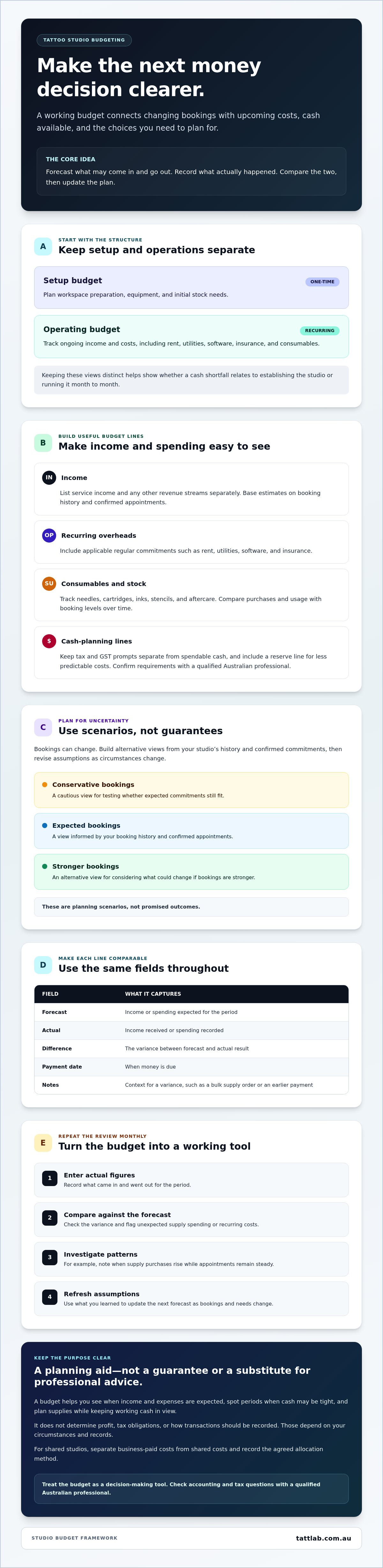
Keep setup costs separate from recurring operating costs. A setup budget records one-time purchases and expenses involved in preparing a workspace. An operating budget tracks ongoing income and costs such as rent, software, insurance and consumables. Separating the two helps you identify whether a cash shortfall relates to establishing the studio or running it month to month.
Who can use a tattoo studio budget template?
Artists preparing to work independently can use the setup section to list planned equipment, workspace costs and initial stock needs, then map the regular costs they’ll need to cover once operating. An established studio can use the operating section to track changing bookings, purchasing patterns and overheads over time. Comparing consumable purchases with booking levels, for example, can help you see whether actual usage is in line with your expectations.
Shared studios can adapt the same structure to their arrangement. Separate costs paid by the business from costs shared between artists, and record the agreed allocation method so everyone can see what the budget assumes. The categories will vary, but the framework can work for solo artists, shared spaces and larger studios alike. The Tattoo artist profession overview provides broader context on the work and studio practices behind some operational spending, such as hygiene-related supplies and training.
What the template can and cannot tell you
A budget can show when income and expenses are expected, helping you identify periods when cash may be tight. It doesn’t determine profit, tax obligations or how transactions should be recorded. Those questions depend on your circumstances and records, so check them with a qualified professional rather than treating a forecast as accounting advice.
Bookings can change, so forecasts are estimates, not guaranteed outcomes. Use your own booking history and confirmed commitments as inputs, then update assumptions as circumstances change. Keep these three terms clear:
- Forecast: the income or spending you expect for a period.
- Actual result: the income received or spending recorded for that period.
- Variance: the difference between the forecast and actual result, which you can investigate and use to refine the next forecast.
This comparison turns a static list into a working reference. Next, organise the categories so the budget reflects how your studio earns and spends.
Build the tattoo studio budget template from income and expense categories
Set up the spreadsheet so each line represents a clear source of income or type of spending. A practical tattoo studio budget template separates one-time setup costs from regular operating expenses, while making forecasts and actual transactions easy to compare. Start with categories that match how your studio works, then adjust them as the business changes.
Income, setup spending, and recurring overheads
Start with service income, using cautious estimates based on your booking history and confirmed appointments. If the studio has other legitimate revenue streams, such as product sales, record them separately rather than combining everything in one total. This makes it easier to see which parts of the business are contributing income and where a shortfall may be coming from.
Keep one-time setup spending distinct from ongoing costs. Under recurring overheads, include applicable items such as rent, utilities, software, insurance and other regular commitments. The Creative Independent’s guide to financial planning for artists also explores the value of approaching creative work with a clear financial plan.
Consumables, tax prompts, and cash reserves
Make supply spending visible by tracking purchases in useful categories, such as traditional needles, cartridges, inks, stencils and aftercare. Compare orders and usage with booking levels over time. If purchases rise while appointments remain steady, record a note to investigate, such as whether stock levels or ordering patterns changed. For practical context on supply categories, see this professional tattoo supplies guide.
Add separate cash-planning lines for tax and GST rather than treating all incoming money as available to spend. Your requirements depend on your circumstances, so confirm them with an accountant or other qualified Australian professional. A reserve line can also help you plan for less predictable costs without obscuring routine operating expenses.
For each category, include columns for forecast, actual, difference, payment date and notes. Payment dates help you see when money is due, while notes explain a variance, such as a bulk supply order or an expense paid earlier than expected. A simple structure to copy is:
- Income: service income and other revenue streams, listed separately.
- Setup: one-time equipment, workspace or initial stock purchases.
- Fixed overheads: regular commitments such as rent, utilities and software.
- Variable expenses: supplies and other costs that can change with studio activity.
- Reserves and actuals: planned cash set aside, plus recorded transactions for comparison.
Once you’ve identified the supply categories your studio uses, Tatt Lab’s tattoo consumables and aftercare supplies can be one source to consider when planning replenishment.
Compare budget scenarios when tattoo studio bookings fluctuate
A single income forecast can hide how much bookings vary. Use your tattoo studio budget template to compare conservative, expected and stronger booking scenarios. These are planning cases, not promises. They help you see how different appointment levels could affect cash available for operating costs, supplies and reserves.
Start with the studio’s booking history and appointments already confirmed. For each scenario, write down your assumptions about unbooked capacity, cancellations and other likely changes. Keep the revenue basis consistent too. If you’re budgeting the studio’s share of artist income, use that share rather than the full amount paid by clients.
How to estimate income without overpromising
List confirmed appointments first, then estimate additional bookings only where your records support an assumption. For example, use a recent comparable period to guide the expected case, a quieter period for the conservative case and a busier period for the stronger case. Label estimates clearly and replace any illustrative figures with your own records.
Forecasts stay useful when you update them as bookings change, rather than treating an early estimate as a promise.
A simple starting formula is expected bookings × average revenue per booking = estimated booking income. Calculate the average from your own records, using the same revenue basis and time period across all scenarios. Keep the assumptions beside each estimate so you can see what changed when bookings shift, then revise the figures as new appointments are confirmed.
How to identify break-even pressure points
Compare each scenario’s planned income with the studio’s fixed and variable operating costs. Fixed costs are commitments that generally remain stable over the period, while variable costs can change with activity, such as supply use. If the conservative case leaves a gap after expected costs, review the timing of payments, spending assumptions and available cash before committing to discretionary purchases.
You can estimate the booking level needed to cover costs by considering fixed costs alongside the amount each booking contributes after its variable costs. Keep the calculation tied to the period you’re planning, and document what you included. Break-even is a planning estimate, not proof of profitability or a guarantee that costs and income will match the forecast.
Use the comparison to ask practical questions: Which costs still fall due in a quieter period? Does the stronger scenario depend on unconfirmed appointments? Do supply assumptions fit the work booked? A qualified Australian accountant can help check calculations and advise on tax or other financial decisions. Update the scenarios as bookings firm up, then carry the revised assumptions into your next budget review.
Set up a monthly budget review that turns estimates into decisions
A budget becomes more useful when you revisit it regularly. Set aside time each month to update the tattoo studio budget template, check what changed and decide whether your next forecast needs adjusting. Keep the same categories from month to month so you can distinguish a genuine shift in spending from a change in how you’ve recorded it.
A simple monthly review in four steps
- Update income: Add confirmed bookings and revise expected income using current appointment information. Keep estimates for unbooked capacity clearly labelled.
- Enter actual costs: Record spending from invoices, receipts and other source documents. Add a note for unusual purchases, one-time expenses or costs paid earlier than expected.
- Compare the figures: Check forecast against actual income and spending. Investigate differences that could affect cash available, such as supplies costing more than planned or a recurring charge appearing in a different period.
- Adjust the next forecast: Update assumptions using what you’ve learned. If a supply order was larger because stock needed replenishing, record the reason rather than assuming the same expense will recur every month.
For supplies, consistent category tracking helps show how purchasing changes alongside studio activity. Record medical supplies separately if that helps you monitor orders and usage, and consult the professional studio safety guide for related context. A clear note can make an unexpected purchase easier to understand during the next review.
Keep financial records useful and appropriately checked
A spreadsheet or bookkeeping software can support this process. The important part is to use your chosen method consistently and retain the source records that explain each entry. Match transactions to the same categories you use in the budget, and include payment dates where timing affects your view of available cash. These habits make it easier to trace a figure back to its source instead of relying on memory.
Use the monthly review to flag questions, not to make assumptions about tax treatment. For example, note any tax or GST item you’re unsure how to record, then take the relevant records to a qualified Australian accountant. Clear categories, receipts and notes give an adviser a more complete picture to discuss. The budget itself doesn’t determine your tax obligations or replace professional advice.
Over time, the review can reveal patterns worth acting on: a recurring cost to investigate, a supply category that needs a more realistic forecast, or income that varies more than expected. For tattoo consumables such as needles, cartridges, inks and aftercare, you can review available tattoo supplies as part of your purchasing research, then compare options with your studio’s actual stock needs and budget.
Use your tattoo studio budget to plan supplies and next steps
A budget can guide purchasing as well as cash-flow planning. Compare supply purchase history with upcoming appointments to estimate what may need replenishing, rather than ordering by habit or waiting until stock is low. Review categories separately, such as needles, cartridges, inks, stencils and aftercare, so you can see which items recur and how spending changes with studio activity.
There’s a balance to manage. Keeping suitable stock available for planned work supports day-to-day operations, while holding more than you need can tie up cash that may be required for rent or other commitments. Use your records to set a point for reviewing reorder needs, and factor in supplier delivery details you’ve confirmed. Choose supplies based on suitability, quality, safety and your studio’s requirements, not budget alone.
Turn supply spending into a more considered purchasing plan
Look at past orders alongside expected appointments. If you use a category regularly, note its typical purchasing pattern and check whether upcoming work changes that expectation. Set a review point based on actual usage and the time you need to allow for replenishment, rather than assuming a universal stock level. Record the reason for unusual orders, such as a change in planned work or a one-time restock.
Aftercare is another category to include in your supply planning. For additional context on professional aftercare considerations, read this professional tattoo aftercare guide. Use the information alongside your studio’s requirements when reviewing what to budget for.
Copy, customise, and maintain the template
Start with blank rows, then add categories that reflect your setup. For each line, record the forecast, actual amount, difference, payment date and a short note.
- Income: ______________________________
- Setup costs: __________________________
- Recurring expenses: ___________________
- Variable spending: ____________________
- Cash reserves: ________________________
Adapt or expand these rows as your studio changes. Keep categories consistent between reviews, and discuss accounting or tax questions with a qualified Australian accountant. This keeps the budget useful for planning without mistaking it for bookkeeping or professional advice.
Once your budget reflects your actual purchasing needs, you can explore professional tattoo and medical supplies as part of your supplier review.
Make your next budget review a practical step forward
A tattoo studio budget template works best as a living cash-flow tool. Keep setup costs separate from recurring expenses, use your booking history to build realistic income scenarios, and compare forecasts with actual spending each month. Tracking supply purchases by category can also help you plan replenishment while keeping working cash visible.
Start with the categories that matter to your studio, then refine them as bookings and operating needs change. Clear records make it easier to spot patterns and prepare informed questions for a qualified accountant when you need advice on tax or GST.
When you’re ready to review supply options, Tatt Lab is an artist-owned and operated Australian supplier with online purchasing and nationwide shipping options. Wholesale purchasing structures are available for registered professional studios and medical clinics. Explore professional tattoo and medical supplies as part of your next purchasing review, and keep building a steadier plan for your studio.
Frequently Asked Questions
How do I create a budget for a tattoo studio?
Create a tattoo studio budget template with separate sections for expected income, one-time setup costs, recurring overheads, variable expenses and cash reserves. Add columns for forecast, actual, variance, date and notes. Use your studio’s booking and spending records to set estimates, then update the figures regularly as appointments and costs change. Keep tax-related assumptions separate and ask a qualified Australian accountant or tax professional to review them before relying on them.
What should a tattoo studio budget template include?
Include income, rent and other applicable overheads, utilities, software, insurance, consumables, payment fees, equipment needs and cash reserves. Your categories should reflect your studio’s actual setup, since not every business has the same costs. Separate one-time setup purchases from ongoing expenses so you can understand what it takes to establish the studio and what it takes to operate. Recording forecast and actual amounts makes changes easier to identify over time.
How much should a tattoo studio budget for supplies?
There’s no reliable universal amount for tattoo supplies because usage depends on appointment volume, the work being done, product choices and supplier arrangements. Review your purchasing history alongside booking records to estimate what you may need, then compare that forecast with actual spending each month. Group purchases by category, such as needles, cartridges, inks and aftercare, to make patterns clearer. If you’re unsure how to account for purchases, ask a qualified professional.
How do tattoo artists forecast income when bookings change?
Start with confirmed appointments, then use recent studio records to estimate likely additional bookings. Build conservative, expected and stronger scenarios, and label each as an estimate rather than a promise. Revisit the forecast as cancellations, new bookings or schedule changes occur. This helps you consider how different booking levels may affect cash available for costs without treating uncertain income as guaranteed. Use your own records and keep the assumptions visible so you can adjust them.
Should a tattoo studio budget include GST and tax?
A budget can include separate planning lines for tax and GST-related cash, but the correct treatment depends on your business circumstances and current requirements. Don’t use a generic template to decide whether you need to register or to calculate amounts owed. Check current Australian Taxation Office guidance and confirm how it applies to your situation with a qualified accountant or registered tax professional. Keep estimates clearly labelled until they’ve been appropriately checked.
How often should a tattoo studio update its budget?
Review your budget at least monthly, comparing forecast income and spending with actual records. Update it sooner if bookings change significantly, an unexpected expense arises or a planned purchase could affect available cash. Keep categories consistent so comparisons remain useful from one period to the next. A regular review can help you notice patterns and revise estimates, but it can’t guarantee that future income or costs will match your forecast.
Can a spreadsheet work as a tattoo studio budget template?
Yes, a spreadsheet can work well if it separates income and expense categories, records forecast and actual figures, and makes variances easy to review. Include dates and notes so you can understand when costs occurred and why an estimate changed. Keep the file organised and retain relevant source records. A spreadsheet supports planning, but it doesn’t replace bookkeeping, professional tax advice or any record-keeping obligations that apply to your business.


Comments (0)
There are no comments for this article. Be the first one to leave a message!