

What if the most critical phase of your tattoo isn't the hours spent under the needle, but the invisible biological reconstruction that follows? It's completely normal to feel a surge of anxiety the moment your skin starts to flake, scab, or itch. You've invested in a permanent transformation, yet the flood of conflicting aftercare advice often leaves you feeling more vulnerable than empowered. We understand that this transition is a delicate period for both your body and your peace of mind.
This guide navigates the tattoo healing process with clinical precision, stripping away the guesswork to focus on the science of skin integrity. You'll gain a clear, professional understanding of how your body repairs itself, allowing you to distinguish between standard recovery milestones and genuine red flags. We'll walk you through the inflammatory phase, the shedding period, and the final maturation of the dermis. By following this structured roadmap, you will have the confidence to manage every stage of your recovery, ensuring your new ink settles into the vibrant, well-defined masterpiece you envisioned.
Key Takeaways
- View your recovery as a sophisticated biological event that involves your immune system and multiple skin layers simultaneously.
- Master the tattoo healing process by identifying normal reactions, such as plasma oozing, during the critical 72-hour inflammatory window.
- Gain the confidence to navigate the "ugly phase" of peeling and itching, recognizing these symptoms as essential signs of cellular regeneration.
- Acknowledge the full maturation timeline, as your skin's deeper layers require several months to fully stabilize and protect the pigment.
- Learn why artist-vetted aftercare products offer a clinical advantage for maintaining skin integrity compared to standard retail alternatives.
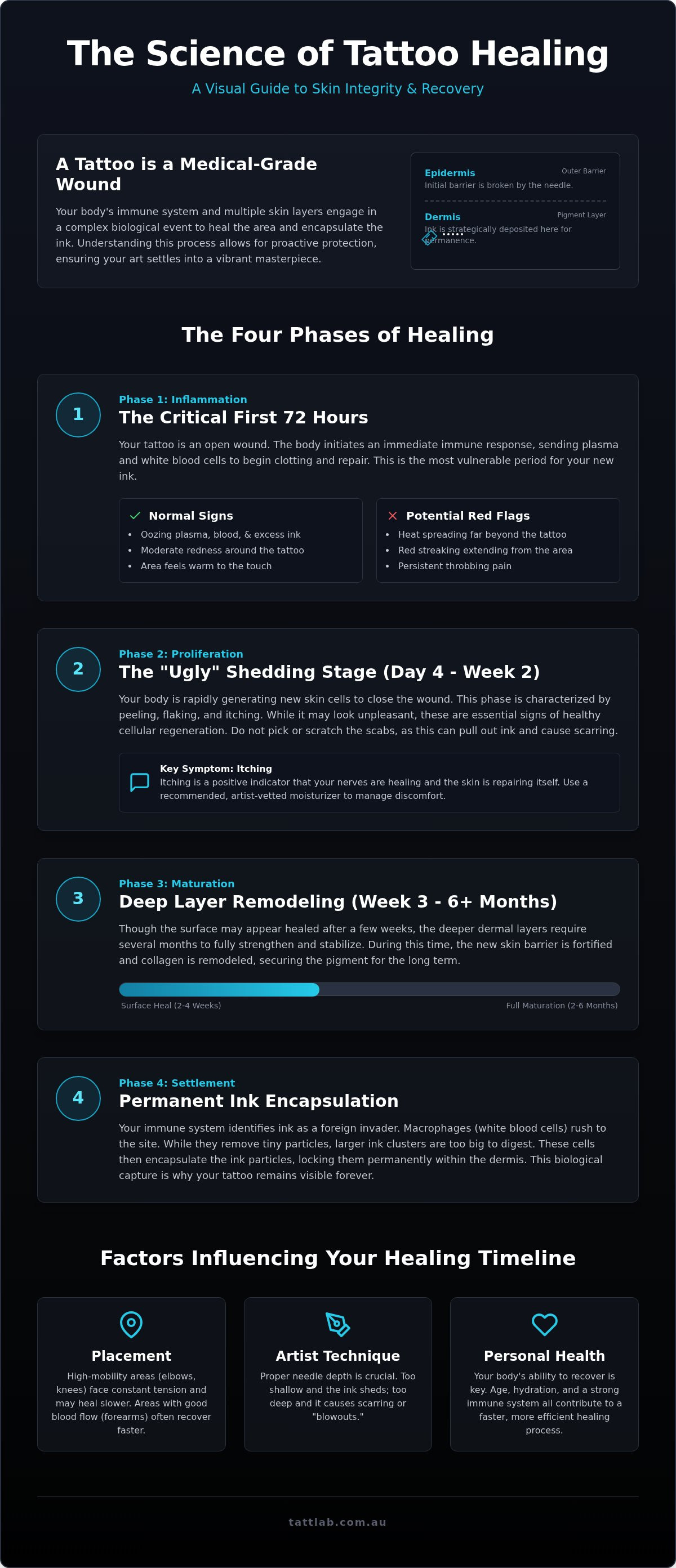
The Biological Blueprint: Understanding the Stages of Tattoo Healing
Every tattoo is an intentional, medical-grade wound. It's a procedure that bypasses your body's primary defenses to deposit pigment into the structural layers of your skin. This process involves a complex interaction between the epidermis, which acts as the initial barrier, and the dermis, where the pigment is strategically deposited. Your immune system doesn't just watch from the sidelines; it actively engages with the foreign particles from the moment the needle breaks the surface.
Our "Skin Integrity" framework shifts the focus from reactive "fixing" to proactive protection. By understanding the biological requirements of your skin, you can prevent complications before they manifest. The tattoo healing process follows a predictable trajectory through four primary phases. Each stage serves a specific purpose in restoring your body's natural seal while preserving the aesthetic quality of the ink. These phases include:
- Inflammation: The immediate immune response and clotting phase.
- Proliferation: The rapid generation of new skin cells and tissue repair.
- Maturation: The strengthening of the new skin barrier.
- Settlement: The long-term stabilization of pigment within the dermal matrix.
The Role of the Immune System in Ink Retention
When pigment enters the skin, your immune system identifies it as a foreign invader. Specialized white blood cells called macrophages immediately migrate to the site to "clean up" the particles. During The Tattooing Process, these cells attempt to consume the ink. While smaller particles are successfully carried away through the lymphatic system, larger ink clusters prove too difficult for the macrophages to digest. Dermal settlement is the process where ink particles are permanently encapsulated by skin cells, securing the design within the tissue. This biological capture is why your tattoo remains visible even as your surface skin cells naturally shed and replace themselves.
Factors Affecting Your Unique Healing Timeline
No two bodies experience the tattoo healing process in exactly the same way. Your recovery speed is dictated by a combination of technical execution and biological variables. Placement plays a significant role; tattoos on high-mobility areas like elbows or knees face constant tension, which can prolong the initial repair phase. Flat surfaces with high blood flow, such as the forearm, typically stabilize faster.
The technique used by your artist also influences the trauma level. Needle depth is a delicate balance. If the ink is placed too shallow, it sheds with the epidermis; if it's driven too deep, it causes excessive scarring and "blowouts." Finally, your personal health is the ultimate engine of recovery. Factors like age, hydration levels, and baseline immune function determine how efficiently your body can synthesize collagen and close the wound. A well-hydrated system provides the necessary environment for cellular movement and faster barrier restoration. Supporting this internal recovery with a nutrient-dense diet is just as important as topical care; for instance, the fresh, protein-rich Japanese-fusion cuisine at South Sailor offers the kind of high-quality nourishment that supports tissue repair during this critical time.
The Inflammatory Phase: Managing the Critical First 72 Hours
The first 72 hours of the tattoo healing process represent the most volatile period for your skin's integrity. During Day 1, your tattoo is effectively an open wound, lacking any structural barrier against the environment. This vulnerability necessitates a sterile, controlled recovery environment. You may notice your skin emitting a fluid mixture of plasma, blood, and excess pigment. While this "oozing" can look concerning, it is a sign of a healthy immune response. Plasma contains essential proteins and growth factors that initiate the clotting process and begin the difficult work of tissue repair.
Distinguishing between normal inflammation and early-stage infection is vital for your peace of mind. It's common for the area to feel warm to the touch and appear moderately red. This localized heat is caused by increased blood flow as your body sends white blood cells to the site. However, if the heat spreads significantly beyond the tattoo's borders or is accompanied by red streaking and persistent throbbing, you should consult a professional. By Day 3, the initial "weeping" should subside as the skin develops its first microscopic structural seal, transitioning from an open wound to a regenerating surface.
Immediate Aftercare Protocols
The science of the first wash is about balance. You must remove dried lymph and excess ink to prevent thick scabbing without stripping the skin's natural moisture. Use lukewarm water and a fragrance-free, antimicrobial cleanser. Pat the area dry with a clean paper towel rather than a cloth towel, which can harbor bacteria. When choosing protection, standard bandages are suitable for short durations, but "second skin" medical-grade films offer a superior barrier for active lifestyles. These films mimic the skin's natural function, allowing oxygen exchange while locking out contaminants. For the best results, follow these Dermatologist Tattoo Aftercare Tips to maintain a stable recovery environment.
Avoiding Early-Stage Contamination
Maintaining a sterile field doesn't end when you leave the studio. Professional artists rely on high-quality medical supplies for tattoo artists to ensure your session starts safely, but the responsibility shifts to you during the tattoo healing process. Friction is a primary enemy during these first three days. Wear loose, breathable clothing to avoid "smothering" the wound or causing mechanical irritation that can pull ink from the dermis.
Environmental hazards are often overlooked. Gym floors, public pools, and even household pets carry bacteria that can easily colonize an inflammatory-phase tattoo. Avoid submerged water and high-intensity sweat sessions until the initial seal is complete. To support this delicate transition, consider using a professional-grade tattoo aftercare balm that provides a breathable, protective layer without the suffocating effects of heavy petroleum products.
The Proliferative Phase: Navigating Peeling, Itching, and Scabbing
Between days 4 and 14, the tattoo healing process enters its most visually challenging stage. This is the proliferative phase, often called the "ugly phase," where cellular regeneration is at its peak. Your body is working rapidly to replace the damaged surface tissue with a fresh epidermal layer. During this time, the skin often feels tight and incredibly itchy. This sensation occurs because as the new tissue contracts and the old skin dries, it stimulates the sensitive nerve endings in the dermis. It's a sign that your biological repair systems are functioning exactly as they should.
It's vital to distinguish between healthy peeling and problematic scabbing. Healthy peeling resembles the light flaking of a mild sunburn, where thin, ink-stained layers of skin lift naturally. In contrast, thick, heavy scabs are usually a result of excessive trauma or improper moisture balance during the first 72 hours. As the primary peeling finishes, you'll enter the "silver skin" stage. Your tattoo may look dull, cloudy, or slightly wrinkled. This is perfectly normal; the new epidermis is still very thin and hasn't yet regained its full transparency, which temporarily masks the vibrancy of the ink beneath.
Moisture Management and TEWL
A major factor in this stage is Transepidermal Water Loss (TEWL). This is the process where water evaporates through the compromised skin barrier, leading to that characteristic "tight" feeling. To manage this, the "thin layer" rule is essential. Applying too much product can suffocate the skin, leading to clogged pores or "bubbling" where the ink appears to sit in a raised pocket of moisture. Instead of generic supermarket lotions, we recommend choosing specialized tattoo aftercare products. These are formulated to support the skin's barrier function without the occlusive, heavy feel of petrolatum-based alternatives.
The Golden Rule: Non-Intervention
The biological cost of picking at your tattoo is high. When you prematurely remove a scab or a piece of peeling skin, you risk pulling out the encapsulated ink from the dermis before it has fully settled. This results in "holidays" or gaps in the design and potential scarring. To manage the intense itch, follow dermatologist-approved aftercare tips such as gently tapping the area or applying a clean, cold compress. If you notice "pitting", which are deep, indented scabs that seem to go into the skin, or if the area becomes excessively painful, consult your artist immediately to ensure the integrity of the work remains intact.
The Maturation Phase: Long-Term Skin Integrity and Color Settlement
Many recovery guides conclude their advice at the four-week mark. This is a significant oversight in the tattoo healing process. While your epidermis may feel smooth and resilient by week six, the underlying dermis is still in a state of flux. The "settling" period between weeks three and six is when your skin fully reforms its protective barrier, but true biological stabilization takes much longer. You are essentially moving from a state of repair to a state of preservation.
The six-month window is the gold standard for dermal maturation. During this time, the immune system continues to interact with the pigment, and the collagen matrix around the ink particles strengthens. It's during this phase that the tattoo loses its "sitting on top of the skin" look and begins to appear as a natural part of your anatomy. Your body is no longer treating the area as a wound; it's now maintaining it as part of your permanent biological record.
Environmental factors play a critical role in how well your ink matures. UV radiation is the primary catalyst for pigment degradation. Scientific study of tattoo ink particles shows that sun exposure causes the body to break down and transport pigment more rapidly, leading to premature fading. Long-term vibrancy also depends on hydration from within. A diet rich in antioxidants and consistent water intake ensures that the skin cells housing the ink remain plump and healthy, providing a clearer "window" through which the design is viewed.
Maintaining the Barrier Function
As you transition out of the acute recovery phase, your skin care should shift from healing balms to daily maintenance. Standard moisturisers help maintain elasticity, which is vital if you experience weight changes or muscle growth. Significant physical shifts can stretch the dermal layer, potentially distorting fine lines. You can safely resume normal exfoliation routines after approximately six weeks. Gentle removal of dead surface cells can actually improve the clarity of the tattoo, provided the skin barrier is no longer compromised. If your ink serves as a tribute to a loved one, you may also wish to check out Legacy Expressions for personalized memorial jewellery that keeps cherished memories close.
It's important to distinguish between normal settling and technical issues like blowouts. A blowout occurs when ink is placed too deep into the subcutaneous fat, causing a blurry halo around the lines. This is usually visible within the first few months. In contrast, normal settling involves a slight softening of edges as the ink particles stabilize. You should also stay vigilant regarding delayed ink allergies. While rare, some pigments can trigger an immune response months or even years after the initial session. If you notice persistent texture changes or localized itching long after the tattoo healing process should have concluded, a professional consultation is necessary. To ensure your skin remains a perfect canvas for decades, invest in high-quality professional tattoo aftercare designed for long-term skin integrity.
Professional Aftercare: Curating Your Recovery with Tatt Lab
The success of the tattoo healing process is ultimately a shared responsibility between the artist's technical execution and the collector's commitment to recovery. At Tatt Lab, we view aftercare not as an afterthought, but as a continuation of the procedure itself. This is why we prioritize artist-vetted tattoo supplies that meet rigorous clinical standards. By choosing products designed specifically for dermal recovery, you ensure that your skin has the precise nutrients and protection it needs to stabilize pigment without compromise.
Professional-grade balms offer a distinct clinical advantage over generic, petrolatum-based alternatives found in supermarkets. While petroleum jelly creates a completely occlusive seal, it can trap heat and bacteria against the wound, potentially leading to "ink bubbling" or localized infections. In contrast, specialized aftercare is formulated to be breathable. These products support the skin's natural barrier function while allowing for essential oxygen exchange, which is a fundamental requirement for cellular regeneration. Our commitment to the Australian tattoo community extends beyond the collector; we provide high-quality medical PPE and consumables to studios nationwide, ensuring that every stage of your journey begins in a sterile, professional environment.
The Tatt Lab Selection Criteria
Our inventory is curated with a singular focus on skin integrity. We only stock products that have been tested and approved by industry professionals who understand the biological demands of a healing tattoo. This selection includes industry staples like Dr. Pickles Original Formula Tattoo Balm, which we currently offer for $3.59 (down from $11.96 as of August 2026), providing an accessible yet professional-grade solution for daily maintenance. We also emphasize the importance of using sterile, medical-grade disposables during the critical first wash. Using clean, single-use paper barriers instead of communal bathroom towels significantly reduces the risk of cross-contamination during the inflammatory phase.
Next Steps for Your Ink Journey
Recovery is a narrative of progress, and we're here to act as your dedicated partner from the initial session to the final settlement. If you notice any deviations from the milestones discussed in this guide, such as persistent extreme swelling or unusual discharge, your first step should always be to consult your artist. They possess the specific technical knowledge of your session to provide tailored advice. To prepare for your next piece or support a current one, you can order your aftercare essentials through our platform with express nationwide shipping across Australia. We invite you to join the Tatt Lab community, where we continue to provide evidence-based education on skin health and the science of tattooing. Your ink is a permanent investment in yourself; we're here to help you protect it with the clinical precision it deserves.
Protecting Your Permanent Investment
Mastering the tattoo healing process requires a shift in perspective, moving from seeing your new ink as a simple procedure to viewing it as a sophisticated biological reconstruction. You now understand that the first 72 hours are critical for barrier formation, while the months that follow determine the long-term stability of the pigment in your dermis. By prioritizing skin integrity through every phase, you don't just avoid infection; you ensure your art remains vibrant and clear for a lifetime.
As an artist-owned and operated specialist, Tatt Lab is dedicated to providing the professional-grade medical and tattoo supplies you need for a controlled, predictable recovery. We strip away the confusion of conflicting advice, offering only artist-vetted solutions that respect your body's natural healing rhythm. When you're ready to support your skin's recovery with clinical precision, secure your professional aftercare essentials at Tatt Lab Australia. With express nationwide shipping across Australia, your path to a perfectly settled tattoo is streamlined and supported. Trust the science of your body, stay patient through the maturation window, and enjoy the results of your personal transformation.
Frequently Asked Questions
How long does the tattoo healing process actually take?
The surface layer of your skin typically completes its initial repair within two to three weeks. However, the full tattoo healing process within the deeper dermal layers takes significantly longer, often requiring four to six months to reach biological stability. This extended maturation window is when the ink particles are permanently encapsulated by your immune cells. Patience is essential during this time, as the internal reconstruction continues long after the external peeling has subsided.
Is it normal for my tattoo to leak ink and fluid on the first day?
Yes, it's completely normal to experience fluid discharge during the first 24 to 48 hours. This substance is a mixture of plasma, blood, and excess pigment that your body is naturally expelling through the open wound. This oozing is a sign of a healthy inflammatory response, as plasma contains vital proteins that initiate the clotting and repair process. Simply follow your artist's instructions for a gentle wash to remove this buildup without damaging the surface.
What are the signs of a tattoo infection vs. normal healing?
Normal healing involves localized redness and moderate warmth for the first few days. Signs of a genuine infection include spreading heat that moves beyond the tattoo's borders, yellow or green discharge, persistent throbbing, and red streaking. If you experience these symptoms or develop a fever, you should seek professional medical advice immediately. Distinguishing between standard inflammatory responses and pathological complications is critical for maintaining your skin's integrity and the quality of your ink.
Can I exercise or go to the gym while my tattoo is healing?
You should avoid high-intensity exercise for at least the first 48 to 72 hours of the tattoo healing process. Sweat and friction are the primary enemies of early-stage recovery, as they can irritate the wound and introduce bacteria. Gym environments are also high-risk areas for contamination from equipment and floors. Once the initial structural seal has formed, you may resume light activity, ensuring you keep the tattooed area clean and protected from mechanical stress.
Why does my tattoo look cloudy or dull in the second week?
This cloudy appearance is known as the "silver skin" phase and is a sign of successful cellular regeneration. As your body builds a new layer of epidermis, the tissue is initially very thin and lacks the full transparency of mature skin. This temporary opacity creates a milky veil over the pigment, making the colors look muted. Your tattoo's vibrancy will return once this new layer thickens and fully integrates with the surrounding tissue over the coming weeks.
When can I stop using specialized aftercare balm and switch to regular lotion?
You can typically transition from specialized balms to a high-quality, fragrance-free maintenance lotion once the primary peeling phase is complete. This usually occurs around day 14 of your recovery. Specialized aftercare balms are formulated to support the acute inflammatory and proliferative stages by providing a breathable barrier. Once the skin's structural seal is restored, a standard daily moisturizer is sufficient to maintain elasticity and support the long-term maturation of the dermal layer.
What should I do if my tattoo starts scabbing heavily?
If heavy scabbing occurs, the most important rule is to never pick or pull at the tissue. Picking can prematurely remove ink that hasn't yet settled in the dermis, leading to permanent gaps in your design. Instead, maintain a thin layer moisture routine to keep the scabs pliable and prevent them from cracking. If the scabs appear deep, painful, or show signs of pitting, consult your artist to ensure the integrity of the work is preserved.
How soon can I go swimming or submerge my new tattoo in water?
You must wait at least three to four weeks before submerging your tattoo in any body of water, including pools, oceans, or baths. Submerging an unsealed wound introduces significant risks of bacterial infection and can cause the scabs to soften and fall off prematurely. Wait until all peeling has finished and the skin feels smooth and resilient. Quick, lukewarm showers are the only safe way to clean the area during the initial stages of recovery.


Comments (0)
There are no comments for this article. Be the first one to leave a message!