

That familiar tub of petroleum jelly in your medicine cabinet might be the single greatest threat to your new investment. While it feels like a protective barrier, it often acts as a suffocating seal that traps heat and bacteria against a fresh dermal wound. Understanding what not to put on a new tattoo is the difference between a crisp, vibrant result and a blurred, faded disappointment. You've likely heard a dozen different opinions from various artists, and the resulting confusion can make the scabbing phase feel more like a gamble than a recovery.
We understand the vulnerability that comes with healing new art and the fear of seeing your ink fallout during the process. This specialist's guide will demystify the science of skin regeneration, providing you with a clear blacklist of ingredients and environmental factors that jeopardize your results. You'll learn how to navigate the itching and discomfort of the first week while ensuring your skin's biological healing process remains uncompromised. From why fragrances are a clinical risk to the dangers of premature sun exposure, we're providing the roadmap to professional-grade recovery.
Key Takeaways
- Treat your tattoo as a specialized dermal wound that requires a precise inflammatory response and consistent gas exchange to preserve ink integrity.
- Master the product blacklist to understand what not to put on a new tattoo, focusing on the dangers of petroleum-based occlusives and synthetic fragrances.
- Protect your investment from environmental hazards like UV radiation and water submersion, which can degrade pigment and introduce harmful pathogens.
- Avoid the common pitfall of over-moisturising to prevent maceration, a state where oversaturated skin cells lead to premature scab loss and ink fallout.
- Shift your recovery protocol toward professional-grade, pH-balanced aftercare products that support the skin’s biological healing process rather than obstructing it.
The Biology of Healing: Why Your Tattoo is a Vulnerable Wound
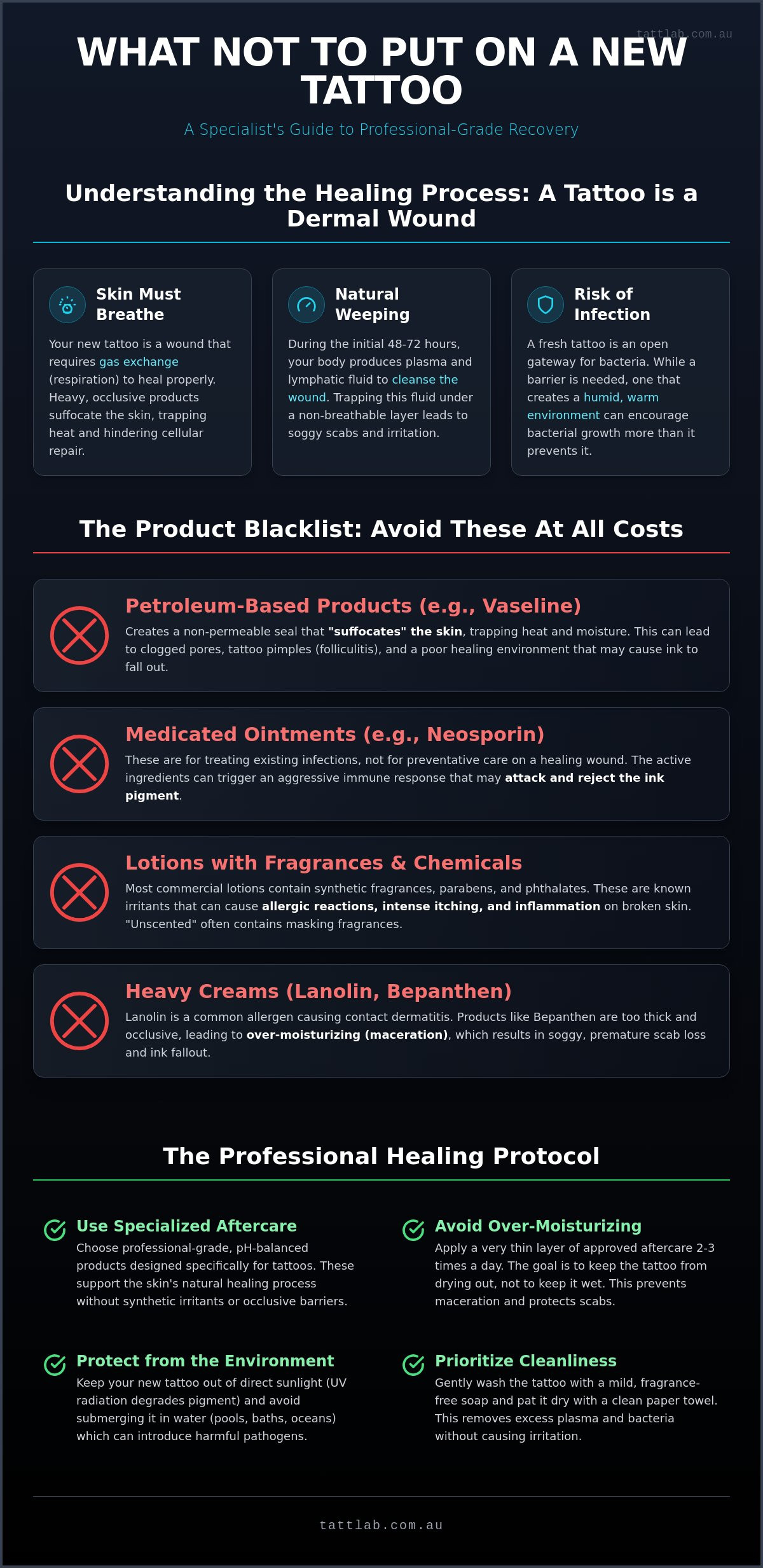
A tattoo isn't just a piece of art; it's a controlled medical wound that bypasses the epidermis to deposit pigment directly into the dermis. This process triggers an immediate inflammatory response as your body works to repair structural damage while simultaneously trying to encapsulate the foreign ink particles. Understanding The Biology of Healing is essential for anyone looking to maintain the integrity of their new work. During the initial 48 to 72 hours, your skin requires a steady state of gas exchange, often referred to as respiration. If you obstruct this natural process by applying heavy, occlusive substances, you create an environment where the skin cannot breathe, leading to heat retention and potential cellular distress.
This early window is also defined by the weeping phase. Your body produces plasma and lymphatic fluid to flush out impurities and begin the clotting process. If these fluids are trapped under a thick, non-breathable layer, they can stagnate. This often results in soggy scabs or excessive irritation, both of which are major red flags when considering what not to put on a new tattoo. Maintaining skin integrity isn't just about comfort; it's the biological foundation for how crisp and vibrant your lines will remain once the healing cycle completes.
The Dermal-Epidermal Junction
When a needle enters the skin, it creates thousands of microscopic channels. For the ink to settle permanently, these channels must heal from the bottom up. If the surface is sealed too early with incorrect products, it can cause an osmotic imbalance. This pressure can actually push ink back toward the surface, leading to ink rejection or a blurred, blown out appearance. Using specialised tattoo aftercare ensures that the skin remains permeable enough for gas exchange while providing a thin, protective barrier against external irritants.
The Risks of Pathogen Entry
Every fresh tattoo is an open gateway for opportunistic bacteria. In a professional studio, the environment is strictly controlled, but your home is filled with non-sterile surfaces and household dust. Finding the balance between protection and respiration is the primary challenge of the first week. You need a barrier that keeps pathogens out without creating a humid greenhouse effect that encourages bacterial growth. When you are deciding what not to put on a new tattoo, remember that your goal is to support the skin's natural defense mechanisms, not replace them with synthetic barriers. In the context of tattoo recovery, secondary intention healing refers to the process where the wound is left to close through the growth of new tissue from the edges inward rather than being surgically closed.
The Product Blacklist: What Not to Put on Your Tattoo
Selecting the wrong topical application can compromise the work of even the most skilled artist. While your skin is in its most vulnerable state, the ingredients you apply act as either a catalyst for regeneration or a source of cellular stress. A clear understanding of what not to put on a new tattoo helps you avoid the common pitfalls that lead to faded pigment and prolonged irritation. Adhering to Professional Standards means looking beyond household convenience toward clinical efficacy.
Medicated ointments like Neosporin or Bacitracin are designed to treat existing infections; they aren't formulated for the specialized needs of tattoo recovery. These products often contain active ingredients that can trigger an aggressive immune response. This response can effectively "pull" the ink out of the dermis as the body tries to purge the medication. Similarly, lanolin, which is derived from sheep's wool, is a known allergen for a significant portion of the population. It can cause a bumpy, raised texture known as contact dermatitis, which disrupts the smoothness of your healed lines and causes intense itching.
The Petroleum Jelly Myth
Petroleum-based products are perhaps the most misunderstood category in the industry. Historically, Vaseline was a studio staple because it was cheap and accessible, but modern science has moved past these heavy occlusives. Petroleum creates a non-permeable seal that traps body heat and prevents the vital gas exchange your skin needs. This "suffocation" effect often leads to tattoo pimples or folliculitis, where the hair follicles become inflamed under the heavy grease. Modern alternatives are designed to be compatible with professional tattoo ink, ensuring the pigment remains stable while the skin repairs itself.
Chemical Irritants in Supermarket Lotions
Supermarket lotions often contain hidden enemies like parabens and phthalates. These chemicals serve as preservatives but can be highly irritating to broken skin. You should also be wary of labels marked "unscented". In the cosmetics industry, "unscented" often means the product contains masking fragrances to hide chemical smells, rather than being truly fragrance-free. Even products like Bepanthen, which is traditionally used for nappy rash, can be problematic. Its thick, occlusive nature can over-saturate the wound, leading to the "soggy" scab issues we will discuss in later sections. For those seeking optimal results, selecting specialized tattoo aftercare ensures your skin receives only what it needs for restoration without the risk of synthetic irritants.
Environmental and Lifestyle Hazards to Avoid
While topical applications are a primary concern, the environment surrounding your healing skin is equally influential. A new tattoo exists in a state of high reactivity, meaning external stressors like UV radiation and moisture levels can dictate the final aesthetic outcome. Understanding what not to put on a new tattoo extends beyond lotions; it includes keeping the wound away from environmental contaminants that act as biological disruptors. In the Australian climate specifically, where UV indices frequently reach extreme levels, the margin for error is significantly narrower.
Lifestyle choices during the first 14 days can either facilitate a seamless recovery or introduce complications like ink fallout and infection. Activities that seem harmless, such as a session at the gym or a long soak in the bath, create a "petri dish" effect. Sweat is a saline solution that carries bacteria and metabolic waste, which, when trapped against the skin by tight clothing, can lead to localized inflammation. Similarly, the biological cost of picking or touching a healing tattoo is high; removing a scab prematurely often pulls pigment from the dermal layer, resulting in permanent "holidays" or gaps in your art.
The Sunscreen Paradox
One of the most common mistakes in aftercare is the premature application of sunblock. While UV radiation is the fastest way to degrade fresh pigment, you must not put sunscreen on a tattoo that is less than two weeks old. Sunscreen formulations often contain complex chemical filters and minerals that are safe for intact skin but highly irritating to an open wound. These substances can cause a stinging sensation or trigger an allergic reaction that compromises the healing tissue. During the initial fluid phase, UV rays can also cause "ink spread", where the pigment particles move slightly before they've been fully encapsulated by your cells. Instead of chemical barriers, rely on loose, breathable clothing to provide mechanical shade.
Water Safety and Bacteria
It's vital to differentiate between washing and soaking. A quick, lukewarm shower is necessary for hygiene, but submerging your ink in a pool, ocean, or bathtub is a major risk. Stagnant water is a breeding ground for pathogens that can easily enter the dermal-epidermal junction. Furthermore, prolonged submersion causes an "osmotic pull", where water enters the skin cells and effectively leaches out the pigment before it has settled. Following Clinically-Vetted Aftercare protocols means keeping the area dry and only using controlled cleaning methods. For studio owners and artists, maintaining these standards requires a strict adherence to medical supplies for tattoo artists to ensure the initial environment remains as sterile as possible before the client even leaves the chair.
The Danger of Over-Moisturising
While maintaining a baseline of moisture is essential for recovery, many enthusiasts cross the line into over-saturation. This leads to a clinical state known as maceration. When skin cells are over-saturated with moisture, the tissue softens and begins to break down. This often results in "soggy" scabs that feel wet or slimy to the touch. These compromised scabs don't protect the wound; instead, they fall off prematurely and take the settling ink with them, leaving gaps in your art. Understanding what not to put on a new tattoo includes knowing when to stop applying even the best products.
Identifying over-moisturised skin is straightforward if you know the clinical signs. You might notice small white bumps, which are often clogged pores or localized folliculitis caused by trapped moisture. The tattoo may also appear dull or have a milky sheen rather than a healthy, natural glow. The "Less is More" rule is the safest standard to follow. You should only apply a thin, breathable layer of product when the skin feels "tight" or noticeably dry. If you can see a shine on the surface after application, you've used too much.
Moisture vs. Hydration
True healing begins from within. Internal hydration through consistent water intake is just as vital for skin integrity as any topical application. While some subcultures advocate for the "dry healing" method, which involves no moisturiser at all, we recommend a balanced middle-ground approach. To perform a "touch test", press a clean finger against the area; if it leaves a wet residue or feels tacky, you've over-applied. For the best results, use professional aftercare solutions that are formulated to absorb quickly without leaving an occlusive film.
Managing the Itch Without the Cream
The intense itching that occurs during the scabbing phase is rarely a sign of simple dryness. It's actually a biological indicator of histamine release and nerve endings repairing themselves as they reconnect in the dermal layer. Slapping on more lotion won't stop this internal process and will likely lead to the maceration mentioned earlier. Instead of more cream, try applying a clean, cold compress for a few minutes to soothe the area. Never slap or hit the tattoo to relieve the sensation, as this causes micro-trauma to the delicate new tissue and can disrupt the pigment settling process.
Professional Standards: Choosing Clinically-Vetted Aftercare
Elevating your recovery from a basic healing process to a narrative of preservation requires a shift toward clinical-grade standards. While previous sections detailed what not to put on a new tattoo, the final step in protecting your investment is selecting products that support the skin’s biological homeostasis. Much like the advanced care provided by Bella Complexion for specialized skin treatments, professional tattoo supplies are specifically engineered for dermal puncture wounds rather than surface-level abrasions. These formulations prioritize sterile environments and the specific needs of skin that has undergone significant mechanical stress.
Standard household soaps often disrupt the skin’s natural acid mantle, leading to dryness and irritation that triggers the very itching you want to avoid. In contrast, pH-balanced, antimicrobial soaps designed for the tattoo industry cleanse the area without stripping away essential lipids. This targeted approach ensures that the wound remains clean and receptive to healing balms, which are designed to support the lipid barrier without the occlusive, pore-clogging side effects of petroleum or heavy waxes. By choosing artist-vetted supplies, you're replacing uncertainty with a sense of controlled, predictable progress.
What to Look for in a Tattoo Balm
A high-quality balm should feel lightweight and absorb steadily rather than sitting on the surface. Look for specialized botanicals and oils such as Grape Seed Oil or Vitamin E, which provide antioxidant support and facilitate cell regeneration. You can perform a breathability test by applying a small amount to the back of your hand; if the skin feels warm or "sweaty" under the product, it's likely too occlusive for a fresh tattoo. Tatt Lab stocks only artist-vetted brands that have been rigorously tested in professional Australian studios to ensure they meet these high standards of permeability and safety.
The Long-Term Preservation Mindset
Successful aftercare requires a mental shift from simply "healing a wound" to "preserving a permanent piece of art." This commitment doesn't end once the initial scabbing phase concludes. Once the skin is fully closed and the surface texture has returned to its natural state, your routine should transition from intensive healing balms to high-quality daily moisturisers. This ongoing hydration maintains the vibrancy of the ink and prevents the dullness that occurs as the epidermis thickens over time. Trusting the expertise of your artist and the clinical efficacy of your products is the only logical choice for long-term satisfaction. To secure the future of your ink, Explore our range of professional aftercare and studio supplies today.
Protecting Your Permanent Investment
Your tattoo is more than a technical procedure; it's a permanent narrative of personal transformation. Maintaining the integrity of that art requires a recovery process that respects the skin's biological complexity. We've explored how bypassing heavy occlusives and synthetic irritants allows for the essential gas exchange your dermis needs during its most vulnerable phase. Navigating the specifics of what not to put on a new tattoo ensures that your lines stay crisp and your pigment remains stable for years to come. Once your recovery is complete, you can confidently showcase your healed masterpiece in the vibrant social scene at Kiss My Brass.
As an artist-owned and operated facility, Tatt Lab is dedicated to providing medical-grade quality standards for all skin types. We prioritize physical integrity by offering professional-grade consumables that outperform household alternatives. With express nationwide shipping across Australia, you can access the same specialized tools used in the country's leading studios from the comfort of your home. You've already done the hard work of choosing the right artist. Now, let the science of professional recovery protect your vision.
Shop Professional Tattoo Aftercare & Supplies
Frequently Asked Questions
Can I put Bepanthen on my new tattoo?
While Bepanthen is a common household item, it isn't specifically formulated for the complex gas exchange required by a fresh tattoo. Its thick, occlusive consistency can over-saturate the wound, potentially leading to the soggy scabs and maceration mentioned earlier in this guide. For optimal healing integrity, it's better to choose a specialized balm that supports the skin's natural lipid barrier without the heavy, non-breathable seal characteristic of nappy rash creams.
Is it okay to use Vaseline if I only put a tiny bit on?
Even a thin layer of Vaseline is a risk because petroleum is a non-permeable substance that suffocates the skin. It creates a complete barrier that traps body heat and bacteria against the open wound, which can lead to localized infections or painful tattoo pimples. Modern aftercare science has moved past these heavy occlusives in favor of breathable formulas that allow the skin to regulate its temperature while the pigment settles into the dermal layer.
What happens if I accidentally put scented lotion on my tattoo?
If you apply scented lotion, the synthetic fragrances may cause an immediate inflammatory response or painful contact dermatitis. This irritation can lead to excessive redness, itching, and potential ink fallout as the body tries to purge the chemical irritants from the open wound. Gently wash the area with a pH-balanced, antimicrobial soap to remove the product, then monitor for signs of persistent swelling or heat, which could indicate a more severe reaction.
Can I put sunscreen on a fresh tattoo if I am going outside?
You should not apply sunscreen to a tattoo that is less than 14 days old. The chemical filters in sunblock are designed for intact skin and can be highly abrasive to a healing dermal wound. When considering what not to put on a new tattoo, remember that physical shade is your only safe option. Wear loose, dark clothing to block UV rays until the skin has fully closed and the initial scabbing phase is complete.
How many times a day should I apply cream to my new tattoo?
Most specialists recommend applying a thin layer of aftercare 2 to 3 times per day, but the touch test is a more accurate guide. Only apply product when the skin feels noticeably tight or dry to the touch. Over-application is a frequent cause of maceration, where the skin becomes oversaturated and the scabs soften. Your goal is a matte finish; if the tattoo looks shiny or feels slimy, you have used too much.
Is coconut oil safe to put on a new tattoo?
Coconut oil is a natural moisturiser, but it lacks the specialized vitamins and antimicrobial properties found in artist-vetted aftercare. While it is less occlusive than petroleum, it can still be heavy enough to clog pores in some skin types. For a professional-grade result, it's better to use a balm formulated with Grape Seed Oil or Vitamin E, which are specifically chosen to support the skin's biological regeneration without the risk of localized breakouts.
Why does my tattoo look dull after I put moisturiser on it?
A dull appearance often occurs when a product layer sits on the surface of the skin, reflecting light differently than the pigment beneath. However, if the dullness persists, it may be a sign of over-moisturising or the beginning of maceration. Ensure you are using a breathable formula that absorbs quickly into the tissue. Once the tattoo is fully healed and the epidermis has regenerated, the natural vibrancy of the ink will return as the skin's texture stabilizes.
Can I use rubbing alcohol to clean my new tattoo?
Rubbing alcohol is far too aggressive for a fresh tattoo and should be avoided entirely. It acts as a powerful desiccant, stripping the wound of all moisture and killing the very cells trying to repair your skin. This can lead to excessive scabbing, cracking, and a significantly higher risk of ink fallout. Always stick to gentle, fragrance-free, pH-balanced soaps specifically designed to cleanse without compromising the skin's delicate biological healing process.


Comments (0)
There are no comments for this article. Be the first one to leave a message!