

The transition from a protective barrier to topical hydration isn't just a matter of convenience; it's a critical biological shift from managing inflammatory exudate to restoring your skin's natural barrier. You've likely felt that moment of hesitation, wondering if you're suffocating your new piece or if removing the wrap too early will invite unwanted scabbing and ink fallout. Understanding exactly when to switch from wrap to moisturizer is the most vital decision you'll make in the first 72 hours of your tattoo's life.
We understand that the conflicting advice between traditional cling wrap and modern medical adhesives can be overwhelming for anyone prioritizing their physical integrity. This guide promises to replace that uncertainty with a professional, data-driven timeline to ensure your ink heals with clinical precision. We'll provide a day-by-day breakdown of the aftercare progression, including how to identify when your skin is physiologically ready for hydration and the specific steps to maintain vibrant, long-term results.
Key Takeaways
- Identify the distinct healing windows for traditional cling wrap versus medical-grade adhesive films to prevent premature environmental exposure.
- Recognize critical biological indicators, such as the cessation of plasma weeping, to determine exactly when to switch from wrap to moisturizer.
- Execute a precise "clinical wash" protocol to remove debris and prepare the dermal layer for optimal nutrient absorption without causing trauma.
- Understand how specialized ingredients like Shea Butter and Vitamin E in professional tattoo aftercare formulas support long-term skin integrity and ink vibrancy.
Understanding the Protective Phase: Why We Wrap Tattoos
A fresh tattoo is a precisely executed dermal injury. In the immediate aftermath of your session, the skin exists in a state of high vulnerability, characterized biologically as an "open wound" phase. During this window, the epidermis has been bypassed to deposit pigment into the dermis, leaving the internal layers exposed to the environment. Professional wrapping serves as a temporary synthetic epidermis. It acts as a sophisticated barrier that prevents external pathogens, bacteria, and debris from infiltrating the compromised tissue. This protective seal is essential for maintaining physical integrity while the body begins its complex inflammatory response.
The duration of this phase depends heavily on the type of material used. While traditional occlusive methods like cling wrap provide a short-term shield against domestic contaminants, modern medical-grade adhesives offer a breathable environment that supports gas exchange while remaining impermeable to liquids. Distinguishing between these methods is the first step in mastering when to switch from wrap to moisturizer. This transition isn't arbitrary; it's a calculated move based on your skin's move from active fluid production to the early stages of epithelialization.
The Biology of Tattoo Weeping
Immediately after the needles stop, your body begins producing an inflammatory exudate, a mixture of plasma, white blood cells, and excess ink. This "weeping" is a healthy sign of the body's immune system responding to the procedure. Standard protocols for Tattoo Aftercare prioritize this initial containment to manage these fluids. By keeping the area wrapped, you maintain a moist environment that is critical for cellular repair. This prevents the plasma from drying out prematurely, which can cause the ink to become trapped in a thick, hard scab that might eventually pull pigment away from the dermis.
Primary Goals of Initial Aftercare
The primary objective during the first 48 hours is fluid management and contamination control. By containing the plasma, the wrap ensures that the "ink-locking" process occurs without interruption from external friction or bacteria. This methodical approach reduces the risk of cross-contamination in your home environment, especially during sleep or daily activities. Effective initial care focuses on several key outcomes:
- Minimizing Scab Formation: Keeping the wound moist prevents the heavy crusting that leads to ink fallout.
- Pathogen Exclusion: Creating a sterile field that blocks opportunistic infections.
- Pigment Retention: Ensuring the ink settles into the dermis without being disturbed by premature drying.
This initial stage sets the foundation for the entire healing narrative. It ensures that when you finally reach the point when to switch from wrap to moisturizer, the underlying tissue is stable, clean, and ready to receive hydration without the risk of trapping bacteria beneath a layer of lotion.
Traditional Cling Wrap vs. Medical Adhesive: The Timelines
The timeline for your recovery depends almost entirely on the barrier material your artist selected. While the goal is always skin integrity, the chemical and physical properties of the wrap determine the specific moment when to switch from wrap to moisturizer. Following standardized medical advice on tattoo care ensures you aren't removing protection too early or leaving it on until it becomes a liability. Your artist's specific technique, such as the saturation of the ink or the trauma to the skin, also dictates how much fluid your body will produce, which directly impacts the wrap's lifespan.
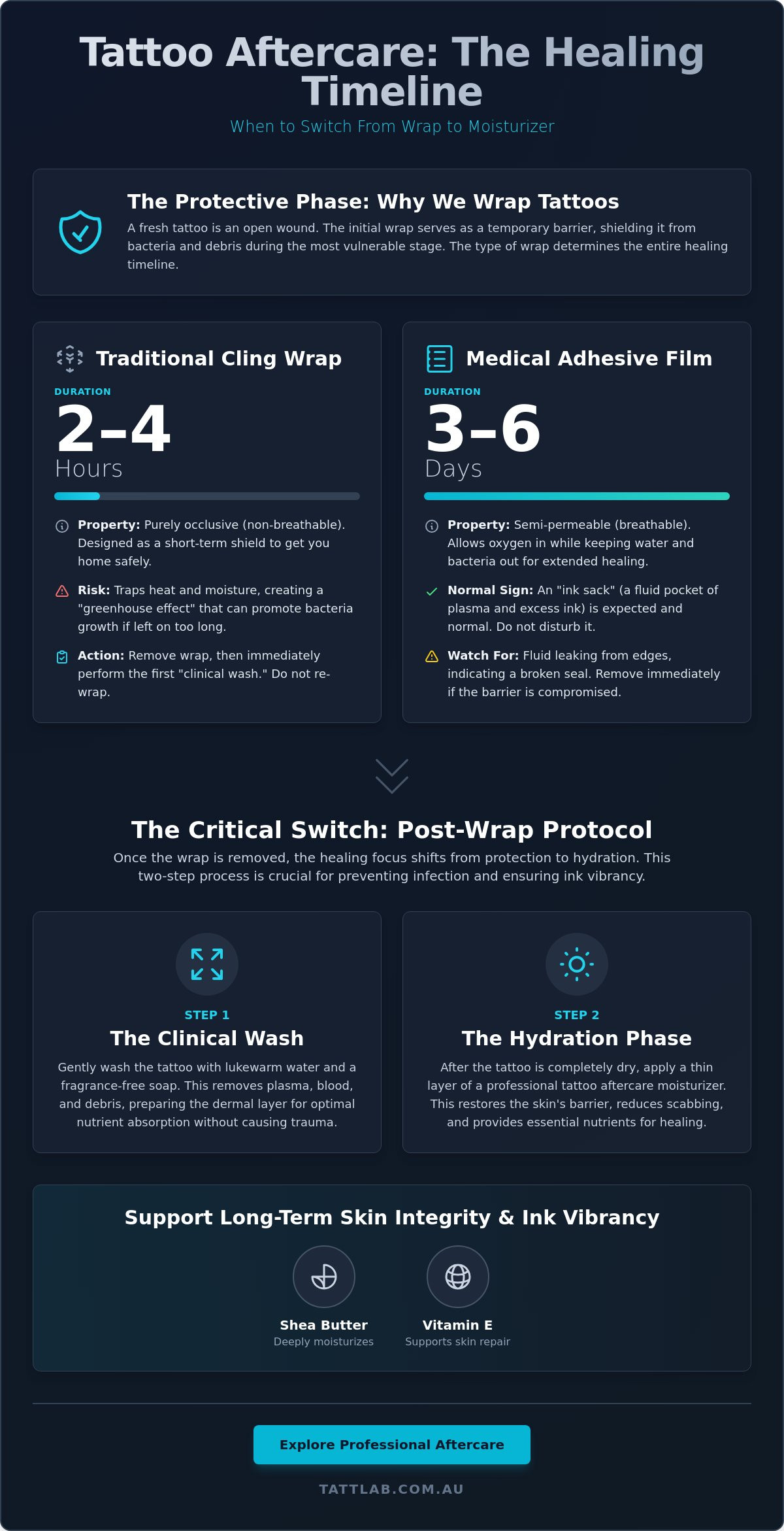
The Cling Wrap Protocol (2–4 Hours)
Traditional plastic film is purely occlusive. It's designed to get you from the studio to your home without environmental exposure. Because it doesn't allow for gas exchange, it quickly traps body heat and moisture, creating a "greenhouse effect" that can breed bacteria if left too long. You should remove this wrap within 2 to 4 hours. Once removed, the skin requires immediate cleansing to stop the "sweating" process. It's a short-term shield. Transitioning to a high-quality tattoo aftercare routine at this stage is essential for preventing the area from drying out too quickly.
The Medical Film Protocol (3–6 Days)
Medical-grade adhesive films operate on a different biological principle. These films are semi-permeable, meaning they allow oxygen to reach the wound while keeping water and bacteria out. This extended window of 3 to 6 days allows the skin to bypass the most volatile stage of healing while still sealed. It's common to see a dark, fluid-filled pocket under the film, known as an "ink sack." This is a normal accumulation of plasma and pigment. However, if the fluid leaks from the edges, the seal is compromised. A broken seal means the barrier is no longer sterile, and the wrap must be removed immediately to prevent trapping external bacteria against the wound. You should also watch for excessive redness or irritation around the adhesive edges, which may indicate a sensitivity to the material.
Determining when to switch from wrap to moisturizer with medical films usually happens once the film is removed on day four or five. Never attempt to re-wrap a tattoo yourself once the professional seal is gone. At this point, the wound has likely closed enough to begin the manual hydration phase. If you notice the film peeling significantly or if the "ink sack" becomes uncomfortably heavy, consult your artist before removing it earlier than planned. The transition must be methodical to avoid disrupting the new layer of skin forming beneath the film.
Clinical Indicators: When Your Skin is Ready for Moisturiser
The transition from occlusive protection to active hydration marks a pivotal moment in the healing narrative. While the initial wrap serves as a synthetic barrier, the decision of when to switch from wrap to moisturizer should be dictated by your skin's biological readiness rather than a rigid clock. The primary clinical indicator is the cessation of plasma weeping. If your tattoo still exhibits a "wet" or "leaking" surface, the dermal layer hasn't yet closed enough to safely receive topical products. Applying moisturizer too early can trap residual exudate, leading to bubbling or localized infections.
You'll observe a distinct visual shift as the inflammatory phase subsides. The surface will move from a glossy, "shiny and wet" appearance to a matte, "dull and tight" texture. Tactilely, the area will lose the radiating heat associated with the initial trauma. This cooling effect signals that the body has successfully managed the immediate injury and is moving toward structural repair. This "dryness" stage is your critical window; waiting until the skin actually cracks or peels is often too late and risks damaging the pigment's longevity.
The 48-Hour Threshold
For those using traditional methods, the 48-hour mark is frequently the standard transition point. At this stage, you must assess the surface integrity of the tattooed area. Healthy tightness feels like a firm, protective film over the ink. If you notice persistent, throbbing inflammation or excessive redness beyond this window, it's a sign to consult your professional before proceeding. The goal is to catch the skin just as it begins to feel parched but before it becomes brittle. This ensures the underlying layers remain supple as the body works to lock in the ink deposited by round liners and shaders.
Biological Signs of Transition
Re-epithelialisation is the biological trigger that indicates your skin has formed a new, albeit thin, protective layer and is ready for moisturising. This marks the shift from the inflammatory phase to the proliferative phase, where new tissue begins to bridge the gaps in the dermis. You can identify this through the "clean touch" test. After washing your hands thoroughly, gently tap a non-tattooed area near the ink, then the tattoo itself. If the tattoo feels dry and slightly "papery" rather than tacky or sticky, the transition is safe. Identifying this shift ensures you provide the necessary lipids exactly when to switch from wrap to moisturizer for optimal recovery. This methodical approach mirrors the precision of the tattoo process itself, prioritizing long-term aesthetic outcomes over quick fixes.
The Safe Transition Protocol: From Seal to Supple
Once you've determined the correct moment when to switch from wrap to moisturizer, the physical execution of that transition is paramount. Removing a protective barrier incorrectly can cause micro-trauma to the newly formed skin, potentially pulling pigment or causing unnecessary irritation. You should approach this process with the same level of care your artist used during the application. Start by washing your hands thoroughly with antimicrobial soap. If you're using an adhesive film, peel it back slowly and parallel to the skin rather than pulling upward. This technique minimizes tension on the dermal layers and prevents "skin stripping" around the edges of the tattoo.
Cleaning the Fresh Canvas
After the wrap is gone, the tattoo requires a "clinical wash" to remove residual plasma, ink, and adhesive. Use only lukewarm water. Hot water can dilate blood vessels and cause the area to weep again; cold water may not effectively break down the proteins in the dried exudate. Apply a fragrance-free, antimicrobial cleanser using only your clean fingertips. Never use a washcloth or sponge. These tools harbor bacteria and are far too abrasive for the healing tissue. If adhesive residue remains, don't scrub. Gentle circular motions with the cleanser will eventually lift it. Utilizing high-quality medical supplies for tattoo artists ensures that the cleaning agents are formulated for compromised skin rather than general household use.
The next step is often the most overlooked: the air-dry period. Instead of using a bathroom towel, which can transfer lint, fibers, and dormant bacteria into the wound, let the area air-dry for at least 15 to 20 minutes. If you're in a hurry, you may gently pat the area with a single-use paper towel, but complete air exposure is preferable. This ensures that no moisture is trapped under the first layer of cream. Trapped moisture is a common cause of "tattoo bubbling" and localized breakouts.
Moisturising with Precision
The "less is more" rule is the gold standard for your first application. You aren't trying to drown the skin. You're simply providing a breathable barrier of lipids to support elasticity. Apply a tiny amount of specialist moisturizer and massage it in until the skin looks hydrated, not greasy. If the surface remains shiny or sticky, you've used too much. Blot the excess away with a clean paper towel. The frequency of application depends on your environment and skin type. A dry, air-conditioned office might require three applications a day, while a more humid climate might only need two. By maintaining this balance, you ensure the skin stays supple without suffocating the follicles. For the best results, always choose a professional tattoo aftercare formula designed specifically for dermal recovery.
Elevating Your Healing: Specialist Aftercare for Long-Term Integrity
The final phase of your recovery narrative shifts from protection to preservation. While the previous sections established the precise biological window of when to switch from wrap to moisturizer, the chemical composition of your chosen product determines whether you're merely hydrating the surface or actively supporting dermal remodeling. Generic drugstore lotions often rely on heavy occlusives or synthetic fillers that can compromise the delicate balance of a healing wound. Specialist formulas are engineered to mirror the skin's natural lipid profile, providing the necessary nutrients without the risk of follicle suffocation.
To maintain the physical integrity of your ink, you must be discerning about ingredient labels. Many commercial products contain petroleum, which creates an impermeable seal that traps heat and prevents vital gas exchange. Others use lanolin, a common allergen that can trigger localized inflammation. You should also strictly avoid artificial fragrances and alcohols, as these are primary irritants for compromised tissue. Instead, prioritize formulations rich in bio-available ingredients:
- Vitamin E: A potent antioxidant that neutralizes free radicals and supports cellular repair.
- Shea Butter: A superior emollient that maintains skin elasticity and prevents the "tight" feeling of the proliferative phase.
- Natural Oils (Jojoba or Grapeseed): These mimic the skin's sebum, penetrating deeply to nourish the dermal layers where the pigment resides.
Why Clinical Formulations Matter
Professional products do more than just alleviate dryness; they provide a protective matrix that supports the skin's natural barrier functions. This is particularly critical for preventing pigment oxidation. During the first few weeks, your tattoo ink is still settling into the dermis. Exposure to environmental stressors without adequate antioxidant protection can lead to premature fading or a loss of detail. Clinical aftercare ensures the pigment remains vibrant and the lines remain sharp by stabilizing the environment around the ink particles. As your skin moves from the "healing" stage to long-term maintenance, transitioning to a high-quality daily moisturizer will keep the area supple and the art looking its best.
The Tatt Lab Standard
At Tatt Lab, we view the healing process as a specialized extension of the artistic procedure. Our commitment is to provide artist-vetted, medical-grade solutions that respect the body's biological requirements. We curate Australia's most effective healing solutions, ensuring every piece of art we support receives the meticulous care it deserves. Once you've identified the correct moment when to switch from wrap to moisturizer, we invite you to explore our professional-grade tattoo aftercare range. It's a sophisticated approach to skin health that prioritizes safety, science, and the enduring legacy of your personal transformation.
Mastering the Transition to Long-Term Vibrancy
Navigating the early stages of tattoo recovery requires a blend of patience and biological awareness. Moving beyond the synthetic protection of a wrap into a focused hydration routine is a significant milestone in your healing narrative. You now understand that the specific material of your barrier, whether it's traditional film or medical-grade adhesive, dictates your initial timeline. Identifying clinical markers like the cessation of plasma weeping provides the confidence needed to know exactly when to switch from wrap to moisturizer without risking the integrity of your ink.
As an artist-owned and operated specialist, Tatt Lab prioritizes medical-grade safety standards to ensure your personal transformation is supported by scientific rigor. Our curated selections bridge the gap between clinical health and aesthetic excellence. We provide express nationwide shipping across Australia so you can access professional-grade formulas the moment your skin is ready for the next phase of its journey. This methodical approach ensures your results are predictable and your skin remains resilient.
Shop Australia’s Most Trusted Tattoo Aftercare Range
Your tattoo is a permanent narrative of your self-assurance. By applying these precise aftercare steps, you ensure your art remains as vibrant and sharp as the day it was created. Trust the process, respect the science, and enjoy the lasting clarity of a perfectly healed result.
Frequently Asked Questions
Can I switch to moisturiser after only 12 hours?
You can transition to moisturizer after 12 hours if your artist used traditional cling wrap, as these barriers must be removed within a few hours to prevent bacterial growth. However, if you are wearing a medical adhesive film, 12 hours is usually too early for removal. These professional films are designed to stay on for several days to manage the initial inflammatory phase. Always ensure the weeping has stopped before applying any topical products to the area.
What happens if I start moisturising while the tattoo is still weeping?
Applying moisturizer while the tattoo is still actively weeping creates an occlusive trap for plasma and residual ink. This excess moisture often leads to "tattoo bubbling" or localized infections because the skin cannot breathe properly. It also hinders the formation of a stable new skin layer. Waiting until the surface is matte and dry to the touch is the most critical factor in when to switch from wrap to moisturizer to ensure long-term pigment stability.
Should I re-wrap my tattoo at night after I’ve started using moisturiser?
You should never re-wrap your tattoo once you have begun the moisturizing phase. Re-wrapping a tattoo that has been treated with cream creates a high-heat, high-moisture environment that encourages rapid bacterial proliferation. This can lead to significant skin irritation or serious infection. Instead, wear loose, clean cotton clothing to protect the area while you sleep. This allows the skin to maintain its natural gas exchange while staying shielded from environmental debris.
My tattoo is peeling—should I apply more moisturiser?
Peeling is a natural part of the healing process, but you shouldn't increase the amount of moisturizer to try and "stop" the flakes. Over-moisturizing can soften the scabs prematurely, which may lead to ink fallout and patchy results. Continue with a very thin, translucent layer two to three times daily. The goal is to keep the skin supple enough to prevent cracking. Never pick or pull at the peeling skin, as this damages the underlying pigment.
Can I use coconut oil instead of a specialist tattoo cream?
While coconut oil has some antimicrobial properties, it is often too greasy for the initial transition phase and can clog your pores. Specialist tattoo creams are formulated with a specific lipid balance to support dermal repair without suffocating the follicles. These professional products often include antioxidants like Vitamin E to prevent pigment oxidation. For the best aesthetic outcome, use an artist-vetted formula that respects the specific biological requirements of compromised skin rather than a general household oil.
Why does my tattoo feel itchy during the transition to moisturiser?
Itching is a sign that your body is releasing histamines as part of the standard inflammatory and repair response. It also indicates that the skin is becoming dry as it forms a new protective layer. Applying a thin layer of specialist moisturizer can alleviate this discomfort by restoring the skin's elasticity and soothing the nerves. If the itchiness is accompanied by extreme redness, bumps, or a rash, it might be a reaction to a product rather than a standard symptom.
How many times a day should I apply moisturiser once the wrap is off?
Most individuals find that applying a thin layer two to three times a day is sufficient once the wrap is removed. Your specific environment and skin type will influence when to switch from wrap to moisturizer more frequently throughout the day. If you work in a dry, air-conditioned office, you might need a third application to prevent tightness. In more humid conditions, twice a day is usually enough. The skin should always look hydrated but never feel sticky.
What should I do if my medical wrap leaks before the 3-day mark?
If your medical adhesive leaks, the sterile seal is compromised and the wrap must be removed immediately. Bacteria can now enter the space between the film and your skin, significantly increasing the risk of infection. Once removed, perform a thorough wash with antimicrobial soap and let the area air-dry completely. Depending on how many days have passed, you may then begin the moisturizing protocol. Never attempt to "patch" a leaking wrap with tape or additional film.


Comments (0)
There are no comments for this article. Be the first one to leave a message!