

Supporting an apprentice takes financial planning as well as a commitment to teaching. Studio owners need to budget for wages, training costs and the time required to guide learning. Knowing how to support your studio's apprentices means preparing for these responsibilities while setting up structured training and clear expectations.
Teaching technique may be the first priority, but apprentices also need regular feedback, transparent employment conditions and time for formal training. Without these foundations, expectations can become unclear for both the apprentice and the studio.
This guide explains how to assess your studio’s readiness, provide practical training and plan for the financial commitments. It also covers setting expectations and building a learning pathway, so you can decide whether your studio is ready to take on an apprentice.
Key Takeaways
- Plan formal training alongside supervised studio learning, and enrol apprentices with a TAFE or registered training organisation within the required timeframe.
- Set expectations in writing, explain safety procedures from day one and make regular feedback part of the learning routine.
- Assess whether your studio has the time, equipment and mentoring capacity to support an apprentice’s development before defining the role.
- Build pay and training costs into your decision: apprentice wages follow the relevant award or enterprise agreement, and employers are usually required to reimburse tuition fees.
Access to on-the-job and off-the-job training
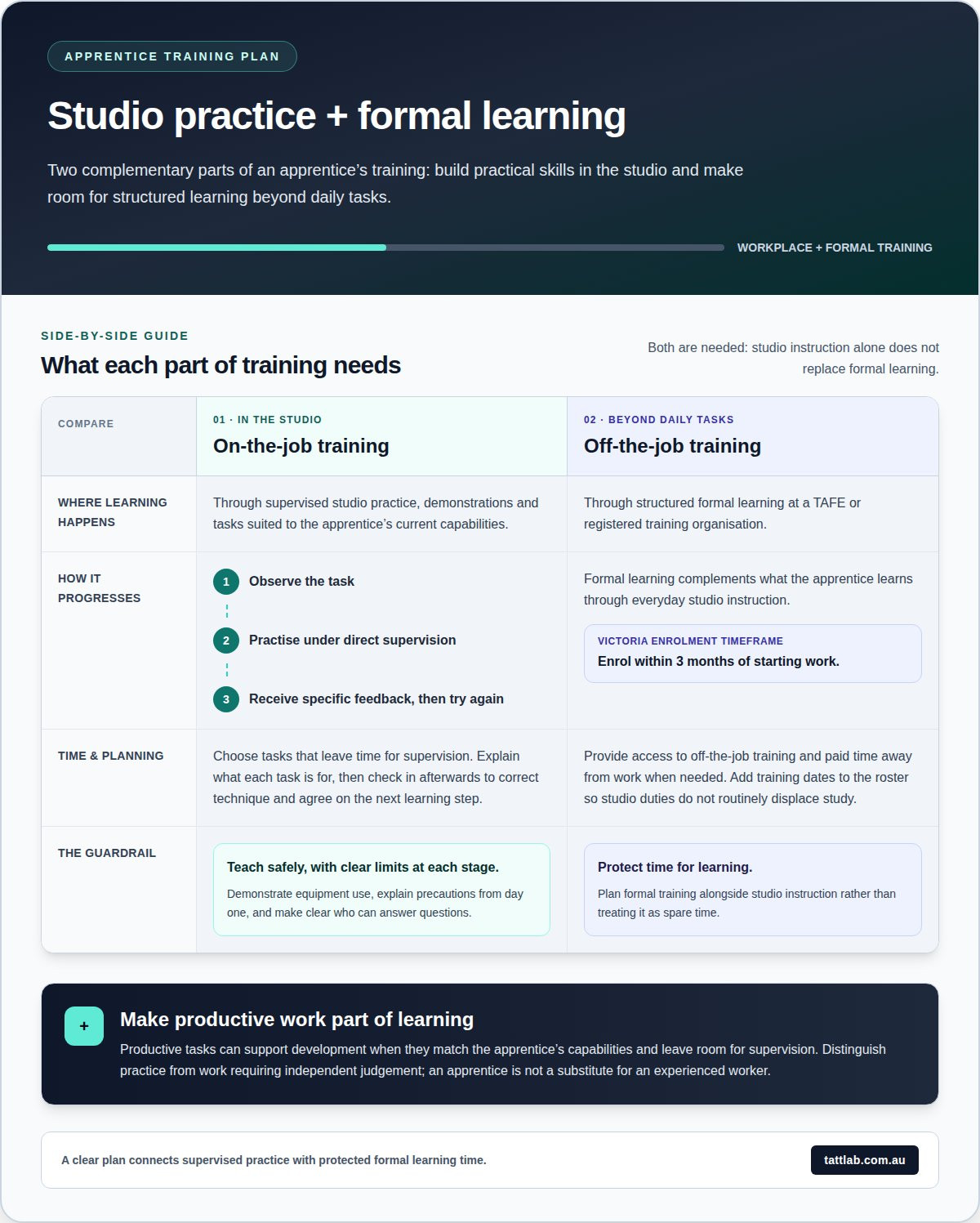
A sound training plan combines supervised studio practice with formal learning. In Victoria, it also requires formal training enrolment within the required timeframe.
On-the-job training
Workplace learning should progress from observation to supervised practice, with clear limits at each stage. An apprentice might first observe a task, practise relevant techniques under direct supervision, then receive specific feedback before trying again. Provide a safe working environment and demonstrate how to use each piece of equipment the apprentice will handle. Explain precautions from day one, and make clear who is available to answer questions.
Off-the-job training and paid time
Formal training complements studio instruction with structured learning beyond daily tasks. In Victoria, an apprentice or trainee must enrol in formal training at a TAFE or registered training organisation within three months of starting work. Employers should provide access to off-the-job training and paid time away from work when needed. Add training dates to the roster so studio duties don’t routinely displace study.
Balancing training and productive work
Productive work can support learning when tasks suit the apprentice’s current capabilities and leave time for supervision. Distinguish practice activities from work requiring independent judgement, and explain the purpose of each task. A brief check-in afterwards gives the supervisor a chance to correct technique and agree on the next learning step. This approach supports workflow without treating the apprentice as a substitute for an experienced worker.
Progress depends on more than technique: apprentices need direction, feedback and a clear path through each program phase. Schedule regular conversations about progress, workload and questions, and make another trusted staff member available when the primary mentor is busy. To support wellbeing and prevent bullying or discrimination, set expectations for respectful conduct, address concerns promptly and provide a private way to raise them. These steps help create a workplace where apprentices can focus on learning.
Employer guidance and apprentice support
Consistent guidance starts before an apprentice’s first shift and continues throughout their development. A journey map can outline each stage, from recruitment and induction to feedback, training and completion.
Explaining employment conditions
Discuss employment conditions before the apprenticeship starts, then provide a typed copy covering working hours, pay, workplace rules, leave conditions and other necessary information. Explain any unfamiliar terms. A written agreement can clarify work expectations, compensation, apprenticeship length and other relevant details, giving both parties a shared reference.
Consider the apprentice’s perspective at each stage. A new starter may need clear routines, while someone further along in training may benefit from more responsibility and focused feedback. Regular meetings can reveal unclear expectations and connect career goals with day-to-day work. A practical answer to how to support your studio's apprentices starts with making expectations clear and accessible.
Guidance and resources for employers
Name a person the apprentice can approach with questions, and schedule regular conversations about workload, progress and concerns. This creates a clear support pathway instead of leaving the apprentice to guess whom to ask. Clear guidance can help employers develop future workers and supervisors, strengthen workplace training and foster a more supportive learning culture.
Map the apprentice’s journey by identifying starting skills, setting learning milestones, reviewing progress and agreeing on next steps. This lets the mentor tailor guidance to current needs rather than relying on a one-size-fits-all approach. Funding and incentives depend on the program and eligibility criteria, so keep them separate from the studio’s core commitments. Include wages, training arrangements and supervision in workforce planning. To support your studio's apprentices over time, make guidance an ongoing process, not a single induction conversation.
Explain safety precautions from the apprentice’s first day, demonstrating safety measures for each piece of equipment or machinery they will use. In Victoria, employers must sign an apprenticeship or traineeship training contract with the apprentice or trainee within 14 days of the job starting. Employer resources on NSW Business Chamber websites were difficult to find in larger resource libraries.
Assessing studio readiness and the role
Readiness means having a defined role, realistic learning opportunities and enough mentor capacity. Assess the studio’s workflow before offering an apprenticeship, rather than waiting until responsibilities become unclear.
Map the apprentice’s likely work across a typical studio week. Identify who will teach each task, when supervision is available and which activities match the apprentice’s current skills. For example, observing consultations may be appropriate before helping prepare a workspace. If the mentor’s schedule leaves no time for demonstrations or feedback, adjust the duties before recruitment.
Consider whether the apprentice will learn within the studio’s established aesthetic tradition or develop an individual creative direction. Either approach requires clear expectations. Decide how to assess progress, whether critiques will be formal and how often you’ll discuss the work. These decisions shape the role and give the apprentice a visible route from observation to greater responsibility.
To assess how you might work together, invite a potential apprentice to join the team at a firing, studio sale or craft show. Observe how they communicate, respond to direction and contribute to shared tasks. Explain the activity beforehand, then discuss what each person learned afterwards. This offers a practical view of working together before a longer commitment.
Set boundaries around the apprentice’s independent work. Decide whether studio time allows personal projects, whether completed work can be sold as studio production and how apprentice work will be identified. Include these expectations in the role discussion to prevent credit or ownership becoming sources of tension.
If you use a trial period, specify whether it will last a few weeks or months and set a review date. Use the meeting to discuss attendance, learning progress, communication and support needs. A clear review process lets both parties assess the fit against agreed expectations rather than assumptions. Readiness shows in the studio’s ability to teach consistently, protect learning time and give the apprentice a defined place in its workflow.
Apprentice pay and financial support
In Victoria, apprentice wages must follow the relevant award or enterprise agreement. Employers are usually required to reimburse apprenticeship and traineeship tuition fees. Budget for wages and tuition separately, then include paid training time and the supervisor’s teaching time. For example, if the roster releases an apprentice for off-the-job learning, account for their wages during that time too.
Before committing to the role, identify the applicable award or enterprise agreement and use its apprentice provisions to determine pay. The correct amount depends on the relevant instrument and the apprentice’s circumstances, so don’t substitute an ordinary studio rate or informal arrangement. Record how the wage was calculated in your employment planning, and review it if the apprentice’s circumstances or training arrangements change.
Set up a clear process for tuition reimbursement. Budget for course fees, note when reimbursement is due and retain relevant enrolment and payment records. This makes training costs visible alongside everyday staffing expenses. Don’t assume a support program automatically pays the employer: distinguish assistance for the apprentice from costs the studio is responsible for meeting.
Victoria’s Apprenticeship Support Officer Program supports apprentices aged 15 to 28 during their first year of training. Include this support in the apprentice’s broader pathway, alongside workplace mentoring and formal study. It doesn’t replace the studio’s wage or tuition responsibilities. A practical budget review should therefore cover the applicable wage basis, tuition reimbursement, paid training time and supervision capacity before the start date. If those commitments cannot fit the studio’s current finances and workflow, adjust the timing or role before making an offer. Clear planning protects the training relationship from avoidable financial surprises and helps the apprentice understand the support available during their first year.
Tatt Lab
Tatt Lab supplies professional tattoo equipment and consumables for day-to-day studio work. As an apprentice moves from observation to supervised practice, having the studio’s chosen supplies organised can help keep sessions consistent with established procedures.
Studios can source Tattoo Aftercare, Traditional Needles, Tattoo Catridges and Tattoo Inks from Tatt Lab. These products support practical studio needs, while mentoring, formal training and employment support remain the foundation of an apprenticeship. Choose supplies that suit supervised tasks and the studio’s established approach, rather than treating equipment as a substitute for instruction.
Planning your studio’s apprentice setup? Shop professional tattoo supplies at Tatt Lab.
Make room for the next stage of studio growth
Mentoring an apprentice can shape the studio’s future as well as one artist’s career. Start by turning your intentions into a practical plan: define what the apprentice will learn, who will guide them and how the role fits into studio operations. That clarity helps put the principles of how to support your studio’s apprentices into consistent practice.
As you prepare, consider the supplies used in everyday studio work. Tatt Lab offers Tattoo Aftercare, Traditional Needles and Tattoo Catridges, helping studios source essentials while planning for an apprentice. Choose supplies suited to supervised work, and let training and mentorship guide the learning process.
Contact Tatt Lab about apprentice support and take the next step towards a considered, sustainable learning environment. With a clear plan and steady guidance, your studio can help an emerging artist build skills with care and confidence.
Frequently Asked Questions
What are the best ways to mentor and support apprentices in a creative studio?
Pair practical instruction with feedback that distinguishes technique from personal taste. After an apprentice presents a design, for example, discuss line control, composition and how well the work responds to the brief before sharing stylistic preferences. Invite them to explain their decisions, then agree on one skill to practise next. This builds independent judgement through specific, constructive critique.
How can a studio create a structured apprenticeship training plan?
Use a learning record that links each skill to observable evidence. For a design task, note whether the apprentice observed a demonstration, completed supervised practice, received feedback and identified a next step. Keep the record accessible to both apprentice and mentor, and use it to plan future tasks. This makes development easier to discuss than relying on memory or general impressions.
What costs should a small studio budget for when hiring an apprentice?
Budget for wages under the relevant award or enterprise agreement, tuition fees that employers are usually required to reimburse in Victoria, and paid training time. Also account for the mentor’s time, administration and supplies used during supervised practice. These are planning categories, not fixed costs: the total depends on the training arrangement, roster and applicable employment conditions.


Comments (0)
There are no comments for this article. Be the first one to leave a message!