

What if the "pain is a rite of passage" mantra is actually holding back the quality of your final piece? For many, the fear of involuntary muscle twitching during a long session or the sharp sting on the ribs creates an anxiety that disrupts the biological rhythm of the tattoo process. You likely worry that numbing agents might compromise the canvas, making the skin "rubbery" or difficult for your artist to navigate. It's a valid concern, especially since the FDA issued critical warnings in March 2024 regarding OTC products exceeding a 4% lidocaine concentration. However, when you understand the clinical benefits of using tattoo numbing cream within safe, regulated parameters, the conversation shifts from avoiding pain to optimizing skin stability.
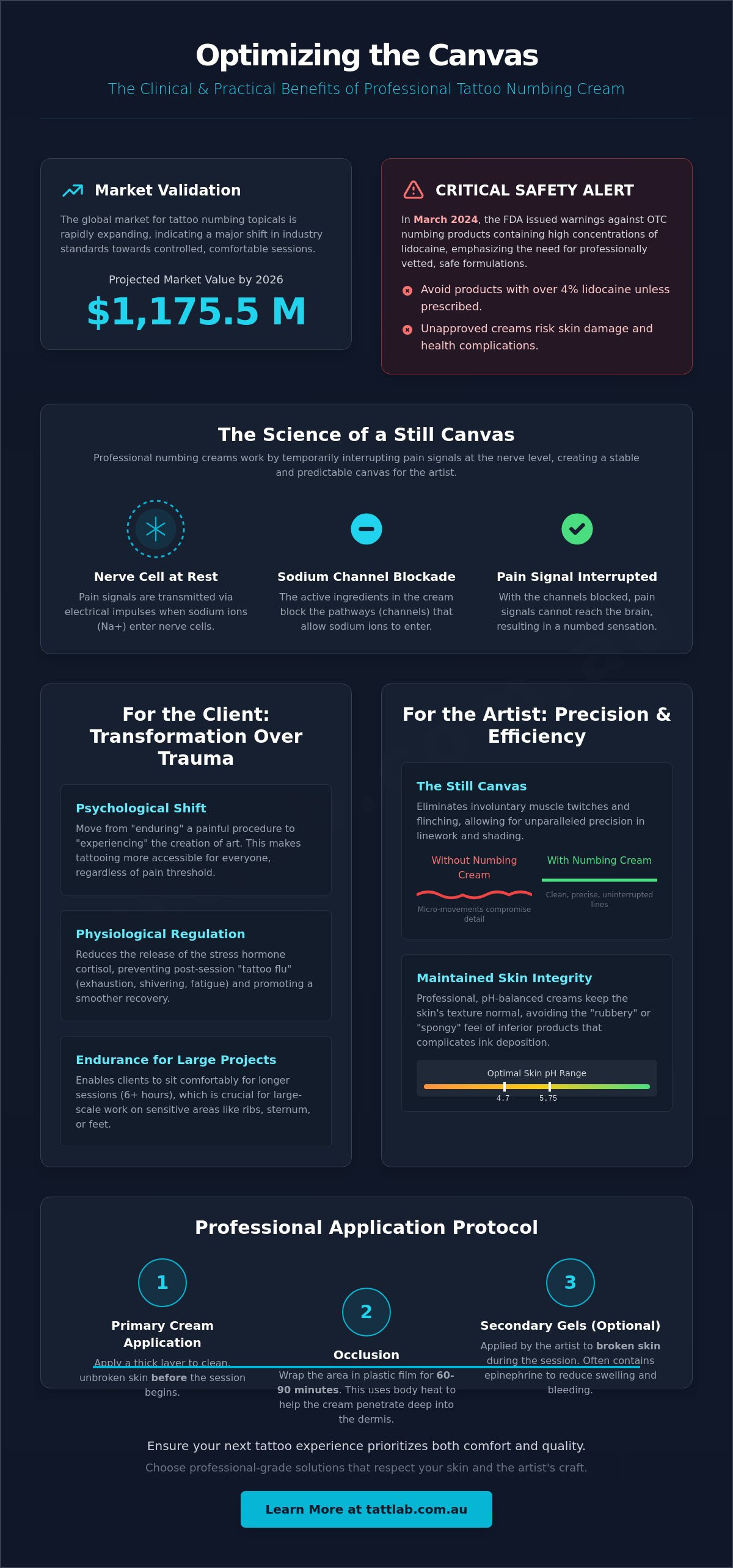
With the global market for these specialized topicals reaching $1,175.5 million in 2026, it's clear that both specialists and clients are prioritizing a more controlled, predictable environment. This guide explores how professional grade formulations transform the tattooing journey by prioritizing skin health and session endurance. We'll examine the science of skin integrity, the latest 2026 safety standards, and how to select a product that supports ink clarity while keeping your nervous system calm and focused.
Key Takeaways
- Understand the biological mechanism of sodium channel blockade and how professional-grade topicals ensure a stable, predictable session.
- Explore the psychological and physiological benefits of using tattoo numbing cream to regulate cortisol levels and minimize the risk of post-session exhaustion.
- Learn how a "still canvas" allows for greater precision in linework and more efficient time management during complex, high-endurance projects.
- Prioritize skin health by identifying high-quality formulations that adhere to the 2024 FDA safety standards while avoiding the "rubbery" texture of inferior products.
- Master the professional protocol for application timing to ensure seamless integration between the numbing phase and the first needle stroke.
Understanding Topical Anaesthetics: How Tattoo Numbing Cream Works
Tattoo numbing cream is a specialized topical anesthetic designed for deep dermal penetration. Its primary function is to temporarily desensitize the area where the needle will be working. The science behind this involves a mechanism known as a sodium channel blockade. When the cream is applied, it prevents sodium ions from entering the nerve cell membrane. This action stops the electrical impulses that carry pain signals to your brain. One of the most significant benefits of using tattoo numbing cream is this precise control over the body's immediate pain response, allowing for a more predictable session.
Beyond simple pain relief, the formulation's pH level plays a critical role in skin integrity. The human skin barrier typically maintains a pH between 4.7 and 5.75. Professional-grade creams are engineered to be pH-balanced to avoid disrupting this delicate environment. If a product is too alkaline, it can cause the skin to become "spongy" or "rubbery," which complicates the artist's ability to deposit ink accurately. Maintaining the skin's natural texture is vital for long-term ink clarity and a smooth healing process. This clinical focus ensures the skin remains a viable canvas from the first pass to the final highlight.
The Chemistry of Comfort: Lidocaine, Prilocaine, and Benzocaine
Professional formulations usually rely on a curated mix of active ingredients. Lidocaine is the industry standard, known for its quick onset and reliable performance. Prilocaine is often paired with it to extend the duration of the effect, reaching deeper into the dermal layers. Benzocaine provides a faster surface-level numbing. Topical anesthesia is a temporary interruption of peripheral nerve conduction. In our lab-focused approach, we recognize that just as picosecond-level precision is required for laser removal, a still canvas is necessary for ink application. When the skin is calm, the artist can focus on the microscopic details of the design without the distraction of client movement.
Primary vs. Secondary Numbing: Timing the Journey
The tattooing journey involves two distinct types of numbing agents. Primary creams are designed for intact skin. They require a process called occlusion, where the area is wrapped in plastic for 60 to 90 minutes. This creates a heat-trapping environment that drives the lidocaine through the stratum corneum. Secondary gels are applied once the skin has been opened by the needle. These often contain epinephrine, which acts as a vasoconstrictor to reduce swelling and minor bleeding. By understanding the benefits of using tattoo numbing cream, you can better coordinate the timing of your session. Tatt Lab emphasizes using only vetted supplies that respect the biological complexity of your skin, ensuring that comfort never comes at the expense of safety.
Client-Side Benefits: Enhancing the Tattoo Journey Through Pain Management
The tattooing process is often romanticized as a test of will, but for many, the true value lies in the final aesthetic result rather than the physical struggle. By modulating the pain response, one of the primary benefits of using tattoo numbing cream is the psychological shift it facilitates. You move from a state of "enduring" a procedure to "experiencing" the creation of art. This transition is particularly liberating for individuals with lower pain thresholds or chronic pain conditions who might otherwise feel excluded from the culture of body modification. It's about reclaiming your skin on your own terms, ensuring the memory of the session is defined by transformation rather than trauma.
Physiologically, managing pain is a matter of hormonal regulation. High-intensity pain triggers a significant release of cortisol, the body's primary stress hormone. When cortisol levels spike and remain elevated for hours, it can lead to "tattoo flu," a state of systemic exhaustion, shivering, and fatigue that sets in after the adrenaline fades. Using a professional-grade topical anesthetic helps keep the nervous system in a parasympathetic state. This lower-stress environment prevents the biological burnout that often follows long sessions, allowing for a much smoother recovery period. However, safety remains paramount. The FDA warning on unapproved numbing creams issued in March 2024 serves as a critical reminder to choose products that respect your body's chemistry without exceeding safe lidocaine limits.
Endurance for Large-Scale Masterpieces
Large-scale work on sensitive areas like the ribs, sternum, or armpits presents a unique challenge for even the most seasoned collectors. Physical comfort is directly correlated with your ability to sit still for six hours or more. When the body is under duress, involuntary muscle spasms can occur, which are impossible to control through willpower alone. These micro-movements can disrupt the precision of intricate linework. By utilizing a numbing solution, you provide your artist with a steady canvas, ensuring that every detail is executed with the exactness it deserves. This focus on endurance is why many specialists now consider pain management a standard part of comprehensive tattoo care.
Mitigating Needle Phobia and Session Anxiety
For some, the barrier to getting tattooed isn't the pain itself, but a deep-seated anxiety or past trauma related to needles. Numbing cream acts as a vital safety net, providing a layer of psychological comfort that lowers the heart rate and steadies the mind. A calm mind leads to a steady body, which is essential for a successful outcome. We view this process as a partnership in your personal evolution. By removing the fear of the "sting," you can focus on the significance of the piece you're receiving. This clinical yet empathetic approach ensures that your journey toward clarity and self-expression is as peaceful as it is professional.
Professional Advantages: How Numbing Creams Optimise the Artist’s Workflow
While much of the dialogue surrounding topical anesthetics focuses on the client’s comfort, the technical advantages for the practitioner are equally significant. For a professional artist, a steady, unmoving canvas is the foundation of precision. One of the primary benefits of using tattoo numbing cream is the "still canvas" effect, where the absence of involuntary flinching allows for unparalleled linework accuracy. When a client isn't bracing for impact, the artist can maintain a consistent hand speed and needle depth. This consistency is vital for ensuring even ink saturation and preventing "blowouts" caused by sudden micro-movements. Utilizing high-quality professional tattoo supplies alongside a vetted numbing protocol creates a controlled environment where the art can truly flourish.
Session endurance isn't just a client requirement; it's an artist's necessity. Managing a client in high levels of distress is mentally and physically draining. It requires constant verbal reassurance and frequent posture adjustments to compensate for the client's shifting. By integrating numbing agents, the artist can redirect that energy back into the technical execution of the piece. This shift in focus is especially critical during complex cover-ups or multi-session back pieces where the mental load on the artist is already substantial. In a May 2026 industry survey, artists reported that a pain-free client environment reduced their subjective mental fatigue by 35% over an eight hour shift.
Precision and Technical Execution
Achieving the perfect gradient or a razor-sharp fine-line requires absolute stability. In styles like single-needle realism or delicate geometric work, even a millimeter of movement can compromise the entire design. The benefits of using tattoo numbing cream become clear when working on high-sensitivity zones where nerves are closer to the surface. A calm nervous system ensures that the skin doesn't become inflamed or "tight" from stress, allowing for better "clearance" and visibility. This stability enables the artist to achieve higher levels of detail in a single pass, which significantly reduces the need for secondary touch-ups later in the healing journey.
Studio Efficiency and Client Retention
From a business perspective, efficiency is paramount. A session that is repeatedly interrupted by breaks to manage pain is a session that loses profitability. Reducing these interruptions leads to better time management for the studio, allowing for more accurate scheduling and higher daily throughput. Beyond the clock, offering a modern, pain-managed experience builds a reputation for elite client care. Clients who feel supported and comfortable are statistically more likely to return for larger, more complex projects. It also preserves the artist’s own longevity; by avoiding the awkward, strained positions needed to pin down a flinching client, you reduce the long-term physical toll on your back, neck, and hands.
Prioritising Skin Integrity: Safety, Ingredients, and Clinical Best Practices
At the Lab, we view numbing as a clinical intervention that must be balanced with the long term health of your skin. When exploring the benefits of using tattoo numbing cream, you must account for the biological reality of the dermal barrier. Safety isn't a secondary concern; it's the framework of our practice. A 24 hour patch test is non negotiable to identify potential contact dermatitis or allergic reactions before a full application. By respecting the skin's natural defense systems, we ensure the tattooing process remains a journey of transformation rather than a source of medical complication.
The core of a successful session lies in maintaining the skin's receptivity to pigment. While the benefits of using tattoo numbing cream include significant pain reduction, these are only fully realized when the skin's physical structure is respected. Misuse of topicals can lead to the "rubbery skin" phenomenon, which complicates ink deposition. This texture change is typically the result of using poor quality formulas or leaving the cream under occlusion for too long. For those focused on long term results, mastering tattoo aftercare starts with ensuring the skin isn't traumatized during the numbing phase.
Avoiding Complications: Lidocaine Toxicity and Over-Absorption
Clinical safety requires a strict adherence to dosage. Applying high concentration lidocaine to massive surface areas, such as a full back or both legs, can lead to systemic absorption and lidocaine toxicity. Following the March 2024 FDA guidelines, it's vital to use products that don't exceed the recommended 4% lidocaine threshold for OTC use. Signs of adverse reactions include lightheadedness, a metallic taste in the mouth, or blurred vision. If these occur, the cream must be removed immediately. We prioritize a methodical approach, numbing only the specific zone being worked on to keep the body's internal systems stable and focused on healing.
Maintaining Optimal Skin Texture for Ink Saturation
Optimal ink uptake requires a clean, hydrated canvas. Before the first needle stroke, the numbing cream must be thoroughly removed using a pH balanced cleanser. Any residual oils can prevent the stencil from sticking or interfere with how the tattoo ink settles into the dermis. Hydration also plays a key role; dehydrated skin is more prone to inflammation and poor ink retention. We recommend a "less is more" philosophy regarding occlusion time. Usually, 60 to 90 minutes is sufficient for deep penetration without compromising the skin's mechanical properties. To ensure your skin is perfectly prepared for your next piece, we invite you to consult with our specialists at Tatt Lab.
Integrating Numbing Solutions into a Professional Tattoo Protocol
Successful integration of topical anesthetics into a studio workflow requires a structured approach that prioritizes both timing and transparency. For the professional artist, the benefits of using tattoo numbing cream are most apparent when the application is treated as a coordinated phase of the procedure. This protocol begins with clear communication during the booking stage, ensuring the client knows exactly when and how to apply the product. If a client applies their topical agent at home, they must account for the travel time to the studio to ensure the peak anesthetic effect aligns with the first needle stroke. Typically, the window of maximum efficacy occurs between 60 and 90 minutes post-application, making logistical precision essential for a seamless start.
Choosing artist-vetted products is the final step in securing a predictable outcome. At Tatt Lab, we emphasize that numbing is a sophisticated evolution in the tattoo culture’s commitment to safety and skin health. It isn't a shortcut; it's a clinical tool that supports the artist's technical requirements and the client's physiological well-being. By standardizing the use of regulated, professional-grade supplies, studios can elevate the entire experience from a test of endurance to a refined medical-aesthetic journey.
The Consultation: Setting Expectations
During the initial booking process, specialists should discuss numbing options as a standard part of the preparation. It's vital to ensure the client understands that numbing is a supplement designed to dampen the nervous system's response, not a total "off switch" for all sensation. You may still feel pressure or a dull vibration, which is a normal part of the process. The journey to a new tattoo should be as clear and controlled as possible, replacing the uncertainty of pain with the confidence of a managed environment. This honest dialogue builds immediate trust and reduces session-day anxiety.
Selection Guide: What to Look for in a Formula
Not all topicals are created equal. Professional-grade creams are typically water-based rather than oil-based. Water-based formulas allow for deeper dermal penetration and are significantly easier to remove, ensuring that your stencil and pigment aren't compromised by greasy residue. We prioritize medical-grade PPE and sterile supplies to complement the numbing process, maintaining the high standards of a clinical laboratory. Selecting a formula that respects the skin's natural pH and moisture balance is the only way to ensure the benefits of using tattoo numbing cream don't interfere with long-term ink clarity. To support your next session with the highest quality standards, explore our range of professional tattoo aftercare and supplies.
Elevating the Standards of Your Tattoo Journey
The transition from enduring pain to optimizing performance represents a significant shift in modern tattoo culture. By prioritizing pH-balanced formulations and adhering to the March 2024 FDA safety guidelines, you protect the skin's biological integrity while ensuring a predictable session. We've explored how a stabilized canvas directly translates to superior linework and reduced artist fatigue. Integrating these insights allows you to fully realize the benefits of using tattoo numbing cream without compromising on dermal health or ink clarity. It's about shifting the focus back to the artistry and the personal transformation that each piece represents.
Tatt Lab is an artist-owned and operated specialist provider committed to medical-grade safety standards. We offer express nationwide shipping across Australia to ensure your studio stays equipped with the highest quality cartridges, needles, and aftercare. Upgrade your studio supplies with Tatt Lab’s professional range and experience the precision that comes from a science-first approach to skin. Your journey toward reclaiming your skin deserves the meticulous care and technical edge that only a dedicated specialist can provide. We look forward to being a partner in your next evolution.
Frequently Asked Questions
Does tattoo numbing cream affect the final look of the tattoo?
Professional-grade numbing creams won't compromise the final aesthetic of your piece if they are applied and removed correctly. Water-based formulas are preferred because they don't leave an oily residue that can interfere with pigment saturation. One of the primary benefits of using tattoo numbing cream is that it creates a stable canvas; this allows your artist to achieve more consistent depth without the distraction of micro-movements.
How long does the numbing effect typically last during a session?
A standard application typically provides a desensitized window of 60 to 90 minutes. The exact duration depends on your individual metabolic rate and the specific formulation used. High-quality topicals are engineered to provide a predictable decline in effect, allowing you to transition through the session without a sudden return of full sensation.
Can I use numbing cream on every part of the body?
You can use numbing agents on most areas, but you must avoid mucous membranes and areas with highly compromised skin. It's also vital to limit the application to specific zones rather than the entire body at once. Applying lidocaine to more than 20% of your body's surface area in a single session can increase the risk of systemic absorption, which our Lab specialists strictly advise against for your safety.
Is it safe to reapply numbing cream once the skin is broken?
You should never reapply a primary numbing cream to broken skin; instead, use a secondary gel specifically formulated for open dermis. Primary creams are designed for intact skin barriers. If they enter the bloodstream directly through an open wound, the risk of lidocaine toxicity increases significantly. Secondary gels often contain vasoconstrictors like epinephrine to help manage swelling while maintaining the numbing effect safely.
What happens if I have an allergic reaction to the lidocaine?
Allergic reactions usually manifest as localized redness, persistent itching, or a burning sensation. If you notice hives or any swelling beyond the immediate tattoo site, you must remove the product immediately and cleanse the area with a pH-balanced soap. We recommend a 24 hour patch test for every client to ensure your journey toward new ink is free from preventable complications.
Does using numbing cream make the tattoo take longer to heal?
Numbing cream does not delay the biological healing process when used within professional parameters. In fact, the benefits of using tattoo numbing cream include a reduction in the initial stress response of the skin. By lowering cortisol and adrenaline during the session, the body can often begin the recovery phase with less systemic inflammation, potentially leading to a more comfortable first 48 hours of healing.
Can I buy high-strength numbing cream without a prescription in Australia?
In Australia, lidocaine products up to a 5% concentration are generally available over the counter at pharmacies. However, the Therapeutic Goods Administration (TGA) regulates higher concentrations and specific anesthetic combinations more strictly. We always recommend using products that are fully compliant with Australian safety standards to ensure you aren't exposing your skin to unvetted or dangerous chemical levels.
Should I tell my tattoo artist if I plan to use numbing cream?
Yes, you must disclose the use of any numbing products to your artist well before your appointment. Many artists have specific preferences for how the skin is prepared to ensure their stencils and inks perform optimally. Open communication is a hallmark of a professional tattoo journey; it ensures your artist can work with full knowledge of your skin's condition and provide the best possible result.


Comments (0)
There are no comments for this article. Be the first one to leave a message!