

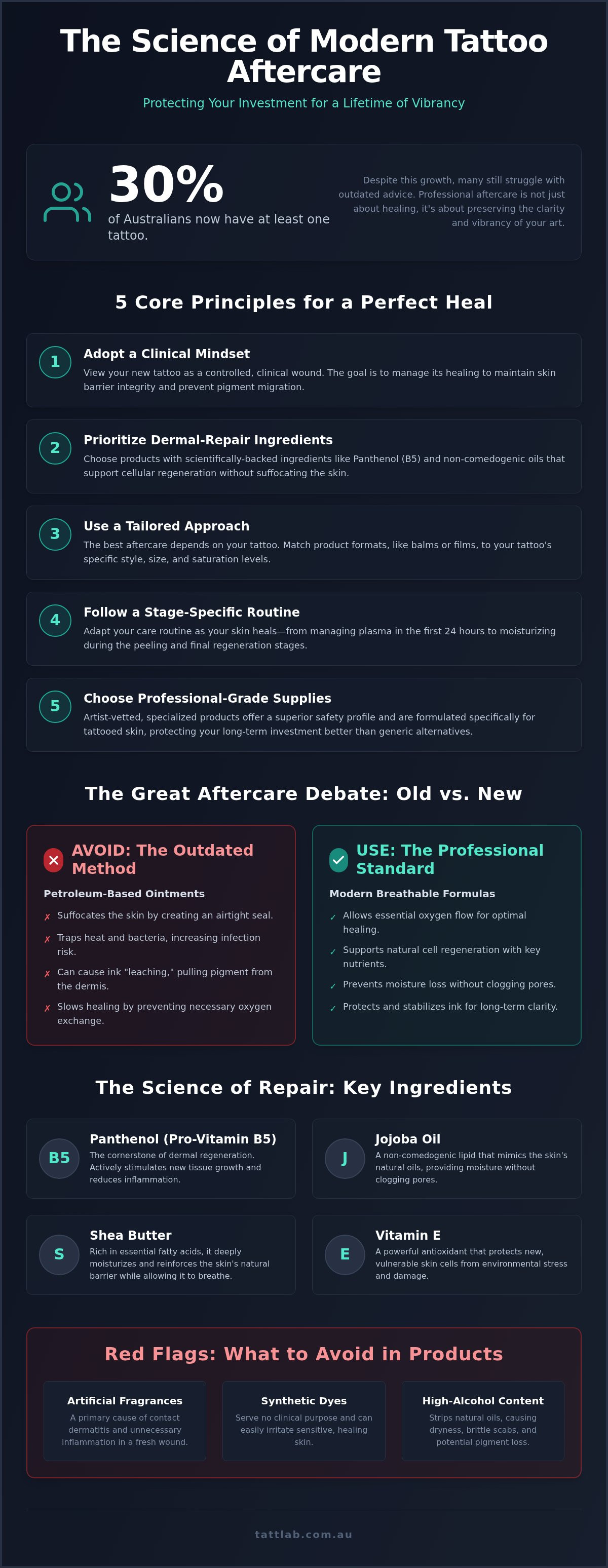
Did you know that 30% of Australians now have at least one tattoo, marking a significant increase in the prevalence of body art across the country? Despite this growth, many collectors still feel overwhelmed by conflicting advice or the fear of suffocating their skin with heavy, occlusive ointments. It's common to feel anxious during the peeling phase, especially when itching and discomfort threaten the integrity of your new work. You've invested significant time and resources into your ink, and you deserve a routine that guarantees vibrant, sharp results without the guesswork.
Identifying the best tattoo aftercare products australia provides in 2026 involves understanding the science of dermal trauma and epidermal recovery. This guide offers a clinical selection of scientifically-backed products and protocols designed to protect your skin's health and ensure optimal pigment retention. We'll demystify the healing process by explaining how stage-specific formulations balance essential moisture with oxygen permeability. From medical-grade washes to professional balms like Ink Nurse or Dr Pickles, you'll learn exactly how to follow a professional routine that eliminates irritation and preserves the clarity of your transformation for years to come.
Key Takeaways
- View aftercare as the clinical management of a controlled epidermal wound to maintain skin barrier integrity and prevent pigment migration.
- Prioritise dermal-repair ingredients such as Panthenol (Pro-Vitamin B5) and non-comedogenic moisturisers like Jojoba Oil to support cellular regeneration without suffocating the skin.
- Identify the best tattoo aftercare products australia offers by matching specific product formats, like balms or film dressings, to your tattoo’s style and saturation levels.
- Follow a precise, stage-specific routine that adapts to your skin's needs from the initial 24-hour plasma phase through to the final regeneration stage.
- Learn why artist-vetted, professional-grade supplies provide a superior safety profile compared to generic alternatives for protecting your long-term ink investment.
The Biology of Ink: Why Professional Aftercare Matters
A tattoo is far more than an aesthetic choice; it's a controlled epidermal wound that requires precise clinical management. During the application, needles penetrate the skin thousands of times per minute to deposit pigment into the dermis. This process triggers an immediate immune response. Your skin's primary goal is to close the breach and protect the body from infection. Effective aftercare supports this biological repair while ensuring the ink remains stable. Understanding The Tattooing Process and Healing is the first step in identifying the best tattoo aftercare products australia offers in 2026. Modern science has shifted the focus from simply covering the skin to actively managing the healing environment.
The "Bepanthen debate" is a common point of confusion for many collectors. While nappy rash creams were once the industry standard, they were never designed for the unique physiology of a tattoo. These formulations often contain high levels of petroleum or antiseptics that can be too aggressive for fresh ink. Professionals now prefer specialised products that respect the skin's need for oxygen. This shift from occlusive, suffocating barriers to breathable, nutrient-rich environments is what separates a standard heal from a superior one.
The Problem with Petroleum-Based Ointments
Searching for the best tattoo aftercare products australia provides often leads to a choice between old-school greases and modern clinical formulas. Heavy, petroleum-based ointments create a total seal over the wound. This might sound protective, but it often traps body heat and bacteria against the skin. This lack of airflow can lead to "leaching," where the product actually pulls pigment out of the dermis during the early stages of recovery. Breathability is the most important factor in modern skin integrity. When the skin can't breathe, it becomes macerated and soft, which increases the risk of scabbing and infection. Modern aftercare prioritises moisture without sacrificing oxygen permeability.
The Investment Perspective: Protecting Your Art
Viewing your aftercare as an insurance policy is the best way to approach the healing phase. You've invested significant time and money into your art, and the first two weeks determine how that work will look for the next twenty years. Poor aftercare is the leading cause of "blowouts," where ink spreads into unintended areas, and premature fading. By using professional-grade supplies, you ensure long-term clarity and sharp line-work. This methodical approach to recovery respects the craftsmanship of the artist and the physical integrity of your body, turning a technical procedure into a lasting narrative of self-assurance.
The Science of Cellular Repair: Essential Ingredients for Ink
The transition from a fresh wound to settled art depends entirely on the cellular environment you create. While the previous section highlighted the need for breathability, the specific chemistry of your chosen ointment dictates the speed and quality of tissue repair. When searching for the best tattoo aftercare products australia provides, the priority should be bio-compatible ingredients that mimic the skin's natural lipid structure. This ensures the barrier is reinforced without being obstructed. Effective recovery is a methodical process of supporting the body's innate healing mechanisms rather than simply masking the discomfort.
Clinical aftercare must provide a semi-occlusive barrier that allows oxygen exchange while preventing transepidermal water loss. This balance is critical for pigment stability. If the skin loses too much moisture, scabs become brittle and pull at the underlying ink. If the area remains too wet, the tissue becomes macerated and prone to infection. Following Dermatologist Recommendations for Tattoo Care involves selecting hypoallergenic formulas that stabilise the dermal layer during these vulnerable first days, ensuring the "settling" of the ink is uniform and crisp.
Key Ingredients for Rapid Recovery
Panthenol, or Pro-Vitamin B5, acts as the cornerstone of modern dermal regeneration. It works by stimulating fibroblast activity, the biological process responsible for creating new skin tissue, while simultaneously reducing the persistent redness associated with fresh needle work. To complement this, non-comedogenic lipids like Jojoba Oil and Shea Butter provide essential fatty acids. Unlike petroleum, these plant-based fats allow the skin to breathe. Vitamin E is another vital addition; it protects the emerging skin from oxidative stress and early environmental damage. You can find these high-performance ingredients in professional aftercare solutions that prioritises long-term ink clarity and skin health.
The "Blacklist": What to Avoid in 2026
The most common cause of healing complications isn't the tattoo itself, but contact dermatitis triggered by poor product choices. Artificial fragrances and synthetic dyes are the primary culprits. These additives serve no clinical purpose and often cause unnecessary inflammation in a fresh wound. High-alcohol content sanitisers should also be avoided on the immediate tattoo area, as they dehydrate the tissue and stall cellular migration. Many household moisturisers contain hidden irritants like lanolin or heavy preservatives that can provoke an immune response. Choosing a fragrance-free, medical-grade formulation ensures your body's resources are focused entirely on repair rather than fighting off external irritants.
Evaluating the Best Tattoo Aftercare Products in Australia (2026)
Choosing the best tattoo aftercare products australia offers requires more than just picking a popular brand from a pharmacy shelf. It requires a selection framework based on the specific trauma inflicted during your session. Fine-line work involves minimal skin disruption, whereas heavy colour saturation or solid blackwork creates a more significant epidermal wound. Matching the product format to the tattoo style is the key to a predictable, high-quality result. This methodical approach ensures your skin receives exactly what it needs at each stage of the recovery process.
Professional-grade care often begins with sourcing from dedicated tattoo supplies Australia providers who vet their inventory for clinical efficacy. This ensures you aren't just buying a standard moisturiser, but a specialised tool for dermal recovery. By selecting artist-vetted products, you reduce the risk of adverse reactions and ensure that the ingredients align with modern safety standards.
Balms vs. Lotions: When to Use Each
Balms are generally denser and provide a robust semi-occlusive barrier. This makes them ideal for the first 48 to 72 hours of healing. They excel at managing heavy-duty moisture needs for tattoos with significant saturation, where the skin is most vulnerable to drying out. Lotions, by contrast, are lighter and designed for rapid absorption. They are better suited for larger surface areas or fine-line tattoos where a heavy residue might lead to clogged pores or trapped heat. A hybrid approach is often the most effective. Use a balm for the initial protective phase and transition to a lotion once the skin has closed to maintain hydration without the weight.
Transparent Film Dressings (Second Skin)
The Australian professional circuit has seen a rapid rise in "Second Skin" technology. These medical-grade adhesive films facilitate moist wound healing, a clinical standard that keeps the body's natural enzymes in contact with the wound. This environment accelerates cellular repair and eliminates the need for constant cleaning during the critical first 24 hours. Because the film is breathable yet waterproof, it protects the ink from external contaminants while allowing the skin to function naturally. Safety protocols are vital here. You must ensure the skin is completely sterile before application to avoid trapping bacteria. When removing the film, doing so under warm running water prevents unnecessary tension on the new tissue before you transition to a traditional cream or lotion.
The Clinical Aftercare Protocol: A Stage-by-Stage Routine
Recovery is not a static state but a dynamic biological progression. To achieve the best results, your routine must evolve alongside your skin's changing needs. Using the best tattoo aftercare products australia provides ensures that each phase of healing is supported by the correct chemical environment. This methodical approach reduces the risk of complications and guarantees that your ink settles with maximum clarity. By following a structured protocol, you replace the uncertainty of "dry healing" with a controlled, predictable path toward skin integrity.
- Phase 1: The Plasma Phase (Hours 1-24). This initial window focuses on managing exudate and maintaining sterile protection. Your body is working to seal the wound; your job is to keep the surface clean without stripping away the natural enzymes required for repair.
- Phase 2: The Regeneration Phase (Days 2-5). During this proliferative stage, the goal is to prevent heavy scabbing while allowing oxygen exchange. This is when the dermal layers begin to knit back together.
- Phase 3: The Peeling Phase (Days 6-14). As dead skin cells begin to shed, managing the itch becomes the priority. Deep, non-greasy hydration is essential to prevent you from picking at the emerging art.
- Phase 4: Long-Term Integrity (Day 15+). Once the surface is closed, the focus shifts to UV protection and maintenance. The ink is still settling in the deeper layers, so consistent care remains vital for sharpness.
Step 1: The Sterile Cleanse
Hygiene is the foundation of successful tattoo aftercare. You should use a pH-balanced, fragrance-free wash to remove excess plasma and ink without disrupting the skin's delicate acid mantle. When drying the area, always use the "pat dry" technique with a clean paper towel. Never rub the wound, as abrasive friction can damage the fragile new skin cells and pull pigment from the dermis. Most collectors find that washing twice a day is sufficient, though you may need to increase this frequency if you work in a dusty environment or engage in light exercise.
Step 2: Controlled Hydration
The "Less is More" rule is the most important principle of topical application. A thin, transparent layer of ointment is far superior to a thick coat. When you over-moisturise, you risk creating "soggy" scabs and clogged pores, which can lead to bubbling and infection. In the humid Australian climate, your skin may require less frequent application than in drier regions. Watch for signs of distress; if the tattoo looks shiny or feels wet hours after application, you're using too much. You can shop the clinical aftercare collection to find specialised formulas that provide the perfect balance of moisture and breathability for local conditions.
Sourcing Professional-Grade Aftercare: Why Quality Matters
The final phase of any successful transformation is ensuring the provenance of your recovery tools. Choosing the best tattoo aftercare products australia provides involves a shift from generic retail options to specialised, artist-vetted solutions. This methodical selection process mirrors the high standards found in medical supplies for tattoo artists, ensuring that the safety protocols established in the studio continue throughout the healing window. When you source your supplies from a dedicated provider, you aren't just buying a cream; you're investing in a clinically-sound ecosystem designed for pigment retention and skin health.
Tatt Lab operates as a bridge between clinical rigor and the specific needs of the body art subculture. Every product in our inventory undergoes a rigorous vetting process to ensure it meets modern standards for dermal repair. This commitment to quality prevents the common pitfalls of inferior products, such as irritation or uneven healing. By prioritising physical integrity, we help you maintain the long-term clarity of your investment. Our focus is on providing a transparent, results-oriented path to recovery that respects the vulnerability of freshly tattooed skin.
The Artist-Led Advantage
Artist-owned businesses bring a unique depth of knowledge that generic suppliers cannot replicate. We understand the nuances of how different ink brands interact with specific aftercare formulations. This expertise allows us to curate a selection that works harmoniously with the biological processes described in previous sections. A boutique-studio persona combined with clinical expertise creates a professional yet deeply reassuring environment for sourcing your supplies. We view ourselves as dedicated partners in your journey, from the initial needle strike to the final settled result. This artist-led approach ensures that every recommendation is grounded in practical, real-world success rather than marketing hype.
Securing Your Supplies Nationally
Preparation is the most effective strategy for a predictable healing outcome. Securing the right products before your appointment eliminates the risk of using unsuitable household alternatives in a moment of urgency. We facilitate this through national express shipping across Australia, ensuring that professional-grade care is accessible regardless of your location. Online ordering provides a convenient, low-pressure way for individuals and studios to maintain their inventory of high-quality consumables. Having your routine ready to go allows you to focus entirely on the transformation itself, replacing uncertainty with a sense of controlled progress. You can Explore the Tatt Lab Professional Aftercare Collection to find the exact tools required for your next session.
Elevating Your Healing Standard
Protecting your personal narrative requires a commitment to clinical precision that extends far beyond the studio chair. You've learned that successful recovery is a methodical progression, moving from sterile protection in the plasma phase to deep, breathable hydration during regeneration. By prioritising ingredients like Panthenol and avoiding occlusive petroleum barriers, you ensure your skin barrier remains resilient and your pigment stays sharp. Identifying the best tattoo aftercare products australia provides in 2026 is about choosing formulations that respect the unique biology of a tattoo while providing a predictable path to recovery.
Tatt Lab is dedicated to being your partner in this journey, offering artist-vetted clinical formulations and specialist support from industry experts. With our Australia-wide express shipping, you can secure professional-grade supplies before your next session begins. It's time to replace uncertainty with a results-oriented routine that honours your physical integrity and aesthetic investment. Shop Australia’s Best Professional Tattoo Aftercare today and experience the difference that medical-grade standards make. Your art deserves nothing less than a specialist’s touch during every stage of its transformation.
Frequently Asked Questions
Is Bepanthen still recommended for tattoo aftercare in 2026?
Professionals generally advise against using nappy rash creams like Bepanthen in 2026. While once a common choice, these formulations are often too occlusive, potentially trapping heat and bacteria against the wound. Modern clinical alternatives provide a semi-occlusive barrier that allows for vital oxygen exchange. By choosing the best tattoo aftercare products australia offers from specialist suppliers, you ensure the ingredients are specifically balanced for dermal recovery and pigment stability.
How long should I leave a second skin bandage on my new tattoo?
You should typically leave the initial second skin bandage on for 24 hours to manage the plasma phase. If your artist applies a second piece after cleaning, it can often remain in place for three to five days. This duration facilitates a moist wound healing environment, which is the clinical standard for rapid cellular repair. Always monitor the seal; if fluid begins to leak or the edges lift, remove it immediately under warm water.
Can I use regular unscented moisturiser for my tattoo?
While basic unscented moisturisers are safer than fragranced versions, they often lack the technical depth required for optimal healing. Specialised tattoo products contain high concentrations of Panthenol and non-comedogenic lipids that actively stimulate fibroblast activity. Regular lotions may also contain hidden irritants or preservatives that provoke an immune response. For the best results, use medical-grade formulations that are specifically vetted for their ability to maintain skin barrier integrity during the regeneration phase.
What happens if I over-moisturise my new tattoo?
Over-moisturising creates a hyper-hydrated environment that can lead to maceration, where the skin becomes soft and "soggy." This often manifests as bubbling or clogged pores, which can pull pigment from the dermis and increase the risk of bacterial infection. If your tattoo looks shiny or feels wet several hours after application, you are likely using too much product. A thin, transparent layer is always superior to a thick, suffocating coat of ointment.
How do I stop my tattoo from itching during the peeling stage?
Managing the itch requires consistent, deep hydration without over-saturating the tissue. When the skin begins to peel, apply a light, non-greasy lotion to soothe the area and prevent the scabs from becoming brittle. You must never scratch or pick at the emerging art, as this causes premature shedding and permanent ink loss. If the discomfort is intense, a clean, dry cold compress can provide temporary relief while the cellular layers continue to knit back together.
Are natural or organic tattoo balms better than medical-grade products?
Natural ingredients like Shea Butter and Jojoba Oil are excellent for moisture, but organic does not always mean safer for a fresh wound. Medical-grade products undergo rigorous vetting to ensure they are hypoallergenic and free from contaminants. The best tattoo aftercare products australia provides often combine the best of both worlds: high-quality plant lipids paired with clinical repair agents like Pro-Vitamin B5. This dual approach ensures both physical integrity and long-term aesthetic outcomes are prioritised.
Can I go swimming or use a sauna after getting a tattoo?
You should avoid swimming, saunas, and soaking in baths for at least two to four weeks until the tattoo is fully healed. Submerging a fresh wound in water introduces bacteria and chemicals like chlorine, which significantly increase the risk of infection and premature fading. Saunas cause excessive sweating, which can trap moisture under the skin and lead to pigment migration. Wait until the peeling phase is completely finished and the skin has regained its natural barrier.
What are the signs that my tattoo aftercare routine is failing?
Identifying a failing routine early is critical for protecting your health and your art. Look for persistent redness that spreads away from the tattoo, excessive heat, or localised swelling that lasts beyond the first 48 hours. The presence of pus, a foul odour, or intense, throbbing pain are clear indicators of a potential infection. If you notice these symptoms, consult a medical professional immediately to ensure the physical integrity of your skin is not compromised.


Comments (0)
There are no comments for this article. Be the first one to leave a message!