

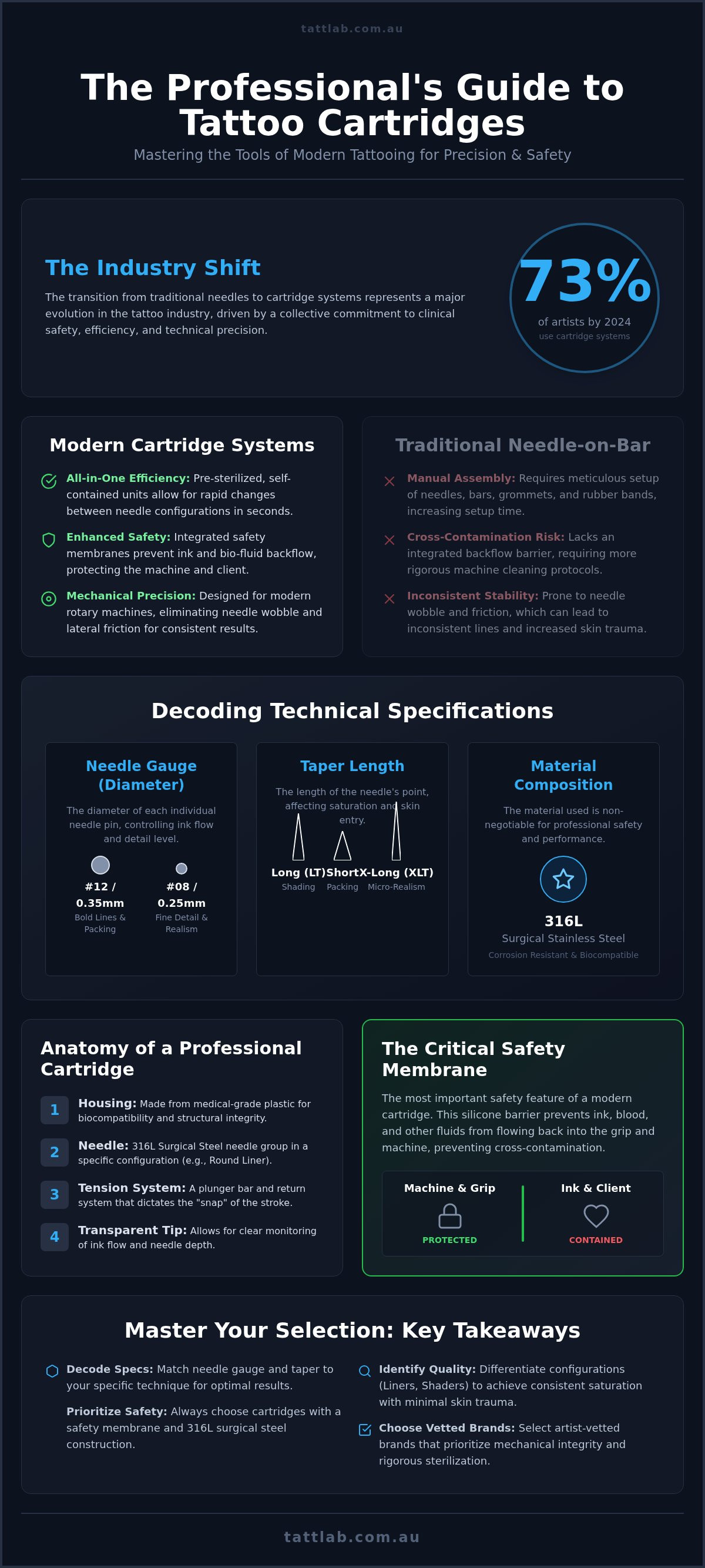
By 2024, approximately 73% of professional tattoo artists had transitioned from traditional needles to tattoo cartridges. This shift represents more than just a preference for convenience; it reflects a collective commitment to clinical safety and technical precision. However, with the lack of a national regulatory framework in Australia, the responsibility for selecting sterile, high-quality tools falls directly on your shoulders. You understand that a single faulty component can lead to inconsistent needle quality, causing unnecessary skin trauma or allowing ink backflow to compromise your expensive rotary machine.
It is frustrating when confusing terminology regarding tapers and gauges stands between you and your best work. You deserve a clear, scientific understanding of the tools that interface with your clients' skin. This artist-led guide helps you master the technical nuances of tattoo cartridges to enhance your precision and protect your professional investment. We will examine the critical role of safety membranes, the importance of 316L surgical stainless steel construction, and how to select the exact configurations needed for crisp line work and smooth, pepper-free shading.
Key Takeaways
- Understand how the evolution of modern rotary pen machines relies on the mechanical precision and efficiency of all-in-one needle systems.
- Decode technical specifications like needle gauges and tapers to ensure your tool selection perfectly aligns with your specific tattooing style and technique.
- Identify why 316L surgical stainless steel and integrated safety membranes are essential for protecting your equipment and maintaining clinical hygiene standards.
- Learn to differentiate between various configurations like Round Liners and Shaders to achieve consistent saturation with minimal skin trauma.
- Master the selection of professional tattoo cartridges by identifying artist-vetted brands that prioritize mechanical integrity and rigorous sterilization.
What are Tattoo Cartridges and Why Have They Revolutionised the Industry?
The tattoo cartridge is a sophisticated, self-contained needle and housing system that has fundamentally altered the technical landscape of the studio. Unlike traditional needle-on-bar setups that require manual assembly and meticulous alignment, these units are pre-sterilised and ready for immediate use. This shift is a central component of the modern tattooing process, providing a level of precision and safety that was previously difficult to maintain in high-volume environments. Professional studios across Australia are increasingly adopting this technology to streamline their workflows and enhance client safety, reflecting a broader industry move toward medical-grade standards.
The mechanical evolution of the industry is clearly visible in the data. By 2024, approximately 73% of professional artists had transitioned to cartridge systems, largely because they allow for a "cool but clinical" environment. This transition isn't just about speed; it's about the physical integrity of the process. By using high-performance tattoo cartridges, artists can eliminate many of the variables that lead to inconsistent results, such as needle wobble or friction-induced skin trauma. This methodical approach ensures that the focus remains on the artistic outcome while maintaining a rigorous safety profile.
The Anatomy of a Professional Cartridge
A professional cartridge consists of a medical-grade plastic housing designed for biocompatibility and structural integrity. Inside, the needle is attached to a tension system that dictates the mechanical "snap" of the stroke. While some budget options still utilize metal springs, the professional standard focuses on silicone membranes. These membranes provide a consistent return for the needle and, crucially, serve as a physical barrier against ink and biological fluids. The transparent or tinted tip of the housing allows you to monitor ink reservoir levels and needle depth with absolute clarity, ensuring that every pass is controlled and predictable.
Cartridges vs. Traditional Needles: A Comparative Overview
The transition from traditional needles to tattoo cartridges is driven by mechanical necessity and operational efficiency. Modern rotary pen machines are engineered specifically for these systems, utilizing an internal drive bar to actuate the needle. This design eliminates the need for the rubber bands and grommets used in coil machines, which were frequent sources of needle wobble and lateral friction. When you don't have to worry about the mechanical stability of your needle, you can dedicate more mental energy to the nuances of the skin.
In a busy professional studio, efficiency translates to better focus on the art itself. Cartridge systems allow you to transition between configurations, such as moving from a tight Round Liner to a Curved Magnum, in mere seconds. While the per-unit cost may be higher than a loose needle, the reduction in setup time and the elimination of autoclave processing for tubes and grips offer a significant advantage. This evolution represents a commitment to using premium tattoo supplies to prioritize both artistic excellence and long-term health outcomes.
Technical Specifications: Understanding Gauges, Tapers, and Materials
Technical precision in the studio isn't just about the machine; it's about the physics of the needle. Needle gauge is the diameter of the individual needle pin. Choosing the correct gauge for tattoo cartridges determines how much pigment is delivered and the level of trauma inflicted on the dermis. While #12 (0.35mm) remains the industry standard for traditional work, #08 (0.25mm) bugpins are becoming essential for the delicate gradients found in modern realism. This choice is a direct calculation between the desired visual outcome and the biological response of the skin.
The material composition is non-negotiable for professional safety and performance. High-performance needles are crafted from 316L surgical stainless steel, a material valued for its corrosion resistance and biocompatibility. This clinical focus aligns with broader FDA tattoo safety guidelines, ensuring that the tools you use don't introduce contaminants into the skin. When you combine medical-grade steel with a specific needle count, you control the "footprint" of the tattoo. A higher needle count increases skin resistance, requiring a more deliberate mechanical stroke to ensure even saturation without causing unnecessary scarring.
Taper Lengths and Their Effect on Ink Flow
Taper refers to the length of the needle point itself. Short tapers have more surface area at the very tip, making them ideal for bold, traditional lines and solid colour packing where maximum saturation is the goal. Long Tapers (LT), defined by a 7mm gradual incline, are the standard for smooth black and grey shading because they allow for a softer entry into the skin. For artists specialising in micro-realism, Super Long Tapers (XLT) provide the ultra-fine detail necessary for intricate textures. Selecting the right taper ensures the ink flows predictably, preventing the pitting that occurs when a needle is too aggressive for the task.
Bugpins and Specialised Diameters
Using #08 and #10 bugpins allows you to achieve intricate textures and softer shading transitions that standard needles simply can't replicate. These smaller diameters create significantly less skin resistance, which is vital for long sessions on sensitive areas. It's important to match your needle diameter to the viscosity of your tattoo ink; thinner bugpins perform best with finely dispersed, lower-viscosity pigments. You can explore a curated range of high-performance configurations at Tatt Lab to find the perfect match for your specific style. This methodical approach to technical selection is what separates a standard procedure from a truly transformative piece of art.
Choosing the Right Configuration for Your Tattooing Style
Selecting the right configuration within your tattoo cartridges is a critical decision that dictates the mechanical footprint of your work. Round Liners (RL) are engineered with needles soldered in a tight, circular grouping. This specific geometry ensures that the ink is delivered in a concentrated stream, which is essential for achieving consistent line weights and sharp definition. Conversely, Round Shaders (RS) feature a more spread-out circular arrangement. This allows for improved ink flow during small area filling or traditional whip shading, where a softer, more textured application is required to build depth without causing excessive trauma.
For larger saturation tasks, Magnums (Mag) are the professional choice for efficiency and skin safety. These configurations consist of two rows of needles, maximizing ink delivery across a broader surface area. While traditional Magnums are flat, Curved Magnums (CM) feature a slightly arched profile that mimics the natural movement of the artist's hand. This "soft edge" is vital for seamless gradients, as it prevents the harsh edges or "tracks" that can occur with flat configurations. It's a methodical way to protect the skin's physical integrity while achieving the high-level realism that clients expect.
Configurations for American Traditional and Bold Work
Traditional styles rely on the "bold will hold" philosophy, which demands a specific mechanical approach. This typically requires standard #12 Round Liners to create the iconic, heavy outlines that define the genre. For solid, saturated colour fields, large Magnums or Flat needles provide the necessary rigidity. This structural stiffness ensures that the pigment is driven into the dermis with minimal passes. When you prioritize needle rigidity, you reduce the time the skin is under tension, which is a key factor in successful long-term healing and pigment retention.
Needle Selection for Fine Line and Realism
The rise of the Single Needle (1RL) has transformed illustrative work, allowing for ultra-fine details that mimic the precision of a technical pen. In portraiture and micro-realism, Curved Magnums are indispensable for creating the soft, airbrushed transitions needed for realistic skin textures. Using tighter groupings in these tattoo cartridges allows you to maintain total control over delicate aesthetics. This ensures that the final result feels sophisticated and intentional. By matching the needle grouping to the specific biological needs of the area being tattooed, you can achieve smooth, pepper-free shading that ages gracefully alongside the client.
Safety Standards: Membranes and Cross-Contamination Prevention
The safety membrane within tattoo cartridges is the primary barrier between a sterile procedure and a compromised machine. This silicone or rubber seal acts as a one-way valve, allowing the needle to move freely while preventing ink and interstitial fluids from entering the drive bar of your rotary machine. When a membrane fails or is absent, capillary action can pull biological contaminants into the internal motor housing. Because the internal components of a rotary pen are not autoclavable, such a failure necessitates the immediate decommissioning of the machine to prevent cross-contamination between clients. It is a methodical safeguard that protects both your professional reputation and your equipment.
Professional-grade equipment is distinguished by rigorous sterilization protocols. Every unit must be processed using Ethylene Oxide (EO) gas and sealed in individual medical-grade blister packaging. You should always verify the presence of a sterilization indicator, typically a color-changing dot, and a valid expiration date before opening the seal. Choosing "budget" alternatives often means sacrificing this internal barrier, exposing your studio to significant liability and your equipment to permanent damage. High-quality tattoo cartridges are a non-negotiable investment in clinical safety.
Bio-Safety and Studio Integrity
The selection of medical supplies for tattoo artists must include membrane-verified cartridges to maintain a truly sterile field. "Open" cartridge systems, which rely on simple metal springs, offer no protection against backflow and are increasingly considered obsolete in modern professional environments. Maintaining studio integrity requires a methodical check of every blister pack. If the packaging is punctured or the indicator has not shifted to the correct color, the cartridge must be discarded. This commitment to safety protects the physical integrity of your clients and the professional reputation of your business.
Membrane Tension and Machine Compatibility
The tension of the membrane also impacts the longevity of your equipment. A membrane that is too stiff requires the motor to work harder, which can lead to premature wear or overheating. Leading brands like Elite and EZ V-Select offer varying levels of resistance, allowing you to match the "snap" of the needle to your specific machine's power. It's often necessary to adjust your voltage slightly when switching between brands to compensate for these different tension profiles. You can shop artist-vetted safety cartridges at Tatt Lab to ensure your equipment remains protected without sacrificing performance. This balance between mechanical resistance and motor health is essential for predictable, long-term results.
Sourcing Professional Tattoo Cartridges in Australia
Sourcing tattoo cartridges in Australia requires more than just finding a vendor; it requires a partnership with a supplier that understands the mechanical and biological stakes of your work. Tatt Lab is an artist-owned specialist provider, which means every product in our inventory has been vetted for performance in a real-world studio environment. We focus on premium brands like Elite EVO and EZ Revolution, ensuring that your equipment is powered by components that meet the highest standards of safety and precision. This methodical approach to sourcing allows you to focus on the artistic outcome while we handle the technical rigour of supply quality.
For a busy studio, consistency is essential for maintaining a professional rhythm. We offer dedicated wholesale accounts that ensure you have a steady supply of configurations, from ultra-fine liners to large magnums. Our nationwide express shipping ensures that whether you are in a major city or a regional hub, your studio remains stocked with the essential tattoo supplies needed to maintain your workflow without interruption. We understand that your time is best spent on the craft, not on managing supply chain delays.
The Tatt Lab Quality Assurance
Our commitment to your professional integrity starts with a rigorous selection process. We only stock tattoo cartridges that are EO gas sterilised and feature integrated safety membranes. This clinical focus isn't just a marketing claim; it's a fundamental requirement for modern studio safety that protects your machines and your clients. Because we come from an artist-led background, we provide high-level technical expertise that helps you navigate configuration choices or machine compatibility. We see ourselves as a dedicated partner in your artistic progression, supporting the Australian industry with tools that respect both the artist's vision and the client's physical integrity.
Streamlining Your Studio Supplies
Managing a studio involves balancing multiple technical and administrative tasks. We simplify this process by offering a comprehensive shop for both cartridges and medical-grade PPE. You can bundle your needle orders with high-performance tattoo aftercare products to provide a complete, professional experience for your clients from the first pass to the final healing stage. This holistic approach ensures that the quality of your work is supported long after the client leaves your chair.
Our platform is designed for efficiency, offering click-and-collect options and reliable nationwide delivery. By setting up a professional account, you gain access to seamless reordering tools that save time and reduce the mental load of inventory management. This methodical approach to studio supplies allows you to maintain a composed, modern environment where the focus remains on delivering exceptional, safe, and predictable results for every client.
Elevating Your Craft with Technical Precision
Mastering the technical nuances of modern needle systems is a fundamental step toward achieving artistic excellence and ensuring long-term equipment health. By aligning needle gauges and taper lengths with your specific tattooing style, you create a controlled environment where precision meets physical integrity. It's a methodical approach that reduces skin trauma and ensures every pass of the needle is purposeful and predictable.
Protecting your professional investment requires a commitment to medical-grade safety standards, particularly the use of integrated membranes to prevent backflow. As an artist-owned and operated specialist, we recognize the importance of these clinical details in maintaining a sterile studio environment. We invite you to explore our range of professional tattoo cartridges and experience the reliability of artist-vetted supplies. With Australia-wide express shipping, your studio can remain focused on the narrative of personal transformation while we handle the technical supply. We look forward to supporting your progress as a dedicated partner in your artistic journey.
Frequently Asked Questions
What is the difference between a round liner and a round shader cartridge?
Round liners have needles soldered together in a tight, concentrated point to ensure sharp, consistent line weights and maximum definition. In contrast, round shaders feature needles that are grouped in a parallel, circular arrangement with slightly more space between the tips. This configuration allows for increased ink flow, making it the superior choice for small area filling and traditional whip shading where a softer, more textured application is required.
Why is a safety membrane important in a tattoo cartridge?
The safety membrane is a critical barrier that prevents ink and biological fluids from backflowing into your machine's motor. Without this seal, capillary action can pull contaminants into non-autoclavable internal components, posing a significant cross-contamination risk. High-quality tattoo cartridges utilize these membranes to maintain a sterile field and protect your mechanical investment from permanent damage, ensuring the long-term reliability of your equipment.
What needle gauge is best for fine line tattooing?
For ultra-fine line work, #08 (0.25mm) or #10 (0.30mm) gauges are considered ideal within the professional community. These smaller diameters create a smaller footprint on the skin, allowing for intricate detail and reduced skin resistance. Using these bugpin sizes ensures that the line remains delicate and sharp, though they require a precise hand and steady voltage to ensure consistent depth and saturation during the procedure.
How do I know if a tattoo cartridge is compatible with my machine?
Most modern rotary pen machines utilize a universal twist-and-lock connection that is compatible with the vast majority of professional cartridges. You should verify your machine's manual to ensure it doesn't require a proprietary system before making a purchase. A proper fit is essential for mechanical stability; any looseness can cause needle wobble, which compromises your precision and increases the risk of causing unnecessary trauma to the client's skin.
Can I reuse tattoo cartridges if they are cleaned in an autoclave?
No, you must never reuse tattoo cartridges, regardless of the cleaning method employed in your studio. These units are strictly single-use medical devices designed to be discarded after every session to prevent infection. The plastic housing and internal membranes aren't designed to withstand the high heat and pressure of an autoclave. Attempting to sterilize them will compromise their structural integrity and fail to eliminate deep-seated biological contaminants.
What does "taper" mean in relation to tattoo needles?
Taper describes the length and angle of the needle's point before it reaches its maximum gauge. In the Australian industry, a long taper is typically defined by a 7mm gradual incline, which facilitates a softer entry into the skin. This measurement is crucial because it dictates the ink flow and the mechanical impact on the dermis; longer tapers are ideal for smooth gradients, while shorter tapers provide more saturation for bold work.
Are bugpin needles better for shading or lining?
Bugpin needles are highly effective for both lining and shading when the work demands extreme technical detail and precision. For lining, their narrow diameter allows for ultra-fine, illustrative results that mimic a technical pen. When used for shading, they create smoother gradients and more delicate textures in realism pieces. Their primary advantage is the reduced skin resistance they provide, allowing you to build complex layers of tone while maintaining tissue health.
How can I tell if a tattoo cartridge has been properly sterilised?
You can verify sterilization by checking the individual blister packaging for a visible EO gas indicator and a valid expiration date. The indicator, usually a small dot, should have changed to the specific color designated by the manufacturer, such as blue or green. If the packaging is torn, punctured, or lacks these clear markers, the cartridge is considered compromised and must be discarded immediately to maintain your studio's clinical safety standards.


Comments (0)
There are no comments for this article. Be the first one to leave a message!