

Is your equipment protection actually compromising your clinical integrity? Many artists assume any plastic layer suffices, yet the distinction between professional tattoo barrier film and a roll of supermarket cling wrap is the difference between a controlled medical environment and a significant cross-contamination risk. You likely already prioritise hygiene above all else, but fighting with stubborn adhesive residue on your expensive matte-finish machines or watching a film lift mid-session is a frustration that shouldn't disrupt your focus or your workflow.
This specialist’s guide provides a technical deep dive into selecting and applying barrier films that exceed Australian health regulations while preserving the physical integrity of your gear. We'll explore the science of adhesive stability, the transition toward a 100% disposable "sterile field" philosophy, and the methodical application techniques that ensure your studio remains a bastion of safety. By mastering these technical nuances, you can reduce setup times and ensure your workstation functions with the precision of a high-end laboratory. This approach allows you to focus entirely on the transformative art of the procedure, replacing setup uncertainty with a sense of controlled, predictable progress.
Key Takeaways
- Learn why a dedicated tattoo barrier film is essential for preventing bloodborne pathogen transfer compared to standard household alternatives.
- Identify the ideal micron thickness and polyethylene composition required to balance puncture resistance with tactile precision.
- Master the overlapping technique and surface preparation steps to create a seamless, clinical-grade barrier on irregular equipment.
- Discover how to prevent adhesive residue from compromising expensive machine finishes through professional selection and removal methods.
- Understand the importance of integrating artist-vetted supplies into a comprehensive, medical-grade hygiene protocol.
The Science of Cross-Contamination: Why Barrier Film is Non-Negotiable
Tattooing is an invasive procedure that requires a meticulous approach to infection control. At its core, professional tattoo barrier film is a low-tack, self-adhesive, medical-grade plastic shield designed to isolate equipment from biological contaminants. While a studio may appear pristine, the microscopic reality of bloodborne pathogens (BBPs) requires a physical, non-porous interface between the artist's tools and the environment. Many components of a modern workstation, including machine grips, power supply housings, and furniture upholstery, possess porous or textured surfaces that can trap fluids. Without a clinical shield, these areas become reservoirs for bacteria that standard liquid disinfectants might not fully reach during a quick turnaround. Tattoo barrier film serves as the primary defence against cross-contamination in high-touch zones.
Barrier Film vs. Standard Cling Wrap
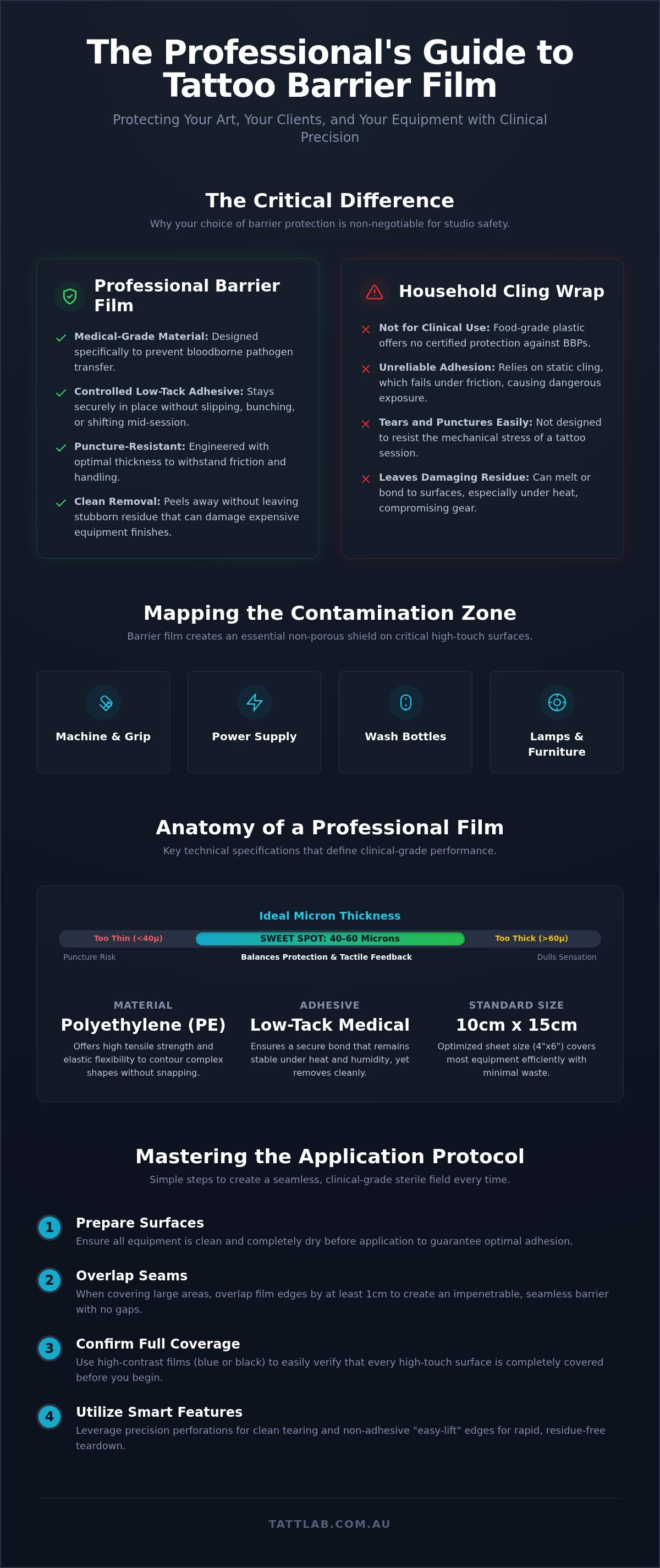
The use of household cling wrap is a common shortcut, but it lacks the structural integrity required for professional tattooing hygiene protocols. Standard wrap is designed for static food storage, not the mechanical friction and constant handling inherent in a tattoo session. It often shifts, tears, or bunches, which can expose the very equipment you're trying to protect. In contrast, specialised barrier film features a controlled adhesive backing. This ensures it remains anchored to the substrate without sliding, yet peels away without leaving a residue that can ruin the anodised finish of a high-end machine. Australian health regulations increasingly favour these dedicated products because they provide a predictable, standardised level of protection that household items simply cannot guarantee.
Identifying High-Touch Areas in the Studio
Effective hygiene requires mapping the "contamination zone," which extends well beyond the immediate site of the tattoo. Every time an artist adjusts a voltage setting or moves a lamp, there's a risk of transfer. High-touch areas often include power supply knobs, clip cord sleeves, and even the handles of adjustable stools. These overlooked surfaces are critical links in the chain of infection. Integrating high-quality film into your broader medical supplies for tattoo artists protocol ensures that every point of contact is neutralised. By treating the workstation like a controlled laboratory environment, you protect both the longevity of your equipment and the long-term health of your clients. This methodical approach replaces uncertainty with a sense of predictable progress during every session.
Technical Specifications: Evaluating Adhesive Strength and Material Integrity
Selecting the right tattoo barrier film requires an understanding of polymer science and adhesive chemistry. Polyethylene (PE) is the industry standard for these shields because it offers a unique combination of high tensile strength and elastic flexibility. This material allows the film to contour around the complex, ergonomic curves of modern tattoo machines without snapping. When a film is engineered correctly, it provides a non-porous surface that prevents fluid migration. This is a critical factor in mitigating the risk of infection and allergic reactions that can occur when equipment is not properly isolated from the biological environment.
Micron thickness is the primary metric for evaluating a film's performance. Most professional-grade barriers fall between 40 and 60 microns. If a film is too thin, it risks puncturing during a long session; if it's too thick, it can dull the tactile feedback an artist needs to feel the vibration and depth of the needle. Beyond the material itself, design features like the easy-lift edge are vital. These non-adhesive borders allow for a rapid, snag-free teardown at the end of a session. Visual cues also play a role in safety. Clear films offer a minimalist aesthetic, while blue or black variants provide high-contrast visibility, making it easier to confirm that every centimetre of a high-touch surface is fully covered.
Understanding Low-Tack Adhesives
The chemistry of the adhesive determines how well the film protects your gear. Professional barriers use a low-tack, medical-grade adhesive that provides a secure bond to metals and plastics without becoming permanent. In the Australian climate, temperature sensitivity is a significant factor. High humidity or studio heat can cause inferior adhesives to "melt" or bond too aggressively to matte and textured machine finishes. This leads to stubborn residue that requires harsh chemicals to remove, potentially damaging the equipment's anodisation over time. A high-quality adhesive remains stable under heat, ensuring the film stays in place during the procedure but releases cleanly during teardown.
Standard Roll Dimensions and Perforations
Most studios rely on the universal 10cm x 15cm (4" x 6") sheet size. This dimension is specifically chosen to cover power supply screens, lamp handles, and machine grips with minimal waste. Precision perforations are essential for efficiency. If the sheets don't tear cleanly, you risk stretching the film or causing it to bunch, which compromises the barrier's integrity. To maintain the shelf life of your tattoo barrier film, store rolls in a cool, dry environment away from direct sunlight. This prevents the adhesive from degrading and ensures that every sheet performs with the same reliability as the first. For those seeking supplies that have been rigorously tested in professional environments, exploring an artist-vetted range of barriers is the most reliable way to ensure equipment longevity.
Masterclass in Application: Protecting Machines, Power Supplies, and Surfaces
The efficacy of your tattoo barrier film depends entirely on the quality of its application. Before applying any protective layer, surfaces must be thoroughly pre-cleaned with a hospital-grade sanitiser and, crucially, allowed to dry completely. Any residual moisture or cleaning agent will compromise the low-tack adhesive, leading to lifting during the session. Once the surface is prepared, employ the overlapping technique. By layering sheets with a 1-2cm overlap, you create a seamless, liquid-tight seal that prevents fluids from migrating through gaps, especially on irregular or curved components. Effective wrapping should never compromise the mechanical function of the tattoo machine. Focus on smoothing the film to eliminate air bubbles; these pockets don't just look unprofessional, they reduce your grip and can make digital interfaces or physical buttons less responsive.
Wrapping Rotary and Coil Machines
Protecting your primary tools requires a tailored approach based on their design. For sleek, pen-style rotaries, the film should wrap tightly around the body, ensuring the adjustment rings remain operable. When dealing with traditional coil frames, the geometry is more complex. Use small, precisely cut pieces of film for the frame's high-touch areas and combine this with a machine bag for the cord. Pay close attention to the RCA or clip cord connection point. It's vital to secure the barrier without putting tension on the cable, which could cause power fluctuations. This dual-layer protection on high-vibration gear ensures that even if a bag tears, the underlying tattoo barrier film maintains the sterile field.
Furniture and Large Surface Protection
Large surfaces like armrests, trays, and trolley handles are significant cross-contamination risks that require a methodical approach. When covering these areas, keep the film as flat as possible. Creases or folds are problematic because they allow fluids to pool rather than being easily wiped away during the session. For modern studios using tablet-based power supplies or digital interfaces, barrier film is the safest way to maintain touch sensitivity while ensuring the screen remains uncontaminated.
- Apply film to armrest ends where the artist’s forearms or the client’s skin make frequent contact.
- Cover lamp handles and power knobs before the session begins to allow for mid-tattoo adjustments.
- Ensure the film extends slightly beyond the edge of trays to prevent fluids from seeping underneath the plastic.
This meticulous attention to detail transforms a standard workstation into a clinical-grade environment. By following these steps, you provide the predictable progress required for successful long-term results and maintain the physical integrity of your equipment.
Beyond the Roll: Common Pitfalls and Troubleshooting Professional Barriers
The residue problem is one of the most persistent frustrations in a high-traffic studio. While tattoo barrier film is designed for temporary adhesion, the combination of mechanical heat from rotary motors and constant friction can cause even high-quality adhesives to bond too aggressively. This often results in a sticky film left on matte or textured machine finishes. To minimise this, peel the film slowly and at a 45-degree angle during teardown. Ripping the plastic off quickly increases the likelihood of adhesive transfer to the substrate, leaving a mess that can trap future contaminants.
If residue does occur, avoid using harsh industrial solvents or citrus-based cleaners that can strip the anodisation from your equipment. Instead, use a lint-free cloth dampened with a small amount of isopropyl alcohol. It's a delicate balance; you need to remove the tackiness without compromising the physical integrity of the tool's surface. During this process, remember that used film is biohazardous waste. It has been in the contamination zone and potentially exposed to aerosolised fluids. Always handle teardown with the same level of caution as the procedure itself, disposing of all barriers in designated clinical waste bins.
Dealing with Adhesive Transfer
Long sessions generate significant heat, which acts as a catalyst for adhesive melting. This is why selecting a product from a trusted tattoo supply source is vital. Professional-grade barriers are specifically formulated to withstand these temperature fluctuations. If you find that your film consistently leaves a mess, it's often a sign that the adhesive chemistry isn't compatible with your gear's finish or the local climate. High-quality films are vetted by artists who understand these biological and mechanical risks, ensuring a clean release even after several hours under the needle.
When Barrier Film is Not Enough
A plastic shield is a powerful tool, but it's not a universal solution. Certain surfaces, such as highly textured grips or oily furniture finishes, may not allow for a secure bond. In these instances, tattoo barrier film must be supplemented with medical-grade nitrile gloves and secondary sleeves. If a barrier is punctured or begins to lift mid-session, the sterile field is compromised. Don't attempt to patch it. The safest course of action is to pause, perform a full sanitisation of the affected area, and reapply a fresh barrier.
Maintaining a pristine studio environment requires more than just the right tools; it requires a commitment to methodical teardown and equipment care. To ensure your workstation remains at a clinical standard, invest in artist-vetted barrier solutions that prioritise both safety and equipment longevity.
Sourcing Clinical-Grade Supplies: Why Professional Artists Choose Tatt Lab
Choosing a supplier should never feel like a gamble. At Tatt Lab, our commitment to the Australian tattoo community is built on a foundation of clinical rigor and artistic empathy. We understand that every consumable you use is a reflection of your professional standards. This is why every roll of tattoo barrier film we stock is artist-vetted through rigorous studio performance tests. We don't just sell products; we provide tools that have been proven to withstand the mechanical heat and biological demands of high-pressure environments. Our range is specifically curated to balance superior tack with residue-free removal, ensuring your equipment remains as pristine as your portfolio.
Supporting your workflow means providing more than just quality stock. We facilitate a steady, low-pressure supply chain that allows you to focus on your craft. With express nationwide shipping across Australia and convenient click-and-collect options, we ensure your studio never faces the anxiety of a supply shortage. For larger studios looking to standardise their clinical hygiene protocols, we offer wholesale opportunities that allow for consistent, predictable progress across multiple workstations. This methodical approach to sourcing ensures that every artist in your space operates with the same high-level technical edge.
The Specialist’s Choice for PPE and Consumables
We prioritising medical-grade standards because we view the tattooing process as a partnership in physical integrity. Integrating high-performance barrier film into your wider tattoo aftercare and safety setup creates a comprehensive narrative of care for your clients. From the initial skin preparation to the final wrap, using specialised PPE establishes your studio as a modern, knowledgeable facility. Our logistics network is designed to be a dedicated partner in this progression, offering rapid fulfilment that respects the pace of a busy professional studio.
Elevating Studio Standards
The visual impact of a well-wrapped workstation shouldn't be underestimated. Using professional-looking, high-contrast barriers builds immediate client trust and projects a sense of clinical authority. It signals to the audience that you value their health as much as the aesthetic outcome. Beyond the immediate hygiene benefits, there's a significant long-term ROI in protecting your expensive gear. High-quality tattoo barrier film prevents the ingress of ink and fluids into sensitive rotary components, extending the lifespan of your machines. By joining the Tatt Lab community, you're choosing a transparent, results-oriented approach that prioritises safety, science, and the long-term success of your artistic practice.
Advancing Your Studio’s Clinical Standards
Mastering the technical application of high-performance tattoo barrier film is more than a hygiene requirement; it's a commitment to the physical integrity of your tools and the safety of your clients. Throughout this guide, we've established that the right material science prevents fluid ingress while methodical application ensures a seamless sterile field. By moving away from household alternatives and toward artist-vetted solutions, you protect your gear from damaging residues and uphold the highest clinical standards in the Australian industry. This meticulous approach replaces session uncertainty with a sense of controlled, predictable progress.
Tatt Lab remains your dedicated partner in this professional progression. As an artist-owned and operated specialist, we only supply premium medical-grade consumables that we trust in our own studios. Shop Clinical-Grade Tattoo Barrier Film at Tatt Lab and secure your setup with express nationwide shipping across Australia. Elevating your workstation hygiene is a definitive step toward a more sophisticated and successful artistic practice. We look forward to supporting your studio's evolution as you continue to prioritise safety and technical excellence.
Frequently Asked Questions
Can I use regular kitchen cling wrap instead of tattoo barrier film?
No. Kitchen wrap lacks the adhesive backing and structural integrity of professional tattoo barrier film. It often shifts under mechanical friction, creating gaps that allow for cross-contamination. Dedicated barriers are non-porous and designed to stay anchored to equipment, meeting the clinical standards required for Australian studio hygiene. Using food-grade products in a medical procedure increases biological risk and compromises the sterile field your client expects.
How do I remove sticky residue left by barrier film on my machine?
Use a lint-free cloth dampened with a small amount of isopropyl alcohol to gently dissolve the residue. Avoid industrial solvents or citrus cleaners, as these can strip the anodisation from your machine's finish. To prevent this issue, ensure you select high-quality films with heat-stable adhesives and peel the film slowly at a 45-degree angle during teardown. This methodical approach protects your equipment's physical integrity and long-term performance.
Is tattoo barrier film recyclable in Australia?
No, used barrier film is considered biohazardous waste and must be disposed of in clinical waste bins. Because the film is exposed to bloodborne pathogens and aerosolised fluids during the procedure, it cannot enter standard recycling streams. Even unused offcuts are typically made of Polyethylene (PE) with adhesive backing, which complicates traditional recycling processes. Always follow your local health authority’s guidelines for the safe disposal of all contaminated studio consumables.
What is the easy lift edge on barrier film rolls?
The easy lift edge is a non-adhesive border located on the sides of each perforated sheet. This design feature allows artists to quickly find a purchase point to peel the film away without struggling against the adhesive bond. It significantly speeds up the teardown process and reduces the need to use tools or fingernails, which could potentially scratch the equipment or compromise your gloves during the post-session cleaning phase.
How often should I change the barrier film during a long session?
You should change the tattoo barrier film if it becomes visibly soiled, punctured, or begins to lift at the edges. While a single application often lasts for the duration of a standard session, long procedures involving high vibration can cause the adhesive to shift or the material to wear thin. If the sterile field is compromised mid-session, pause the procedure, sanitise the equipment, and reapply fresh film to maintain clinical integrity.
Does barrier film protect against all bloodborne pathogens?
High-quality barrier film acts as a non-porous physical shield that prevents the migration of blood and bodily fluids. While it is a critical component of infection control, it must be used as part of a comprehensive safety protocol. This includes proper hand hygiene, the use of medical-grade sanitiser, and secondary barriers like machine bags. The film effectively neutralises high-touch zones, but it doesn't replace the need for thorough post-session disinfection.
Can I use barrier film on my client’s fresh tattoo as aftercare?
No, standard barrier film is designed for equipment and surfaces, not for skin application. It lacks the breathability and specialised medical adhesives found in dedicated tattoo aftercare products. Applying surface film to a fresh wound can trap bacteria and heat, potentially leading to infection or irritation. Always use specific dermal bandages or follow professional aftercare instructions that prioritise skin integrity and the long-term healing of the body.
Should I apply barrier film to my power supply screen?
Yes, applying film to power supply screens and digital interfaces is highly recommended. These are high-touch areas that artists frequently adjust mid-session, making them prime targets for cross-contamination. Because professional film is thin and transparent, it protects the interface without interfering with touch sensitivity or visibility. This ensures you can adjust voltage or settings through a clinical-grade barrier, keeping the underlying electronics free from ink and biological fluids.


Comments (0)
There are no comments for this article. Be the first one to leave a message!