

Distilled water for tattooing may seem like the careful choice, but distillation doesn’t guarantee sterility. It removes many impurities; it doesn’t ensure the water is free from microorganisms, particularly after handling or storage. That distinction matters when water is used to dilute ink or rinse equipment during a procedure.
If you’re unsure whether distilled, sterile and purified water are interchangeable, the labels can be confusing. They describe different things, and choosing the wrong water can introduce contamination where skin’s protective barrier is broken. Distilled water may have a place in a studio, but it isn’t a substitute for sterile technique.
This guide explains what distillation does and doesn’t guarantee, when sterile water or sterile saline may be specified, and why the right choice depends on the task. You’ll also learn how to follow ink and equipment manufacturers’ instructions and handle water carefully to reduce contamination risks. A clear process helps protect both the artist and the person receiving the tattoo.
Key Takeaways
- Distilled water for tattooing has been processed to remove many impurities, but that process doesn’t guarantee it’s sterile.
- Distilled describes how water is processed; sterile describes its microbiological condition. The terms aren’t interchangeable.
- Match the water to the task instead of assuming one type suits every ink or studio workflow.
- Before use, identify the task, check current product instructions, and dispense water carefully into a clean, task-appropriate container.
- If instructions are unclear, pause and consult current official guidance rather than improvising.
What Is Distilled Water for Tattooing, and Why Is It Used?
Artists may see distilled water mentioned in ink directions or studio procedures, but its presence doesn’t make it suitable for every task. Distilled water is water separated from many dissolved substances through evaporation and condensation; distillation describes a purification process, not a guarantee of sterility. The label alone can’t determine whether water is appropriate for a particular tattooing step.
The right choice depends on the product and intended use. A manufacturer may specify a particular diluent for an ink, while another product may be designed to be used as supplied. Don’t assume distilled water is suitable for rinsing equipment, skin or a fresh tattoo just because it appears elsewhere in the studio workflow.
How is distilled water made, and what does distillation remove?
During distillation, water is heated until it becomes vapour. The vapour is then cooled and collected as liquid in a separate vessel. Many dissolved minerals and other substances remain behind in the original water, so distillation can reduce their presence. Distilled water provides a foundational overview of the process and its properties.
Distillation doesn’t prove that the finished water is sterile. Its microbiological condition depends on production, packaging and handling, so the word “distilled” alone isn’t evidence that a product is suitable for a task requiring sterile water.
Where might tattoo artists encounter distilled water?
Distilled water may appear in instructions for preparing a specific ink or product, or in a studio’s water-related procedures. For ink dilution, use only a diluent the ink manufacturer permits, following its current instructions. Don’t transfer directions from one ink to another: formulations and intended preparation can differ.
Product preparation is distinct from wound or skin care. An instruction to use distilled water for one product doesn’t mean it’s suitable for cleaning a fresh tattoo or for every procedure involving equipment. Treat each use as a separate decision, and follow task-specific instructions rather than making distilled water a universal studio requirement.
For professional artists, the practical rule is simple: identify the task, then check the product directions before choosing water. This keeps the decision tied to the ink or workflow in front of you, rather than assumptions about what “distilled” means.
Distilled Water vs Sterile Water: The Safety Difference Tattoo Artists Need to Know
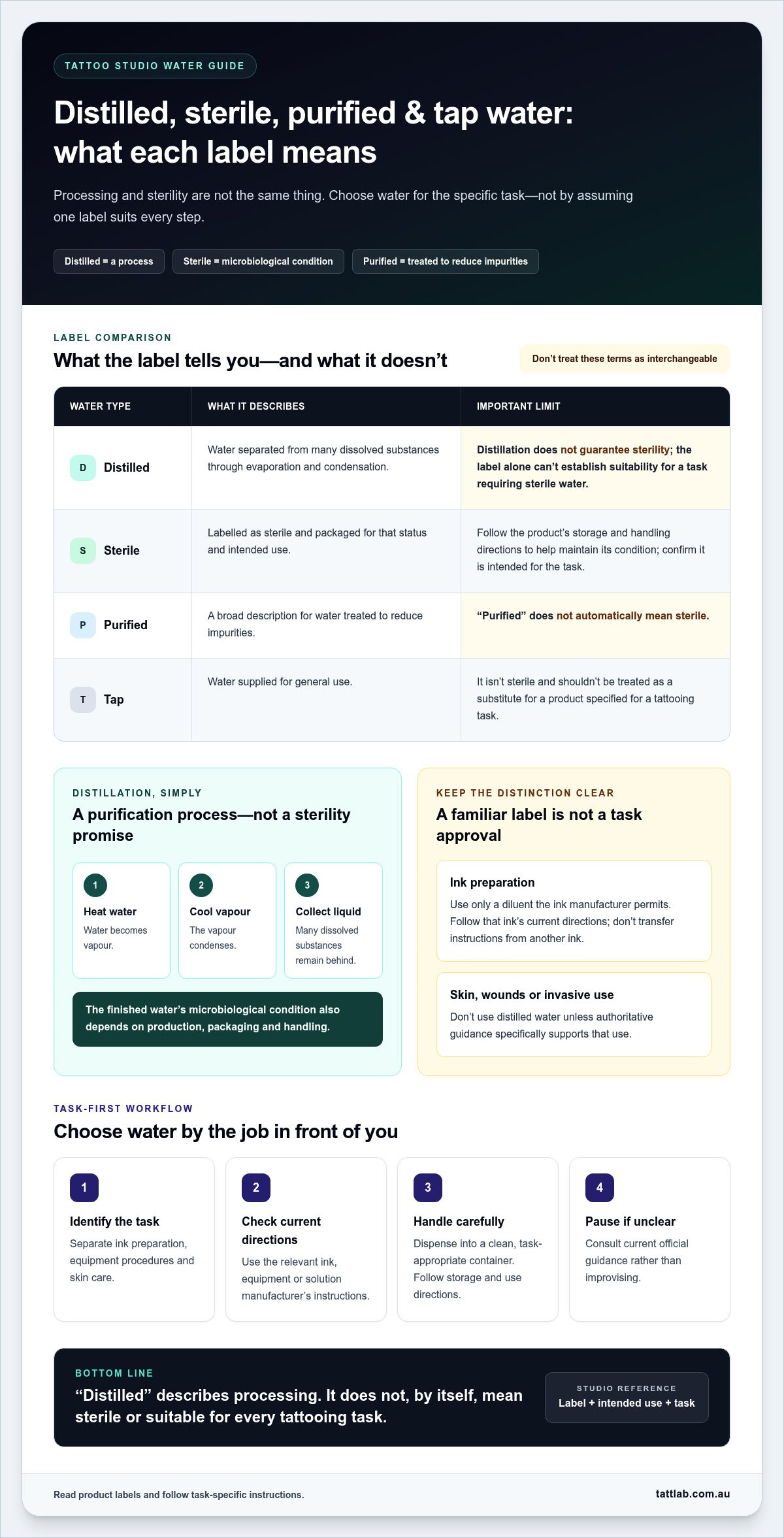
Distilled describes how water is processed; sterile describes its microbiological condition. They aren’t interchangeable terms. Distillation can reduce many dissolved substances, but it doesn’t establish that the finished water is free from microorganisms. For tattooing, that distinction matters whenever water may contact ink, equipment or broken skin.
How do distilled, sterile, purified and tap water differ?
- Distilled water: Produced through evaporation and condensation to reduce many dissolved minerals and impurities. The label alone doesn’t guarantee sterility.
- Sterile water: Labelled as sterile and packaged for that status and intended use. Follow the product’s storage and handling directions to help maintain it.
- Purified water: A broad description of water treated to reduce impurities. It doesn’t automatically mean the water is sterile.
- Tap water: Supplied for general use, but it isn’t sterile and shouldn’t be treated as a substitute for a product specified for a tattooing task.
These descriptions indicate different things: processing, microbiological condition or general treatment. Read the label and intended-use information instead of inferring suitability from a familiar term.
Does distilled water mean sterile water?
No. Never assume distilled water is sterile simply because it has been distilled. The water’s condition also depends on production, packaging and handling. Once opened, a container may be exposed to contamination. Follow its instructions for storage and use, and don’t use it if the packaging is damaged or the product is past its stated use period.
Check the label for a sterile claim and confirm that the product is intended for the task. Water used to dilute tattoo pigments can be a contamination concern if it isn’t sterile, so follow the ink manufacturer’s current directions and the applicable infection-control procedure. For requirements that depend on the task or jurisdiction, consult current Australian and relevant state or territory public-health guidance.
Which water should be used for a specific tattooing task?
There isn’t one water choice for every studio task. For ink preparation or equipment-related procedures, follow the current instructions from the relevant ink, equipment or solution manufacturer. Don’t use distilled water on skin, wounds or for another invasive purpose unless authoritative guidance specifically supports that use. If instructions are unclear, pause and consult current Australian public-health guidance instead of improvising.
Choosing quality tattoo inks and supplies is part of the same careful approach. Explore professional tattoo inks and supplies alongside the manufacturer’s directions for each product.
Common Misconceptions About Distilled Water in Tattooing
Water labels can sound like safety guarantees, but they don’t tell the whole story. Distillation doesn’t make water automatically sterile, and choosing distilled water doesn’t guarantee safer ink, better healing or a better tattoo result. For tattooing, suitability depends on the specific task, product instructions and infection-control procedure.
That’s why distilled water for tattooing shouldn’t be treated as a universal studio solution. Preparing ink, cleaning equipment and caring for skin are different activities, with different requirements. A direction intended for one product or step can’t automatically be applied to another.
Is distilled water always safer than tap water?
There’s no useful blanket ranking without knowing the intended use. Tap water isn’t sterile, but that fact alone doesn’t establish that a bottle labelled distilled is suitable for ink dilution, equipment procedures or skin contact. Check the product’s intended use and the relevant manufacturer instructions. Where requirements vary by task or location, refer to current Australian and state or territory public-health guidance.
For ink preparation, use only a diluent allowed by the ink manufacturer’s current instructions, and follow applicable infection-control procedures. Water that isn’t sterile may introduce contamination when used to dilute pigments, so don’t substitute a product based on assumptions about how it was processed. If the instructions or applicable guidance don’t clearly address the task, pause and seek authoritative direction before proceeding.
Can distilled water replace sterile products or proper cleaning?
No. Water choice doesn’t replace the infection-control procedure required for a task. Cleaning removes soil and residue; disinfection and sterilisation are different processes with distinct purposes. Water labelled distilled should not be used as a shortcut for any of them, and it doesn’t turn a non-sterile product or process into a sterile one.
Keep the workflow categories separate:
- Ink preparation: Use only the diluent permitted in the ink manufacturer’s current instructions.
- Equipment: Follow the equipment instructions and the studio’s applicable cleaning and infection-control procedures.
- Skin or wound contact: Don’t assume distilled water is appropriate. Use current authoritative guidance for the specific purpose.
Don’t improvise a method for sterilising equipment or preparing a solution based on water type alone. If instructions don’t clearly cover the task, pause and consult current Australian or relevant state and territory public-health guidance before proceeding. This distinction supports each step without assigning distilled water benefits it can’t guarantee.
How to Handle Water Carefully in a Tattoo Studio
A consistent water-handling routine makes the intended use clear and helps reduce opportunities for contamination. Don’t choose water by habit or by the word “distilled” alone. Identify the task, follow the relevant instructions, select the specified product and dispense it without compromising its packaging or contents.
A practical check before using water during a session
Pause before use and work through the same checks each time:
- Identify the task. Is the water for product preparation, equipment care or another purpose? These uses may have different requirements.
- Check current instructions. Read the water product label and the relevant ink, equipment or solution manufacturer’s directions.
- Select the specified product. Use the product indicated for that task. Don’t substitute distilled water for a specified sterile product, or vice versa, based on assumption.
- Follow studio procedures. Keep water handling within the documented infection-control workflow and current applicable guidance.
This sequence is especially useful during ink preparation. If an ink’s instructions don’t permit a particular diluent, don’t add it. If directions are unclear or conflict with the studio’s procedure, pause and resolve the uncertainty before proceeding. The professional studio safety guide offers further context for careful supply-handling habits.
Storage and dispensing practices that reduce contamination risk
Careful dispensing protects the product from contact with hands, work surfaces and other items in the session area. Use a clean container suited to the specific task, and keep the main container’s opening from touching the dispensing container or other surfaces. Pour only what’s needed for immediate use, then close the original container promptly.
- Keep containers closed when not in use, and follow the label’s storage directions.
- Never reuse a container marked for single use.
- Don’t pour dispensed liquid back into its original container.
- Follow the product’s labelled use and discard directions. Don’t invent a storage period or assume the product remains suitable after opening.
These habits support a more controlled workflow, but they don’t make non-sterile water sterile or replace required cleaning and infection-control procedures. The distinction matters whether you’re handling distilled water for tattooing or another water product: match the product to the task, then preserve its condition through careful use.
For professional studio supplies, explore tattoo inks and medical supplies to support a deliberate, product-led workflow.
Choose Tattoo Products by Intended Use, Not Assumptions
The safest decision isn’t based on which water sounds purest. Start with the task, then follow the product’s current instructions and relevant public-health guidance. Distilled water for tattooing may be suitable for a specified use, but the label alone can’t establish that it’s appropriate for ink preparation, equipment care or contact with skin.
Questions to resolve before using a water product
Before opening or dispensing water, make the intended use explicit. A short check can prevent assumptions from carrying over between products or steps:
- What exact task will the water support? Separate ink preparation from equipment care and other uses.
- What does the current label or manufacturer instruction specify? Follow the directions for the particular ink, equipment or solution, rather than relying on instructions for a different product.
- Does current local public-health guidance set relevant requirements? Consult the applicable Australian or state and territory guidance, especially if the task involves skin, broken skin or an invasive procedure.
If the task or directions are unclear, pause. Don’t substitute one water type for another, mix a solution or improvise a procedure based on the word “distilled.” Resolve the uncertainty through current authoritative guidance and the applicable product instructions before proceeding. This keeps general information separate from the specific requirements of a product and its intended use.
Where to continue learning about professional tattoo supplies
Water selection is one part of a broader studio safety system. Product choice, handling, equipment care and infection-control procedures work together, but one doesn’t replace another. For more context on ink characteristics, safety and selection, read the professional tattoo ink guide. Use product-specific instructions for decisions about a particular ink, and current local guidance for broader safety requirements.
A deliberate workflow doesn’t need to be complicated: identify the task, verify the instructions, choose the specified product and handle it as directed. For a broader look at quality, safety and performance across studio materials, explore the guide to professional tattoo supplies.
Make Water Choice Part of a Safer Studio Routine
Distilled water for tattooing isn’t automatically sterile, and “purified” doesn’t necessarily mean suitable for every procedure. Distillation describes how water is processed; sterility describes its microbiological condition. Keep that distinction in mind when preparing ink, caring for equipment or handling products for another purpose.
A dependable decision starts with the task. Check the current product label and manufacturer instructions, use the specified water, and follow careful dispensing and storage practices. If directions are unclear or the task involves skin or an invasive procedure, pause and consult current Australian public-health guidance rather than improvising.
Tatt Lab is an artist-owned and operated Australian business serving professional tattoo artists and studios, with professional tattoo inks and medical supplies available through its online store. Explore professional tattoo supplies and safety essentials to support your studio workflow.
With clear instructions and careful handling, you can make each choice with greater confidence and keep safety at the centre of your work.
Frequently Asked Questions
Is distilled water sterile for tattooing?
No. Distillation reduces many dissolved substances, but the process alone doesn’t guarantee the finished water is free from microorganisms. For distilled water for tattooing, check the product label and intended use rather than treating “distilled” as equivalent to “sterile”. Packaging, storage and handling also matter. If the task requires sterile water, use a product labelled for that purpose and follow its instructions.
Can you use distilled water to dilute tattoo ink?
Only if the ink manufacturer’s current instructions explicitly permit distilled water as a diluent. Don’t assume the same direction applies to every ink, since products can have different formulations and preparation requirements. For ink that will be introduced into skin, use the specified diluent and follow applicable infection-control procedures. If the instructions are unclear, pause and consult current authoritative guidance instead of substituting water by assumption.
What is the difference between distilled water and sterile water?
Distilled water is named for how it’s produced: water is evaporated and condensed to reduce many dissolved substances. Sterile water is described by its microbiological condition. Distilled water isn’t necessarily sterile, and sterile water may be produced and packaged in ways that maintain sterility for its intended use. Read the label, storage directions and intended-use information to identify what a particular product is suitable for.
Can distilled water be used to clean tattoo equipment?
Don’t treat distilled water as a complete equipment-cleaning method. Water may feature in a specific procedure, but it doesn’t replace the cleaning, disinfection or sterilisation steps required for the equipment and task. Follow the equipment manufacturer’s instructions and the studio’s documented infection-control procedures. Avoid improvised methods, especially for reusable items or equipment that may contact broken skin; consult current local public-health guidance if requirements are unclear.
Is distilled water safe to use on a fresh tattoo?
Don’t assume distilled water is appropriate for a fresh tattoo simply because it has been purified. A new tattoo involves broken skin, so follow current authoritative aftercare guidance and the directions for the aftercare products being used. Use only products intended for that purpose. If you’re unsure what to apply or how to care for the area, seek guidance from an appropriate health professional rather than experimenting with studio water.
How should distilled water be stored in a tattoo studio?
Follow the product label for storage and discard directions, since products can differ. Keep the container closed when it isn’t being used, and avoid touching its opening to hands, dispensing containers or work surfaces. Dispense only what’s needed into a clean, task-appropriate container, and don’t pour unused liquid back into the original bottle. Don’t assume an opened product remains suitable indefinitely; use the labelled instructions.
Can tap water be used instead of distilled water for tattooing?
Don’t substitute tap water for distilled water, or distilled water for tap water, without checking the requirements for the specific task. Tap water isn’t sterile, and distilled water isn’t automatically sterile either. For ink preparation, follow the ink manufacturer’s current directions; for other uses, follow product instructions and relevant local guidance. If the correct product isn’t clear, pause and verify rather than improvising.


Comments (0)
There are no comments for this article. Be the first one to leave a message!