
The long-standing advice to let your new tattoo breathe might actually be the very thing compromising your skin's biological recovery. While the debate over dry healing vs wrap healing tattoo methods continues to circulate in online forums, modern dermatology suggests that leaving a fresh wound exposed to the elements is often an invitation for trauma rather than a path to perfection. With infection rates reaching 11 percent in unregulated environments as of 2026, the stakes for your dermal integrity have never been higher.
It is natural to feel anxious when faced with conflicting artist advice or the physical discomfort of the peeling phase. We view tattoo recovery as a precise biological progression rather than a simple waiting game. This guide explains the science of moisture-controlled healing to ensure your ink settles perfectly with minimal trauma. You will learn how to navigate the nuances of dry healing vs wrap healing tattoo protocols to achieve maximum ink retention and a shortened, comfortable recovery. We will examine why maintaining a medical-grade micro-environment is the key to protecting both your health and your aesthetic investment.
Key Takeaways
- Understand the fundamental shift from traditional air-drying to modern moisture-controlled protocols to preserve your dermal integrity.
- Explore the biological mechanics of moist wound healing and why the dry healing vs wrap healing tattoo choice directly affects how quickly your cells regenerate.
- Identify the clinical risks of each method, including how to prevent heavy scabbing, ink loss, and secondary infections during the critical first week.
- Learn to tailor your recovery protocol based on tattoo placement and skin sensitivity for a more comfortable, predictable healing timeframe.
- Discover why professional-grade breathable films and specialized tattoo aftercare products provide a superior safety profile over generic supermarket alternatives.
Demystifying Aftercare: What Are Dry Healing and Wrap Healing?
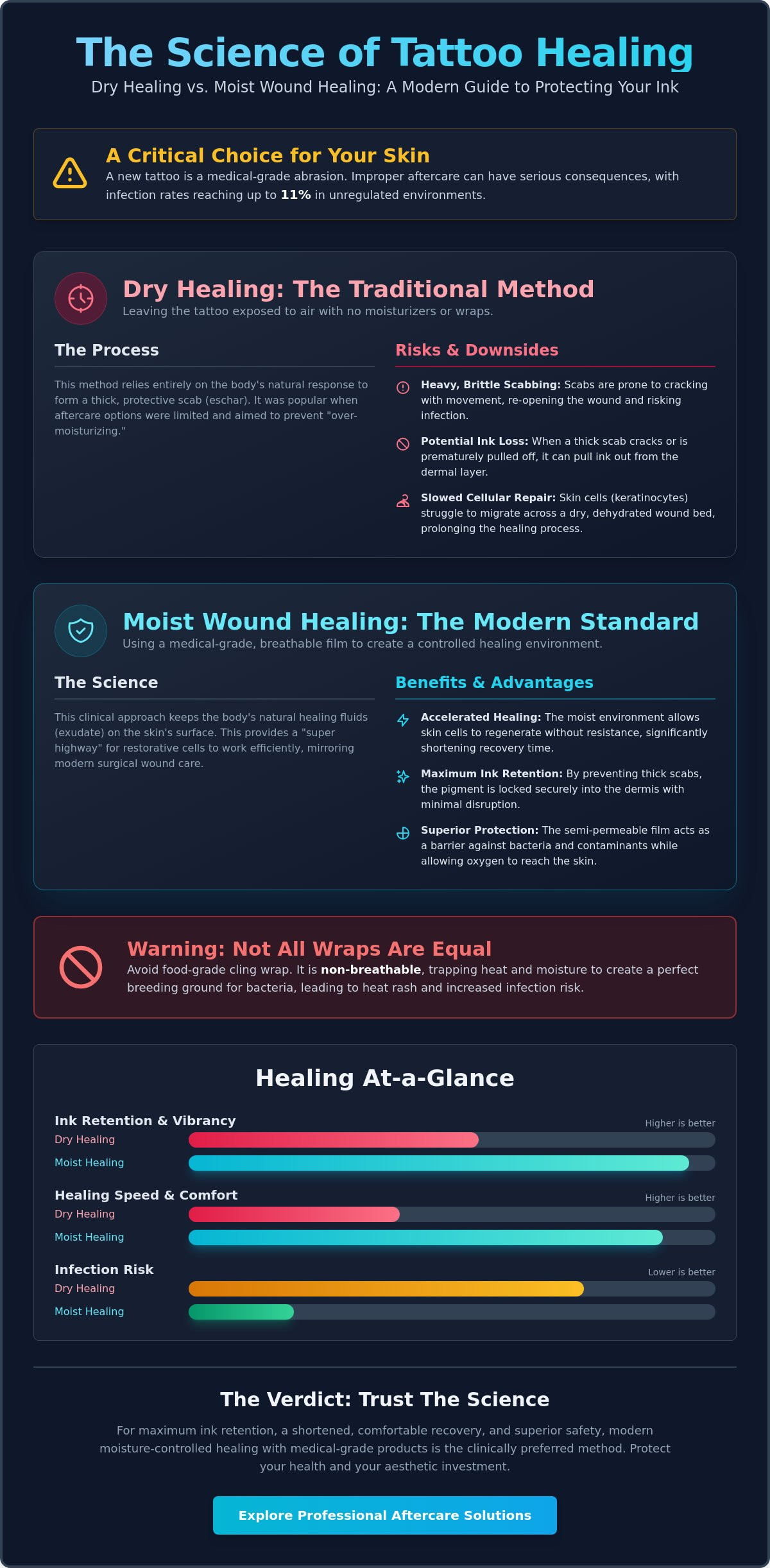
Deciding between dry healing vs wrap healing tattoo protocols is one of the most significant choices you'll make for your new ink. While both paths aim for a beautiful result, they utilize different biological mechanisms to get there. A tattoo is essentially a medical-grade abrasion. Treating it requires a clinical approach that respects the skin's natural recovery process. Dry healing is the traditional technique of letting the wound air-dry with almost no intervention. Wrap healing is the contemporary standard. It uses occlusive barriers to create a controlled environment for the skin to regenerate without the interference of external contaminants.
The Evolution of Tattoo Aftercare Protocols
The industry has moved away from the era of "cling wrap and prayer." In the past, food-grade plastic wrap was often the only option available to artists. This material is non-breathable. It creates a stagnant, warm environment that encourages bacterial growth and heat rash. Today, professional tattoo aftercare has shifted toward clinical wound management. We now utilize advanced medical-grade occlusive dressings. These films are engineered to be semi-permeable. They allow oxygen to reach the skin while keeping water and bacteria out. This shift reflects a deeper understanding of how the body repairs itself. Your artist typically determines the initial recovery path based on the saturation of the ink, the location of the piece, and your skin's immediate inflammatory response.
Defining the 'True' Dry Healing Method
True dry healing involves using no lotions, no ointments, and no wraps after the initial bandage is removed. It relies entirely on the body's natural response to create a thick protective scab. This was popular in the early days of tattooing because it avoided the risks of "over-moisturizing," which can sometimes pull ink out of the skin if done incorrectly. There is a vital distinction between intentional dry healing and simply neglecting a tattoo. While some practitioners still prefer this minimalist approach for specific styles, most modern professionals view it as unnecessarily harsh. Without a moisture barrier, the skin is prone to cracking and secondary trauma. This method requires extreme patience and a very low-impact lifestyle during the first two weeks.
Many people find a middle ground in "Open Air" healing. In this approach, you wash the tattoo regularly and apply a very thin layer of specialized balm, but you don't use a physical barrier like a film. It's a common choice for those with adhesive sensitivities or for tattoos in areas where a film won't stay put. When discussing dry healing vs wrap healing tattoo options with your artist, clarity is your best tool. Using the right terminology ensures you both understand the plan. Different tattoo aftercare methods can yield vastly different results depending on the size and detail of the work. If you tell your artist you plan on dry healing, they might assume you mean the open air method. If you actually intend to use zero products, they need to know so they can adjust their technical approach accordingly.
The Biological Mechanics of Skin Regeneration
Every tattoo is a complex interplay of mechanical puncture and dermal abrasion. When the needle deposits tattoo ink into the dermis, it triggers an immediate inflammatory response. Understanding the biological mechanics of this process helps clarify the debate over dry healing vs wrap healing tattoo methods. In a clinical sense, the skin wants to repair itself as efficiently as possible. Scientific consensus in wound care, often utilized in modern surgical recovery, favors a moist environment. This allows keratinocytes, or skin cells, to migrate across the wound surface with minimal resistance.
Moist vs. Dry Environments for Dermal Repair
In a hydrated state, the body's natural exudate, containing plasma and white blood cells, remains fluid. These components are essential for cleaning the wound and preventing infection. When you choose a moisture-retaining protocol, you're essentially providing a highway for these cells to work. If the wound dries out, as seen in traditional dry healing, these cells must work much harder to navigate through dehydrated tissue. This slowing of cellular migration is why dermatologist-approved tattoo aftercare focuses on maintaining a balanced moisture level. Properly hydrated skin ensures that the pigment particles are locked into the dermal layer without the disruption caused by excessive cellular struggle. To achieve this balance, many professionals recommend starting with high-quality tattoo aftercare products that support the skin's barrier without suffocating it.
The Protective Barrier: Natural vs. Synthetic
Dry healing forces the body to create its own barrier: a thick scab known as an eschar. While this serves as a natural bandage, it's inherently brittle and restrictive. As you move, the scab can crack, creating open fissures that invite secondary infection. More importantly, these scabs often anchor themselves to the pigment in the dermis. If a scab is prematurely detached by friction or itching, it can pull the ink out with it, leading to ink fallout and patchy results. Modern medical-grade films act as a synthetic second skin. They provide the same protection as a scab but with full flexibility and transparency. Because these wraps are engineered for oxygen permeability, they allow the skin to breathe while maintaining the moisture needed for repair, effectively preventing the growth of anaerobic bacteria that thrive in sealed, oxygen-deprived environments. This sophisticated approach to dry healing vs wrap healing tattoo recovery ensures the biological process remains uninterrupted from the first hour to the final shed.
Evaluating the Risks: Scabbing, Infection, and Ink Retention
Every recovery method carries a unique set of variables that can either enhance or compromise your final result. Choosing between dry healing vs wrap healing tattoo protocols isn't just a matter of preference; it's a strategic decision based on risk mitigation. While wrap healing is often seen as the gold standard for modern studios, it requires precise execution to avoid complications. Conversely, dry healing leaves the skin in a state of high vulnerability where environmental factors can easily disrupt the delicate repair process. Managing the tattoo healing process requires a proactive approach to these risks to ensure your ink remains as saturated and sharp as the day it was applied.
One of the most significant differences between these methods is the "itch factor." Dehydrated skin triggers a much more intense histamine response, leading to the maddening discomfort often associated with the peeling phase. Beyond mere annoyance, this itching frequently leads to accidental scratching. In a dry healing scenario, even a small amount of friction can cause a brittle scab to tear away prematurely. This often results in "ink fallout," where the pigment is physically lifted out of the dermis, leaving behind patchy or faded areas. Wrap healing typically results in more vibrant, saturated outcomes because it keeps the area flexible and protected from such mechanical trauma.
When Dry Healing Goes Wrong
The primary danger of dry healing is the formation of "deep scabbing." When a tattoo is left completely exposed, the body creates a thick, hard eschar to protect the wound. If this scab becomes too dry, it can crack and bleed, creating open fissures that are prime real estate for secondary infections. In the Australian climate, environmental contaminants like fine dust or salt water can easily settle into these cracks. This is particularly risky if your tattoo is in a high-friction area where clothing constantly rubs against the unprotected skin. If these deep scabs are disrupted, they can cause permanent scarring that distorts the original artwork.
Common Pitfalls of Wrap Healing
Wrap healing is highly effective but isn't without its own challenges. The most common phenomenon is "fluid buildup," often appearing as dark, murky bubbles under the film. This is a normal mixture of plasma, excess ink, and blood, but it must be monitored. If the seal of the wrap is compromised, this fluid can become a breeding ground for bacteria. It's also vital to distinguish between a normal inflammatory response and an adhesive allergy. If you notice a defined red rectangle exactly where the adhesive sits, you may be experiencing a reaction to the film itself. To avoid damaging the fresh epidermis during removal, we recommend peeling the wrap back slowly under warm running water, stretching the film out rather than pulling it upward away from the skin.
Choosing Your Protocol: Factors for Optimal Recovery
Optimal recovery is rarely a one size fits all solution. The decision between dry healing vs wrap healing tattoo protocols requires an honest assessment of your daily environment and the physical characteristics of your new ink. While biological principles remain constant, the way we apply them must adapt to your lifestyle. A small fine line piece on the forearm requires a different management strategy than a saturated blackwork piece on a high movement joint like the knee. Movement is a primary catalyst for scabbing; therefore, areas like elbows, ditch areas, and ankles almost always benefit from the flexible protection of a medical-grade wrap.
Your occupation and activity levels also dictate the safest path. If your daily life involves manual labor, gym environments, or exposure to dust, the physical barrier of a wrap is indispensable. It acts as a primary defense against external contaminants that could easily penetrate a "dry" tattoo. However, for those with highly reactive skin or known adhesive sensitivities, a controlled "open air" method may be the safer choice to avoid contact dermatitis. In these cases, the focus shifts to frequent, gentle cleansing and the application of a thin moisture barrier rather than a physical film.
The Artist's Recommendation vs. Personal Preference
Your artist selects specific tattoo supplies based on how they want the pigment to interact with your skin. Deferring to their expertise is vital because they understand the technical nuances of their specific needle groupings and ink saturation. For example, heavy blackwork creates more trauma than a light grey wash, often necessitating a longer initial wrap period to manage higher levels of exudate. Before you leave the studio, ensure your aftercare kit is prepared. Having the right tools on hand prevents the temptation to use generic, non-specialized products that can clog pores or leach pigment.
Environmental Factors in Australia
Australia presents unique challenges for dermal repair that many global guides overlook. In high humidity regions like Queensland, sweat can accumulate rapidly under a medical film. This trapped moisture can lead to heat rash or miliaria, which mimics the appearance of a breakout. If you're healing in the tropics, you might need to change your wrap more frequently or transition to an open air method sooner than someone in a cooler climate. Conversely, in the arid conditions of the Red Centre or Western Australia, the lack of atmospheric moisture makes true dry healing extremely risky. The skin can crack before the underlying tissue has stabilized, leading to painful fissures. Regardless of the dry healing vs wrap healing tattoo method you choose, the one absolute rule in our climate is total sun avoidance. UV exposure is the fastest way to degrade fresh pigment and damage recovering skin cells. Equipping yourself with clinical-grade tattoo aftercare before your appointment ensures you're ready to manage whichever path your artist recommends.
Professional-Grade Aftercare: The Tatt Lab Standard
The success of the dry healing vs wrap healing tattoo debate ultimately rests on the quality of the materials you place against your skin. While the method provides the framework, the specific tools determine the safety of the recovery environment. We advocate for the use of specialized medical supplies for tattoo artists because supermarket alternatives simply aren't engineered for dermal trauma. Food-grade plastic wrap, for example, is designed to keep oxygen out of containers. When applied to a fresh tattoo, it creates a non-breathable, anaerobic environment that can trap heat and pathogens, significantly increasing the risk of infection and heat rash.
Professional recovery requires a transition from protection to nourishment. Once the initial phase of wrap healing is complete, the focus shifts to maintaining the skin's elasticity as the new epidermis stabilizes. This transition period is where many people falter. Moving from a medical-grade film to a high-quality balm ensures the skin doesn't suddenly contract or crack. This methodical progression supports the biological needs of the skin at every stage, ensuring the pigment remains exactly where the artist intended.
Selecting the Right Barrier
There is a fundamental difference between traditional absorbent dressings and modern 'second skin' films. Absorbent pads are designed to pull fluid away from a wound, which can sometimes lead to the tattoo drying out too quickly and sticking to the bandage. In contrast, the medical-grade films Tatt Lab prioritizes are semi-permeable membranes. They keep external contaminants out while allowing the skin to perform its natural gas exchange. We carefully vet every aftercare product for the Australian professional market to ensure they withstand local conditions without compromising the seal. Tatt Lab's artist-owned perspective ensures higher safety standards because our selections are grounded in the daily reality of the studio environment rather than just a retail shelf.
Long-Term Integrity and Maintenance
Your commitment to your ink shouldn't end when the peeling stops. Beyond the first two weeks, the long-term vibrancy of your art depends on the ongoing health of your skin. Even after the dry healing vs wrap healing tattoo phase concludes, the dermis continues to settle for several months. Consistent hydration is the most effective way to keep your art looking sharp for years to come. Dehydrated skin appears dull and can cause the edges of fine lines to look blurred over time. By maintaining a steady routine of professional-grade moisturization, you're protecting the physical integrity of the work and the personal transformation it represents. Consistency in your daily routine will always beat the specific method you chose in the first week. To ensure your recovery is supported by clinical-grade solutions, Explore Tatt Lab's Professional Aftercare Range to find the right tools for your specific skin type and tattoo style.
Elevating Your Dermal Recovery Standards
Mastering your recovery involves more than just waiting; it's about active, scientific management of your skin's healing environment. We've explored how the choice between dry healing vs wrap healing tattoo methods impacts cellular migration and ink retention. By prioritizing moisture-controlled environments and medical-grade barriers, you significantly reduce the risk of heavy scabbing and secondary infection. Whether you're navigating the humidity of the tropics or the dry heat of the outback, the right protocol ensures your personal transformation settles with absolute precision. This methodical approach protects the physical integrity of your art while supporting your body's natural regenerative process.
As an artist-owned and operated facility, we understand the vulnerability of fresh ink. We maintain medical-grade safety standards through our curated range of recovery tools, ensuring every client has access to professional-grade solutions. You can Secure Your Professional Aftercare Supplies at Tatt Lab with express nationwide shipping across Australia. Your journey from the studio to a fully healed masterpiece deserves the highest level of meticulous care. Trust the science, stay consistent with your routine, and enjoy the lasting vibrancy of your new art.
Frequently Asked Questions
Is dry healing a tattoo better than wrapping it?
Modern clinical consensus generally favors wrap healing over traditional dry healing for its ability to maintain a controlled micro-environment. While dry healing was once the industry standard, it often results in thick, brittle scabs that can lead to ink fallout. Using medical-grade films supports faster cellular migration and protects the physical integrity of your artwork during the most vulnerable stages of recovery.
Can I switch from wrap healing to dry healing halfway through?
Transitioning from a wrap to an open-air method is a standard part of a professional recovery narrative. Most artists recommend keeping the initial medical-grade film in place for three to five days to manage the weeping phase. After this period, you can transition to a routine of gentle cleansing and specialized balm application to support the skin as it stabilizes.
How long should I keep my tattoo wrapped if I choose wrap healing?
You should typically keep a medical-grade adhesive film on for three to five days, depending on your artist's specific instructions. If you are using a traditional absorbent dressing, it should usually be removed within two to four hours. The duration depends heavily on the level of exudate and the saturation of the ink in your specific piece.
Why is my tattoo so itchy during dry healing?
Itching is a biological response to the dehydration of the epidermis and the formation of a hard scab. As the skin dries out, it tightens and pulls on surrounding nerve endings, which triggers a significant histamine release. Moisture-controlled healing methods significantly reduce this discomfort by keeping the skin flexible and preventing the nerve irritation caused by brittle scabbing.
Does wrap healing cause more infections than dry healing?
Wrap healing actually provides a superior physical barrier against bacteria when performed with sterile, medical-grade materials. When comparing dry healing vs wrap healing tattoo safety, infections are more frequently associated with dry healing because open cracks in the scab provide a direct pathway for contaminants. Wraps only pose a risk if applied to improperly cleaned skin or if the seal is compromised.
Can I use normal cling wrap for wrap healing?
You should never use food-grade cling wrap for tattoo recovery because it is not breathable. It traps heat and moisture against the skin, which creates an anaerobic environment where bacteria can thrive. Professional wrap healing requires semi-permeable medical films that allow oxygen exchange while keeping external pathogens and water out of the wound site.
What should I do if my tattoo scabs heavily during dry healing?
If you notice heavy scabbing, do not attempt to pick or pull the flakes away. Apply a very thin layer of specialized tattoo aftercare balm to keep the scab flexible and prevent it from cracking. This helps ensure the scab stays attached until the underlying skin has fully regenerated, which is vital for preventing patchy ink retention and permanent scarring.
Is it normal for fluid to build up under my tattoo wrap?
Fluid buildup, often called an ink sack, is a completely normal part of the early recovery process. This mixture of plasma, excess pigment, and blood is the body's way of cleaning the wound and facilitating repair. As long as the fluid is contained within the seal and there are no signs of abnormal redness or heat, it's a healthy indicator of progress.


Comments (0)
There are no comments for this article. Be the first one to leave a message!