

If you’ve ever loaded up a client session only to find your ink separating in the cap, running too thin, or healing out patchy and dull, you already know the cost of cutting corners on supplies. When you buy professional grade tattoo ink, you’re not just picking a colour off a shelf. You’re making a decision that affects your client’s skin, your studio’s reputation, and the longevity of your artwork. This guide walks you through exactly what to look for, where to source it, and how to avoid the traps that catch even experienced artists off guard.
Table of Contents
- Key takeaways
- What defines professional grade tattoo ink
- Where to source professional tattoo ink
- Step-by-step buying process for tattoo ink
- Common mistakes when buying tattoo ink
- Why premium ink pays off in the studio
- My take on buying tattoo ink
- Stock your studio with the good stuff
- FAQ
Key takeaways
| Point | Details |
|---|---|
| Prioritise safety standards | Look for inks that are vegan, non-toxic, and sterilised to protect both you and your clients. |
| Source from authorised suppliers | Buying through verified distributors reduces the risk of counterfeit or substandard products. |
| Match ink to your style | Different brands perform differently across realism, blackwork, and colour work. |
| Check packaging details | Batch numbers and expiry dates on labels are non-negotiable markers of quality and authenticity. |
| Document every purchase | Keeping product and batch records supports client safety and professional accountability. |
What defines professional grade tattoo ink
The industry term you’ll hear most often is “professional tattoo pigment,” and it covers a specific set of standards that separate studio-grade product from the cheap stuff flooding marketplaces. When you’re shopping for high-quality tattoo ink, these are the qualities that actually matter.
Ingredients and composition
Professional inks use carrier solutions (typically witch hazel, ethanol, or purified water) to keep pigment suspended evenly. The pigment itself should be finely milled for smooth flow through the needle without clogging. Tattoo inks manufactured in the USA are often vegan, sterile, and engineered for predictable handling and consistent healed results, which is why brands like Intenze have built such strong followings among working artists.
Safety and sterility
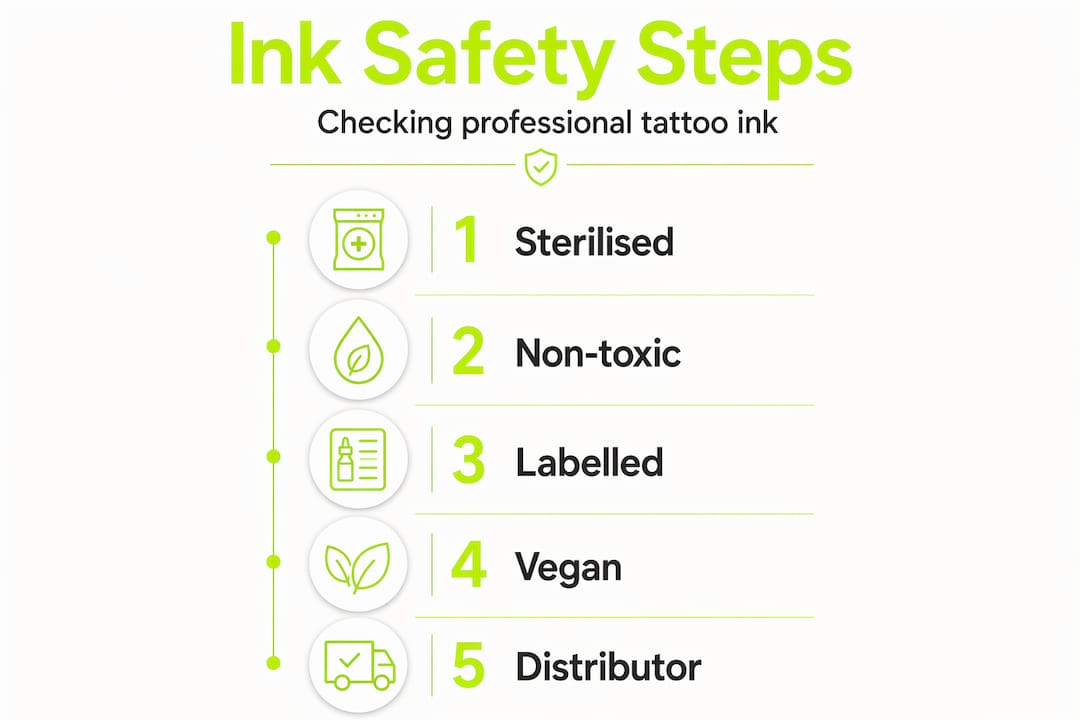
This is where you absolutely cannot compromise. Look for inks that are gamma-radiation sterilised, free from heavy metals, and certified non-toxic. World Famous inks are vegan-friendly, non-toxic, sterilised with gamma radiation, and animal cruelty-free, setting the benchmark for what professional artists should expect as standard.
Colour vibrancy and longevity
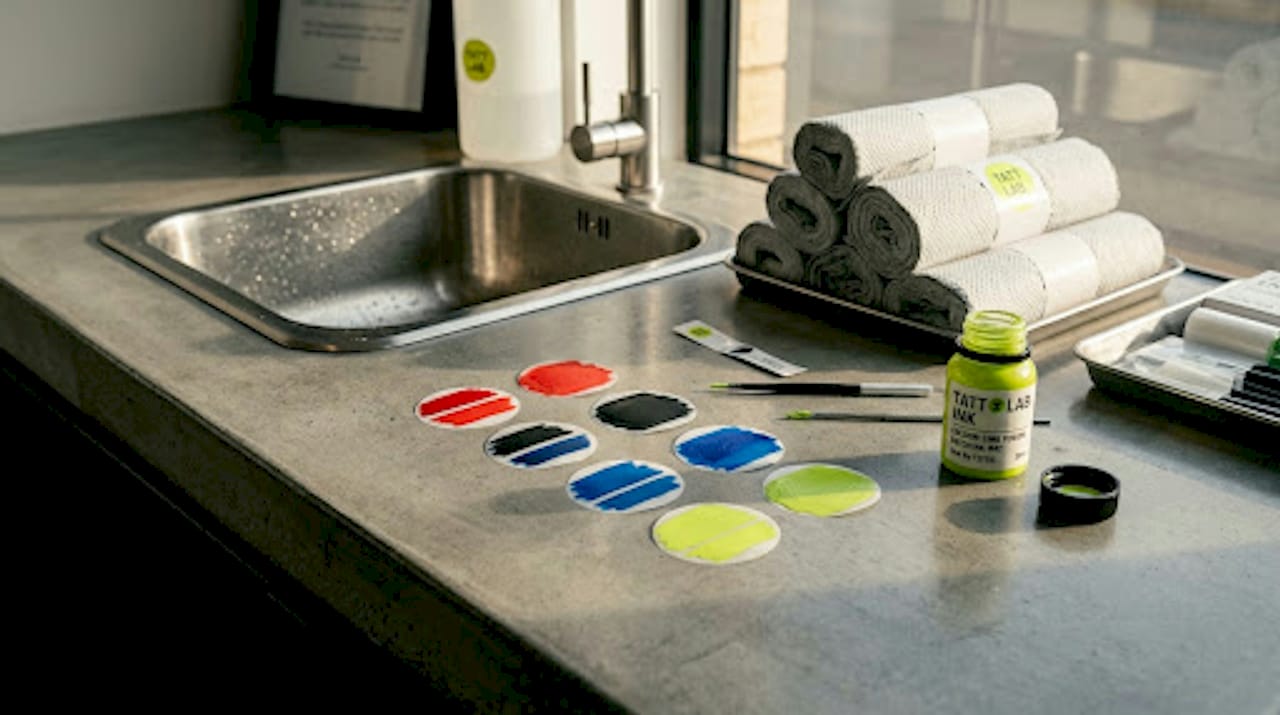
Saturated, true-to-colour pigments that hold their vibrancy through the healing process are the mark of a well-formulated ink. Cheap inks often look great in the bottle but fade or shift tone once healed. Professional formulations are tested for healed results, not just fresh application.
Packaging and labelling
Professional tattoo ink packaging includes labelling with batch number and expiry date to guarantee freshness and authenticity. If a bottle arrives without this information, that’s a red flag worth acting on immediately.
Pro Tip: Always photograph your ink bottles on arrival, including the label details. If a client ever has a reaction, you’ll have a clear record of exactly what product and batch was used.
Where to source professional tattoo ink
Knowing what to look for is half the battle. The other half is knowing where to actually find it. The tattoo ink market has a counterfeit problem, and it’s more widespread than most artists realise.
Authorised distributors and trusted brands
Sourcing from authorised distributors helps avoid counterfeit products and ensures supplier reliability. Brands like Dynamic, Intenze, Eternal, and World Famous are known for vibrant colours, smooth flow, and lasting results. These names have earned their reputations through consistent performance across thousands of studios worldwide. When you’re looking for professional tattoo ink for sale, start with suppliers who are officially listed as authorised stockists for these brands.
Online vs in-store sourcing
Both have their place. Online tattoo ink suppliers give you access to a broader catalogue, competitive pricing, and the convenience of ordering between sessions. In-store purchasing lets you ask questions, check packaging in person, and sometimes get hands-on advice from staff who actually tattoo. The best approach? Build a relationship with a reliable online supplier you trust, and use in-store visits to discover new products or brands before committing to bulk orders.
Here’s a practical process for sourcing ink you can rely on:
- Identify your preferred brands. Start with brands that have strong industry reputations and are stocked by authorised Australian distributors.
- Verify the supplier’s authorisation. Check the brand’s official website for a list of approved stockists before placing any order.
- Cross-reference pricing. If a deal looks too good to be true on an unknown platform, it probably is. Counterfeit inks are often priced well below market rate to attract buyers.
- Check for Australian compliance. Inks sold in Australia should comply with local regulations around cosmetic pigments. Ask your supplier directly if you’re unsure.
- Read recent customer reviews. Look for feedback specifically from other tattoo artists, not general consumers, to get relevant insight into performance.
Pro Tip: Join Australian tattoo artist forums and Facebook groups. The community is generous with supplier recommendations, and you’ll quickly learn which distributors are trusted by working professionals.
Step-by-step buying process for tattoo ink
Even experienced artists benefit from a consistent purchasing process. It keeps quality high, protects your clients, and saves you from expensive mistakes.
- Assess your style and ink needs. A blackwork specialist has very different requirements from a watercolour or realism artist. Map out the colours and formulations you use most frequently before shopping.
- Research brands and product lines. Spend time reading brand documentation, not just marketing copy. Look at ingredient lists, certifications, and verified ingredient details that confirm compliance with safety standards.
- Request samples or test sets. Many reputable suppliers offer sample packs or starter sets. Testing on practice skin before committing to a full set is always worth the extra step.
- Place orders through verified sources. Use official distributor websites or trusted Australian tattoo supply shops. Avoid third-party marketplaces for ink unless the seller is a verified authorised retailer.
- Inspect shipment on arrival. Check every bottle for intact seals, correct labelling, and no signs of leakage or tampering. Proper storage and handling after purchase directly influences longevity and colour consistency.
- Document product and batch details. Log the brand, product name, batch number, and expiry date for every ink you receive. This is your paper trail for client safety.
| Step | What to check | Why it matters |
|---|---|---|
| Assess style needs | Colour range, viscosity, formulation type | Ensures the ink suits your specific technique |
| Research brands | Certifications, ingredient transparency | Confirms safety and professional suitability |
| Inspect on arrival | Seals, labels, batch numbers | Verifies authenticity and freshness |
| Document details | Batch number, expiry, supplier | Protects clients and supports accountability |
Common mistakes when buying tattoo ink
Even artists who know their craft can fall into habits that compromise their ink quality. Here are the pitfalls worth watching for.
- Buying on price alone. The cheapest option in the catalogue is rarely the best performer on skin. Inferior pigments often contain inconsistent particle sizes that clog needles, bleed unpredictably, or fade within months of healing.
- Ignoring expiry dates. Expired ink can separate, grow bacteria, or lose pigment stability. Always check dates before use, and rotate your stock so older bottles are used first.
- Skipping patch tests. Testing patch reactions before client application reduces the risk of adverse reactions, particularly with clients who have sensitive skin or known allergies. This step is non-negotiable for responsible practice.
- Not verifying supplier authenticity. Ink authenticity and supplier reputation greatly impact safety and final tattoo quality. Counterfeit or unreliable inks risk poor results and genuine health issues for your clients.
- Overlooking storage conditions. Ink stored in direct sunlight or fluctuating temperatures degrades faster than you’d expect. Keep your stock in a cool, dark space and follow the manufacturer’s guidelines.
“The most expensive ink mistake isn’t the premium brand you bought. It’s the cheap one you bought twice because the results weren’t good enough the first time.”
If you ever suspect an ink batch is off (unusual smell, separation that won’t mix back, or unexpected viscosity), pull it from rotation immediately and contact your supplier. A reputable distributor will always take that call seriously.
Why premium ink pays off in the studio
The outcomes of using genuinely high-quality pigments go well beyond the finished tattoo. Using high-quality inks results in better colour saturation, improved healing, and client satisfaction that directly builds your studio’s reputation. Clients who heal well come back. They refer friends. They post their results online with your name attached.
Consistency is the other big win. When your ink flows predictably session after session, you spend less time compensating for the product and more time focusing on your art. That’s the difference between a tool that works with you and one that fights you at every pass.
Reduced adverse reactions also matter more than artists sometimes acknowledge. Clients who experience irritation, prolonged redness, or unexpected fading don’t just lose confidence in the ink. They lose confidence in you. Premium formulations with transparent ingredient lists give both you and your clients peace of mind that the process is as safe as it is skilled.
My take on buying tattoo ink
I’ve watched artists at every level make the same mistake: treating ink as a commodity rather than a material that directly shapes their work. In my experience, the artists who are most consistent in their results are the ones who’ve locked in two or three brands they trust completely and built their palette around those.
The myth I hear most often is that expensive ink is just marketing. It’s not. The difference between a well-formulated professional pigment and a budget alternative shows up clearly in healed photos, not fresh ones. Fresh ink almost always looks decent. It’s the six-week photo that tells the real story.
I’ve also learned that supplier relationships matter as much as product quality. When a batch has an issue, a good supplier fixes it fast. A dodgy one ghosts you. Build those relationships before you need them, not after something goes wrong.
My advice: don’t chase every new brand that hits the market. Stick with proven names, source through authorised channels, and treat your ink stock with the same care you give your machines. Your clients’ skin deserves nothing less.
— Marco
Stock your studio with the good stuff
If you’re ready to upgrade your ink game, Tattlab has you covered. As one of Australia’s most trusted tattoo supply destinations, Tattlab stocks a hand-picked range of professional inks from the brands artists actually rely on, including World Famous, Dynamic, and Intenze.
Whether you’re after a full colour set, a reliable shading solution, or just want to explore what’s available from a supplier who genuinely understands the craft, Tattlab makes it easy. Fast shipping, proper packaging, and a catalogue built by artists for artists. Head to Tattlab’s online store to browse the full range of professional tattoo supplies and find the inks that’ll take your work to the next level.
FAQ
What should I look for when buying professional tattoo ink?
Look for inks that are gamma-radiation sterilised, non-toxic, vegan-certified, and clearly labelled with batch numbers and expiry dates. Brands with established reputations for consistent healed results are your safest bet.
Where can I buy professional tattoo ink in Australia?
Authorised Australian distributors and dedicated tattoo supply shops like Tattlab are the most reliable sources. Avoid unknown third-party marketplaces, as counterfeit products are a genuine risk in the tattoo ink market.
How do I know if tattoo ink is genuine and safe?
Check for proper labelling including batch numbers, expiry dates, and ingredient lists. Purchase only from authorised distributors, and verify the supplier is listed on the brand’s official website as an approved stockist.
Can I use any tattoo ink for all styles?
Not all inks perform equally across every style. Realism and portrait work often requires finely milled, high-viscosity pigments, while colour work benefits from bright, saturated formulations. Match your ink choice to your technique for best results.
How should I store professional tattoo ink after purchase?
Store ink in a cool, dark location away from direct sunlight and temperature fluctuations. Always follow the manufacturer’s storage guidelines, as improper conditions can degrade pigment quality and reduce shelf life significantly.


Comments (0)
There are no comments for this article. Be the first one to leave a message!