

What if the industry staple you rely on is actually the primary source of your client's mid-session inflammation? While green soap has served the community for decades, its high pH and botanical additives often trigger unnecessary redness or compromise the delicate bond of your stencil. You likely recognize the frustration of watching a precise map of your work fade prematurely or seeing a client's skin react poorly to traditional dyes. Identifying professional alternatives to green soap for tattoos has become a necessity for artists who prioritize both technical precision and biological safety.
We understand that your work is a delicate balance between artistic expression and medical-grade care. This guide explores the most effective, specialized cleansers designed to maintain skin integrity while ensuring your stencil remains locked in place. You'll discover how modern, pH-balanced solutions can calm the skin during long sessions and provide a sterile environment without the harsh traditional scent. We'll break down the science behind these advanced formulas and show you how to transition your station to a more sophisticated, results-oriented setup.
Key Takeaways
- Understand why traditional vegetable oil-based soaps are being replaced by modern formulations to reduce skin irritation and contact dermatitis.
- Identify the most effective medical-grade alternatives to green soap for tattoos, including pH-balanced foam washes that preserve stencil clarity.
- Learn how to mitigate risks associated with common allergens like lavender oil and D&C Green No. 5 to ensure a calmer session for sensitive clients.
- Discover the clinical protocol for transitioning to new cleansers, from precise dilution ratios to essential patch testing procedures.
- Explore how sourcing artist-vetted supplies from Tatt Lab ensures your studio maintains the highest standards of physical integrity and sterile precision.
The Industry Standard: What is Green Soap and Why is it Used?
Tincture of Green Soap represents the foundational chemistry of the modern tattoo studio. This potassium-based vegetable oil soap serves a critical function, acting as a surfactant that emulsifies skin oils and captures excess pigment particles during the tattooing process. Its formulation typically includes lavender oil, which provides a mild natural antiseptic property and the signature aroma that many clients associate with a professional environment. Because it's non-corrosive, it remains a safe choice for both the client's skin and the maintenance of medical-grade equipment like stainless steel tubes.
While it remains the baseline, many artists are now investigating alternatives to green soap for tattoos to better manage skin sensitivity and technical performance. Maintaining rigorous hygiene protocols is essential for managing Tattoo health risks and safety, and green soap has historically been the primary line of defense in this effort. However, as our understanding of skin biology evolves, the industry is moving toward solutions that offer more targeted support for the skin barrier.
The Chemistry of Traditional Tincture
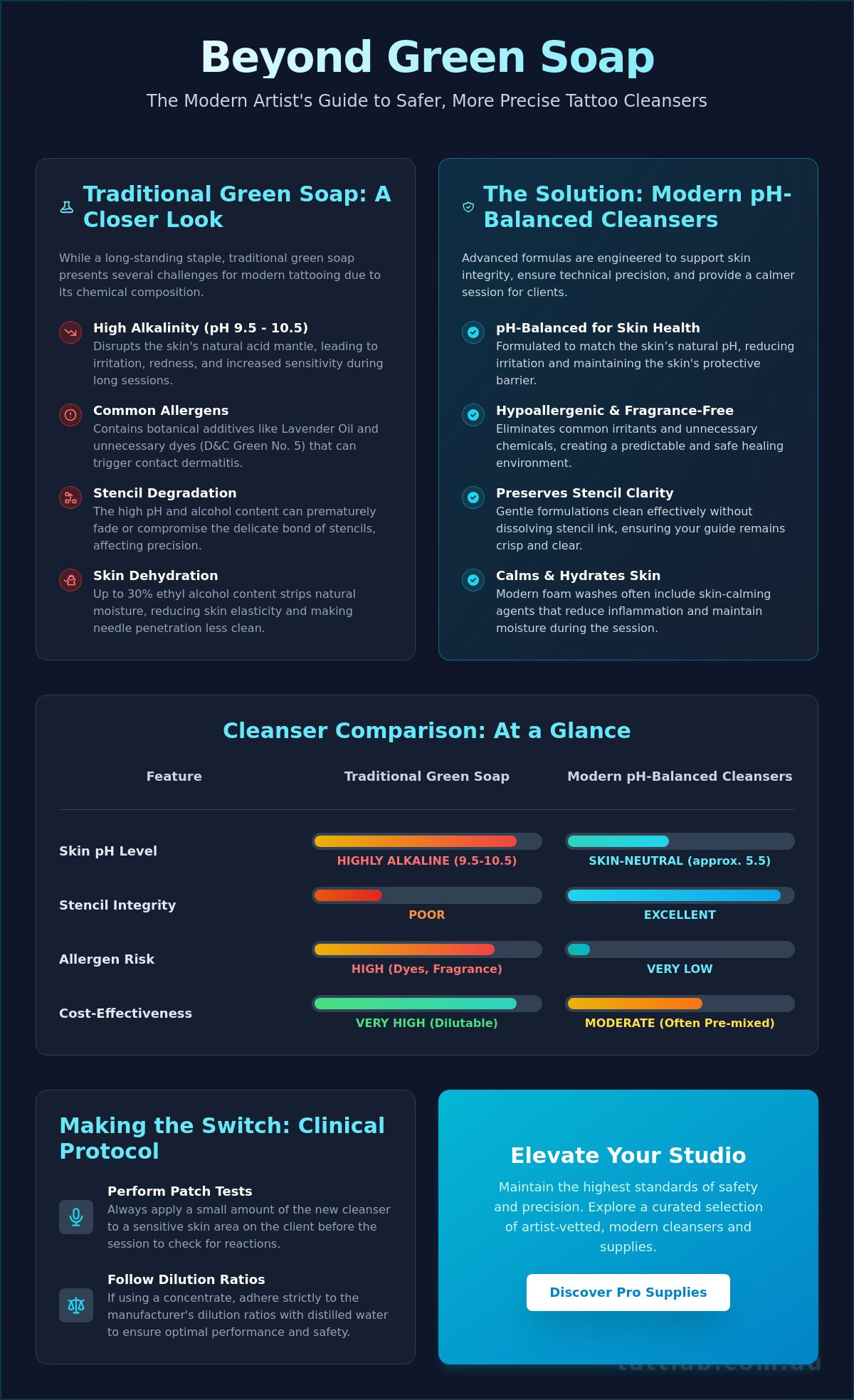
Traditional green soap is the result of a precise saponification process, where vegetable oils react with potassium hydroxide to create a highly soluble liquid soap. The inclusion of approximately 30% ethyl alcohol serves a dual purpose; it acts as a solvent to stabilize the mixture and provides a baseline level of mild disinfection during the procedure. With a pH typically ranging between 9.5 and 10.5, traditional green soap is significantly more alkaline than the skin’s natural acid mantle, which can lead to temporary barrier disruption and increased sensitivity during long sessions.
Why Green Soap Dominates the Tattoo Industry
The ubiquity of this cleanser stems from its remarkable efficiency and economic profile. Most studios rely on it for three primary reasons:
- Economic Efficiency: High concentration levels allow for dilution ratios of 1:8 or 1:10 with distilled water, making it one of the most cost-effective solutions in a high-volume studio. This scalability ensures that artists can maintain a high standard of cleanliness without the financial pressure of single-use pre-mixed solutions.
- Biological Debris Removal: It excels at lifting blood, plasma, and ink through a process of emulsification. By lowering the surface tension of the liquid, it allows biological materials to be wiped away gently, reducing the need for aggressive mechanical friction that could damage the delicate dermis.
- Professional Atmosphere: The distinct green hue and lavender scent create a psychological anchor for the client. In an industry where trust is paramount, these sensory markers signal a sterile and controlled environment, often helping to lower the client's baseline anxiety.
Despite these historical benefits, the shift toward more specialized alternatives to green soap for tattoos is driven by a desire for even greater precision in skin recovery and pigment retention. Modern artists are increasingly seeking out products that offer the same cleaning power without the high alkalinity of traditional tinctures.
Why Artists Seek Alternatives to Green Soap in 2026
The evolution of the modern studio is defined by a move toward biocompatibility and technical precision. While historical reliance on vegetable oil soaps was once unquestioned, the contemporary landscape reveals a growing incidence of contact dermatitis and localized allergic responses. Many artists now recognize that lavender oil, once prized for its antiseptic qualities, is a frequent allergen that can provoke inflammation in sensitive individuals. This shift is mirrored in the FDA guidance on tattoo safety, which emphasizes the importance of monitoring adverse reactions to cosmetic ingredients used during the procedure.
Beyond botanical sensitivities, the "green dye" itself, specifically D&C Green No. 5, has come under scrutiny. While it provides the soap's iconic hue, it serves no functional purpose in the cleansing process and adds an unnecessary chemical variable to an already traumatized skin site. Similarly, the high alcohol content found in traditional formulations can lead to premature dehydration of the epidermis. This drying effect compromises the skin's elasticity during long sessions, making it more difficult for the needle to penetrate cleanly and increasing the likelihood of "weeping" plasma. This has led to a significant rise in the adoption of alternatives to green soap for tattoos that prioritize moisture retention over harsh traditional surfactants.
Client Sensitivities and Skin Integrity
Identifying a negative reaction mid-session is a critical skill for the modern practitioner. If a client experiences persistent redness that extends beyond the immediate work area or reports an intense stinging sensation that doesn't subside, the cleanser may be the culprit. Transitioning to fragrance-free, medical-grade formulas helps eliminate these variables, creating a more predictable healing environment. For a deeper understanding of how these interactions affect long-term results, refer to our guide on Mastering Tattoo Aftercare: The Professional Guide to Skin Integrity and Healing. Ensuring your setup respects the body's natural defenses is the first step toward superior results.
Stencil Preservation and Ink Interaction
Technical performance is equally influential in the search for alternatives to green soap for tattoos. Traditional soaps often contain high levels of surfactants that act too aggressively on stencil carbon, causing fine lines to blur or disappear entirely before the first pass is complete. Certain oils in these soaps can also "cloud" the ink on the surface, obscuring the artist's view of the saturation levels. This is particularly problematic in fine-line and realism work, where "dry" cleansing methods and low-residue washes are becoming the preferred standard. Selecting high-performance tattoo cartridges and compatible cleansers ensures that every detail of your design remains visible and vibrant throughout the entire process.
Professional Alternatives: Comparing Performance and Safety
Selecting a replacement for traditional tinctures requires a focus on biological safety and technical performance. While some consumer-facing guides suggest using baby soap as a gentle option, these products often fall short of professional public health and safety standards for tattooing. Baby soap isn't antimicrobial, and its synthetic fragrances can cause significant irritation in open wounds. Instead, modern artists are turning to high-performance alternatives to green soap for tattoos that are specifically engineered for the dermis during the inflammatory phase.
For sessions involving ultra-sensitive skin or high-risk areas, sterile saline solutions provide a neutral, non-reactive cleaning method. Saline mimics the body's natural fluid balance, ensuring that the skin barrier isn't shocked by shifts in pH. While saline lacks the surfactant power to lift heavy ink buildup, it's an excellent secondary cleanser. Another emerging option is the use of "soap-free" synthetic detergents, known as syndets. These products are formulated to a pH of 5.5, matching the skin's acid mantle to prevent the "tight" feeling and redness often caused by alkaline vegetable soaps.
Specialised Tattoo Foam Washes
Modern foam washes represent the gold standard for intra-procedure care. Because the solution is pre-diluted and dispensed as a light foam, it requires significantly less mechanical friction to spread across the skin. Many of these formulas incorporate botanical extracts like aloe vera to hydrate the tissue and witch hazel to provide a natural vasoconstrictor effect, which helps manage localized swelling. The use of a foam pump mechanism significantly reduces the risk of cross-contamination because the delivery system prevents the "back-suction" common in traditional squeeze bottles.
Medical-Grade Antimicrobial Solutions
In certain clinical scenarios, artists may opt for antimicrobial medical cleansers, such as those containing low-concentration chlorhexidine. These pH-neutral washes provide a higher level of pathogen control without the aggressive drying effect of alcohol-based tinctures. It's essential to ensure these products meet Australian standards for skin disinfectants to maintain studio compliance. For a comprehensive breakdown of the necessary protocols, you can consult our Medical Supplies for Tattoo Artists: The Professional Studio Safety Guide (2026). Adopting these alternatives to green soap for tattoos ensures your practice remains at the intersection of safety and sophisticated skin management.
How to Implement a New Cleansing Protocol in Your Studio
Integrating alternatives to green soap for tattoos into your daily workflow requires more than just a simple product swap; it demands a calibrated shift in your station's chemistry. Before committing to a full session with a new formulation, perform a controlled patch test on a non-procedure area to observe the skin's immediate vascular response. This preliminary step ensures that the client's unique biology aligns with the cleanser's surfactant profile. It's equally important to monitor how these solutions interact with your tattoo stencils across varying skin types. Oily skin often requires a slightly higher surfactant concentration to cut through sebum without lifting the pigment, while dry, porous skin may benefit from a more diluted, emollient-heavy approach to prevent premature irritation.
Dilution and Preparation Standards
Precision in preparation is the hallmark of a professional studio. You must use distilled or deionised water for all dilutions to eliminate the risk of mineral interference or bacterial contamination found in tap water. Diluted solutions are more susceptible to bacterial bloom over time, so it's a best practice to prepare only what you need for a 24-hour period. While the urge to experiment with ratios is common, mixing your own solutions requires strict adherence to manufacturer guidelines to ensure the active antimicrobial agents remain effective without becoming caustic to open tissue.
Maintaining the Sterile Field
The delivery system you choose impacts both the sterile field and the efficiency of the procedure. While traditional wash bottles are standard, many modern alternatives perform better when dispensed through dedicated foamers, which provide a more stable surface area for ink emulsification. You must verify that your chosen alternative meets the same rigorous biological debris removal standards as traditional tinctures, ensuring that plasma and excess pigment are lifted away rather than smeared across the dermis. Nitrile gloves act as a primary barrier when handling concentrated surfactants, preventing the slow degradation of the skin's natural lipids during the setup process.
Educating your clients is the final step in a successful protocol transition. Briefly explain the science behind your choice, noting that you've selected a pH-balanced, fragrance-free alternative to prioritize their skin integrity and comfort. This transparent approach builds immediate trust and reinforces your position as a specialist who values long-term healing over industry tradition. By documenting how different skin types respond to your new cleansers, you can refine your technique and provide a truly bespoke experience for every individual who enters your studio.
Sourcing Quality Tattoo Cleansers from Tatt Lab
The transition from a technical procedure to a successful healing journey begins the moment the needle meets the skin. Your choice of cleanser isn't merely a cleaning task; it's a clinical intervention that dictates the initial state of the wound. While supermarket soaps or generic detergents might seem like accessible substitutes, they lack the biological precision required to support a fresh tattoo. Tatt Lab functions as a dedicated partner in your studio's success, offering artist-vetted alternatives to green soap for tattoos that have been rigorously tested for efficacy and skin safety. By selecting medical-grade solutions, you ensure the technical precision of your work is preserved through every wipe.
Artist-Led Product Selection
Our commitment to physical integrity drives our selection process. We understand that every interaction with the skin affects its ability to recover, which is why we prioritize products that stabilize the dermis rather than just stripping it of ink. Specialized supplies contribute to better healing outcomes and superior color retention by maintaining a neutral environment during the inflammatory phase. You can explore our rigorous standards in The Professional Guide to Tattoo Supplies in Australia: Quality, Safety, and Performance. This resource details how we bridge the gap between traditional artistry and medical-grade safety.
The Tatt Lab Advantage for Australian Studios
Operating an Australian studio requires a reliable supply chain that understands local conditions. Tatt Lab provides a streamlined facility for medical PPE and tattoo consumables, ensuring you have access to the same high-level tools used in clinical environments. Whether you're stocking up on alternatives to green soap for tattoos or replenishing your supply of tattoo cartridges, our platform offers a one-stop-shop experience. We provide express nationwide shipping to ensure your station remains fully equipped, avoiding the risks of inventory gaps. Professional practitioners can establish accounts to access bulk pricing, allowing you to scale your studio's safety protocols efficiently.
Professional-grade results are the product of meticulousness and the right chemistry. Starting the recovery process with a gentle, effective cleanser sets the foundation for your client's long-term satisfaction and the longevity of the art itself. It's time to move beyond outdated industry staples and embrace solutions designed for the modern body. Upgrade your studio hygiene with Tatt Lab’s professional cleansers and aftercare.
Advancing Your Studio Standards for 2026
The evolution of tattoo cleansing marks a significant shift from traditional reliance to biological precision. By prioritizing pH-balanced, fragrance-free solutions, you protect the skin's natural acid mantle and ensure your stencil remains sharp throughout the longest sessions. We've seen how these modern alternatives to green soap for tattoos reduce the risk of mid-session inflammation, providing a calmer canvas and a more predictable healing narrative for every client.
Shop Professional Tattoo Aftercare and Cleansers at Tatt Lab
Your journey toward a more sophisticated, results-oriented studio setup starts with selecting the right chemistry. We look forward to being your partner in every successful procedure and every vibrant, healed result.
Frequently Asked Questions
Can I use Dr. Bronner’s soap as a green soap alternative?
You can use Dr. Bronner’s Unscented Baby Mild soap, but it's not a direct medical equivalent to professional tinctures. While it's a pure castile soap, it lacks the specific antiseptic balance found in dedicated tattoo cleansers. If you choose this path, ensure your dilution ratios are precise to avoid over-drying the skin. Many artists prefer purpose-built alternatives to green soap for tattoos because they are engineered specifically for the inflammatory phase of a fresh wound.
Is baby soap safe to use during the tattooing process?
Baby soap is generally not recommended for use during the active tattooing process. Although marketed as gentle, most commercial baby soaps contain synthetic fragrances and dyes that can provoke an inflammatory response in open skin. They also lack the antimicrobial properties necessary to maintain a sterile field. For a safe procedure, it's better to stick with medical-grade, pH-balanced washes that are artist-vetted and free from unnecessary cosmetic additives.
What is the best green soap alternative for clients with sensitive skin?
Sterile saline solutions and pH-neutral synthetic detergents, known as syndets, are the superior choices for clients with hyper-sensitive skin. These options provide a non-reactive cleaning method that mimics the body's natural fluid balance, preventing the stinging sensation often caused by alkaline soaps. Using these specialized alternatives to green soap for tattoos ensures that you don't compromise the skin's integrity, leading to a calmer session and more predictable healing outcomes without the risk of botanical allergies.
Does using an alternative cleanser affect the tattoo stencil?
Yes, the choice of cleanser directly impacts the longevity of your stencil. Traditional soaps with high surfactant concentrations can break down stencil carbon prematurely, leading to a loss of detail during the first pass. Modern alternative cleansers are often formulated with lower surfactant levels specifically to preserve the design map. This allows you to wipe away excess ink and plasma without sacrificing the precision of your linework or the clarity of your shading.
Can I use rubbing alcohol instead of green soap to clean a tattoo?
You should never use rubbing alcohol as a primary cleaning agent for a tattoo during the procedure. Alcohol is extremely abrasive; it dehydrates the epidermis and causes intense stinging that can lead to client distress. While it's useful for prepping the skin before the needle touches it, using it on open wounds damages the healing tissue. Stick to aqueous, pH-balanced cleansers that lift debris without destroying the delicate skin barrier you're trying to protect.
Why is distilled water necessary when diluting tattoo soaps?
Distilled water is essential for dilution because it's free from the minerals, chlorine, and microorganisms found in tap water. Using tap water introduces a risk of bacterial contamination, which can lead to localized infections or "bacterial bloom" within your wash bottles. Distilled water ensures that the chemical balance of your soap remains stable. This consistency is vital for maintaining the predictable performance of your surfactants and the safety of the sterile field.
Are foam washes better than traditional wash bottles for hygiene?
Foam washes are significantly better for studio hygiene because their delivery systems prevent the "back-suction" effect common in traditional squeeze bottles. When you release a squeeze bottle, it can pull air and potentially contaminated droplets back into the solution. Foam pumps use a one-way valve that maintains the purity of the remaining liquid. Additionally, foam requires less mechanical friction to spread, which reduces physical trauma to the client's skin during frequent wiping.
What should I do if a client has a reaction to green soap during a session?
If a client reacts to green soap, you must stop using it immediately and switch to a neutral alternative like sterile saline. Symptoms like excessive redness, swelling, or a persistent burning sensation suggest a sensitivity to lavender or dyes. Gently pat the area dry and proceed using only non-reactive cleansers for the remainder of the session. Document the reaction in the client's file to ensure you use fragrance-free, medical-grade supplies for all their future appointments.


Comments (0)
There are no comments for this article. Be the first one to leave a message!