

If your workstation looks pristine under the studio lights, can you prove it's actually biologically safe? It's a heavy burden to carry, especially when the line between a successful procedure and a health department audit depends on the liquids in your spray bottles. We know the anxiety that comes with deciphering "Hospital Grade" versus "Medical Grade" labels, particularly when you're worried about cross-contamination or damaging expensive studio furniture. Choosing the right medical grade surface disinfectant for studios is a technical necessity that often feels like a regulatory maze.
You deserve a workspace that reflects your meticulous standards and prioritizes client safety above all else. This guide will help you master the science of studio sterility, showing you how to select TGA-listed disinfectants that protect your professional reputation. We'll demystify the Therapeutic Goods Order 104 (TGO 104) and explain exactly how to interpret ARTG listings. By the end, you'll have a clear understanding of contact times and application methods, replacing uncertainty with a sense of controlled, predictable progress for every session you host.
Key Takeaways
- Distinguish between simple surface cleaning and clinical disinfection to ensure your workspace meets the rigorous standards required for high-risk skin penetration.
- Learn how to navigate TGA regulations and select a medical grade surface disinfectant for studios that carries the correct ARTG listing for your specific environment.
- Discover the "Clean-Disinfect-Protect" cycle, a methodical workflow designed to break the chain of infection and safeguard your professional reputation.
- Identify the specific contact times and application methods needed to neutralize resilient pathogens like Hepatitis B without damaging your studio's high-end equipment.
- Shift from regulatory confusion to clinical confidence by understanding the precise hierarchy of hospital-grade disinfectants and their chemical properties.
The Science of Studio Sterility: Defining Medical Grade Surface Disinfectants
In a professional studio, the difference between "clean" and "sterile" isn't a matter of aesthetics; it's the foundation of your clinical integrity. While a workstation might look spotless to the naked eye, the microscopic reality often tells a different story. True safety requires a shift from domestic cleaning habits to a rigorous understanding of how pathogens behave in high-risk skin penetration environments. Achieving this level of security starts with recognizing that your environment is a controlled facility where science meets health.
Cleaning vs. Disinfecting: A Vital Distinction
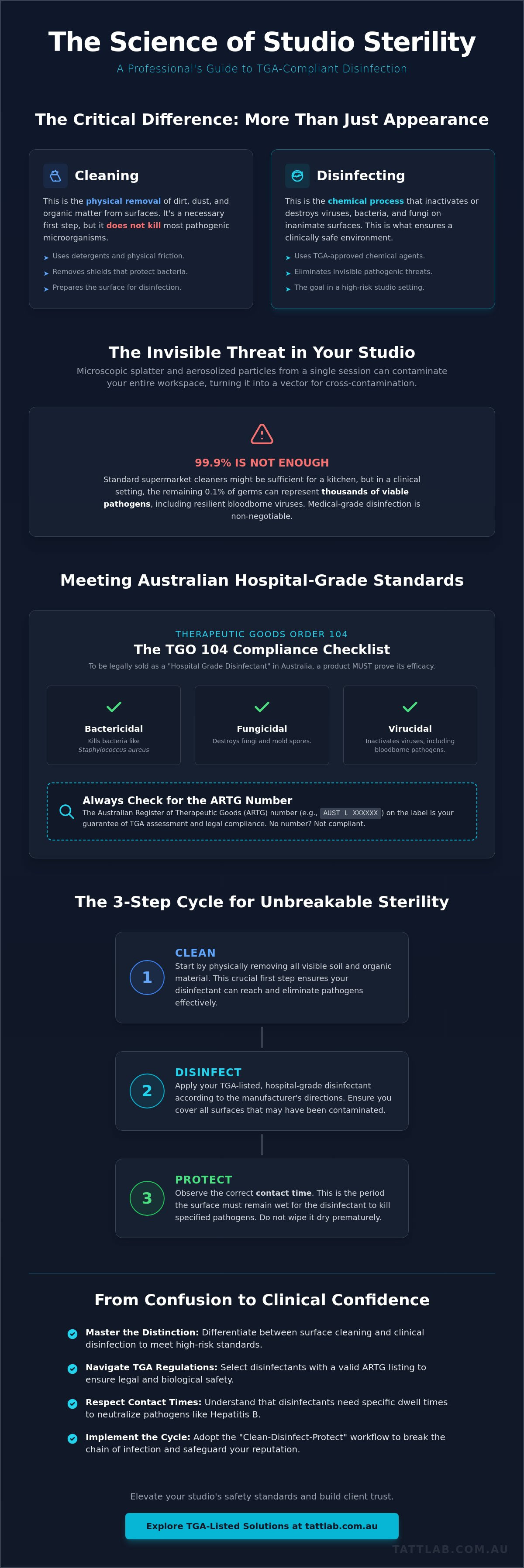
It's helpful to view cleaning and disinfecting as two distinct phases of a single protective process. Cleaning involves the physical removal of soil, dust, and organic matter using detergents. This step is crucial because organic debris can act as a shield for bacteria, rendering subsequent treatments less effective. However, cleaning alone doesn't kill the invisible threats that linger after a session. The Science of Disinfection explains that while detergents lift grime, disinfectants are chemical agents designed to inactivate or destroy microorganisms. Medical-grade disinfection is the elimination of most pathogenic microorganisms on inanimate surfaces.
Supermarket-grade products often boast about killing 99.9% of germs, which sounds impressive in a kitchen but is insufficient for a professional studio. In a clinical setting, that remaining 0.1% could represent thousands of viable pathogens, including resilient bloodborne viruses. Using a dedicated medical grade surface disinfectant for studios ensures you're achieving the broad-spectrum efficacy required to eliminate the specific biological risks associated with your craft. It's about moving beyond "good enough" to a standard that guarantees physical integrity.
The Biohazard Reality of Modern Tattooing
Every time a needle hits the skin, it creates more than just art. Microscopic splatter and aerosolised particles can travel further than most artists realize, settling on chairs, trays, and power supplies. This invisible bio-burden makes systemic disinfection a non-negotiable part of your workflow. It's not just about meeting a checklist for the health department; it's about building a protective barrier for both you and your client. This dual-purpose safety measure ensures that your practice remains a safe haven for personal transformation.
When you choose a high-quality medical grade surface disinfectant for studios, you're investing in your brand's longevity. Clients in high-end, boutique settings value physical integrity above all else. They aren't just looking for a beautiful result; they're looking for the peace of mind that comes from a visible commitment to clinical-grade safety. By positioning sterility as a core brand value, you transform a technical necessity into a narrative of professional excellence and care, replacing client anxiety with a sense of controlled, predictable progress.
TGA Categories and Hospital-Grade Standards: What Australian Studios Need to Know
In Australia, the Therapeutic Goods Administration (TGA) serves as the guardian of public health by regulating any product that makes a therapeutic claim. For a studio owner, this means that any liquid claiming to kill specific viruses or bacteria must be vetted by this federal body. The hierarchy of disinfection is a critical concept to grasp. While low-level disinfectants might suffice for floors or waiting areas, high-risk skin penetration environments require intermediate to high-level solutions. This methodical approach ensures that the products you use are capable of maintaining the physical integrity of your workspace.
The Therapeutic Goods Order 104 (TGO 104) is the legislative framework that defines what constitutes a "Hospital Grade" disinfectant. It isn't just a marketing buzzword; it's a performance standard. To earn this label, a product must pass rigorous testing against specific indicator organisms, including Staphylococcus aureus and Pseudomonas aeruginosa. Understanding the EPA Definitions of Cleaners and Disinfectants can help clarify the global context of these standards, but in Australia, TGO 104 is the final word on efficacy and safety.
Navigating TGO 104 Standards
To be legally supplied as a hospital-grade disinfectant, a product must prove its bactericidal, fungicidal, and virucidal efficacy. This means it doesn't just "sanitize"; it actively destroys the biological structures of pathogens. You can verify a product's status by looking for its ARTG (Australian Register of Therapeutic Goods) number on the label. This is often displayed as an AUST L number. If a product lacks this identifier but makes clinical claims, it hasn't undergone the TGA's stringent assessment process, which could leave your studio vulnerable during a health department audit.
Why 'ARTG Listed' is the Gold Standard
Using an ARTG-listed medical grade surface disinfectant for studios provides more than just biological safety; it offers legal protection. In the event of an audit or a client complication, being able to point to a TGA-registered product demonstrates that you have fulfilled your professional duty of care. It ensures the product performs exactly as the label claims, removing the guesswork from your infection control protocol. For a deeper look at how these standards integrate into your daily workflow, consult our guide on Medical Supplies for Tattoo Artists.
Ensuring your facility is stocked with compliant solutions is a steady step toward long-term studio success. You might consider exploring professional-grade disinfectants that align with these Australian standards to maintain your clinical edge while protecting your clients and your reputation.
Breaking the Chain: Why Surface Disinfection is the Last Line of Defence
Infection control is often described as a chain with six distinct links. For a professional artist, the environment itself acts as a critical "reservoir" where pathogens can linger between sessions. While your choice of needles and inks ensures a sterile point of contact, your workstation surfaces represent the most likely mode of transmission for cross-contamination. Interrupting this chain requires more than a casual wipe; it demands a clinical understanding of how pathogens survive on inanimate objects. Relying on soap and water is a common pitfall; while surfactants are excellent for removing visible soil, they lack the chemical properties to dismantle the resilient biological structures of bloodborne viruses.
A medical grade surface disinfectant for studios acts as a chemical barrier that terminates the path of an infectious agent before it reaches a susceptible host. This is particularly vital when you consider the microscopic nature of procedural splatter. Even if a surface appears clean, the presence of organic bio-burden can harbor pathogens for days or even weeks. By implementing a high-level disinfection protocol, you're not just cleaning a counter; you're actively breaking the chain of infection to preserve the physical integrity of your practice and the safety of your clients.
Targeting Bloodborne Pathogens (BBPs)
The primary concern in any skin penetration environment is the resilience of bloodborne pathogens. Hepatitis B, for instance, is notoriously hardy; it can remain infectious on environmental surfaces for at least 7 days, even in dried blood, while Hepatitis C has been documented to survive for up to 6 weeks under specific conditions. This longevity makes the use of a medical grade surface disinfectant for studios a non-negotiable standard. Your chosen solution must demonstrate specific virucidal activity against both enveloped viruses, like HIV and HBV, and more resilient non-enveloped viruses to ensure comprehensive protection.
Cross-Contamination Hotspots in the Studio
Maintaining this level of clinical rigor is what separates a boutique professional from a casual operator. It builds immediate trust with an audience that values both aesthetic outcomes and meticulous safety. For a broader look at how to select the right tools for your facility, you can explore The Professional Guide to Tattoo Supplies in Australia, which covers the intersection of quality, safety, and performance in modern studio settings.
The Artist’s Workflow: Implementing Medical-Grade Sanitation Protocols
Transitioning from a theoretical understanding of pathogens to a practical, daily workflow is where your commitment to safety becomes visible. The "Clean-Disinfect-Protect" cycle is a methodical rhythm that transforms your studio into a controlled clinical environment. It isn't just about the chemicals you use; it's about the precision of your application. Every client turnaround is an opportunity to reset the biological clock of your workstation, ensuring that the physical integrity of your space remains uncompromised from the first session to the last.
The Science of Dwell Time
One of the most common failures in infection control is the "spray and immediate wipe" habit. Most pathogens aren't killed on contact. They require a specific window of exposure to the active ingredients in your medical grade surface disinfectant for studios to be fully neutralized. This is known as dwell time or contact time. If a product is wiped away before this window closes, you may fail to kill up to 90% of targeted pathogens, leaving your station visually clean but biologically hazardous.
Always read your product labels for specific requirements, which typically range from 2 to 10 minutes depending on the microbial load and the specific claims of the disinfectant. If you're working in a dry or air-conditioned environment, you may need to apply a more generous layer of solution to ensure the surface remains visibly moist for the entire duration of the dwell time. Patience is a clinical necessity here; it's the difference between a superficial clean and a verified disinfection protocol.
Step-by-Step Workstation Reset
A professional reset begins with a meticulous teardown. Start by removing all barriers and disposing of contaminated waste in accordance with local health regulations. During this process, wearing high-quality Nitrile Gloves is essential to protect yourself from both biological fluids and chemical exposure. Once the station is clear, employ the "two-wipe" method. The first wipe uses a detergent or disinfectant to remove organic soil and debris. The second application of your medical grade surface disinfectant for studios provides the actual disinfection, left to sit for the required dwell time before a final inspection and re-barriering.
Surface Compatibility and Equipment Care
While efficacy is paramount, you must also consider the longevity of your equipment. Many high-level disinfectants are formulated with harsh chemicals that can crack vinyl upholstery or corrode stainless steel over time. Alcohol-based solutions are excellent for rapid evaporation on non-porous metal trays, but they can be devastating to the supple materials of a high-end client chair. Choosing alcohol-free alternatives for your furniture ensures you maintain a sterile environment without degrading your studio's aesthetic or functional assets.
Maintaining a steady supply of these clinical essentials is a hallmark of a modern, safety-conscious facility. You can source professional-grade sanitation supplies that are specifically vetted for the unique demands of a boutique studio environment, ensuring your workflow remains efficient and your equipment stays protected.
Elevate Your Studio Safety with Tatt Lab’s Specialist Medical Supplies
Mastering the science of sterility is a journey that requires a dedicated partner. At Tatt Lab, we view infection control as a liberating narrative of professional self-assurance. By providing access to high-tier medical supplies, we help you transition from the anxiety of potential audits to the confidence of a verified clinical workflow. Our commitment to the Australian industry is rooted in the belief that safety and aesthetic excellence should never be mutually exclusive. We've curated a selection that respects the physical integrity of your space while delivering the broad-spectrum efficacy your clients deserve.
The Tatt Lab Difference: Artist-Owned Rigour
Our approach is shaped by years of direct experience within the specialized environment of the modern studio. We don't just stock products; we vet them with the same meticulousness you apply to a complex procedure. Every medical grade surface disinfectant for studios in our inventory is selected for its ability to withstand the demands of high-volume turnarounds without compromising on safety or material compatibility. This artist-owned rigour ensures that our clinical tools are as sophisticated and modern as the work you create.
We understand that a professional facility operates best when it has a single, reliable source for both its clinical and creative needs. Whether you're restocking your essential Tattoo Inks or securing your next batch of TGA-compliant disinfectants, our one-stop-shop model reduces the administrative burden on your practice. This logical progression in supply management allows you to focus on the precision of your craft, knowing the biological safety of your environment is supported by expert knowledge and quality assurance.
Securing Your Studio’s Safety Future
Building a resilient workspace requires a steady, predictable supply chain. We prioritize national distribution and express shipping to ensure your essential safety stock is always within reach. For growing boutique facilities, we offer wholesale opportunities that scale with your progress, providing a methodical way to maintain your clinical edge as your reputation expands. This partnership is designed to lower your operational anxiety, replacing uncertainty with a sense of controlled, long-term growth.
Our role is to be your dedicated specialist from the initial setup to the final result of every session. By choosing supplies that meet the highest Australian standards, you're investing in a future where your reputation for safety is as well-known as your artistic skill. Take the next step in refining your studio's infection control barrier and Explore our range of professional medical-grade disinfectants to ensure your workspace remains a sanctuary of health and transformation.
Securing Your Studio's Clinical Integrity
Your workspace is more than a creative environment; it's a controlled facility where safety and artistry coexist. By prioritizing TGA-listed solutions and mastering the precision of dwell times, you've moved beyond surface-level cleaning to a verified state of biological security. You now understand that protecting your professional reputation is a steady, methodical process that relies on the right chemical barriers and a disciplined workflow. Selecting a high-quality medical grade surface disinfectant for studios is the final step in ensuring your workstation remains a safe haven for personal transformation.
At Tatt Lab, we're dedicated to supporting your clinical excellence with artist-owned and vetted supplies. Our TGA-compliant medical-grade range is curated to meet the specific demands of high-volume studios while respecting the physical integrity of your equipment. With express nationwide shipping across Australia, maintaining your essential safety stock is a predictable and stress-free process. We invite you to Shop TGA-Listed Medical Grade Disinfectants at Tatt Lab and elevate your infection control standards today.
Take confidence in your progress. By leading with a commitment to both holistic wellness and uncompromising safety, you ensure long-term success for your practice and peace of mind for every client who enters your studio.
Professional Studio Safety: Frequently Asked Questions
What is the difference between hospital-grade and household-grade disinfectants?
Hospital-grade disinfectants are subject to more rigorous testing and regulation under TGO 104 compared to household alternatives. While domestic cleaners handle everyday germs, hospital-grade solutions are specifically formulated to kill clinical pathogens like Pseudomonas aeruginosa and Staphylococcus aureus. This makes them the necessary standard for high-risk environments where skin penetration occurs and clinical integrity is paramount.
Do I need to use a TGA-listed disinfectant in my tattoo studio by law?
Australian state health regulations generally require the use of TGA-listed disinfectants for any business performing skin penetration. If a product makes clinical claims about killing viruses or bacteria, it must have an ARTG number to be legally supplied. Using a medical grade surface disinfectant for studios that is properly registered ensures you remain compliant during health department audits and maintain professional standards.
How long should I leave a medical-grade disinfectant on the surface before wiping?
Most professional disinfectants require a contact time of between 2 and 10 minutes to reach full efficacy. This window allows the active ingredients to penetrate and destroy the biological structures of resilient microorganisms. You should always consult the specific product label to ensure the surface remains visibly moist for the entire required duration, as premature wiping can lead to incomplete disinfection.
Can I use 70% isopropyl alcohol as my primary surface disinfectant?
Isopropyl alcohol is insufficient as a primary surface disinfectant because its rapid evaporation rate prevents it from meeting necessary contact times. It's often ineffective against certain non-enveloped viruses and can lead to the degradation of vinyl and plastic components over time. A dedicated hospital-grade solution provides a broader spectrum of protection and better material compatibility for a professional facility.
Will medical-grade disinfectants damage my tattoo bed or vinyl armrests?
Harsh chemical formulations can cause vinyl upholstery to become brittle and crack if they aren't compatible with the material. To prevent this, look for alcohol-free disinfectants specifically designed for medical furniture and sensitive surfaces. Choosing a compatible medical grade surface disinfectant for studios ensures you maintain a sterile environment without compromising the longevity or aesthetic of your expensive equipment.
What does virucidal efficacy mean for a tattoo artist?
Virucidal efficacy is a product's laboratory-proven ability to inactivate or destroy viruses. For your studio, this means the disinfectant is capable of neutralizing bloodborne threats such as Hepatitis B, Hepatitis C, and HIV. This level of protection is essential for breaking the chain of infection and ensures that your practice remains a safe haven for personal transformation.
How often should I reset and disinfect my entire workstation?
You should perform a complete workstation reset after every single procedure. This process includes removing all barriers, disposing of waste, and following the two-wipe method to clean and then disinfect all high-touch surfaces. Maintaining this steady rhythm between every client ensures a predictable and safe environment, reflecting the meticulousness and calm expected in a high-end boutique studio.
Is it necessary to clean a surface before applying a medical-grade disinfectant?
Physical cleaning is a mandatory first step because organic matter like blood, ink, or soil can shield pathogens from the disinfectant. Removing this bio-burden ensures the chemical agent can make direct contact with the surface. Many professionals use a specific "cleaner-disinfectant" in a two-stage process to ensure the workstation is biologically prepared for the next session's clinical requirements.


Comments (0)
There are no comments for this article. Be the first one to leave a message!