

A flawless tattoo isn't just the result of artistic skill; it's the outcome of a meticulously controlled chemical environment. You likely understand that maintaining a clear line of sight through excess ink while managing client comfort is a constant balancing act during long sessions. It's frustrating when skin becomes prematurely sensitized or when a stencil is obscured by inefficient cleanup. Using high-quality green soap for tattoos is the industry standard for a reason, but its effectiveness depends entirely on clinical precision and proper preparation.
We're here to help you master the science and application of this essential cleanser to ensure your workstation meets the latest Australian health standards, including AS 5369:2023. You'll learn how to achieve the perfect balance between hygiene and skin integrity. This guide covers precise dilution ratios to prevent irritation, techniques for maintaining visibility throughout the process, and the technical steps required to foster a sterile, professional work environment that prioritizes your client's safety and your artistic results. By refining your approach to skin prep, you can replace procedural uncertainty with a sense of controlled, predictable progress.
Key Takeaways
- Understand the biological advantages of using a potassium-based, vegetable oil soap to preserve skin integrity during long sessions.
- Learn the correct dilution ratios for green soap for tattoos to balance effective pigment removal with gentle, non-irritating skin contact.
- Identify how to eliminate cross-contamination risks through professional dispenser handling and the strategic use of medical-grade barrier films.
- Discover the natural antiseptic properties that make professional-grade cleansers essential for reducing infection risks and improving visibility.
- Gain insights into sourcing artist-vetted, Australian-compliant consumables to ensure your studio operates at a clinical standard of excellence.
What is Green Soap for Tattoos?
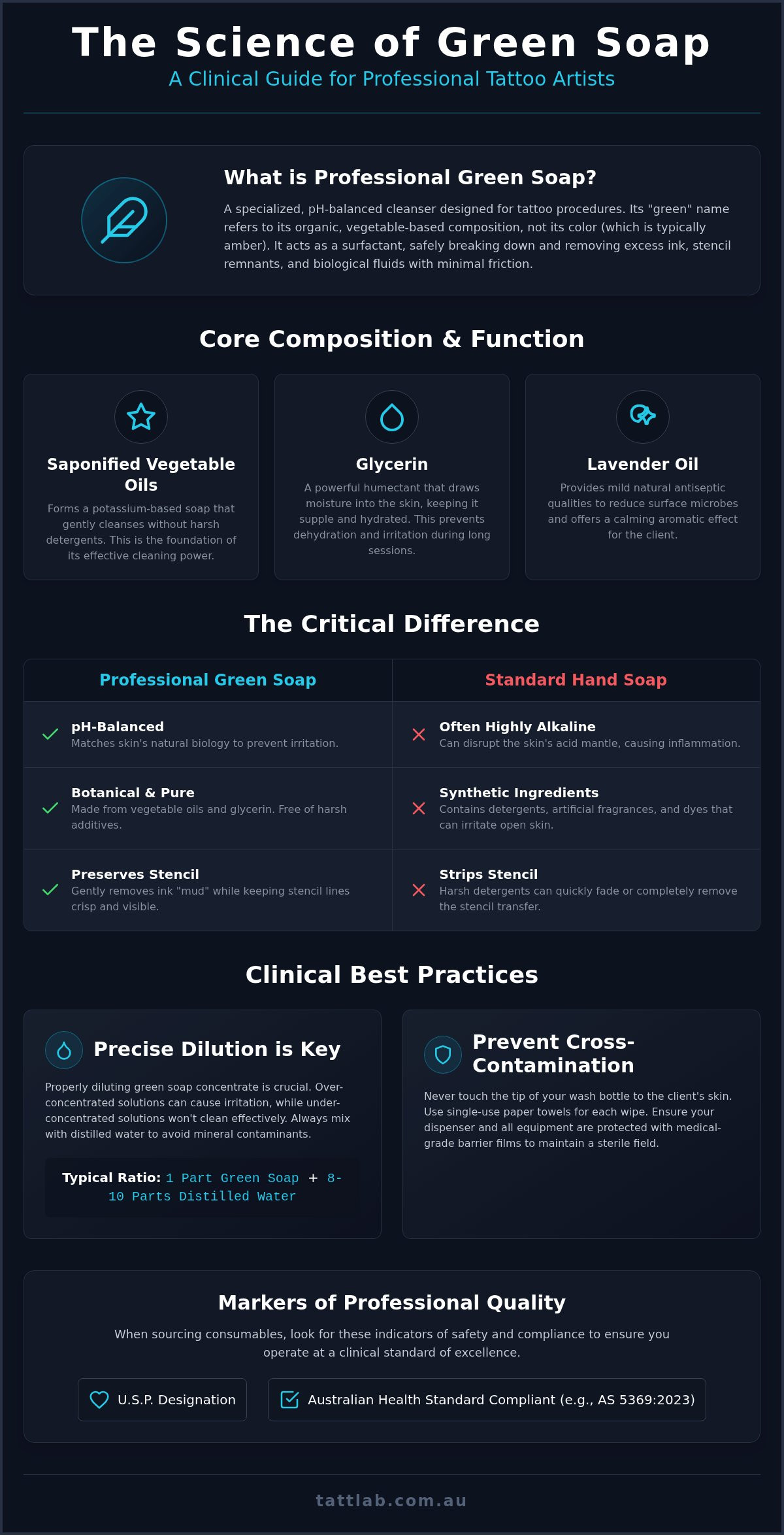
Professional tattooing relies on more than just pigment and needles; it demands a stable, sterile environment where the skin is treated with clinical respect. At the heart of this environment is green soap for tattoos, a specialized surfactant that serves as the foundation for both preparation and mid-session cleanup. Unlike the detergents found in household cleaners, this substance is a tincture of potassium-based soap derived from vegetable oils. Its "green" moniker doesn't actually describe its color, which is typically a translucent amber or yellowish hue. Instead, the name reflects its organic composition and the absence of the harsh synthetic dyes or animal fats found in conventional soaps.
In a modern sanitary procedure, green soap acts as a medical-grade lubricant and cleanser. It efficiently breaks down excess ink and stencil remnants that would otherwise obscure your work. Because it's a surfactant, it lowers the surface tension of liquids, allowing blood and pigment to be wiped away with minimal friction. This is vital for maintaining the integrity of the dermis over a multi-hour session, where repetitive wiping can easily lead to over-worked skin and client distress.
The Composition of Professional Green Soap
The effectiveness of green soap lies in its precise botanical formulation. Most professional varieties consist of saponified vegetable oils, lavender oil, and a significant concentration of glycerin. The inclusion of glycerin is vital; it acts as a powerful humectant that draws moisture into the skin. This prevents the tissue from becoming brittle or dehydrated while you work, ensuring the skin remains supple enough to accept ink smoothly. Professional-grade soaps often carry a U.S.P. (United States Pharmacopeia) designation. This is a critical marker of safety, ensuring the product is manufactured under strict purity guidelines that protect both the artist and the client.
Why Regular Soap is Not a Substitute
You might be tempted to reach for a standard antibacterial hand soap, but the chemical differences are profound. Commercial soaps are often highly alkaline, which can disrupt the skin’s natural acid mantle and trigger inflammatory responses. Professional green soap for tattoos is formulated to be pH-balanced to mimic the skin’s biology. It avoids the heavy synthetic fragrances and dyes that cause contact dermatitis in open wounds. Additionally, the inclusion of lavender oil provides a mild, natural antiseptic quality. This supports hygiene during the process without the cytotoxic effects of harsh chemicals that can delay the healing narrative of a new tattoo.
The Benefits of Using Green Soap During the Tattoo Process
Integrating green soap for tattoos into your workflow does more than keep a station tidy; it actively preserves the canvas. Traditional detergents rely on aggressive mechanical action to clean, but professional green soap utilizes its surfactant properties to encapsulate biological fluids and excess pigment. This allows you to lift debris away with a light touch. By minimizing friction, you reduce the risk of micro-abrasions that can lead to scarring or uneven healing. This methodical approach respects the physical integrity of the client, transforming a technical necessity into a protective measure.
Safety is a cornerstone of any professional studio. Adhering to established tattooing safety regulations requires a commitment to infection control that starts before the first needle hit. Green soap contains natural antiseptic properties, primarily derived from its alcohol and lavender oil content. These ingredients work in tandem to lower the microbial load on the skin's surface throughout the session. Beyond hygiene, the lavender oil provides a subtle, calming aromatic profile that helps lower client anxiety. It also offers a mild soothing effect on sensitized tissue, which is invaluable during the final hours of a demanding piece.
From an operational standpoint, the biodegradability of vegetable-based soap aligns with the modern, eco-conscious studio aesthetic. It's a sustainable choice that doesn't sacrifice clinical power. When you choose high-quality consumables, you're investing in the longevity of your work and the health of your environment. You can find these artist-vetted studio essentials through specialized distributors who prioritize medical-grade standards.
Preserving Skin Integrity and Stencil Clarity
Intricate needle work requires a clear field of vision. One of the most significant advantages of green soap is its ability to remove excess ink without stripping the stencil. Because the soap is designed to be diluted, it remains gentle enough to leave the surgical marker or carbon transfer intact while clearing away the "mud" of mixed pigments. This clarity allows for greater precision. Additionally, the glycerin in the formula helps manage oedema (swelling) and localized redness. By keeping the skin calm, you ensure the tissue remains receptive to pigment, preventing the "bouncing" effect often seen with highly inflamed skin.
Aiding the Transition to Aftercare
The final wipe is the most critical step in the procedure's progression. Using green soap ensures that no heavy chemical residues or synthetic fragrances are left behind to trap bacteria under a bandage. This creates a pristine foundation for the first application of tattoo aftercare. By removing every trace of plasma and stray ink, you allow the healing narrative to begin without interference. This transition is seamless, replacing the intensity of the procedure with the reassurance of a controlled, predictable recovery process.
Proper Dilution Ratios and Preparation
Precision in the studio is a direct reflection of an artist's commitment to procedural safety. While the concentrate is a powerful tool, using green soap for tattoos in its undiluted form is counterproductive. The concentrated tincture is too viscous for effective spray application and possesses a pH level that can be unnecessarily harsh on open skin. Dilution is the technical bridge that transforms this medical-grade concentrate into a gentle, effective cleanser capable of lifting pigment without causing chemical trauma to the dermis.
Proper preparation ensures that the soap's surfactant properties are optimized. When the ratio is correct, the solution creates a fine, low-tension lather that encapsulates biological matter and ink. This allows for a "one-wipe" efficiency that preserves the skin's surface. To maintain potency, prepare your solutions in small batches. Store any prepared bottles in a cool, dark environment to prevent the botanical oils from degrading, ensuring every client receives the same standard of care from the first line to the final shade.
Step-by-Step Preparation Guide
- Sanitise the Vessel: Before mixing, ensure your squeeze or spray bottles are cleaned and disinfected. Any residual moisture from tap water can introduce contaminants.
- Measure the Ratio: The industry standard is typically a 1:8 or 1:10 ratio. For a standard 500ml wash bottle, this equates to approximately 50ml of concentrate topped with 450ml of water.
- Label for Compliance: Clearly mark the bottle with its contents and the date of preparation. This practice aligns with Australian health standards and ensures you're always using fresh, effective solution.
Distilled Water vs. Tap Water
The choice of water is a critical variable that many overlook. Tap water contains dissolved minerals like calcium and magnesium, often referred to as "hard water." These minerals can react with the potassium-based soap, creating a cloudy precipitate that reduces the soap's cleaning efficiency. More critically, tap water is not sterile. It can contain trace amounts of bacteria that are harmless on intact skin but pose a risk when introduced to the deeper layers of the skin during the tattooing process.
Professional artists use distilled or sterile water to eliminate these risks. Distilled water has been boiled into vapor and condensed back into liquid, leaving behind all impurities and pathogens. This ensures that your green soap for tattoos remains a pure, medical-grade cleanser. By removing these biological and chemical variables, you create a predictable environment that supports the body's natural healing process from the very first wipe.
Best Practices for Studio Hygiene and Application
The efficacy of green soap for tattoos is entirely dependent on the integrity of your delivery method. Even the most precise dilution remains useless if the squeeze bottle becomes a vector for cross-contamination. Maintaining a sterile field requires a disciplined approach to how you handle your cleansers during the procedure. This isn't just about cleaning the skin; it's about protecting the entire workstation environment from bloodborne pathogens. Every time you reach for your soap, you must follow a protocol that ensures no biological material travels from the client back to your supply containers.
The "pour, don’t touch" technique is a fundamental skill for the modern artist. When applying soap to a paper towel or the skin, maintain a distance of at least five centimeters between the bottle nozzle and the target surface. This prevents accidental contact with contaminated gloves or aerosolized fluids. If a bottle tip ever touches a contaminated surface, it must be taken out of rotation immediately for sterilization. To further fortify your station, always apply a fresh layer of barrier film or a disposable bottle cover to your dispensers before every session. These simple physical barriers act as a secondary line of defense, ensuring your primary tools remain clinically clean.
Integrating Green Soap into Your Sterile Workstation
Success begins with a logical layout. Your soap dispensers should reside within the "clean zone" of your setup, easily accessible but shielded from the "spray zone" where needle inertia might throw ink and fluids. It's essential to coordinate your cleansing routine with other medical supplies for tattoo artists, such as high-grade gloves and surface disinfectants. You should change your gloves frequently, especially after handling a soap bottle that has been in close proximity to the procedure area. For artists who value this level of clinical precision, you can source professional-grade studio consumables that meet the highest Australian safety standards.
Cleaning the Tattoo Post-Session
The final wash is the most important interaction between the soap and the fresh wound. Once the tattoo is complete, a generous application of diluted green soap removes all remaining biological matter, excess pigment, and any lingering petroleum jelly. This step is vital because it allows the skin to "breathe" before you apply a protective film or bandage. Ensure the skin is completely dry and calm; the lavender oil in the soap will help reduce the immediate heat of the procedure. Taking a moment to explain this process to your client builds immediate trust. It shows them that their safety and the longevity of their new art are your primary concerns, turning a technical cleanup into a reassuring final step in their transformation.
Proper waste management concludes the cycle of hygiene. All used wipes and paper towels saturated with soap and biological fluids must be disposed of in a dedicated clinical waste bin. This prevents the spread of contaminants within the studio and adheres to the rigorous standards of the Public Health Act. By treating every wipe as a potential hazard, you maintain the meticulousness required for a modern, boutique-style studio environment.
Sourcing Professional Tattoo Supplies in Australia
The clinical integrity of your workstation depends on more than just technique; it requires a reliable pipeline of artist-vetted consumables. Sourcing green soap for tattoos from a dedicated Australian distributor ensures that your products meet local regulatory standards while benefiting from specialized logistical support. At Tatt Lab, we function as a specialized facility for the modern artist, bridging the gap between medical-grade rigor and creative expression. Being artist-owned and operated, we understand that every wipe and every cleanser application is a moment where safety meets art, and there is no room for compromise in that exchange.
Operating a boutique-style studio in the current regulatory landscape means adhering to evolving standards like AS 5369:2023. This requires more than just a passing knowledge of hygiene; it demands access to high-performance tools that have been tested in professional environments. Our inventory extends beyond basic hygiene to include a curated selection of tattoo ink that complies with AICIS standards, alongside medical-grade PPE and sterilization supplies. By centralizing your procurement with a trusted specialist, you replace the uncertainty of international shipping with the reliability of express nationwide delivery from our Victoria headquarters.
For studio owners looking to complement their clinical standards with a high-end aesthetic, sourcing quality architectural details from specialists like Vintique can help create a professional environment that reflects the precision of your work.
The Tatt Lab Commitment to Quality
We take a methodical approach to our product selection, vetting every item for its biological compatibility and procedural efficiency. This commitment ensures that the green soap for tattoos you use is a genuine U.S.P. tincture, free from the synthetic fillers that can compromise skin integrity. We provide more than just products; we offer expert support for studios looking to transition to higher safety standards. Our wholesale accounts are designed to support the steady, predictable progress of your business, ensuring that essential daily consumables are always within reach when you need them most.
Building a Safer Industry Together
Our steady, educational approach is designed to lower the anxiety of studio management. By providing the scientific evidence for why specific cleansers and barriers are necessary, we help you build a workstation that is as modern as it is meticulous. Whether you're a solo artist or managing a large-scale studio, our focus remains on your long-term results and the physical safety of the community we serve together. The path to a better tattoo begins with the right preparation, and we're here to ensure you have the best tools for the task.
Refining Your Studio’s Safety Narrative
Mastering the application of green soap for tattoos is a fundamental step in transitioning from a technical procedure to a professional health service. By adhering to precise dilution ratios and sterile preparation methods, you protect the skin's delicate biology while ensuring the clarity of your artistic vision. This commitment to hygiene doesn't just meet Australian health standards; it builds a foundation of trust and safety that clients recognize and value. Every wipe is an opportunity to preserve the integrity of the dermis and support a predictable healing process.
As an artist-owned and operated specialist, we provide the expert knowledge and medical-grade supplies required to maintain a pristine workstation. You can Shop Professional Green Soap and Studio Hygiene Supplies through our clinical facility, benefiting from fast express shipping across Australia to keep your studio consistently stocked. We prioritize medical-grade safety standards so you can focus on the artistry of personal transformation. Your dedication to meticulousness ensures every session is a safe, controlled step toward a successful long-term result.
Professional Hygiene & Application FAQs
Can I use green soap as a daily tattoo aftercare wash?
No, you shouldn't use green soap for daily aftercare because its high pH level and surfactant strength can strip the skin’s natural oils. While it's perfect for procedural cleanup, long-term use on a healing tattoo can cause excessive dryness and irritation. Clients should transition to a dedicated tattoo aftercare product that is specifically formulated to support the skin's moisture barrier during the recovery phase.
What is the standard dilution ratio for green soap?
The industry-standard dilution ratio for green soap for tattoos is typically 1 part soap concentrate to 8 or 10 parts distilled water. This specific balance ensures the solution is powerful enough to encapsulate excess pigment and biological matter while remaining gentle on the dermis. Using a precise measuring vessel helps maintain consistency, ensuring the chemical profile of your cleanser remains predictable for every session.
Why does my green soap look cloudy after dilution?
Cloudiness is usually the result of a chemical reaction between the soap’s vegetable oils and the minerals found in tap water. These minerals, such as calcium and magnesium, create a precipitate that interferes with the soap’s surfactant efficiency. To maintain a clear and effective solution, always use distilled or sterile water. This eliminates mineral interference and ensures the solution remains clinically pure and professional in appearance.
Is green soap vegan and cruelty-free?
Most professional-grade green soaps are vegan because they are formulated from saponified vegetable oils rather than animal fats. However, it's essential to verify the specific manufacturer's label for cruelty-free certifications and U.S.P. purity standards. Choosing vegetable-based green soap for tattoos aligns with the modern studio’s commitment to ethical sourcing and physical integrity, ensuring no animal-derived ingredients compromise the procedure.
How do I prevent cross-contamination when using spray bottles?
Preventing cross-contamination requires a combination of physical barriers and disciplined technique. Always cover your spray or wash bottles with disposable plastic sleeves or barrier film before every session. Additionally, you should maintain a distance of at least five centimeters between the nozzle and the target surface. This "pour, don't touch" method prevents back-splash or accidental contact with contaminated gloves and surfaces.
Can green soap cause an allergic reaction in clients?
Allergic reactions are rare but can occur, typically due to a sensitivity to the lavender oil or alcohol content in the formula. If a client has a history of contact dermatitis or sensitivity to botanical fragrances, it's best to perform a small patch test before the procedure. Monitoring the skin for excessive redness or hives during the initial wipe is a standard part of a trusted specialist's observational routine.
Does green soap expire once it has been diluted?
Yes, diluted green soap has a limited shelf life and should generally be used within seven days. Once the concentrate is mixed with water, the preservative system is significantly weakened, which can allow for bacterial growth over time. Labeling and dating your wash bottles ensures you are always using a fresh, potent solution that adheres to the rigorous Australian health standards for studio safety.
Is green soap effective against bloodborne pathogens?
Green soap is a highly effective cleanser for removing organic matter, but it's not a substitute for a high-level disinfectant. While its alcohol content provides mild antiseptic properties, it isn't designed to sterilize equipment or kill all bloodborne pathogens on its own. It should be used exclusively for skin preparation and mid-session cleanup, followed by medical-grade disinfectants for the final station teardown and sterilization.


Comments (0)
There are no comments for this article. Be the first one to leave a message!