

Melanin-rich skin isn't a barrier to vibrant color; it's a sophisticated biological filter that requires a specialist's understanding of light and opacity. For too long, the industry has lacked formal education on how pigments interact with deeper skin depths, leaving many artists to rely on trial and error. It's frustrating to watch a carefully executed piece heal muddy or seem to disappear entirely because the chosen tattoo ink for dark skin lacked the necessary saturation. You deserve to feel confident in every saturation choice you make, ensuring your work stands the test of time.
We understand the professional pressure to deliver lasting, beautiful results for a diverse clientele while maintaining the highest standards of physical integrity. This guide promises to demystify the science of pigment interaction, helping you master the technical nuances of high-opacity inks. We'll explore the clinical biology of the dermis, review the best-performing ink brands available through Tatt Lab, and provide a roadmap for building a professional kit that ensures every tattoo remains a clear, vibrant narrative of self-assurance. By replacing uncertainty with scientific evidence, we can achieve predictable, masterful outcomes for every client who walks into your studio.
Key Takeaways
- Understand the "Melanin Filter" effect and how pigment in the dermis functions as an optical overlay rather than a chemical blend.
- Learn to evaluate tattoo ink for dark skin based on high-opacity formulations and pigment loads that effectively counteract natural skin depth.
- Master the "Complementary Compensation" technique to precisely calibrate pigment choices against cool, warm, or neutral undertones.
- Discover professional-grade tools like the specialized Skin Tones collection, which features 31 pigments designed for realistic portraiture and seamless blending.
- Refine your application through strategic needle selection and adjusted hand speeds to ensure even saturation without unnecessary tissue trauma.
The Biology of Pigment: Understanding the Melanin Filter
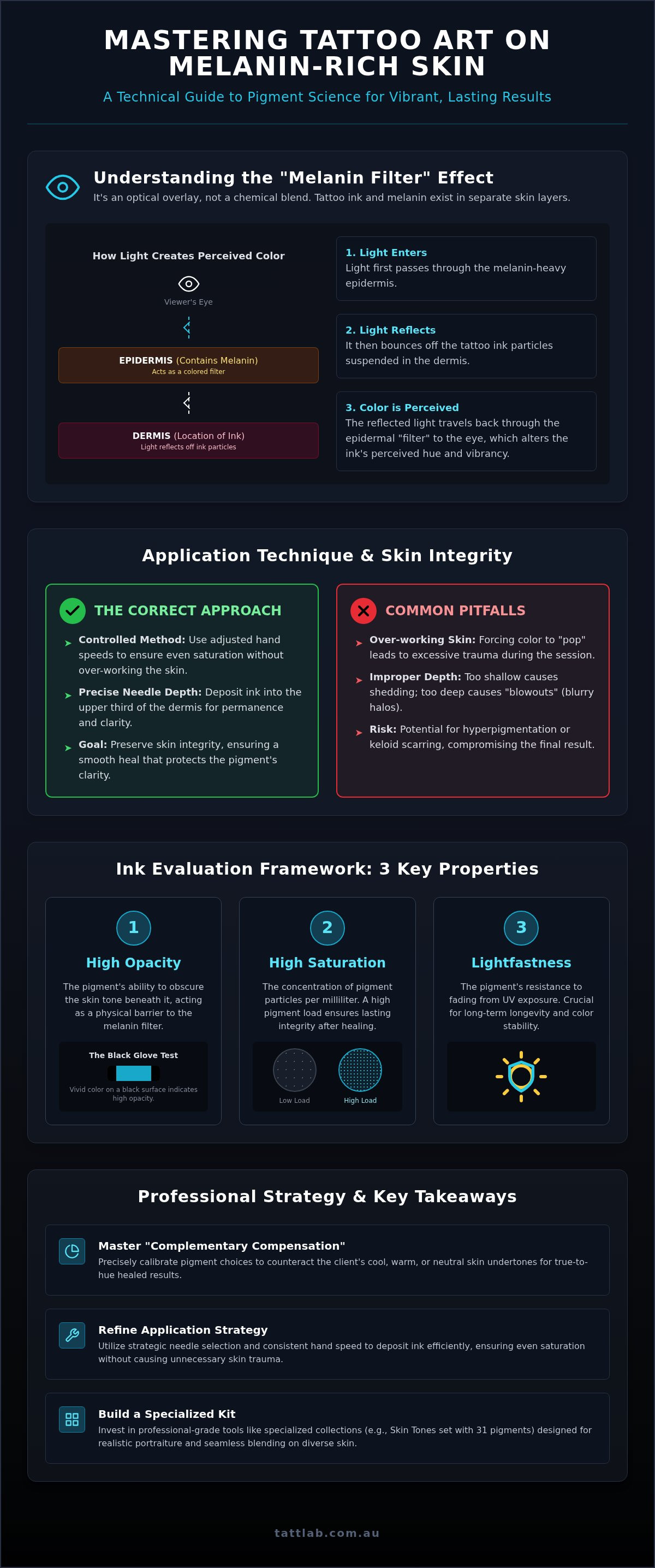
Success in tattooing melanin-rich skin begins with a clinical understanding of the "Melanin Filter." Many artists mistakenly believe that pigment and melanin chemically blend within the skin. In reality, these two substances exist in entirely separate layers. The melanin filter is the optical phenomenon where epidermal pigment shifts the perceived hue of dermal ink. Think of this process as placing a sheet of colored glass over a painting. The colors of the painting don't change, but your perception of them is filtered by the glass above. When selecting tattoo ink for dark skin, you're choosing pigments that must remain visible and accurate despite this biological overlay.
Maintaining skin integrity is paramount when working with deeper tones. Because the visual results aren't always immediate during the session, there's a common temptation to over-work the area to force the color to "pop." This often leads to excessive trauma, resulting in hyperpigmentation or keloid scarring. A controlled, methodical approach ensures the skin heals smoothly, preserving the clarity of the pigment beneath the surface. We prioritize the body's physical integrity to ensure the transformation is both beautiful and safe.
Epidermis vs. Dermis: Where the Magic Happens
Precision in needle depth is the difference between a masterpiece and a medical complication. The epidermis acts as the protective outer shield containing the majority of the body's melanin. Your goal is to deposit the Tattoo ink composition into the upper third of the dermis. If the needle depth is too shallow, the pigment will be shed during the natural skin cell turnover. Conversely, going too deep into the subcutaneous layer leads to blowouts. These appear as blurred, shadowed halos that are particularly visible on dark skin due to the way light interacts with deep-seated pigment. Once the ink is correctly placed, macrophages, which are specialized immune cells, encapsulate the pigment particles. This process holds them in a permanent suspension within the dermal matrix.
The Optical Mixing Phenomenon
The way light behaves as it enters and exits the skin determines the final healed result. Light must travel through the melanin-heavy epidermis, bounce off the tattoo ink in the dermis, and travel back through that same melanin layer to reach the viewer's eye. This creates a predictable color shift. For example, translucent pigments often lose their vibrancy because they don't reflect enough light to overcome the epidermal filter. This is why high-opacity tattoo ink for dark skin is a non-negotiable tool for the modern professional. These inks feature a dense concentration of pigment particles, ensuring that enough light is reflected back to maintain the intended hue and saturation even after the skin has fully settled.
Evaluation Framework: 3 Key Features of Ink for Dark Skin
Moving from biological theory to clinical application requires a methodical evaluation framework. Selecting the right tattoo ink for dark skin isn't about trial and error; it's about identifying three critical physical properties: opacity, saturation, and lightfastness. Opacity refers to the pigment's capacity to obscure what lies beneath it. In this context, it's the ink's ability to remain visible against the natural skin depth. High-opacity inks act as a physical barrier to the melanin filter. Saturation, meanwhile, is the concentration of pigment particles per milliliter of carrier fluid. A high pigment load ensures that even as the skin heals and the initial vibrancy settles, enough particles remain in the dermis to maintain the tattoo's integrity.
Safety remains the foundation of all professional work. Adhering to FDA tattoo safety guidelines ensures that the high-load pigments you select are biologically compatible and free from harmful contaminants. We believe that clinical rigor should never be sacrificed for aesthetic results. For a comprehensive breakdown of ingredient transparency and chemical standards, consult our professional guide to tattoo ink. This methodical approach protects both the artist's reputation and the client's long-term health.
Testing Opacity: The Artist’s Bench Test
Identifying high-opacity ink starts at the workstation. Professional pigments designed for deeper tones often exhibit higher viscosity. When you dispense a drop into an ink cap, it should hold its shape rather than spreading immediately. You can perform a 'Swear Test' by swiping a small amount of pigment across a clean, black nitrile glove. If the color remains vivid and covers the black of the glove, it possesses the opacity required for melanin-rich skin. Many all-purpose blacks fail this test because they contain high ratios of carrier fluid to improve flow, which results in a translucent finish that cannot compete with the epidermis.
Lightfastness and Longevity
In the intense UV environment of the Australian climate, lightfastness is a non-negotiable longevity factor. Pigment particles are essentially microscopic crystals that reflect light. Smaller particles are more susceptible to UV degradation and can be more easily shifted by macrophages over time. Vibrant hues like purples and deep blues often have smaller molecular structures, making them prone to fading if they lack a high lightfastness rating. Choosing stable, high-load pigments ensures that the personal transformation you've created remains sharp for decades. You can source professional-grade pigments that meet these rigorous clinical standards through our studio-focused supply.
Navigating Undertones: Warm vs. Cool Pigment Calibration
Identifying the underlying canvas is the next step in mastering your kit. Melanin-rich skin typically presents one of three primary undertones: cool (blue or pink), warm (yellow or peach), or neutral. While the melanin filter discussed earlier acts as a physical overlay, these undertones dictate how light reflects through the skin’s layers. When selecting tattoo ink for dark skin, you aren't just choosing a color; you're calibrating a chemical response to the body's natural pigments. Failure to account for these subtle shifts often leads to results that look dull or "off" once the healing process is complete. We recommend assessing the undertone in natural light, looking for the subtle blue or golden hues that reside just beneath the surface.
We use a method called "Complementary Compensation" to ensure long-term vibrancy. This technique involves choosing ink hues that counteract the skin’s natural filter to achieve the intended final look. For instance, applying a greenish-yellow pigment on cool-toned dark skin often results in a muddy, desaturated brown. This happens because the cool (blue/pink) undertone effectively "cancels out" the warmth of the yellow, leaving only the dark, desaturated base behind. To prevent this, you'd choose a yellow with a stronger orange or red base to maintain its visual presence. By understanding the toxicological risks of tattoo inks and their chemical composition, professionals can select stable, high-load pigments that resist these optical shifts.
Strategic highlights also play a critical role in creating depth and dimension. Instead of relying on heavy white saturation, which can look chalky or artificial on deeper tones, use white ink sparingly to "lift" the value of adjacent pigments. This creates a sense of three-dimensionality without over-working the tissue. It’s about movement and progression, moving the eye across the piece through contrast rather than just brightness. If you're looking to expand your palette for these specific calibrations, you can explore our professional ink range to find the right saturation levels for your studio.
The Cool Undertone Challenge
Cool-toned skin requires a deliberate warming of the palette to prevent "ashing." This grayish, dull appearance occurs when cool pigments settle under a cool epidermal filter, absorbing too much light. To maintain energy in the piece, select warm-leaning reds, burnt oranges, and magentas. Avoid using "cool" blues or deep purples without a warm base; they tend to recede and lose definition as the skin settles. A warm-toned underpainting or a "bump" of warm pigment in your mix can keep these colors looking intentional and alive.
Mastering Warm and Golden Tones
Golden skin tones provide an exceptional canvas for earth-toned palettes. You can enhance this natural warmth by utilizing rich siennas, deep umbers, and ochres. These pigments harmonize with the skin's existing chemistry, creating a seamless, realistic finish that feels part of the body. When applying white highlights on warm skin, be aware that they may take on a slight yellow tint over time as the skin regenerates. We recommend using a high-opacity almond or cream shade for highlights on golden skin to ensure a more natural, lasting transition that respects the physical integrity of the client's skin.
The Specialist Selection: Top Inks from the Tatt Lab Collection
Precision requires the right tools. While understanding the biology of the melanin filter and the nuances of undertone calibration is essential, your results are ultimately limited by the physical properties of your pigment. We've curated the Skin Tones collection specifically to address the clinical needs of melanin-rich skin. This range features 31 distinct pigments, providing a comprehensive spectrum that moves beyond the limited options typically found in standard kits. By utilizing a specialized tattoo ink for dark skin, you can ensure that every transition, from deep shadows to soft highlights, maintains its intended clarity once the skin has fully settled.
Safety and performance are inseparable in a professional environment. Using medical-grade tattoo supplies ensures that your high-load pigments are applied in a sterile, controlled manner, protecting the physical integrity of the tissue. This clinical rigor builds immediate trust with your clients, framing the procedure as a safe, transformative experience rather than just a technical task. When you work with vetted, professional-grade materials, you eliminate the variables that lead to unpredictable healing. You can order professional tattoo inks online to elevate your studio's inclusive capabilities.
Standout Skin Tone Pigments
The 31-pigment range is designed for realistic portraiture and seamless blending across all skin depths. Deep Siennas and Umbers serve as the essential workhorses for building realistic shadows; they possess the high opacity required to remain visible beneath the epidermal filter. For mid-tone transitions, Almond and Cinnamon tones provide the necessary saturation to bridge the gap between deep shadows and natural skin highlights. These high-opacity earth tones are formulated to reflect light effectively, ensuring the healed result doesn't lose its three-dimensional quality over time.
The Value of Pre-Mixed Sets
Consistency is the hallmark of a specialist. While many artists are tempted to mix custom tones on the fly, "eyeballing" your ratios introduces significant risk, especially during multi-session pieces. Pre-mixed sets ensure that your colors remain identical from the first session to the final touch-up. Professionally bottled pigments also reduce contamination risks by minimizing the need for open-air mixing. From an economic perspective, investing in comprehensive skin tone bundles is more efficient than sourcing individual bottles, allowing you to build a reliable, versatile kit that respects both your craft and your client's long-term aesthetic outcomes.
Implementation: Application Technique and Long-Term Care
It's a common misconception that you need to "crank up" the machine's voltage to make color show up on deeper skin tones. In reality, excessive voltage often leads to skin "chewing" and subsequent scarring, which permanently obscures the artwork. Instead, focus on a controlled hand speed and a steady machine rhythm. This clinical precision ensures that the pigment is deposited exactly where it needs to be without compromising the health of the tissue. A "layering" approach is far superior to aggressive packing. By building saturation slowly, you allow the skin to accept the pigment without reaching a point of trauma. This patience turns the procedure into a narrative of progression, moving the client closer to a lasting, masterful result.
Needle Depth and Saturation
Maintaining a consistent dermal depth is the only way to avoid the "muddy" look that results from improper placement. Stipple shading can be more effective than traditional packing for creating smooth gradients on melanin-rich skin. This technique allows you to build value through a series of fine, controlled points, giving you more control over the final opacity. Identifying the "sweet spot" for pigment packing involves watching the skin's reaction closely. Once you achieve the desired saturation, stop. Over-working the area will only trigger an aggressive inflammatory response that can displace the pigment you've just carefully applied.
Post-Procedure Integrity
The journey doesn't end when the machine stops. Managing hyperpigmentation risks is a critical part of the specialist’s role. We emphasize the importance of tattoo aftercare to ensure the skin heals without the excessive inflammation that can dull pigment vibrancy. Using medical-grade studio safety protocols prevents minor infections that might otherwise lead to localized fading or texture changes. Finally, educate your clients on long-term UV protection. Melanin-rich skin still requires "tattoo-safe" sun care to prevent the light-induced degradation of those carefully selected earth tones, ensuring the tattoo ink for dark skin remains sharp for years to come.
Advancing the Standard for Inclusive Artistry
This specialized focus is why we provide a medical-grade, artist-vetted 31-pigment collection specifically engineered for these biological demands. These high-opacity inks allow you to work with confidence, knowing the healed result will reflect your technical expertise. With express nationwide shipping available across Australia, you don't have to wait to start refining your inclusive practice today.
Browse our professional skin tone ink collection to elevate your studio's capabilities and provide the highest level of care for every skin depth. Your commitment to mastering these nuances ensures that every personal transformation you create is both safe and enduring.
Frequently Asked Questions
Does colour tattoo ink actually show up on dark skin?
Colour tattoo ink is highly visible on dark skin when you select high-opacity pigments that can overcome the natural epidermal filter. Success depends on choosing hues that provide enough contrast with the skin’s depth. Bold reds, deep blues, and rich purples are particularly effective because they reflect enough light to remain vibrant once the skin has fully settled.
What are the best tattoo ink brands for darker skin tones?
Professional artists often rely on brands like Dynamic, Intenze, and World Famous for their high pigment loads and reliable saturation. We recommend the specialized Skin Tones collection, which features 31 artist-vetted pigments designed specifically for realistic blending across various skin depths. These medical-grade formulations ensure the tattoo ink for dark skin remains stable and clear over time.
Can you use white tattoo ink on dark skin for highlights?
You can use white ink on dark skin, but it's most effective when used strategically to "lift" the value of adjacent colours rather than as a standalone highlight. Large areas of pure white can appear chalky or take on a yellowish tint as the skin regenerates. Using a high-opacity cream or almond shade often produces a more natural, enduring transition that respects the skin's physical integrity.
Why do tattoos on dark skin sometimes look "muddy" or grey?
Tattoos look muddy or grey when the chosen pigment lacks the opacity to sit "above" the melanin filter or when a cool-toned ink is used on cool-toned skin. This "ashing" occurs because the skin absorbs too much light instead of reflecting it. To prevent this, artists must calibrate their palette to counteract the skin's natural undertones, ensuring the healed result maintains its intended clarity.
How do I choose the right ink for cool vs. warm skin undertones?
Choosing the right tattoo ink for dark skin requires identifying the client's primary undertone in natural light. For cool (blue/pink) undertones, use warm-leaning reds and oranges to prevent a dull finish. Warm (yellow/peach) undertones are the ideal canvas for earth-toned palettes like siennas and umbers, which harmonize with the body's natural chemistry to create a seamless, realistic finish.
Are there specific tattoo needles that work better for dark skin?
Larger magnums and curved magnums are generally preferred because they allow for even saturation with fewer passes. Minimizing the number of times the needle enters the skin reduces the risk of trauma and hyperpigmentation. Using high-quality cartridges with a consistent taper ensures that the pigment is deposited precisely into the dermis without "chewing" the tissue.
Does tattooing dark skin require a different machine voltage?
You should avoid the temptation to increase your machine voltage when working on darker skin. High voltage increases the risk of tissue trauma and scarring, which permanently obscures the ink. Instead, maintain a steady rhythm and focus on your hand speed to build saturation through controlled layering. This methodical approach ensures a safe, predictable transformation.
How can I prevent keloid scarring when tattooing melanin-rich skin?
Preventing keloid scarring requires a minimalist approach to skin trauma. By using sharp needles, high-opacity pigments, and a "layering" technique, you can achieve full saturation without over-working the area. Proper aftercare is also essential; keeping the skin hydrated and protected during the initial healing phase reduces the inflammatory response that can lead to excessive scar tissue.


Comments (0)
There are no comments for this article. Be the first one to leave a message!