

That first moment you step into the shower with fresh ink feels less like a routine cleaning and more like a high-stakes medical procedure. You've invested hours in the chair and a significant sum in your new art; it's completely natural to feel a surge of anxiety about accidentally washing away the pigment. Learning how to clean a new tattoo properly shouldn't be a guessing game based on outdated myths or conflicting advice from different artists. We understand that vulnerability, and we're here to replace that uncertainty with clinical-grade protocols that prioritize both skin integrity and aesthetic clarity.
By adopting the same methodical standards used by professional specialists, you'll eliminate infection risks and ensure your ink heals with the precision it deserves. We've grounded these instructions in the latest safety standards to ensure your body's natural recovery process is supported at every stage. This guide provides a clear, repeatable routine that demystifies the science of aftercare, from managing the initial weeping phase to selecting products that maintain the long-term vibrancy of your work.
Key Takeaways
- Learn the surgical-level hygiene standards and circular washing techniques required to maintain skin integrity without disrupting settled pigment.
- Master the exact process of how to clean a new tattoo properly to prevent bacterial infiltration and the formation of heavy scabs.
- Understand why pH-balanced, professional cleansing agents are superior to standard soaps that often contain irritating dyes and fragrances.
- Differentiate between healthy plasma weeping and potential complications using the professional "dab, don't wipe" management rule.
- Discover the "Golden Rule" of hydration to avoid suffocating your skin or trapping excess moisture under aftercare ointments.
The Clinical Imperative: Why Cleaning Your New Tattoo Correctly Matters
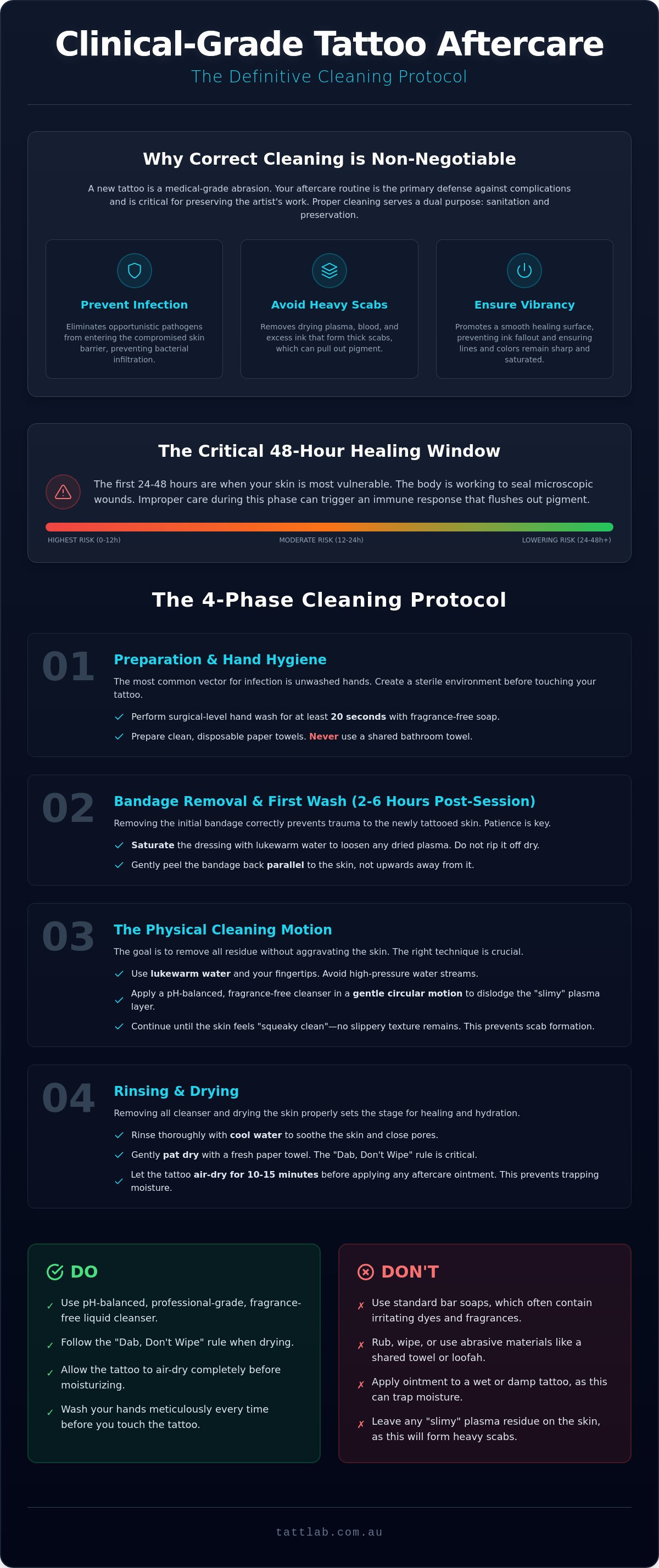
The transition from the studio to your home environment marks the most critical phase of your tattoo's life cycle. While the artistry is complete, the physiological work of integration has just begun. Mastering how to clean a new tattoo properly is the primary defense against bacterial infiltration. Every tattoo is essentially a controlled medical grade abrasion that bypasses the epidermis to deposit pigment into the dermal layer. This process leaves the skin's natural barrier compromised, creating a temporary pathway for opportunistic pathogens. Proper hygiene during this window isn't just a suggestion; it is a clinical requirement for safety.
Cleaning serves a dual purpose: sanitation and preservation. During the initial hours, your body produces a cocktail of excess ink, blood, and interstitial fluid. If left to dry on the surface, these fluids congeal into thick, heavy scabs. These scabs don't just look unsightly; they act like anchors. As they inevitably crack or pull, they can drag the settled pigment out of the skin, resulting in ink fallout and a patchy final result. Learning how to clean a new tattoo properly ensures you maintain the acid mantle of the skin, which is the thin, slightly acidic film that acts as a barrier to bacteria, while ensuring the healing surface remains supple and flat.
The Biological Vulnerability of Fresh Ink
The first 24 to 48 hours represent the critical window for skin closure. During this time, the Tattooing process and healing involves the body attempting to seal the microscopic puncture wounds. Because the ink is held in the dermis, any secondary infection or excessive inflammation can trigger an immune response that attempts to flush the foreign pigment away. Clinical-grade cleaning protocols ensure that this inflammatory phase remains productive rather than destructive, protecting the integrity of fine lines and saturated gradients.
The First Removal: Breaking the Seal
The timing of your first wash depends heavily on the type of bandage used, but the professional standard typically ranges from 2 to 6 hours, or overnight if a medical-grade film was applied. Removing this initial seal requires patience to avoid traumatizing the site. You should never rip a bandage away from the skin while it is dry. Instead, use lukewarm water to saturate the dressing. This helps loosen dried plasma that may have bonded the material to the wound. Peel the dressing back slowly, keeping it parallel to the skin rather than pulling it upward. This gentle approach ensures that the newly forming skin cells remain undisturbed, setting the foundation for a vibrant, clinical-quality heal.
The Step-by-Step Protocol for Cleaning Your New Tattoo
Establishing a consistent cleaning ritual is the most effective way to ensure your skin recovers with the same precision your artist applied to the design. This isn't merely about surface hygiene; it's a methodical process designed to support cellular regeneration while protecting the pigment's depth. When you understand how to clean a new tattoo properly, you transform a potentially stressful recovery into a predictable, clinical routine. The following protocol breaks down the physical actions required to maintain a sterile environment and promote a vibrant heal.
Phase 1: Preparation and Hand Hygiene
The most common vector for tattoo-related complications isn't the environment or the equipment; it's the simple act of touching the area with unwashed hands. Before you even consider touching your bandage or the tattoo itself, you must perform surgical-level hand hygiene. Use a fragrance-free soap or a dedicated medical-grade sanitiser to scrub your hands and wrists thoroughly for at least twenty seconds.
Preparation also extends to your environment. Ensure you have a stack of fresh, high-quality paper towels ready. You should never use a shared bathroom towel or a reusable washcloth on a fresh tattoo, as these fabrics are notorious traps for bacteria and can shed abrasive fibers into the open wound. By isolating your cleaning supplies, you maintain the integrity of the "clean zone" around your new art.
Phase 2: The Physical Cleaning Motion
Once your hands are sterile, use lukewarm water to wet the area. Avoid high-pressure streams directly from the showerhead; instead, cup the water in your hands and gently pour it over the site. Apply a small amount of professional cleanser and use your fingertips to perform a gentle circular motion. This specific movement is designed to dislodge the "slimy" layer of plasma, excess ink, and dried blood that accumulates during the first few days.
Identifying when the skin is truly clean is vital. You're looking for a "squeaky clean" feel where the slippery texture of the plasma is completely gone, leaving only the natural texture of your skin. Following dermatologist tattoo aftercare tips, you should continue this gentle agitation until no residue remains. If you leave even a small amount of plasma on the surface, it will harden into a scab, which can compromise the clarity of your ink.
After the wash, rinse the area with cool water to help soothe the skin and ensure zero residue from the cleanser remains. To dry, use a fresh paper towel and use a "pat-dry" method. Never rub or wipe the area, as friction can prematurely lift healing skin cells and cause irritation. Let the tattoo air-dry for at least ten to fifteen minutes before moving to the next stage of your routine. For the best results, always pair your cleaning protocol with artist-vetted tattoo aftercare solutions that respect the skin's natural barrier.
Beyond Soap: Selecting Professional Cleansing Agents
Selecting a cleansing agent is the most impactful decision you'll make for your skin's immediate recovery. While common digital advice often suggests using any "mild soap," this recommendation lacks the clinical nuance required for a punctured dermis. Understanding how to clean a new tattoo properly requires a focus on chemistry, specifically how a cleanser interacts with your skin's natural barrier and the newly deposited pigment. Standard supermarket soaps are typically formulated for intact skin, often relying on heavy surfactants that strip away the protective lipids your body needs to facilitate cellular repair.
The primary objective is to maintain the skin's pH balance. Human skin is naturally slightly acidic, and using highly alkaline household soaps can disrupt the acid mantle, leaving the area vulnerable to pathogens. Furthermore, there is a distinct difference between antimicrobial and antibacterial agents. While antibacterial soaps target bacteria, high-quality antimicrobial cleansers provide a broader spectrum of protection against fungi and viruses without the harshness that leads to secondary irritation. Following a day-by-day tattoo aftercare routine ensures that you are using the right level of protection at every stage of the inflammatory process.
What to Avoid in Your Cleanser
Many commercial soaps contain ingredients that are catastrophic for a healing tattoo. You should strictly avoid products containing the following:
- Alcohol: This serves as a desiccant, stripping moisture and causing the skin to crack.
- Parabens and Synthetic Dyes: These are common allergens that can trigger contact dermatitis in an open wound.
- Heavy Fragrances: Artificial scents are the leading cause of post-tattoo irritation and chemical sensitivity.
- Exfoliating Acids or Beads: Any product designed to "renew" skin will prematurely lift healing tissue and pull pigment from the dermis.
There is also a persistent myth regarding the use of harsh household antiseptics like undiluted Dettol. While these are effective for surfaces, they are far too aggressive for a tattoo. They can cause chemical burns and significantly delay the healing timeline, often leading to heavy scarring and dull ink.
The Case for Specialist Aftercare Products
Specialist professional tattoo aftercare is formulated with the specific biological needs of wounded skin in mind. One of the most significant advancements in recent years is the shift toward foam cleansers. Foam reduces the need for physical friction; the bubbles do the work of lifting debris so you don't have to apply pressure to the sensitive site.
During the first 72 hours, these "no-touch" foam washes are essential for minimizing trauma. At Tatt Lab, we vet every product for clinical efficacy, ensuring they meet the rigorous standards of professional artists. By choosing a dedicated tattoo cleanser, you're not just washing your skin; you're applying a targeted solution designed to preserve the clarity of your art while respecting your body's physical integrity. This methodical approach ensures that your cleaning routine supports a liberating narrative of transformation rather than a struggle with avoidable complications.
Managing the Weeping Phase and Common Obstacles
The first 48 hours of your tattoo's life cycle are defined by a physiological response known as "weeping." During this phase, your body produces a mixture of plasma, excess pigment, and interstitial fluid. While this can look alarming, it is actually a sign of a healthy inflammatory response. Mastering how to clean a new tattoo properly during this window involves managing this fluid without disrupting the body's natural sealing process. If you allow this exudate to sit on the skin for too long, it will harden into a thick scab that risks pulling pigment from the dermis.
The golden rule for managing fluid between scheduled washes is simple: dab, don't wipe. Use a fresh, sterile paper towel to gently press against the area, absorbing the moisture without creating friction. Wiping can cause micro-abrasions that lead to unnecessary irritation or secondary scabbing. If you discover that your clothing or bedsheets have adhered to the site overnight, avoid the impulse to pull them away. This mechanical trauma can rip out pigment and damage the delicate new skin. Instead, take the fabric and the limb into a lukewarm shower and allow the water to saturate the material until it naturally releases.
Plasma, Ink, and Exudate: What's Normal?
If your artist applied a medical-grade adhesive film, you'll likely notice a dark, liquid-filled bubble forming beneath the plastic. This is often called an "ink sack." While it might look concerning or "muddy," it is a concentrated mixture of plasma and excess pigment. This fluid creates a specialized healing environment that keeps the wound moist and protected. If you aren't using a film, your tattoo may look slightly blurry during the first two days; this is merely the surface-level fluid and not a reflection of the final art clarity.
Red Flags: When to Contact a Professional
Distinguishing between a standard healing response and a clinical infection is paramount for your safety. While some redness and swelling are expected, you should watch for excessive heat radiating from the site, yellow or green discharge, or red streaks extending away from the tattoo. It's also vital to differentiate between a "healing itch" and an allergic reaction to the tattoo ink itself. An allergy typically presents as persistent, raised bumps or a rash that doesn't subside after the first week. If you suspect cross-contamination has occurred, contact your artist or a medical professional immediately to prevent further complications. To ensure you have the right tools for every phase of recovery, browse our range of professional aftercare supplies designed for clinical-grade results.
Professional Maintenance: Transitioning from Cleaning to Hydration
The final stage of your clinical protocol involves a delicate balance between sanitation and hydration. While the initial focus remains on removing debris, the subsequent phase is about maintaining the skin's elasticity without compromising its ability to breathe. The "Golden Rule" of tattoo maintenance is absolute: never apply ointment or lotion to a tattoo that is damp or hasn't been freshly cleaned. If you have followed the steps on how to clean a new tattoo properly, your skin is a sterile canvas ready for protection. Applying a barrier over a dirty or wet surface traps bacteria and moisture against the wound, which can lead to bubbling, maceration, or infection.
How much product you use is just as important as the product itself. Over-hydrating is a common mistake that suffocates the dermis. You only need a sheer, translucent layer of aftercare. If the tattoo looks shiny or greasy, you've applied too much. This excess can clog pores and trigger "heat rash" or breakouts around the art. As the healing progresses, usually between days seven and fourteen, you can transition from three dedicated washes a day to your standard daily hygiene routine, provided the skin is no longer peeling or scabbing. Learning how to clean a new tattoo properly during this transition ensures that the skin remains resilient as it completes its final stage of closure.
The Synergy of Cleaning and Moisturising
Post-wash, your skin requires a minimum of fifteen minutes to air-dry completely. This ensures that no microscopic water droplets are trapped beneath your moisturizer. In this phase, we recommend selecting a breathable barrier rather than a heavy petroleum-based occlusive. Petroleum products are often too dense for fresh ink, potentially leaching pigment or trapping body heat. Specialist balms are formulated to support the skin's natural gas exchange, allowing oxygen to reach the site while keeping the surface supple. This synergy between a clean surface and a breathable moisturizer is what prevents the "tight" feeling that often leads to premature cracking.
Securing the Investment with Tatt Lab Supplies
Achieving a studio-quality heal is a partnership between the artist's technical skill and your commitment to professional-grade supplies. Using high-quality tattoo supplies ensures that your skin isn't battling unnecessary chemical irritants during its most vulnerable state. We always encourage you to consult your artist for specific recommendations tailored to your skin type and the complexity of your piece.
You are now equipped with the same clinical knowledge as a specialist, moving from the initial vulnerability of a new procedure to the confidence of a perfectly healed transformation. Your diligence today secures the clarity of your art for years to come. By following these protocols, you aren't just managing a wound; you're actively participating in the preservation of your personal narrative. Trust the process, respect the science, and enjoy the lasting results of your commitment to professional care.
Just as you prioritize clinical precision for your skin's recovery, ensuring the same level of care for your oral health is vital. For those looking for expert care, you can explore Fee-for-service clinical dental treatments at 7 Pearls Dental, where professional standards and patient safety are a top priority.
Securing the Future of Your Body Art
Your tattoo is an investment in self-expression that deserves the highest standard of clinical care. By prioritizing surgical-level hand hygiene and selecting pH-balanced, specialist cleansers, you've moved beyond basic aftercare into the realm of professional skin management. We've explored the biological necessity of removing plasma and the critical importance of allowing your skin to air-dry before applying any breathable barriers. Mastering how to clean a new tattoo properly isn't just about preventing infection; it's about ensuring every line and shade remains as vibrant as the day it was etched.
As an artist-owned specialist in medical and tattoo supplies, Tatt Lab is dedicated to providing the tools you need for a flawless recovery. Our range is vetted for clinical efficacy to support your skin's natural healing narrative from the first wash to the final settle. If you're ready to provide your ink with the precision it requires, Explore Professional Tattoo Aftercare Solutions at Tatt Lab. With nationwide Australian express shipping, you can access the same high-tier supplies used in the country's leading boutique studios. Trust your body's resilience and enjoy the lasting clarity of your new transformation.
Common Clinical Questions
How many times a day should I clean my new tattoo?
You should clean your new tattoo two to three times per day during the initial healing phase. This frequency ensures you remove accumulated plasma and environmental debris without over-stripping the skin's natural moisture. Consistency is vital; however, washing more than three times can cause excessive dryness and irritation. It's a delicate balance that respects your body's natural recovery speed while maintaining a sterile surface.
Can I use Bepanthen to clean my tattoo?
Bepanthen is a topical ointment and cannot be used to clean your tattoo. It's designed for hydration and protection after the cleaning process is complete. To ensure you understand how to clean a new tattoo properly, you must use a dedicated liquid or foam cleanser first, then apply a thin layer of aftercare once the skin is dry. Using an ointment as a cleanser will trap bacteria against the skin.
What happens if I accidentally rub my tattoo while cleaning it?
If you accidentally rub the area, you might experience temporary redness or minor irritation. The primary concern with rubbing is the premature removal of healing skin cells or settled pigment, which can lead to patchy results. Don't panic; just return to the gentle, circular cleaning motion. Monitor the site for any pigment loss once healed, as you may require a minor touch-up from your artist.
Is it okay to shower with a new tattoo?
Showering is perfectly safe and is often the best way to clean your new tattoo under controlled conditions. Keep the water temperature lukewarm and avoid letting the high-pressure stream hit the art directly. It's critical to avoid soaking the area in baths, pools, or salt water for at least two to three weeks to prevent infection. This protects the integrity of the closing dermis during the critical window.
Showering is perfectly safe and is often the best way to clean your new tattoo under controlled conditions. Keep the water temperature lukewarm and avoid letting the high-pressure stream hit the art directly. It's critical to avoid soaking the area in baths, pools, or salt water for at least two to three weeks to prevent infection. This protects the integrity of the closing dermis during the critical window. If you rely on tank or bore water for your daily hygiene, you might want to check out AWARE Water Testing to ensure your water source meets the highest safety standards for wound care.
Why is my tattoo still 'leaking' ink after I washed it?
Leaking or "weeping" is a standard part of the inflammatory phase where the body expels excess pigment and plasma. This usually subsides within the first 48 hours as the skin begins to seal. If the leaking continues beyond three days or is accompanied by excessive swelling, it may indicate that the area is being over-hydrated or irritated. It's an expected part of the physical integration process and artistic settling.
Can I use bar soap to wash my new tattoo?
You should avoid using traditional bar soap on a fresh tattoo. Bar soaps often have high pH levels that disrupt the skin's acid mantle and can harbor bacteria from previous uses. A liquid, pH-balanced, fragrance-free cleanser is the professional choice for maintaining skin integrity and ensuring a sterile healing environment. It's about choosing chemistry that supports rather than hinders your recovery and preserves the pigment.
How long do I need to keep up the intensive cleaning routine?
You should maintain a strict cleaning routine for approximately seven to fourteen days. Once the tattoo has finished peeling and the skin no longer feels sensitive or raised, you can transition back to your regular hygiene habits. Mastering how to clean a new tattoo properly during this window prevents secondary complications as the skin completes its closure. Long-term care then shifts toward hydration and consistent sun protection.
What should I do if my tattoo sticks to my bedsheets?
If your tattoo adheres to fabric overnight, don't attempt to pull it away while dry. Take the fabric with you into a lukewarm shower and let the water saturate the material until it releases naturally. Ripping the fabric away can cause mechanical trauma, pulling out pigment and damaging the newly formed skin layers. It's a common obstacle that requires patience and moisture to resolve safely.


Comments (0)
There are no comments for this article. Be the first one to leave a message!