

What if clients don’t rebook because of what happens around the appointment, rather than the tattoo itself? Learning how to keep clients coming back starts with a consistent, thoughtful experience that helps people feel respected, informed and comfortable at every step.
Strong work matters, but a confusing enquiry process, uneven communication or unclear aftercare can leave clients uncertain, even when they love their tattoo. Discounts might prompt another booking, but trust and personal service help turn a first appointment into an ongoing studio relationship.
This guide covers practical ways to improve the client journey, from the first message to aftercare and follow-up. You’ll find steps for setting clear expectations, communicating considerately and creating reliable studio routines, along with simple ways to review whether your retention efforts are working. The aim is steady progress: a professional experience clients feel confident returning to.
Key Takeaways
- Learn how to keep clients coming back by making trust, comfort and clear expectations part of the whole studio experience.
- Build repeatable client-care habits while leaving room for each person’s preferences and goals.
- Compare relationship-led retention with discounts, rewards and convenient rebooking to choose an approach that fits your studio.
- Use a simple follow-up routine to stay organised from appointment preparation through aftercare and future booking.
- See how consistent workflows and well-organised tattoo supplies can support a professional client experience, without promising loyalty on their own.
How to Keep Tattoo Clients Coming Back Starts With a Trustworthy Experience
Client retention is the pattern of people choosing to return, rebook and recommend a studio over time. In tattooing, that choice depends on more than the finished piece. Clients are trusting you with a personal decision and their body, so comfort, clear expectations and consistency all shape how they remember the experience.
A booking prompted mainly by a promotion may be a one-off. Lasting loyalty is more likely to grow when clients feel heard, understand what to expect and receive considered care throughout their visit. A follow-up message can help, but it can’t make up for a client journey that feels confusing or inconsistent. A dependable experience from the first enquiry onward is the practical foundation of how to keep clients coming back.
What makes a tattoo client feel confident returning?
Clear communication reduces uncertainty. Before an appointment, explain the next steps and what information you need. During the session, check in respectfully and give the client space to share preferences or concerns. Afterwards, provide clear aftercare guidance and make it easy for them to refer back to it.
Listening matters as much as explaining. Clarify what the client hopes to achieve, acknowledge their preferences and discuss realistic expectations without rushing them. These actions help a person feel respected rather than processed. No single gesture guarantees a rebooking, but consistent, thoughtful interactions give trust room to grow. A basic approach to customer relationship management (CRM) also focuses on understanding and managing interactions across the customer lifecycle, rather than treating each contact as a separate transaction.
Map the client journey from first enquiry to next appointment
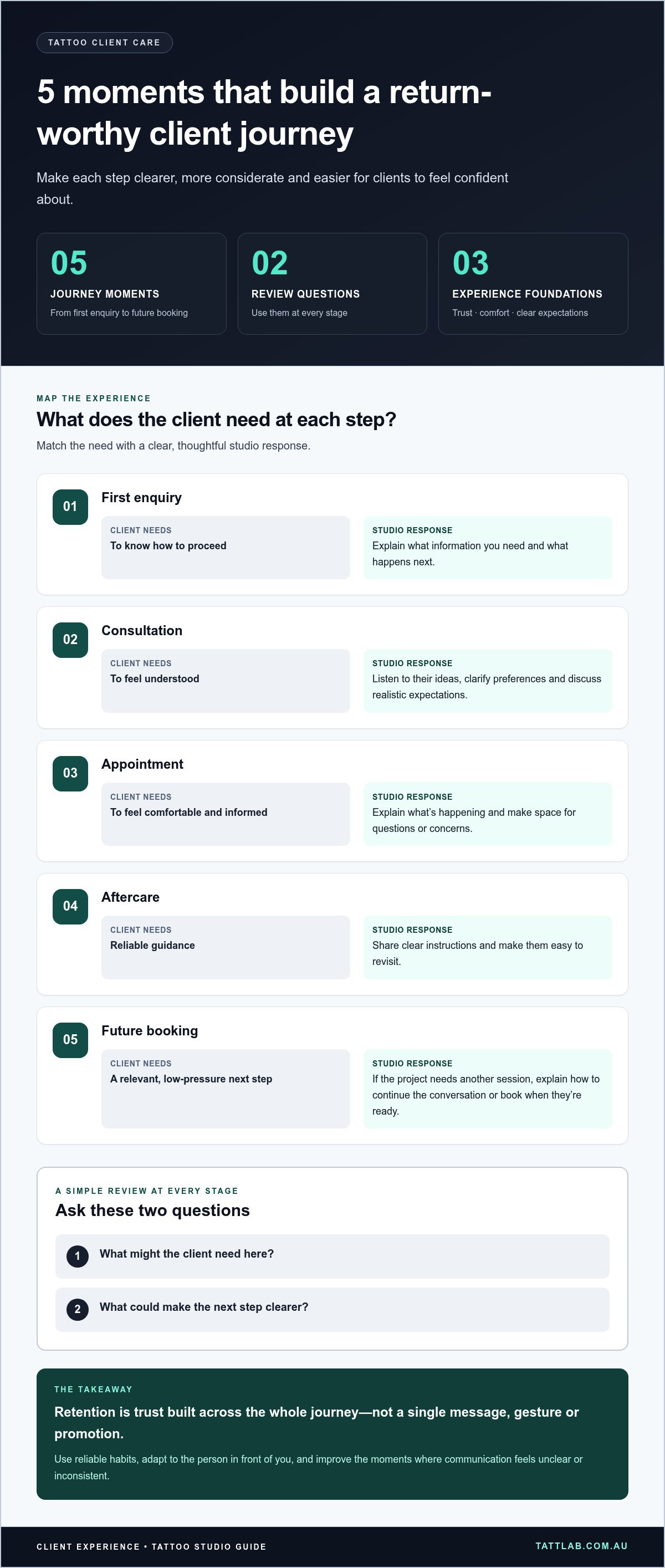
Review each stage by asking two questions: what might the client need here, and what could make the next step clearer?
- First enquiry: The client needs to know how to proceed. Explain what information you need and what happens next.
- Consultation: The client needs to feel understood. Listen to their ideas, clarify preferences and discuss realistic expectations.
- Appointment: The client needs to feel comfortable and informed. Explain what’s happening and make space for questions or concerns.
- Aftercare: The client needs reliable guidance. Share clear instructions and make them easy to revisit.
- Future booking: The client needs a relevant, low-pressure next step. If a project needs another session, explain how to continue the conversation or book when they’re ready.
Client retention is the trust built across the whole journey, from first enquiry through aftercare and the next appointment. Mapping these moments helps you spot where communication becomes unclear or inconsistent, then improve the experience without making it feel scripted.
Build Repeat Bookings Through Consistent Tattoo Client Care
A consistent client experience doesn’t have to feel scripted. Use reliable habits to make each stage clear, then adapt your approach to the person in front of you. A prepared consultation, attentive appointment and useful aftercare guidance can help clients feel supported without making promises about outcomes.
Make the appointment experience personal and predictable
Before the session, revisit the agreed design details, placement, session plan and any preferences the client has shared. Explain what they can expect and invite questions. During the appointment, communicate calmly and check in at appropriate moments. When clients understand what’s happening, they can feel more at ease with the process.
With the client’s knowledge, keep a concise record of useful preferences for future visits, such as communication needs or agreed project details. Handle notes responsibly and update them when circumstances change. This helps make care personal without assuming someone’s preferences will always stay the same.
Use thoughtful follow-up to support the client after an appointment
A brief follow-up can show care without turning into a sales prompt. Share or reinforce the aftercare guidance you’ve already provided, and invite the client to ask questions if something is unclear. Keep the message relevant to their appointment and consistent with your professional advice. Avoid sending conflicting instructions or making assumptions about healing.
Clear aftercare information extends the studio experience into the client’s everyday routine. For a deeper reference, point clients to this professional tattoo aftercare guide. Keep your own instructions easy to revisit, too, so clients aren’t left relying on memory once they’re home.
To make these habits manageable, prepare a simple checklist for the consultation, appointment close and follow-up. Use it as a prompt, not a script: the essentials stay consistent while the conversation remains human. If you’re reviewing supplies as part of a dependable workflow, explore professional tattoo aftercare and studio supplies.
Consistency and respectful communication are the foundations of retention, helping clients feel informed, valued and comfortable returning. That steady, individual care is a more durable answer to how to keep clients coming back than relying on a single message or promotion.
Do Discounts Keep Tattoo Clients Coming Back? Compare Retention Approaches
A discount can prompt someone to book, but it can’t create trust on its own. If promotions become the main reason clients return, they may focus more on price than on the care, communication and artwork that make a studio worth revisiting. A stronger retention mix puts the relationship first, then uses practical booking options, feedback or rewards where they fit.
Each approach takes a different level of effort and serves a different purpose. Consider your clients’ preferences, your studio’s capacity and what supports sustainable business goals before deciding what to prioritise.
| Approach | Purpose | Effort | Potential limitation |
|---|---|---|---|
| Relationship-led care | Build trust through attentive, consistent service. | Ongoing care in everyday interactions. | Requires follow-through from the whole team. |
| Convenient rebooking | Make planning the next appointment straightforward. | Simple prompts and clear booking steps. | Won’t help if timing or capacity doesn’t suit the client. |
| Feedback | Identify what’s working and where communication can improve. | Ask focused questions and respond thoughtfully. | Feedback needs review and appropriate action. |
| Rewards | Recognise continued support. | Set up and maintain clear, manageable terms. | Can feel transactional if care is inconsistent. |
| Discount-led promotions | Encourage action around a specific offer. | Plan the offer and account for its effect on studio operations. | May attract price-led bookings without building loyalty. |
When do loyalty offers help, and when can they backfire?
A reward can be a thoughtful way to recognise a returning client, provided it’s optional, clearly explained and sustainable for the studio. It should complement good service, not replace it. Frequent discounting may train clients to wait for the next offer or make full-price appointments feel less appealing. Before running a promotion, consider whether it suits your capacity and supports the experience you want clients to remember.
How can artists ask for feedback and respond well?
Ask a focused question at a natural point, such as whether the booking information was clear or the client felt comfortable during the appointment. Give them room to answer honestly. If they raise a concern, listen without becoming defensive, acknowledge what they’ve shared and identify a practical next step where appropriate. Feedback can also reveal ways to make communication clearer for future visits.
There’s no single formula for how to keep clients coming back. Choose a manageable mix, observe how clients respond and review it against your studio’s goals. Discounts may create a reason to act today; reliable care and respectful communication give clients a reason to return.
Create a Simple Follow-Up System That Encourages Tattoo Rebooking
A follow-up system doesn’t need dedicated customer software. A calendar and a simple spreadsheet or booking record can make communication more reliable. Keep only details that support the client’s care, such as agreed project plans, useful preferences and the next step discussed. Limit access to these notes, and keep them factual, relevant and up to date.
What should a tattoo studio follow-up sequence include?
Use a repeatable sequence as a prompt, not a script. Personalise each interaction and avoid messages that don’t suit the client or their project.
- 1. Before the visit: Confirm the agreed appointment logistics and share a clear point of contact for questions. Review the consultation notes so the client doesn’t need to repeat details unnecessarily.
- 2. Prepare for the appointment: Review the design plan and relevant preferences. Make sure the agreed next steps are clear before the client arrives.
- 3. During the visit: Communicate calmly, explain what’s happening and make space for questions or feedback.
- 4. After the visit: Share relevant aftercare guidance and invite questions without adding a sales message or asking for an immediate rebooking.
- 5. Support the next step: If the client’s project calls for another appointment, explain how to book or continue the conversation. Leave the timing and decision with them.
Which client-retention measures are useful for a small studio?
Choose a definition before comparing results. For example, count clients who have visited before and booked again during a chosen period, then divide by all unique clients who booked during that same period. Keep the time window and counting method consistent. The figure helps you track your own pattern, rather than chase an invented industry benchmark.
Read that measure alongside other signals. Note whether clients book another session, how repeat visits develop over time, recurring themes in feedback and referrals clients mention. A simple monthly review of booking records and brief notes can help you spot friction, such as unclear next steps or repeated questions about preparation. Choose one improvement to test, then review the same measures again. This keeps the process manageable and helps connect your actions with the experience clients report.
Consistency matters more than complexity. A small routine can make follow-up easier to maintain and show where the client journey needs attention. For practical workflow support, explore professional tattoo aftercare and studio supplies.
Support a Consistent Studio Experience With Reliable Tattoo Supplies
Clients notice more than the finished tattoo. An organised workspace and a prepared appointment can help the studio feel considered and professional while reducing avoidable interruptions. Supplies don’t guarantee client loyalty or a safe outcome on their own. They’re one part of a consistent workflow, alongside the artist’s training, judgement and established procedures.
How can consistent preparation reinforce client confidence?
Build preparation into the routine you follow for each appointment. Organise the needles or cartridges, inks and other materials relevant to the planned work, and have aftercare information ready to share. This helps you move through familiar steps calmly instead of searching for items or information while the client waits.
Keep hygiene and safety practices aligned with your professional procedures. Product choice alone can’t replace those practices, and no individual supply can promise safety or repeat bookings. For more background on choosing and understanding studio equipment, read this professional tattoo supplies guide and the studio safety guide.
Connect aftercare and studio routines to long-term client care
The appointment ends, but the client’s care continues at home. Give clear aftercare guidance that matches your professional advice, and keep it consistent with what you explained in the studio. Organising tattoo aftercare supplies and client instructions as part of your established routine can make it easier to provide that guidance reliably.
Reliable supply routines can also support preparation for different appointments. Keeping relevant needles, cartridges and inks organised helps you follow your workflow without implying that supplies alone create a positive experience. The same principle applies to communication: make aftercare and next steps easy to understand, while tailoring details to each appointment.
To put this into practice, review one client touchpoint, such as how aftercare guidance is prepared or how appointment materials are organised. Choose one small improvement and build it into your routine. That deliberate attention is a practical part of how to keep clients coming back because it supports a dependable experience without promising loyalty.
If you’re reviewing your setup, explore professional tattoo supplies as one part of a consistent studio workflow.
Make Client Trust Part of Your Studio Routine
Long-term client relationships grow through thoughtful, dependable care. Clear expectations, respectful communication and useful aftercare help connect each stage of the client journey, while a simple follow-up routine gives you a way to learn from rebookings, feedback and referrals.
Discounts can encourage a booking, but they’re only one tool. A more sustainable approach to how to keep clients coming back is to build an experience clients value, then make it easy to continue the relationship when they’re ready. Review one touchpoint at a time, refine your process and keep the client’s comfort at the centre.
Consistent studio workflows can support that professionalism. Tatt Lab is an artist-owned and operated Australian supplier, with an online range that includes tattoo aftercare, needles, cartridges, inks and medical supplies. Explore professional tattoo and studio supplies as one part of your studio setup.
Retention grows through steady, human care, not a single promotion or message. Keep improving the experience, and give each client a reason to feel confident returning.
Frequently Asked Questions
How do tattoo artists keep clients coming back?
Tattoo artists encourage repeat visits by making each interaction clear, respectful and consistent. Explain the process, listen to the client’s preferences, provide relevant aftercare guidance and make future booking steps easy to understand. Keep communication personal rather than relying on frequent promotions. These habits can strengthen trust over time, although no single approach guarantees that a client will rebook or recommend the studio.
Do discounts help tattoo studios retain clients?
Discounts can prompt a booking, but they don’t necessarily build lasting loyalty. If promotions become the main reason to return, clients may focus more on price than on the relationship or studio experience. Consider rewards as optional recognition, and weigh any offer against client preferences, studio capacity and sustainable business goals. Reliable service and clear communication should remain the foundation of your retention approach.
When should a tattoo artist follow up with a client?
Follow up after the appointment with relevant aftercare guidance and a brief, low-pressure invitation to ask questions. Keep the message consistent with the professional advice you gave in the studio, and avoid turning a care check-in into an immediate sales pitch. Before the appointment, confirm agreed logistics and provide a clear point of contact. The purpose is to make communication dependable and useful at each stage.
How can a tattoo studio encourage clients to rebook?
Make the next step clear without pressuring the client to book before they’re ready. If their project involves another session, explain how to arrange it and discuss relevant planning during the appointment. Keep booking instructions straightforward and offer a convenient way to continue the conversation. A thoughtful experience and easy rebooking process can remove friction while leaving the decision and timing with the client.
How can a tattoo artist ask clients for feedback?
Ask one focused, respectful question at a suitable point, such as whether the appointment information was clear or the client felt comfortable during the session. Give them room to answer honestly. If they raise a concern, listen calmly, acknowledge what they’ve said and identify a practical next step where appropriate. Treat feedback as information that can improve communication, not automatically as a complaint.
What should a tattoo studio track to measure client retention?
Track returning-client bookings, repeat visits, rebooking patterns, feedback themes and referrals. Define your returning-client rate consistently, for example by comparing returning clients with all unique clients booked during the same chosen period. Use the same method each time so you can review your own patterns meaningfully. Look at the measures together, then choose one part of the client experience to improve rather than chasing an unsupported benchmark.
Can aftercare communication help clients return to a tattoo studio?
Clear aftercare communication can support trust by extending useful care beyond the appointment. Give guidance that reflects your professional advice, keep it easy for the client to refer back to, and invite questions without making rebooking the focus. Consistent aftercare is one part of the wider experience, not a guarantee of another visit. Clients are more likely to feel supported when information is relevant, clear and consistent.


Comments (0)
There are no comments for this article. Be the first one to leave a message!