
A single misplaced needle doesn't just risk a health violation; it compromises the clinical integrity of your entire studio. Precision is the pulse of our industry. Knowing how to properly dispose of tattoo sharps is the foundation of a professional practice that respects both the art and the biological safety of the community. You already know that maintaining a sterile environment is as vital as the ink itself, yet the patchwork of state-specific environmental regulations often creates unnecessary friction in your daily workflow. The anxiety of a surprise health audit or the fear of a needle-stick injury shouldn't shadow your creative process.
This guide will help you master the clinical protocols for sharps disposal to protect your studio, your clients, and the community while ensuring full legal compliance. We've distilled the complex Australian Standard 4031 requirements into a clear, step-by-step workflow. You'll gain the technical knowledge needed to secure your workspace and the confidence to pass every health inspection with meticulous ease. Let's refine your studio's safety journey through science-backed precision.
Key Takeaways
- Master the science of biocontainment by identifying the specific biological risks associated with needles, cartridges, and razors to protect both your clients and your craft.
- Ensure your studio remains fully compliant by mastering the technical requirements of Australian Standards AS 4031:1992 and AS/NZS 4261:1994 for medical-grade biohazard containment.
- Learn how to properly dispose of tattoo sharps during your session, including the critical "three-quarters full" protocol that prevents accidental needle-stick injuries.
- Navigate the complex landscape of state-specific EPA and WorkSafe regulations to establish a seamless workflow between your workstation and commercial collection services.
- Elevate your professional environment with artist-vetted medical supplies that bridge the gap between high-end studio aesthetics and rigorous clinical safety standards.
The Critical Science of Sharps Disposal in Tattooing
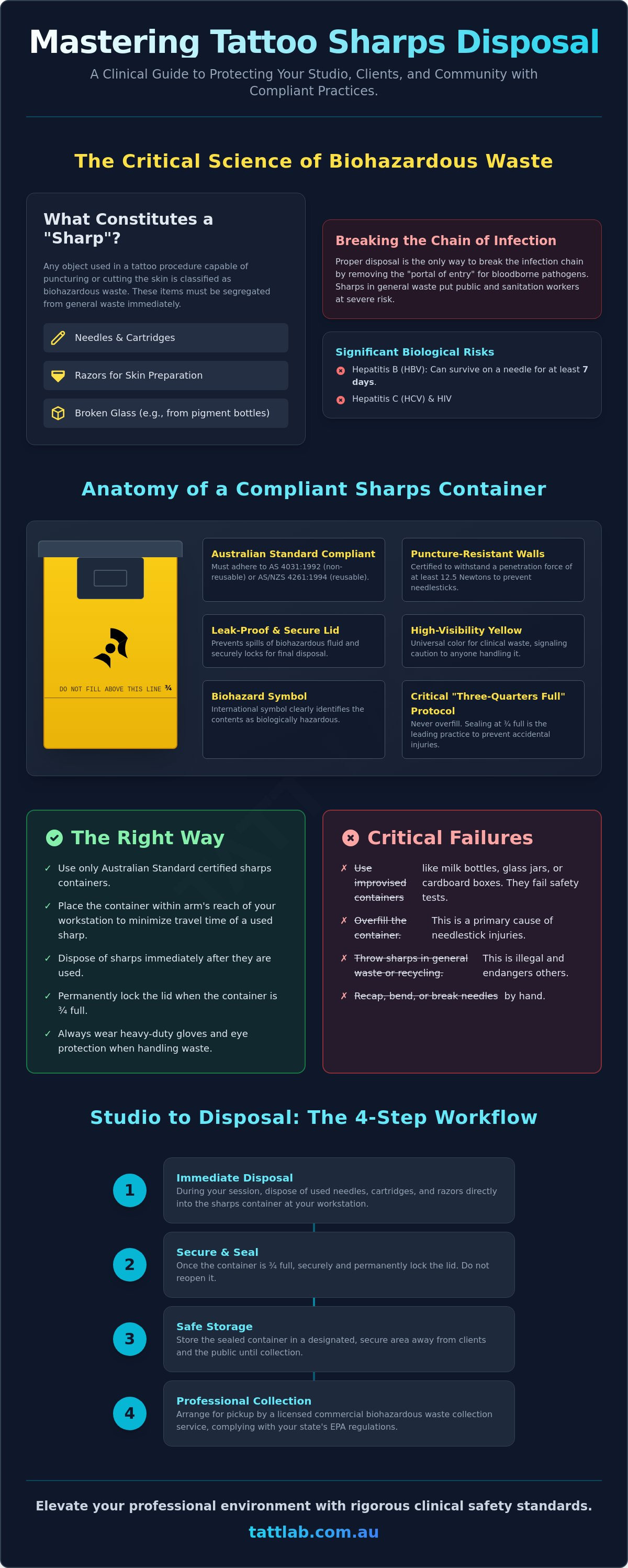
In the tattoo industry, precision is the foundation of every successful procedure. This precision must extend beyond the art itself and into the biological safety of the studio environment. Understanding The Critical Science of Sharps Disposal is a fundamental pillar of professional practice that protects the artist, the client, and the public. Within a studio, "sharps" are defined as any object capable of puncturing or cutting the skin. This category encompasses needles, cartridges, razors used for skin preparation, and even broken glass from pigment bottles or equipment.
These items are classified as biohazardous because they come into direct contact with blood and interstitial fluid. The biological risks are significant. Bloodborne pathogens such as Hepatitis B (HBV), Hepatitis C (HCV), and HIV can survive on surfaces for extended periods. For instance, HBV is remarkably resilient and can remain infectious on a needle for at least seven days. Proper disposal is the only way to break the "Chain of Infection." By isolating the contaminated object in a puncture-proof, Australian-standard container, you effectively remove the "portal of entry" for a potential host. General waste or recycling bins are never an option. When a sharp enters a standard waste stream, it creates a high-risk environment for waste management staff and violates the Environmental Protection Act regulations that govern Australian clinical waste.
Identifying Biohazardous Waste in Your Studio
The distinction between general waste and sharps is absolute and non-negotiable. Contaminated sharps include anything that has touched skin or has been loaded with pigment during a session. Professional standards in Australia dictate that even unused needles must be treated as sharps if the sterile blister pack has been opened. Once the seal is broken, the needle is no longer considered sterile and must follow the biohazardous waste path. During the studio teardown, your PPE—specifically heavy-duty gloves and eye protection—serves as the final barrier. Handling waste requires a methodical approach to ensure no accidental needle sticks occur while transitioning tools from the machine to the sharps container.
The Impact of Improper Disposal on Public Safety
Poor waste management threatens more than just the immediate studio area. It puts waste collection workers at risk of life-changing needle-stick injuries and the psychological trauma of potential infection. In Australia, medical waste that ends up in landfills can lead to environmental contamination where pathogens or heavy metals from ink leach into the ecosystem. Learning how to properly dispose of tattoo sharps is about more than just compliance; it's about industry integrity. Maintaining these rigorous standards positions the Australian tattoo industry as a sophisticated, health-conscious profession. It ensures the client's journey toward self-expression remains a safe, clinical, and liberating experience from start to finish.
The Anatomy of a Compliant Sharps Container
Adhering to Australian clinical standards is the first step in establishing a studio that prioritises both artist safety and client health. The foundational benchmarks for these containers are AS 4031:1992, which covers non-reusable containers, and AS/NZS 4261:1994 for reusable versions. These regulations ensure that the vessel can withstand the rigours of a professional environment without compromising its structural integrity. A compliant bin is instantly recognisable by its high-visibility yellow colour and the prominent international biohazard symbol, which serves as a universal warning of the biological risks contained within.
When you're evaluating how to properly dispose of tattoo sharps, the physical build of the container is your primary line of defence. The walls must be puncture-resistant to prevent needles from piercing the plastic during handling or transport. Equally vital are leak-proof sides and a secure locking lid that remains sealed even if the bin is accidentally overturned. Selecting the correct size is a logistical necessity; a 1.4L bin might suffice for a solo artist, but a high-traffic studio may require 5L or 10L units to avoid the dangerous habit of overfilling, which is a leading cause of needlestick injuries.
Why Improvised Containers Fail the Safety Test
Using milk bottles, juice cartons, or glass jars is a significant breach of safety protocol that puts your livelihood at risk. These materials are either too porous, too brittle, or too thin to contain medical waste safely. WorkSafe and state health departments, such as NSW Health or the Victorian Department of Health, strictly prohibit these improvised vessels because they don't meet the mechanical stress tests required for biohazardous waste. Puncture resistance must be certified by Australian Standards to ensure that the container's material density can successfully resist a needle penetration force of at least 12.5 Newtons.
Placement and Accessibility at the Workstation
The layout of your station should mirror the precision of your linework. Optimal positioning involves placing the sharps bin within arm's reach of your procedural area to minimise the 'travel time' of a contaminated needle. The longer a used needle is held in the air, the higher the statistical probability of an accidental injury. Many professionals prefer wall-mounted brackets to keep the floor clear, while others opt for weighted tabletop stands to ensure stability.
Maintaining Studio Safety with Tatt Lab involves keeping the bin accessible to the artist but out of the natural reach or sightline of the client. This reduces the risk of a client accidentally knocking the container during a session. If you're looking to refine your studio's clinical standards, checking your current setup against the professional equipment guidelines at Tatt Lab can help you create a safer, more efficient environment. Understanding how to properly dispose of tattoo sharps is a core component of this professional evolution, turning a routine task into a disciplined safety habit.
The Professional Protocol: From Workstation to Disposal Site
Maintaining a sterile environment requires a clinical mindset that extends beyond the tattoo itself. Precision in the Lab means treating every used needle as a potential biohazard from the millisecond it leaves the machine. Immediate disposal is the cornerstone of this protocol. You shouldn't place used cartridges on your workstation tray or a side table. Instead, the transition from the machine to the sharps container should be a single, fluid motion. This discipline eliminates the risk of accidental contact during the post-session cleanup when focus often wanes.
Adhering to the 'Three-Quarters Full' rule is a non-negotiable safety standard in Australian studios. According to AS 4031:1992, sharps containers must never be filled to the brim. Overfilling is the primary cause of needle-stick injuries, as it forces the artist to manually push waste down or leaves needles protruding from the opening. Once the waste reaches the 75% mark, it's time to engage the permanent lock mechanism. This final seal is irreversible, ensuring the contents remain contained during transport to a specialized medical waste facility. Understanding how to properly dispose of tattoo sharps involves recognizing that the journey ends only when the waste is logged. Keeping a detailed disposal log is essential for state health department audits, documenting the date of sealing, the weight of the bin, and the collection receipt from your licensed waste provider.
Step-by-Step Studio Teardown Safety
The teardown process is where skin health and artist safety intersect. Always wear fresh nitrile gloves when handling used cartridges. Use a one-handed drop technique to deposit the sharp into the bin, keeping your free hand behind your back or away from the container opening to prevent accidental sticks. Once the session's waste is secured, decontaminate the exterior of the sharps bin using a TGA-registered hospital-grade disinfectant. This prevents cross-contamination in your storage area while you await professional collection.
Handling Needle-Stick Injuries
Even with rigorous standards, accidents can happen. If a puncture occurs, immediate first aid is vital. Wash the site with warm soapy water for at least 30 seconds without scrubbing, as harsh scrubbing can damage the tissue and increase the risk of infection. You must report the incident to your studio manager and seek a medical evaluation within two hours to discuss post-exposure prophylaxis. Having a clear, written safety plan lowers anxiety during these high-stress moments. It transforms a frightening event into a controlled, professional response, prioritizing your long-term health and clarity. Learning how to properly dispose of tattoo sharps includes knowing how to react when the protocol fails, ensuring the safety of the entire studio collective.
Navigating Australian Regulations and Collection Services
Understanding the legalities of clinical waste isn't just about compliance; it's about safeguarding the community and the environment. In Australia, the Environment Protection Authority (EPA) and WorkSafe operate at a state level to dictate how biohazardous materials move from your station to a high-heat incinerator. Whether you're in Melbourne following EPA Victoria's Environment Protection Act 2017 or in Sydney adhering to NSW Health guidelines, the core requirement remains the same: you must account for every needle used. Knowing how to properly dispose of tattoo sharps ensures your studio remains a trusted space for skin health and professional integrity.
Commercial Waste Management for Registered Studios
Licensed studios must partner with an authorized medical waste contractor to manage their output. These professionals provide a recurring collection service, swapping full yellow bins for sterilized replacements on a schedule that suits your volume. This process integrates into a mandatory "Waste Tracking" system. In Victoria, the EPA’s Waste Tracker app requires digital records for every movement of clinical waste. While a monthly collection service might cost between A$50 and A$150, the alternative is catastrophic. Fines for the improper disposal of clinical waste can reach A$90,000 for businesses under state legislation, making professional compliance the only viable path for a sustainable practice.
Public Disposal Options for Independent Artists
For artists working in smaller capacities or those transitioning between professional spaces, public disposal routes offer a safe alternative. Many local councils provide community sharps bins in public restrooms or designated drop-off points at civic centers. Participating pharmacies across Australia also accept small volumes of sharps through the Pharmacy Guild’s needle and syringe programs. Some public hospitals offer disposal services, though you should call ahead to confirm their specific protocol for professional waste. Maintaining this level of care reflects the standards found in The Professional Guide to Tattoo Supplies in Australia, where safety and performance are treated as inseparable. Mastering how to properly dispose of tattoo sharps is a vital step in the professional journey toward skin health excellence.
Elevating Your Studio Safety with Tatt Lab Medical Supplies
Your studio is more than a creative space; it's a clinical environment where precision meets skin health. At Tatt Lab, we view safety as an integral part of the artistic process. We don't settle for generic hardware. Instead, we source artist-vetted, medical-grade sharps containers designed to meet rigorous Australian Standards, such as AS 4031:1992. This science-led approach ensures that your disposal process is as refined as your linework. Understanding how to properly dispose of tattoo sharps is the final, critical step in a sterile workflow that protects both the artist and the client.
Integrating sharps safety into your broader workflow requires a shift in perspective. It's about moving away from reactive cleaning and toward a proactive, "Lab" minded methodology. Every needle used is a potential biohazard that requires a clear, predictable path from the machine to the puncture-resistant bin. By prioritizing this level of meticulous hygiene, you're not just following regulations. You're safeguarding the long-term integrity of your clients' skin and the professional reputation of your brand. We believe the journey to a perfect tattoo ends only when the last sharp is safely locked away.
Essential Supplies for a Sterile Environment
A sharps bin is only one component of a professional setup. To maintain true clinical integrity, you need to pair your disposal units with high-quality nitrile gloves and hospital-grade sanitisers. This creates a cohesive safety barrier that prevents cross-contamination during the breakdown of your station. You can explore our full breakdown of these requirements in our Medical Supplies for Tattoo Artists: The Professional Studio Safety Guide. We believe that premium tattoo cartridges, which are engineered for peak performance and fragmentation control, deserve a disposal method that matches their technical quality. When you invest in high-end tools, knowing how to properly dispose of tattoo sharps ensures those tools don't become a liability after the session ends.
Joining the Tatt Lab Professional Network
Safety shouldn't be a solo effort. By opening a wholesale account with Tatt Lab, you gain access to a consistent supply of medical-grade equipment and expert support for any studio safety queries. Our goal is to lower the anxiety associated with compliance, replacing uncertainty with a sense of controlled, predictable progress. We offer a minimalist, boutique-studio experience that aligns with the sophisticated aesthetic of the modern Australian tattoo scene. View our complete range of tattoo supplies to see how we can support your studio's evolution. Together, we can maintain a "cool but clinical" environment that respects the culture while prioritizing the science of skin health.
Protecting the Integrity of Your Craft and Community
Mastering how to properly dispose of tattoo sharps is a non-negotiable step in the journey of a professional artist. By integrating AS 4031:1992 or AS/NZS 4261:1994 compliant containers into your daily workflow, you eliminate the risks of needle-stick injuries and cross-contamination. This commitment to safety ensures your studio remains a controlled, sterile environment that respects both the art and the biological reality of skin penetration. It's about more than just following the law; it's about the evolution of your practice into a clinical space where client health is the highest priority.
As an artist-owned and operated specialist, Tatt Lab understands the meticulous nature of your work. We provide the technical tools necessary to maintain these high standards, offering Australian Standard (AS) Compliant Bins designed for maximum durability. With our express nationwide shipping, your studio remains equipped with the medical-grade essentials required for a seamless and safe operation. Secure your studio with medical-grade sharps containers from Tatt Lab and take the next step in your professional journey. Your dedication to safety builds the trust that defines a lasting career.
Frequently Asked Questions
Can I dispose of tattoo needles in a thick plastic laundry detergent bottle?
No, you cannot use a laundry detergent bottle because it fails to meet the puncture-resistant requirements of Australian Standard AS 4031. These containers are often made of high-density polyethylene but aren't tested for needle penetration or leak-proofing. To maintain skin health and safety within your studio, you must use a dedicated yellow sharps container. This ensures your professional journey remains compliant with state health regulations.
How often should I have my studio's sharps bin collected by a professional service?
You should arrange for a professional collection once your container reaches the 75 percent fill line. For a standard studio, this typically occurs every 3 to 6 months depending on your specific client volume. Leaving full containers on-site increases the risk of accidental needle sticks. Professional waste services ensure the clinical integrity of your workspace is never compromised by overflowing or unstable hazardous materials.
Where can I find a list of authorized sharps disposal locations in Australia?
You can find authorized disposal sites through your local council website or the National Public Toilet Map, which lists over 19,000 locations across Australia. Many pharmacies also participate in the Pharmacy Guild of Australia needle disposal programs. For commercial studios, the most reliable method is contracting a licensed medical waste provider who specializes in the safe transit and destruction of biohazardous materials.
What should I do if a sharps container is accidentally knocked over and spills?
If a container spills, you must immediately secure the area and use forceps or tongs to retrieve the needles while wearing puncture-resistant gloves. Never use your hands to pick up loose sharps. Once you've placed the items back into a new AS 4031 compliant bin, you must disinfect the entire surface with a hospital-grade solution. This methodical approach mirrors the precision we value in our clinical procedures at the Lab.
Are tattoo cartridges considered sharps even if the needle is retracted?
Yes, tattoo cartridges are classified as sharps because they house needles that have been in contact with human blood and tissue. Even when the needle is retracted, the internal mechanism contains biological residue that poses a cross-contamination risk. Understanding how to properly dispose of tattoo sharps means treating every cartridge as a potential hazard, ensuring they go directly into the yellow bin after every session.
Is it legal for a home-based tattoo artist to use community sharps bins?
No, it's illegal for home-based artists to use community sharps bins for their business waste. Community bins are strictly reserved for domestic users, such as individuals with diabetes managing their own health. As a commercial operator, you're required by the Environment Protection Act to manage your clinical waste through a licensed contractor. This distinction is vital for maintaining the professional evolution and legality of your practice.
What are the penalties for improper medical waste disposal in Australia?
Penalties for improper medical waste disposal are severe, with fines in states like Victoria reaching up to A$10,000 for individuals and A$50,000 for corporations. Beyond the financial cost, non-compliance can lead to the immediate suspension of your skin penetration license. We view waste management as a core component of skin integrity, protecting both the artist and the wider community from unnecessary biological harm.
How do I know if my sharps bin meets the Australian Standard AS 4031?
You can verify compliance by checking the exterior of the container for the AS 4031:1992 certification mark. This label confirms the bin has passed rigorous testing for puncture resistance, impact strength, and secure locking mechanisms. Using certified equipment is a non-negotiable part of how to properly dispose of tattoo sharps within a clinical setting. It provides the technical edge needed to ensure your studio operates with absolute safety.


Comments (0)
There are no comments for this article. Be the first one to leave a message!