

A taut working surface starts with a deliberate stretch in the direction the line is travelling. Learning how to stretch skin for tattooing also means keeping your machine angle controlled, because stretching across a line can make it appear narrower once the skin settles. The aim is steady support, not excessive tension.
It’s easy to focus on needle depth or hand speed and overlook how much the skin moves beneath your hands. A stable surface supports greater control when lining, packing or shading. This guide covers practical stretching techniques, adapting your approach to different areas, and choosing the right stretch direction. It also explains the challenges of working alone and when a helper may make it easier to maintain tension.
Key Takeaways
- Use your free hand to create a stable working surface, adjusting finger placement as the body area and skin movement require.
- Keep tension consistent while tattooing, and reassess it if the skin shifts or the working surface becomes less stable.
- Adapt the amount of stretch for lining, packing and shading rather than using the same tension for every technique.
- For awkward areas, a second gloved person can help maintain skin tension while you concentrate on controlled tattooing.
How to stretch skin for tattooing
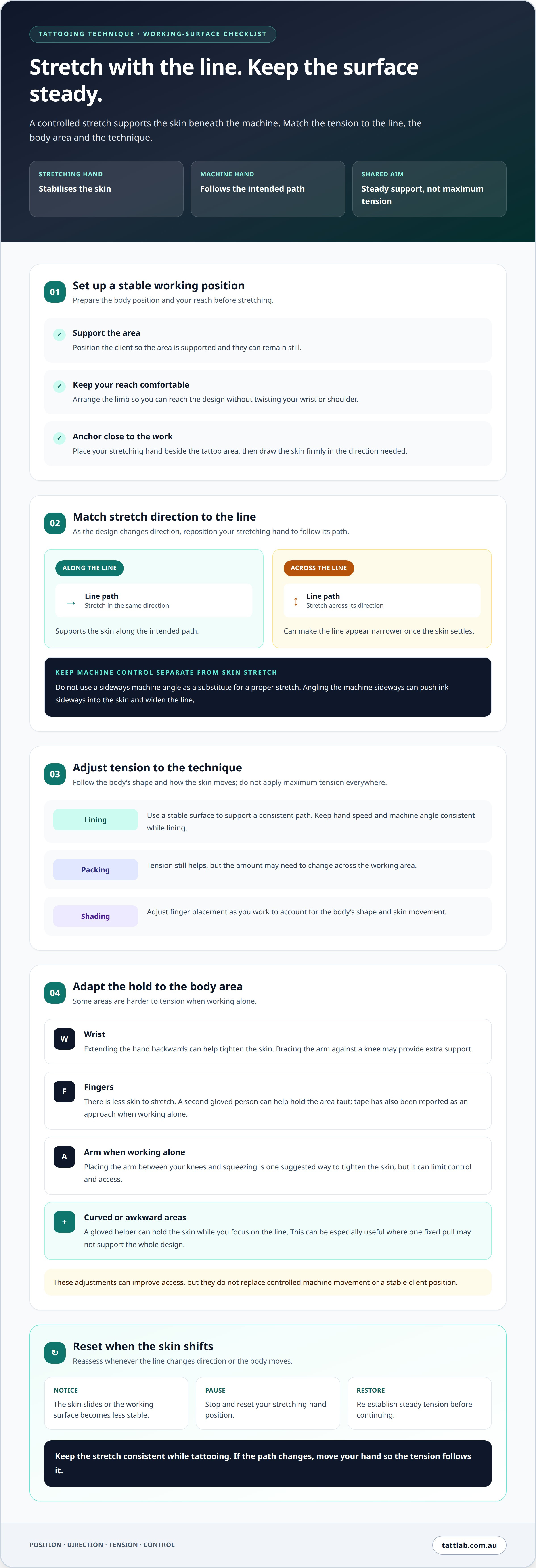
Skin moves as the body shifts, so keeping the working surface stable depends on controlled tension from your stretching hand. When lining, stretch in the direction the line travels. This supports the skin along the intended path. Stretching across that path can make a line appear narrower once the skin returns to its natural position.
Position the client so the area is supported and easy to reach. Place your stretching hand close to the tattoo area, then use your fingers to draw the skin firmly in the required direction. Guide the machine with your other hand. Keep the tension steady rather than repeatedly releasing and reapplying it, as changing support can shift the skin beneath the needle.
- Set the body position. Arrange the limb so the client can remain still and the artist can reach the design without twisting the wrist or shoulder.
- Anchor the skin. Place the stretching hand beside the working area, then pull the skin taut in the direction that supports the next movement.
- Check the line path. As the design changes direction, reposition the stretching hand so the tension follows the new path.
- Maintain controlled movement. Keep hand speed and machine angle consistent while lining, rather than changing both as the skin shifts.
Direction matters because tension changes the surface beneath the machine. For a line running along the forearm, for example, stretch in that same direction to support its path. Pulling across the line can make it appear compressed when the skin relaxes. Angling the machine sideways can also push ink sideways into the skin and widen the line, so don’t use machine angle as a substitute for a proper stretch.
The amount of stretch depends on the technique. Lining needs a stable surface to support a consistent path. Packing and shading also benefit from tension, but the amount may need to change across the working area. Follow the body’s shape and how the skin moves. Adjust your finger placement as you work instead of applying maximum tension everywhere.
At the wrist, extending the hand backwards can help tighten the skin. Bracing the arm against a knee may provide extra support. Fingers offer less skin to stretch, so a second gloved person can help hold the area taut. These adjustments can improve access, but they don’t replace controlled machine movement or a stable client position.
Some areas are harder to tension when you’re working alone. For an arm, one suggested approach is to place it between your knees and squeeze, but this can limit control and access. A wrist may be easier to position by extending the hand backwards and bracing the arm against a knee. Tape has also been reported as a way to hold finger skin taut, but it shouldn’t distract you from controlling the machine.
Reassess the stretch whenever the line changes direction or the body shifts. If the skin slides, pause, reset your hand position and restore tension before continuing. A gloved helper can hold the skin while you focus on the line. This can be especially useful on curved areas, where one fixed pull may not support the whole design.
Keep the roles clear: your stretching hand stabilises the skin while your machine hand follows the intended path. When learning how to stretch skin for tattooing, practise matching the tension to the line’s direction, then adjust the support for packing or shading. A consistent stretch, hand speed and machine angle work together to support controlled tattooing. These fundamentals are equally crucial in delicate disciplines like paramedical tattooing, where clinics such as Ogzy Skin & Scalp Tattoo adapt tension when blending pigment into scar tissue or stretch marks.
Working alone can make some areas harder to hold taut. When tattooing your own arm, you may need to use your body to create the stretch. Placing the arm between your knees and squeezing can tighten the skin, although this method is described as less than ideal. For lining, stretch in the direction the line travels. A forum participant also recommends maintaining the same hand speed and machine angle while lining.
A forum participant reported using tape to stretch finger skin while tattooing. For the wrist, extending the hand backwards and pressing the arm against a knee is another suggested way to tighten the skin. These approaches offer alternatives for holding the skin taut when working alone.
Tatt Lab
Tatt Lab can support your setup as you refine a consistent, controlled workflow. Equipment supports your process, while skin stretching remains a hands-on technique that depends on positioning, tension and machine control. Tatt Lab supplies traditional needles, tattoo cartridges, tattoo inks and tattoo aftercare for artists’ everyday work.
As you review your technique and setup, consider which supplies suit your work, from lining and shading to caring for finished tattoos. Choosing what you need can help organise your studio workflow, but equipment doesn’t replace skilled practice. Browse Tatt Lab’s tattoo supplies online and choose the products that fit your work.
Build a More Deliberate Tattooing Practice
Treat skin tension as part of your working rhythm, not a last-minute correction. As you practise how to stretch skin for tattooing, notice how positioning and hand control work together on each area. Small, deliberate adjustments can help you develop a steadier process while keeping the client’s comfort in view.
That process also depends on having suitable studio supplies close at hand. Tatt Lab offers Tattoo Aftercare, Traditional Needles and Tattoo Cartridges to support different parts of a tattoo workflow. For guidance on tattoo supplies, contact Tatt Lab for tattoo advice.
Build your technique with patience and care. A considered setup and consistent practice can help make each session more controlled.


Comments (0)
There are no comments for this article. Be the first one to leave a message!