

Healing is part of the tattoo, not an afterthought. Tattoo artist health and wellness depends on thoughtful aftercare, attention to how the skin is healing, and support that reflects the person’s needs. A tattoo may carry deep personal meaning, but it isn’t clinical treatment.
It’s natural to focus on the finished design, especially when it represents resilience, remembrance or a new chapter. The healing process matters too. Clear aftercare helps you understand what to expect, and individual support can make the experience more manageable for people who need extra assistance.
This article covers tattoo aftercare and wound management, factors that can affect healing, and the role of accessibility and emotional wellbeing. You’ll also learn how dedicated aftercare products can support your routine as your tattoo heals.
Key Takeaways
- Understand how attentive aftercare supports tattoo healing and when changes in the skin may need professional attention.
- Recognise workplace factors that can affect tattoo artists’ physical and overall wellbeing, including repetitive tasks and sustained focus.
- Learn how prolonged, fixed working positions can contribute to strain in the back, neck, wrists and hands.
- Explore practical ways to adjust posture, workspace setup and work habits to support comfort during tattoo sessions.
Tattoo aftercare and wound management
Every tattoo creates a skin wound, so hygiene and clear aftercare matter. In Australia, artists also need to consider client access and individual support needs.
Managing Tattoo Wounds
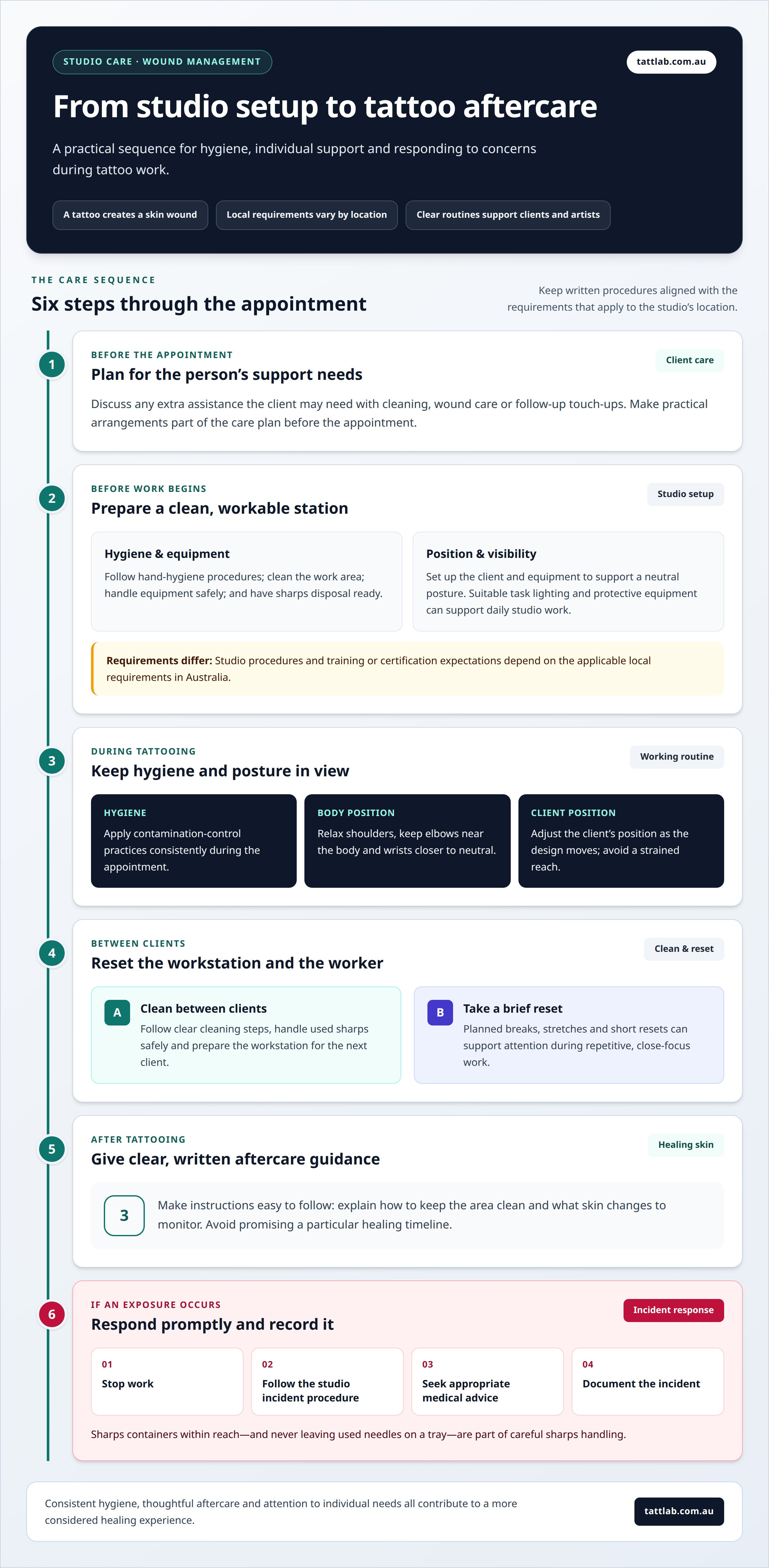
Tattoo aftercare and wound management means caring for freshly tattooed skin as it heals. Clear, written instructions help clients understand each stage and follow the artist’s guidance consistently. Artists can explain how to keep the area clean and what changes to monitor, without promising a particular healing timeline. Some people with disability may need extra help with cleaning, wound care or follow-up touch-ups. Discussing support needs before the appointment helps make practical arrangements part of the care plan.
Studio Infection Control and Hygiene
Infection control combines hygiene practices that reduce contamination risks during tattooing. In Australia, studios must follow the requirements that apply to their location. Good procedures address hand hygiene, clean work areas, equipment handling and sharps disposal. Local rules shape how these procedures are carried out, so a studio’s written routine should reflect its applicable requirements. Clear cleaning steps between clients, safe handling of used sharps and a prepared workstation also support occupational health. These routines protect clients’ healing skin and the artist’s working environment.
Infection Prevention Training
Infection-prevention training teaches artists to apply hygiene procedures to real studio tasks. Australian training or certification expectations depend on applicable local requirements. Practical learning should cover hand hygiene, contamination control, cleaning and safe sharps handling. A certificate alone cannot replace consistent practice at every appointment. Occupational health guidance also encourages planned breaks, stretches and a workstation that supports a neutral posture. Repetitive, close-focus work can be physically and mentally demanding; manageable schedules and short resets help sustain attention. Task lighting and suitable protective equipment can support eyesight, hearing and skin during daily studio work.
Health and wellness risks for tattoo artists in Australia
Tattoo work involves repeated contact with skin, ink and sharp equipment. A used needle, contaminated surface or splash of bodily fluid can create an exposure concern. Artists also handle cleaning products and inks, which may irritate skin. In Australia, risks vary with the tasks performed, studio procedures and individual sensitivities. Recognising these risks helps artists identify where careful routines matter most.
Sharps injuries need prompt attention because a needle can break the skin during setup, tattooing or disposal. Keep sharps containers within reach and never leave used needles on a tray. If an exposure occurs, stop work, follow the studio’s incident procedure and seek appropriate medical advice. Documenting the incident can help the studio review its process and reduce the chance of a similar event.
Skin and respiratory irritation can also arise during routine studio tasks. Repeated contact with cleaning agents, for example, may leave an artist’s hands dry or uncomfortable, while airborne particles from cleaning or work materials may bother sensitive airways. Use products as directed, avoid unnecessary contact and keep the workspace orderly. If symptoms recur around a particular task or product, recording the pattern may help identify a possible trigger.
Tattoo work can also bring emotional demands. A long appointment may require sustained concentration, careful communication and sensitivity to a client’s personal story. Difficult interactions, packed schedules or limited recovery time can contribute to stress and fatigue. Clear appointment boundaries, realistic scheduling and a brief reset between clients can support steady attention. Tattoo artist health and wellness includes recognising when work patterns affect mood, sleep or daily functioning, then seeking suitable support rather than treating distress as simply part of the job.
Risk awareness is most useful when it leads to practical action: notice the exposure, follow the relevant studio procedure and record recurring concerns. This helps artists protect their wellbeing while maintaining a calm, attentive experience for clients.
What are the common musculoskeletal injuries and ergonomic risks for tattoo artists?
Tattooing often means holding a precise position while guiding a machine across a client’s skin. A bent neck, rounded shoulders or unsupported forearm can increase muscular load during detailed work. Repeating small hand movements may also contribute to wrist, thumb or finger discomfort. These are possible strain patterns, not inevitable outcomes. Risk depends on posture, task duration, force, equipment grip and opportunities to change position.
Back and neck discomfort can develop when an artist leans towards a client for a close view. For example, working over a low chair may keep the spine flexed and the head tilted. A shoulder held raised while reaching across a client can also become tense. If the setup forces the artist to reach, twist or hold one position, the body has fewer chances to distribute effort across different muscles.
Hands and wrists face their own demands. A tight grip on a tattoo machine, pressure through the fingertips or repeated wrist bending can load small joints and forearm muscles. The same is true when an artist braces a hand awkwardly or reaches for supplies without moving their torso. Tingling, reduced grip comfort or persistent aching can signal that a task or position needs attention.
Ergonomic risks often arise from the interaction between artist, client and workstation. A chair that cannot bring the client to a workable height may encourage hunching, while poorly placed task lighting may prompt further leaning. Arrange the client and equipment so you can keep your shoulders relaxed, elbows near your body and wrists closer to neutral. Adjust the client’s position as the design moves across an arm, leg or back instead of maintaining a strained reach. Changing posture between tasks can also reduce sustained loading. Notice which body area feels strained and during which task, so you can make a practical adjustment before discomfort becomes part of every session.
How can tattoo artists prevent back, neck, wrist, and hand strain?
Small adjustments to the client, chair and workstation can reduce awkward reaches during a tattoo session. Position the client so the area being tattooed is close to your natural working height. For a forearm design, support the client’s arm on a stable surface rather than leaning across the table. Move the chair or your seat as the tattoo progresses, keeping your shoulders relaxed and your back supported.
Good lighting helps you see detail without bringing your face close to the skin. Position the task light to illuminate the design without glare, then adjust the client if shadows make you lean. Keep frequently used items within easy reach. For example, placing a tray beside your working hand can reduce repeated twisting and reaching during setup and tattooing.
- Back: Bring the work closer instead of bending over a low client position.
- Neck: Raise or reposition the client when close detail draws your head forward.
- Wrists: Keep your wrist near neutral rather than sharply bent while guiding the machine.
- Hands: Use a relaxed grip and avoid squeezing the machine more firmly than control requires.
Vary your position to avoid holding one posture throughout a long appointment. Between tasks, stand, roll your shoulders and gently move your hands. A short stretch while preparing the next station adds movement without disrupting careful work. If one area repeatedly becomes uncomfortable, note which task or setup came before it. This pattern can point to a useful adjustment, such as raising the client’s limb or changing your seat position.
Plan the workstation before the client settles in. Arrange lighting, chair height and supplies around the design area, then reassess when moving from an arm to a leg or back. These deliberate adjustments support steadier movement and focus. To explore professional tattoo supplies for your studio workflow, choose equipment that suits the way you work.
Tatt Lab
Tatt Lab supplies Australian tattoo professionals with products for studio practice and client aftercare. When it’s time to restock, choose from tattoo aftercare, traditional needles, tattoo cartridges and tattoo inks. These products support different parts of the workflow, from preparing equipment to sharing aftercare guidance with clients. Supplies that suit your established studio processes can help keep routine tasks organised, while ergonomic adjustments and breaks remain important for managing physical strain. Browse Tatt Lab’s tattoo supplies online to find what your studio needs.
Make wellbeing part of your studio practice
A sustainable approach to tattoo artist health and wellness comes from steady decisions, not a single adjustment. Treat your comfort as part of the studio environment you shape every day. Notice which working habits support focus, make small changes when strain appears and keep client care grounded in clear routines. Over time, this attention can help protect the energy and precision your craft requires.
For the practical side of studio preparation, Tatt Lab offers Tattoo Aftercare, Traditional Needles and Tattoo Catridges. These supplies support different parts of the work, while thoughtful workstation habits remain essential to your wellbeing. If you’re ready to discuss supplies for your studio, contact Tatt Lab today.
Keep building a practice that respects both the art and the person creating it. Small, considered steps can help make that progress part of your everyday routine.
Frequently Asked Questions
What Australian training or certifications do tattoo artists need for infection prevention?
Australian training or certification expectations depend on applicable local requirements. Practical infection-prevention learning should cover hand hygiene, contamination control, cleaning and safe sharps handling.
How can tattoo artists protect their hearing, eyesight, and skin at work?
Use task lighting and suitable protective equipment to support eyesight, hearing and skin. Use cleaning products as directed, avoid unnecessary contact and keep the workspace orderly.


Comments (0)
There are no comments for this article. Be the first one to leave a message!