

What if your tattoo isn't a static image, but a living biological ecosystem that requires as much cellular support as any other organ? You've likely noticed that even the most masterful fine-line work or saturated color can begin to soften over time. It's natural to feel a sense of anxiety as the crisp edges of a meaningful piece begin to blur against the inevitable timeline of skin aging. This is why mastering long term tattoo care tips is about more than just surface-level moisture; it's about preserving the dermal integrity where your ink lives.
We understand that your ink represents a narrative of personal transformation, and protecting that investment requires a sophisticated approach to skin health. You'll discover the professional-grade biological and lifestyle strategies required to keep your tattoos vibrant and sharp long after the initial healing phase. This guide explores the science of dermal health, the impact of 2026 MoCRA regulations on ink safety, and the specific daily habits that prevent pigment migration to ensure your artwork remains a clear reflection of your self-assurance for decades to come.
Key Takeaways
- Understand the biological role of macrophages in ink migration to better manage how your artwork evolves over decades.
- Identify why broad-spectrum UV protection is the single most critical factor in preventing the degradation of fine lines and color saturation.
- Learn essential long term tattoo care tips that focus on maintaining a healthy skin barrier to ensure your ink remains clear and visible.
- Differentiate between epidermal exfoliation and dermal protection to restore the optical clarity of your tattoos without damaging the pigment.
- Recognize when a professional consultation is necessary to address fading while adhering to a "less is more" approach for long-term skin integrity.
The Biology of Aging Ink: Why Tattoos Fade Over Time
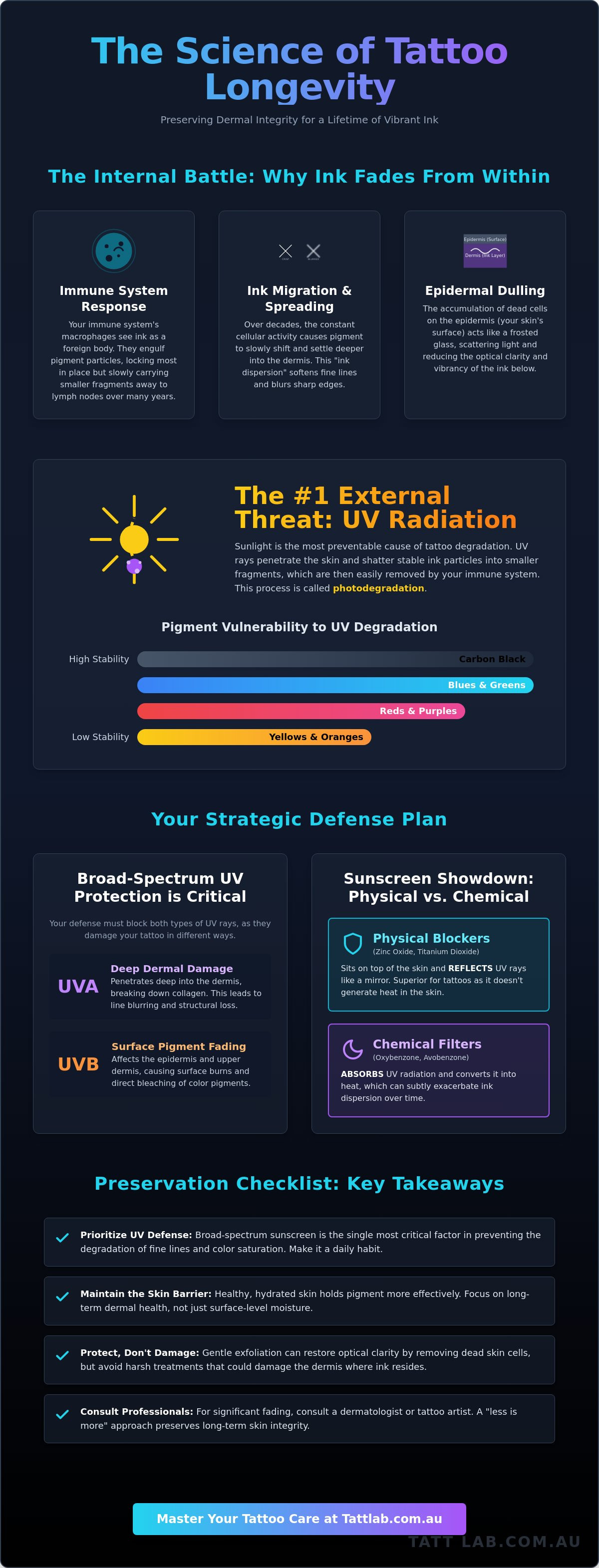
Your skin is far more than a static canvas; it's a dynamic, living organ that treats tattoo pigment as a lifelong biological challenge. From the moment the needle deposits ink, your immune system initiates a persistent "clean-up" operation that never truly ends. This internal environment is why even the most expertly applied artwork undergoes subtle shifts over the years. Understanding the physiological mechanics of your body is the first step in mastering long term tattoo care tips that preserve your aesthetic investment. While the ink resides in the dermis, it remains under constant surveillance by specialized cells designed to protect your physical integrity.
The clarity of your tattoo is also subject to the optical quality of the epidermis. As your skin undergoes natural cell turnover, dead cells accumulate on the surface. This creates a dulling effect, similar to looking at a vibrant painting through a sheet of frosted glass. Over decades, the cumulative effect of cellular replacement and pigment relocation leads to "ink dispersion," the primary biological driver behind the softening of once-crisp outlines.
Macrophages and the Constant State of Healing
The immune system views tattoo pigment as a foreign invader. Specialized white blood cells, known as macrophages, rush to the site to consume the ink particles. While many of these cells become "locked" in place, holding the pigment in a state of permanent suspension, others successfully transport smaller fragments to the lymph nodes. This ongoing cellular activity is a core component of The Biology of Tattoo Ink. Ink migration is the biological movement of pigment within the dermal layer, a slow process where ink particles gradually shift or settle deeper into the tissue over time. This movement is why fine-line details often appear to "spread" as the years pass.
UV-Induced Photodegradation of Pigment
Sunlight is the most aggressive external threat to your ink's longevity. UV radiation penetrates the skin and acts like a microscopic sledgehammer, shattering stable ink particles into smaller, more manageable fragments. Once broken down, these fragments are easily carried away by the immune system. This chemical reaction, known as photodegradation, affects pigments differently based on their molecular structure:
- Carbon-based blacks: These are exceptionally stable and resist breakdown longer than most colors.
- Organic pigments: Yellows, oranges, and light greens often degrade faster due to their complex chemical bonds.
- Professional-grade stability: Modern inks that comply with 2026 MoCRA and EU REACH standards are formulated for higher resistance to this fragmentation compared to lower-quality alternatives.
By implementing targeted long term tattoo care tips, you can mitigate these biological processes. Protecting the skin's structural health ensures that the macrophages holding your pigment remain stable and the surrounding tissue stays firm, keeping your narrative of personal transformation sharp for the long haul.
Strategic UV Defense: The #1 Factor in Ink Longevity
While biological processes like macrophage activity work from the inside, ultraviolet (UV) radiation is the most aggressive external catalyst for pigment degradation. It is widely considered the single most preventable cause of tattoo "death," a term used to describe the point where a piece loses its structural definition and chromatic depth. Unlike the gradual shifts of internal ink migration, UV damage is a relentless environmental stressor that shatters pigment particles with microscopic precision. One of the most critical long term tattoo care tips is acknowledging the "cumulative damage" theory; even ten minutes of incidental daily exposure adds up to significant fading over years. This is why protecting a ten-year-old tattoo is just as vital as shielding a fresh one.
Effective defense requires broad-spectrum protection that addresses both UVA and UVB rays. UVA radiation penetrates deeply into the dermis, causing the structural collagen breakdown that leads to line blurring, while UVB rays are responsible for surface-level damage and color bleaching. Adopting Dermatologist-approved tattoo care practices ensures that you are not just preventing a temporary burn, but actively preserving the integrity of the dermal layer where your ink resides.
Physical vs. Chemical Barriers
Choosing the right barrier is essential for maintaining ink clarity. Physical blockers, such as zinc oxide or titanium dioxide, sit on top of the skin and reflect UV rays away like a mirror. These are often superior for tattooed skin because they don't absorb heat. In contrast, chemical filters like oxybenzone absorb UV radiation and convert it into heat, which can cause subtle tissue expansion and exacerbate ink dispersion. For maximum security, especially during prolonged outdoor activity, UPF-rated clothing remains the gold standard of defense. Integrating high-quality tattoo aftercare products into your daily routine helps maintain the skin's moisture levels, making it more resilient to these environmental stressors.
Managing the UV Index in Australia
In high-intensity environments like Australia, relying on the ambient temperature is a mistake. The UV Index can be extreme even on cool, overcast days. Professional maintenance requires checking the daily UV forecast and applying protection whenever the index is 3 or higher. Reflection is another overlooked factor; water, sand, and even light-colored pavement can bounce up to 80% of UV rays back onto your skin, significantly increasing the dose of radiation your tattoos receive. A strict reapplication protocol every two hours during peak sun periods is the only way to ensure your artwork remains as sharp as the day it was finished.
By treating sun protection as a biological necessity rather than a seasonal chore, you can effectively halt the most common cause of premature ink aging. These long term tattoo care tips create a protective environment that allows your skin to thrive and your tattoos to remain vibrant for decades.
Dermal Hydration and the Role of the Skin Barrier
The visual clarity of your tattoo is entirely dependent on the health of the tissue sitting above it. When the epidermis becomes dehydrated, it loses its natural translucency and begins to resemble frosted glass. This opacity obscures the pigment in the dermis, making once-vibrant colors appear muted and outlines seem hazy. Effective long term tattoo care tips prioritize the restoration of this biological "window" through a dual-action approach to hydration. Clarity is the goal, and it requires a consistent commitment to skin integrity.
True hydration requires a deliberate balance between humectants and occlusives. Humectants, like hyaluronic acid or glycerin, draw moisture into the skin cells from the atmosphere or deeper tissue. Occlusives then create a protective seal to keep that moisture from escaping. While many people reach for petroleum-based products, these can be counterproductive for daily use. Petroleum often forms a heavy, non-breathable film that clogs pores and traps heat, potentially leading to follicular irritation. Instead, look for lipid-rich formulas that mimic the skin's natural barrier and allow the tissue to function normally.
Systemic hydration plays an equally vital role. Drinking sufficient water improves skin turgor and translucency from the inside out. When your body is well-hydrated, the dermal layer remains plump, providing a stable foundation for the ink. Following expert advice on long-term tattoo aftercare ensures that you are supporting your body's natural ability to maintain this clarity. Healthy skin simply looks better.
Choosing Professional-Grade Aftercare over Supermarket Brands
Supermarket lotions often rely on inexpensive fillers, synthetic fragrances, and drying alcohols to achieve a specific texture or scent. These ingredients can trigger micro-inflammation, a subtle but persistent immune response that can accelerate ink degradation over decades. Transitioning to medical-grade Mastering Tattoo Aftercare: The Professional Guide to Skin Integrity and Healing provides the specialized support your skin needs. These professional formulations use biocompatible ingredients that reinforce the skin barrier without the risk of irritation. It's a professional approach for professional-grade art.
The Science of Transepidermal Water Loss (TEWL)
Transepidermal Water Loss, or TEWL, describes the process where water evaporates through the skin surface into the environment. If your lipid barrier is compromised, TEWL increases, leading to the "frosted" appearance mentioned earlier. A healthy lipid barrier keeps the canvas clear and the ink below sharp. Establishing a nightly ritual is a powerful way to combat this. Applying a high-quality tattoo aftercare product before sleep, when the skin's repair mechanisms are most active, allows for maximum absorption and barrier fortification. This consistent habit is one of the most effective long term tattoo care tips for maintaining the optical brilliance of your collection.
Advanced Maintenance: Exfoliation and Collagen Support
Preserving the sharpness of your ink requires a shift in perspective from surface-level aesthetics to structural biological maintenance. While the pigment resides safely within the dermis, the visual clarity of that pigment is filtered through the epidermis. Over time, dead skin cells accumulate on the surface, creating an opaque layer that dulls the "pop" of your colors. One of the most advanced long term tattoo care tips involves managing this cellular buildup to restore the optical brilliance of your artwork. By refining the texture of the skin's surface, you ensure that light can reach the ink and reflect back with maximum intensity.
Beyond surface clarity, the physical position of your ink depends on the scaffolding of the skin itself. Collagen and elastin are the primary structural proteins that keep the dermis taut and firm. As these proteins degrade with age or environmental stress, the skin loses its elasticity, which can lead to the "sagging" or stretching of tattoo outlines. Maintaining a robust dermal matrix is essential for preventing the migration of ink particles and ensuring that fine lines remain distinct rather than blurring into the surrounding tissue.
The Art of Gentle Exfoliation
To improve the visual depth of your tattoos, you should incorporate gentle exfoliation into your routine. However, it's vital to choose chemical exfoliants, such as Alpha Hydroxy Acids (AHAs) or Beta Hydroxy Acids (BHAs), over harsh physical scrubs. Physical beads can cause micro-tears and irritation that trigger a localized immune response, potentially affecting the pigment. Applying a mild chemical exfoliant one to two times per week is sufficient to remove dead cell buildup without thinning the skin. This process reveals fresh epidermal cells, creating a natural "glow" effect that makes decades-old ink look significantly more vibrant. Investing in professional-grade tattoo aftercare during this process helps soothe the skin and maintain its essential moisture balance.
Supporting the Dermal Matrix
Skin nutrition is a frequently overlooked pillar of ink preservation. A thick, healthy dermis holds ink particles in place more securely than thin, compromised tissue. You can support this dermal integrity through a diet rich in Vitamin C, Vitamin E, and Omega-3 fatty acids, which provide the building blocks for collagen synthesis and barrier repair. Conversely, habits like smoking cause significant vasoconstriction and accelerate the breakdown of collagen, directly contributing to premature ink blurring. To combat external stressors, consider using topical antioxidants. These specialized compounds help neutralize free radical damage caused by pollution and incidental light, protecting the biological environment where your narrative of personal transformation lives. These long term tattoo care tips ensure your body remains a resilient and high-definition canvas for life.
Maintaining Integrity: When to Consult a Professional
Your tattoo is an evolving narrative, not a static image. As you implement these long term tattoo care tips, it's essential to recognize that skin is a dynamic biological medium. Even with meticulous UV defense and hydration, the dermal layer naturally changes over decades. Distinguishing between this graceful, natural aging and "fixable" fading is the key to maintaining the aesthetic integrity of your work without causing unnecessary trauma to the tissue. A trusted artist is a long-term partner in this evolution, helping you decide when a precise intervention is required and when the skin simply needs better daily support.
The "less is more" philosophy is paramount in tattoo restoration. Every time a needle enters the skin, it creates a new biological response. Repeatedly over-working the same area to maintain "perfect" saturation can lead to a buildup of sub-clinical scar tissue, which eventually rejects pigment or causes a raised, uneven texture. Professional maintenance is about subtle refinement rather than constant re-saturation. By focusing on the health of the dermal matrix, you ensure that any necessary touch-ups are successful and the surrounding tissue remains resilient.
Identifying the Need for a Touch-Up
While some softening of edges is inevitable due to macrophage activity, certain signs indicate that a professional consultation is necessary. You should look for specific indicators of degradation that go beyond natural aging:
- Significant Drop-out: Areas where pigment has completely vanished, leaving gaps in the composition.
- Broken Outlines: Structural lines that have fragmented, disrupting the clarity of the design.
- Extreme Chromatic Shift: Colors that have shifted significantly toward unintended hues despite proper sun protection.
It's vital to allow a significant waiting period between restorative sessions. Skin stability is crucial; rushing into a touch-up before the tissue has fully recovered from previous interventions can compromise the final result. When choosing an artist for restoration, prioritize those who demonstrate an understanding of "aged skin" dynamics. They must account for the thinning of the dermis and the reduced elasticity that comes with time to ensure the needle depth is calibrated with clinical precision.
The Tatt Lab Standard for Long-Term Care
At Tatt Lab, we are committed to providing the professional-grade supplies required for life-long results. We believe that the quality of the tools used during a procedure is just as important as the care provided afterward. When you consult with an artist for restorative work, advocate for the use of high-quality tattoo ink that adheres to 2026 MoCRA and EU REACH safety standards. These formulations are designed for maximum stability and biocompatibility, reducing the risk of adverse reactions in mature skin.
Furthermore, ensure your artist utilizes specialized medical supplies for tattoo artists during any touch-up procedures. Using sterile, professional-grade equipment protects your physical integrity and ensures the new pigment settles correctly into the existing dermal environment. By combining expert professional intervention with consistent long term tattoo care tips, you can preserve the vibrancy and meaning of your tattoos for the rest of your life.
Explore our professional aftercare range to protect your investment today.
Securing the Future of Your Dermal Narrative
Preserving the integrity of your body art is a deliberate, lifelong commitment to dermal health. By mastering the balance between internal hydration and external protection, you can effectively mitigate the biological processes that lead to ink migration and fading. These long term tattoo care tips provide the scientific framework necessary to ensure your narrative of personal transformation remains as sharp and vibrant as the day it was created. Consistency is the primary driver of success; treating your skin with clinical precision today prevents the need for extensive restorative work tomorrow.
At Tatt Lab, we function as an artist-owned and operated facility dedicated to providing professional-grade, clinical-standard supplies. Our focus is on physical integrity and aesthetic longevity, ensuring you have access to the same tools used in high-end boutique studios. Whether you're reinforcing your skin barrier or preparing for a subtle touch-up, we provide the specialized support your collection requires. With express nationwide shipping across Australia, professional maintenance is always within reach. Shop Professional Aftercare & Supplies at Tatt Lab and invest in the enduring clarity of your ink. Your skin is a high-definition canvas that deserves nothing less than meticulous care.
Frequently Asked Questions
How long does it take for a tattoo to be 'fully settled' into the skin?
A tattoo is typically considered fully settled after three to six months. While the surface epidermis heals within two to four weeks, the deeper dermal layer requires a longer period for the immune response to stabilize and the collagen matrix to remodel around the pigment. This stabilization is critical for long-term clarity, as it marks the point where the ink particles are securely suspended within the tissue.
Can I use normal body lotion for long-term tattoo care?
You should avoid standard supermarket body lotions for long term tattoo care tips because they frequently contain synthetic fragrances and drying alcohols. These additives can cause micro-inflammation that subtly degrades the skin barrier over time. Professional-grade aftercare products are formulated with biocompatible lipids and humectants that support dermal integrity without the risk of follicular clogging or chemical irritation.
Does weight gain or muscle growth significantly distort tattoos?
Significant distortion typically only occurs during rapid or extreme physical changes. Gradual muscle growth or moderate weight fluctuations allow the skin to adapt through its natural elasticity. However, rapid expansion can cause the dermal layer to stretch, potentially leading to the widening of fine lines. Maintaining skin suppleness through consistent hydration helps the tissue remain resilient and keeps the artwork proportional during these transitions.
What is the best SPF rating for protecting tattoo ink in Australia?
In the high-intensity Australian environment, a broad-spectrum SPF 50+ is the professional standard for ink preservation. This rating ensures the highest level of protection against both UVA and UVB rays, which are the primary drivers of pigment fragmentation. Remember that the UV Index is a more accurate measure of risk than temperature; protection is required whenever the index is 3 or higher, regardless of the season.
Why do my tattoos look 'dull' even though they aren't old?
Tattoos often look dull because of transepidermal water loss and the accumulation of dead skin cells on the epidermis. This buildup creates an opaque layer that acts like a filter, obscuring the vibrant pigment in the dermis below. Improving your long term tattoo care tips by focusing on gentle exfoliation and consistent hydration can restore the skin's translucency and bring back the original chromatic depth of the artwork.
Is it possible to 'brighten' an old tattoo without getting a touch-up?
You can often improve the visual clarity of an older tattoo by restoring the health of the skin sitting above it. Removing the "frosted glass" effect of dead cell buildup through chemical exfoliation and using lipid-rich moisturizers can significantly enhance pigment visibility. While this won't replace lost ink particles, it clarifies the existing artwork by improving the optical quality of the dermal window through which the tattoo is viewed.
Does exfoliation actually rub the ink off over time?
Exfoliation cannot rub the ink off because the pigment is located in the dermis, while exfoliation only targets the superficial epidermis. In fact, gentle exfoliation is beneficial as it removes the dulling layer of dead cells that hides your tattoo. You must use chemical AHAs or BHAs instead of harsh physical scrubs to avoid triggering a localized inflammatory response that could affect the stability of the deeper tissue.
Can certain medications cause my tattoo to fade faster?
Certain medications can influence how your skin reacts to environmental stressors. Photosensitizing drugs, such as some antibiotics or specific acne treatments, can make your skin more vulnerable to UV damage, indirectly accelerating ink fading. Additionally, medications that alter the immune system's behavior may change how macrophages interact with pigment particles. If you're starting a new long-term treatment, increasing your sun protection is a prudent defensive measure for your ink.


Comments (0)
There are no comments for this article. Be the first one to leave a message!