

What if your professional environment is the single greatest variable in your tattoo's healing trajectory? You've invested significant resources into high-quality ink, but the reality of a standard work week often clashes with the delicate biological needs of an open wound. Learning how to protect a new tattoo at work is essential for anyone navigating abrasive uniforms or the microbial risks of a busy workspace. You shouldn't have to feel that your career is compromising your physical transformation or the integrity of your new art.
This guide provides clinical protocols for maintaining a sterile environment on your skin, whether you're on a dusty job site or in a medical facility. We'll explore the science of the maturation phase and identify which clean-label products provide the most effective medical-grade barrier against friction and sweat. You'll gain a methodical aftercare plan that replaces uncertainty with a sense of controlled, predictable progress from the first clock-in to the final heal.
Key Takeaways
- Identify specific environmental contaminants and physical stressors in your workplace that pose a risk to the early inflammatory healing phase.
- Master the use of semi-occlusive dermal films to create a professional biological barrier against cross-contamination and debris.
- Learn how to protect a new tattoo at work through strategic fabric selection and loose-fitting garments that prevent friction and irritation.
- Implement a structured workday protocol for cleansing and monitoring your skin to ensure predictable, healthy progress throughout your shift.
- Transition from generic pharmacy alternatives to specialized tattoo aftercare solutions designed to support rapid cellular regeneration and long-term ink clarity.
Assessing Your Workplace Risk Factors for Healing Tattoos
Determining how to protect a new tattoo at work begins with a clinical audit of your daily environment. Every workspace presents a unique microbial and physical load that dictates the trajectory of your recovery. Because the tattooing process involves the intentional disruption of the dermal layer, your skin remains vulnerable to external stressors during the initial inflammatory phase. This vulnerability isn't just about temporary discomfort. It's about preserving the long-term biological integrity of the pigment and preventing the degradation of fine lines.
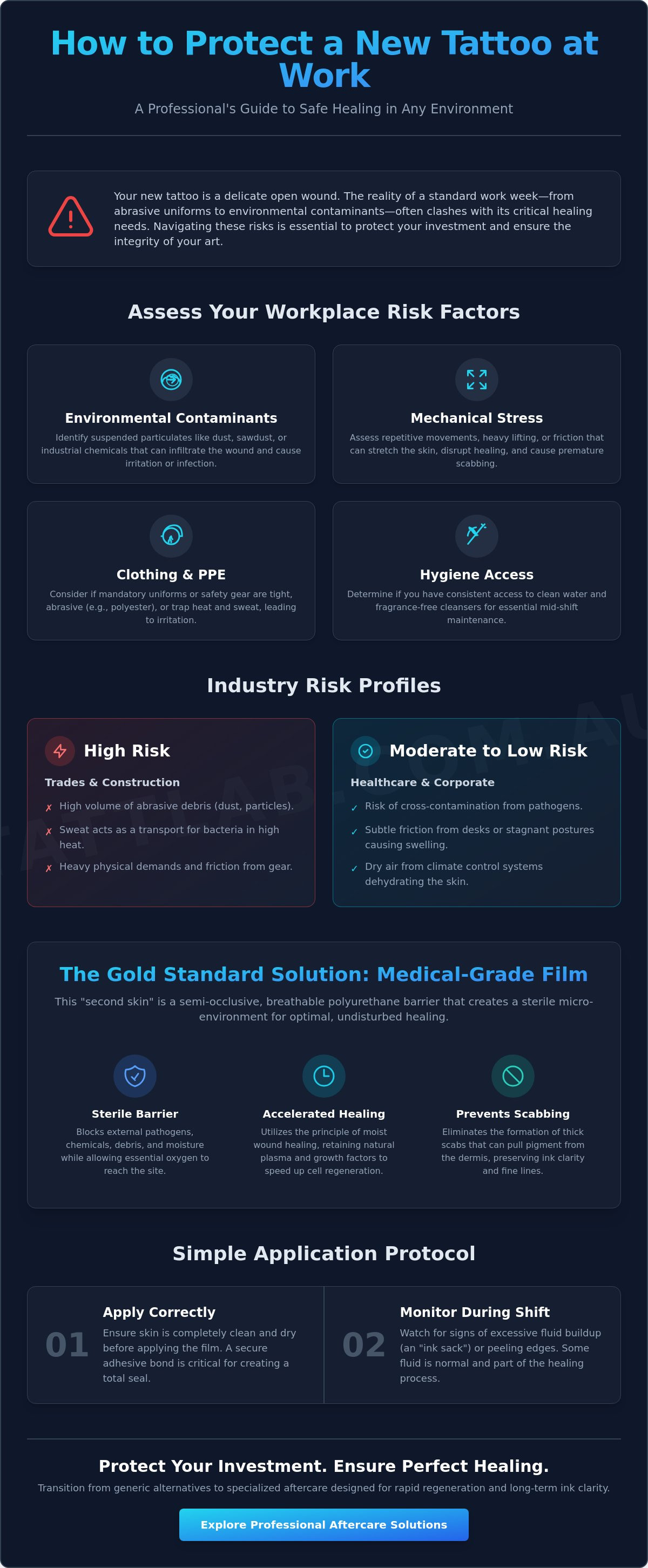
You must evaluate four primary risk categories to ensure your healing remains on a predictable path:
- Environmental Contaminants: Identify if your workspace contains suspended particulates like concrete dust, sawdust, or aerosolized industrial chemicals.
- Mechanical Stress: Assess if your role requires repetitive stretching of the skin, heavy lifting, or high-friction movements that could disrupt the healing site during the proliferation phase.
- Clothing and PPE: Consider if your mandatory gear, such as high-vis polyester, tight uniforms, or restrictive safety harnesses, will trap excessive heat or create abrasive contact.
- Hygiene Access: Determine if you have consistent, immediate access to clean water and fragrance-free cleansers for essential mid-shift maintenance.
High-Risk Environments: Trades and Construction
Construction sites and workshops are particularly challenging due to the high volume of abrasive debris. Dust particles don't just sit on the surface; they can infiltrate the wound and lead to localized irritation or secondary infections. If you're working in high-heat conditions, sweat acts as a transport mechanism for bacteria. It can also cause the skin to macerate if trapped under non-breathable bandages. Protecting your ink in these settings requires a robust, semi-occlusive barrier that can withstand the physical demands of manual labor without peeling or losing its seal.
Moderate to Low-Risk: Healthcare and Corporate
Even sterile or low-impact environments carry specific risks that require a methodical approach. In healthcare, the primary concern is cross-contamination from biological pathogens. You must balance the need for frequent hand sanitization with the protection of your healing skin. In corporate settings, the risks are more subtle but equally persistent. Stagnant postures can cause swelling in lower-limb tattoos. Constant friction against the edge of a desk can lead to premature scabbing and ink loss. Additionally, the dry air from office climate control systems can dehydrate the epidermis. This leads to a tighter, more uncomfortable healing process that requires proactive moisture management. Knowing how to protect a new tattoo at work means adjusting your strategy to match these specific environmental variables.
The Science of Biological Barriers: Medical-Grade Film Dressings
Modern aftercare has transitioned away from the traditional "wash and air dry" method toward a more sophisticated, clinical approach. For professionals wondering how to protect a new tattoo at work, the solution lies in semi-occlusive dermal films. These medical-grade membranes are engineered from specialized polyurethane that functions as a synthetic secondary layer of epidermis. Because the material is breathable, it allows essential oxygen molecules to reach the trauma site while simultaneously blocking external pathogens, chemicals, and moisture. This creates a stabilized micro-environment that is fundamental for rapid cellular regeneration.
The efficacy of these films is rooted in the principle of moist wound healing. By retaining the body's natural plasma and inflammatory exudate, the dressing keeps growth factors and white blood cells in direct contact with the wound. This biological "soup" accelerates the proliferation phase of healing and prevents the formation of thick scabs that can pull pigment from the dermis. Adhering to established tattoo safety guidelines means prioritizing a sterile environment. These films provide that sterility by acting as a total seal against cross-contamination, which is a constant risk in communal workspaces or industrial sites.
Why 'Second Skin' is the Gold Standard for Workers
Dermal films are particularly transformative for individuals in high-activity roles. They eliminate the logistical challenge of finding a sterile space for mid-shift cleaning, which is often impossible on a construction site or in a fast-paced kitchen. The waterproof nature of the barrier protects the ink from sweat and external liquids. Additionally, the low-friction surface allows uniforms and heavy safety gear to glide over the site rather than catching on the healing skin. If you are serious about your results, investing in specialized tattoo aftercare films ensures your ink remains undisturbed by the mechanical demands of your career.
Application and Removal Protocols
Success with medical-grade films depends on a methodical application process. The skin must be completely dry and free of any soap residue before the film is applied to ensure the adhesive bond is secure. During your shift, monitor the dressing for signs of excessive fluid buildup, commonly referred to as an "ink sack." While some fluid is normal, a breach in the seal requires immediate attention in a clean environment. When the workweek ends, use the "low and slow" removal technique. Pull the film back over itself in the direction of hair growth rather than pulling it upward. This tension-reduction method protects the fragile new skin cells and prevents unnecessary trauma to the site. Understanding how to protect a new tattoo at work through these biological barriers replaces the anxiety of workplace exposure with a sense of clinical control.
Physical Protection Strategies: Clothing and Environmental Control
While biological barriers provide an essential first line of defense, your choice of professional attire acts as the secondary shield for your healing skin. Navigating how to protect a new tattoo at work requires more than just covering the site; it involves managing the microclimate between your garment and the wound. When you're in a professional setting, especially one with high physical demands, your clothing can either facilitate a steady recovery or become a source of mechanical trauma. It's essential to understand the broader tattoo risks and precautions associated with environmental exposure and fabric friction.
Fabric Science and Skin Respiration
The material resting against your tattoo dictates the rate of epidermal respiration. 100% cotton is the gold standard for a base layer because its natural fibers allow heat to dissipate and air to circulate. In contrast, synthetic blends like polyester or modern "moisture-wicking" fabrics are designed to pull moisture away from the skin, but they often trap heat and bacteria against the wound. This creates a humid environment that can lead to localized inflammation or ink drift. If your workplace requires high-vis gear or heavy synthetics, wear a loose cotton garment underneath to create a breathable buffer that prevents the synthetic material from suffocating the site.
Outdoor professionals face the additional challenge of ultraviolet radiation. UV rays can degrade pigment and cause significant irritation to healing tissue. However, you shouldn't apply sunscreen to a fresh tattoo, as the chemicals and minerals can infiltrate the open wound. Instead, rely on physical blocks. Use high-density fabrics or specialized UV-rated sleeves to provide total shade until the skin has fully re-epithelialized.
Managing Friction and Pressure Points
Mechanical stress is a frequent culprit in poor tattoo outcomes. If your role involves wearing tool belts, safety harnesses, or restrictive PPE, you must identify potential pressure points before your shift begins. Constant rubbing can cause "ink leaching," where the pigment is physically agitated out of the dermis before it can settle. You can mitigate this by adjusting your gear to sit higher or lower than the tattoo site.
For areas under unavoidable pressure, consider using a non-adherent sterile pad as a temporary cushion. This prevents the garment from sticking to the tattoo while absorbing any minor exudate. By proactively managing these physical stressors, you ensure that your career doesn't dictate the quality of your art. Mastering how to protect a new tattoo at work is a matter of combining medical-grade aftercare with intelligent environmental control to maintain long-term skin integrity.
The Workday Aftercare Protocol: Maintaining Integrity Under Pressure
A successful healing outcome isn't a passive event; it requires a disciplined protocol that adapts to the rigors of your shift. Many professionals mistakenly believe that simply covering the area is enough. However, learning how to protect a new tattoo at work involves a rhythmic cycle of preparation, monitoring, and recovery. In high-pressure environments, you don't always have the luxury of a sterile bathroom. This makes your pre-shift routine and emergency response plan critical for preventing microbial infiltration and ensuring the pigment settles correctly.
Your morning begins with a thorough, gentle cleanse using a pH-balanced, fragrance-free wash. Apply a thin layer of specialized balm or your medical-grade film before you leave the house. This creates a controlled environment before you're exposed to the workplace microbial load. Once you're on the clock, perform a visual check every few hours. Look for signs of "tenting" in the film or excessive heat. If your dressing fails or the tattoo is directly exposed to industrial contaminants, don't wait until you get home. Use sterile wipes from your kit to stabilize the area until you can perform a full cleaning in a controlled space.
The Portable Aftercare Kit for Professionals
Relying on communal workplace soaps or abrasive paper towels is a significant risk factor for infection. These products often contain harsh chemicals or harbor bacteria from previous users. A professional-grade portable kit should include a small bottle of fragrance-free wash, a specialist balm, and sterile gauze or wipes. Deepening your knowledge through Mastering Tattoo Aftercare helps you understand how these tools maintain skin integrity during the most vulnerable 72-hour window. Having these supplies on hand ensures you're never forced to use substandard materials on your investment.
Hydration and Systemic Healing
Healing is a systemic process that requires internal support. Maintaining high levels of hydration throughout your shift improves skin elasticity and helps the body manage the inflammatory response. It's normal to experience some work-related swelling, especially in tattoos on the lower limbs or areas with high movement. However, you must be able to distinguish this from the early signs of infection. If you notice spreading redness, persistent throbbing, or a feverish sensation, consult a professional immediately. To ensure you have the highest quality tools for this journey, explore our curated range of tattoo aftercare products designed for professional environments.
Once your shift concludes, the post-work recovery phase begins. This is the time to allow the skin to breathe in a controlled, clean environment. Remove any temporary physical barriers used during the day and perform a final evening cleanse. This transition from the high-stress workplace environment to a low-stress home environment allows the maturation phase of healing to proceed without interruption. By following this methodical workday protocol, you ensure that your career and your ink can coexist without compromise.
Professional-Grade Solutions for Workplace Tattoo Protection
The final phase of your recovery strategy involves a transition from generic pharmacy products to a specialized, clinical-grade healing arsenal. When you're navigating how to protect a new tattoo at work, the margin for error is significantly smaller than it is during a quiet weekend at home. Standard petroleum-based ointments can often be too heavy, trapping heat and industrial debris against the wound. In contrast, using dedicated tattoo aftercare provides a sophisticated delivery system for nutrients that support rapid re-epithelialization without compromising the skin's ability to breathe. These formulations are specifically engineered for the unique biological trauma of the tattooing process.
Adopting the same medical supplies for tattoo artists for your personal aftercare routine ensures a continuity of safety from the studio to your workplace. This methodical approach mirrors the precision of the tattoo work itself, treating the healing process as a critical technical procedure rather than an afterthought. By using professional-grade barriers, you're not just "covering" a wound; you're maintaining a controlled environment that allows the body to focus its energy on cellular repair and pigment stabilization.
Curating Your Healing Arsenal
A professional-grade balm must provide a breathable lipid barrier that shields the skin from the dry air of office environments or the abrasive dust of a construction site. This moisture balance is vital because professional tattoo ink requires a stable dermal environment to heal with maximum clarity and saturation. Additionally, your cleanser must be pH-balanced to preserve the skin's natural acid mantle. This prevents the disruption of the skin flora, which is your body's first line of defense against workplace bacteria. When these elements work in harmony, the risk of ink drift or irritation is significantly reduced, even during a demanding 12-hour shift.
The Tatt Lab Commitment to Safety
Tatt Lab is committed to supporting the Australian tattoo community by providing access to the same high-performance tools that the best tattoo supplies providers offer to elite studios. We view ourselves as a dedicated partner in your transformation, ensuring that every product we source meets rigorous standards for safety and efficacy. This scientific rigor is what allows our clients to move through their professional lives with confidence, knowing their physical integrity is protected by medical-grade solutions. Before your next shift, consult with your artist and stock up on professional supplies to ensure your new ink remains a source of pride rather than a source of anxiety.
Secure Your Professional Healing Trajectory
Integrating these clinical protocols into your professional routine ensures that your career never dictates the final quality of your ink. By auditing your environment for specific stressors and utilizing medical-grade biological barriers, you've established a foundation for predictable, long-term results. Mastering how to protect a new tattoo at work is ultimately a commitment to your body's natural healing process, supported by the right technical tools and a disciplined workday rhythm. This methodical approach replaces the anxiety of workplace exposure with a sense of controlled, steady progress.
As an artist-owned and operated facility, Tatt Lab understands the inherent vulnerability of new art in a demanding workspace. We specialize in providing clinical-grade medical supplies designed to maintain skin integrity even under the most strenuous conditions. You can secure your skin integrity with Tatt Lab’s professional aftercare range and benefit from our express nationwide shipping across Australia. Your journey toward a fully realized transformation deserves nothing less than professional-grade precision and meticulous care. Trust the science of your recovery and move forward with the confidence that your investment is permanently protected.
Frequently Asked Questions
Can I wear a high-vis vest over a new tattoo?
Yes, you can wear a high-vis vest, but you must prioritize a protective layer between the synthetic fabric and your skin. High-visibility gear is typically made from non-breathable polyester, which can trap heat and cause friction. Wear a 100% cotton base layer or apply a dermal film to ensure the vest doesn't agitate the site. This strategy is a key part of learning how to protect a new tattoo at work in industrial settings.
What should I do if my 'second skin' bandage starts peeling at work?
If your dermal film begins to peel and exposes the tattoo, the sterile barrier is compromised. You should find a clean environment to remove the dressing entirely and cleanse the area. Don't attempt to patch the peeling section with tape, as bacteria may already be trapped underneath. Once cleaned, you can apply a fresh film or transition to a breathable clothing barrier if a sterile application isn't possible.
Is it okay to sweat with a new tattoo if I work in construction?
Moderate sweating is a natural biological response, but excessive moisture can complicate the healing process in construction environments. If sweat pools under a film dressing, it can lead to skin maceration or ink drift. You should monitor the site for fluid buildup. If your role involves high-intensity labor, consider changing your dressing more frequently or using a highly breathable, semi-occlusive barrier to maintain skin integrity.
How do I clean my tattoo if my workplace only has communal bathrooms?
You should never use communal workplace soaps or paper towels, as they often harbor high microbial loads. Instead, carry a portable aftercare kit containing a pH-balanced, fragrance-free wash and sterile wipes. This allows you to maintain clinical-grade hygiene without relying on shared facilities. Always wash your hands thoroughly with your own supplies before touching the tattoo site to prevent cross-contamination from communal surfaces.
Should I wear a bandage or let my tattoo 'breathe' during my shift?
You should generally keep the tattoo covered with a medical-grade barrier during your shift to prevent environmental contamination. While breathing is important for the maturation phase, the workplace presents too many risks from dust, pathogens, and friction. Save the breathable periods for when you return to a controlled, clean home environment. This balance is essential for those figuring out how to protect a new tattoo at work without compromising safety.
How can I protect my tattoo from the sun if I work outdoors?
Physical barriers are the only safe way to protect a fresh tattoo from ultraviolet radiation while you're working outdoors. You shouldn't apply sunscreen to an open wound, as the chemicals can cause significant irritation or interfere with the healing dermis. Wear high-density cotton sleeves or specialized UV-protective clothing. These fabrics provide total shade and prevent pigment degradation without the risks associated with topical sunscreens during the early inflammatory phase.
What are the early signs of a workplace-acquired tattoo infection?
You must distinguish between normal inflammatory swelling and the early markers of a workplace-acquired infection. Watch for spreading redness that feels hot to the touch, persistent throbbing, or the presence of yellow or green discharge. If you experience a fever or notice red streaks emanating from the site, seek medical attention immediately. These symptoms indicate that the biological barrier has been breached and requires professional intervention.
Can I use plastic wrap to protect my tattoo at work?
You shouldn't use standard plastic wrap as a long-term solution for workplace protection. Plastic wrap is completely occlusive, meaning it traps heat and moisture while preventing oxygen from reaching the trauma site. This creates a breeding ground for anaerobic bacteria. Instead, use professional dermal films that are semi-occlusive. These allow the skin to respire while still providing a robust shield against the contaminants found in a professional environment.


Comments (0)
There are no comments for this article. Be the first one to leave a message!