

Your new tattoo is a medical-grade dermal wound, a temporary biological vulnerability that requires the same level of care as any surgical incision. While the desire to submerge in a pool or the ocean is understandable, premature exposure to water introduces significant risks that go beyond simple ink fading. Understanding swimming after a tattoo safe practices is essential for protecting your skin's integrity and ensuring your art heals with the precision intended. It's common to feel anxious when faced with conflicting advice from the internet, but your body's recovery follows a specific, scientific trajectory that requires patience and clinical oversight.
We'll provide you with a transparent, results-oriented roadmap for your healing journey. You'll learn the biological reasons why chlorine and saltwater act as irritants to fresh ink and why professional consensus mandates a waiting period of two to four weeks. This guide explores the specific risks of various water environments and provides a clear timeline for a safe return to the water. By replacing uncertainty with a methodical, science-based approach, you can move forward with total confidence in your aftercare routine.
Key Takeaways
- Recognize your tattoo as a series of dermal micro-wounds and understand how water exposure disrupts the body's natural healing barrier.
- Identify the three specific physical skin markers that signal when you've successfully mastered swimming after a tattoo safe practices.
- Differentiate between the chemical irritation caused by chlorinated pools and the diverse bacterial risks found in natural bodies of water.
- Understand the limitations of medical adhesives and why relying on waterproof bandages for swimming often leads to seal failure.
- Learn the immediate decontamination protocol and the clinical red flags that indicate a need for professional intervention after water exposure.
The Biology of Tattoo Healing: Why Water is a Hazard
A tattoo procedure is the intentional creation of thousands of micro-wounds. These microscopic punctures penetrate the epidermis to deposit pigment into the dermis, bypassing your body's first line of defense. Under normal circumstances, your epidermis acts as a resilient barrier against environmental pathogens. However, when this barrier is breached, your internal systems are exposed to the outside world. This is why The Biology of Tattoo Healing requires a strictly controlled environment. Submerging a fresh tattoo in water leads to a condition known as maceration. This process causes the healing tissue to soften and break down, effectively stalling the recovery process and leaving the wound susceptible to infection. Epithelialisation is the critical biological process where the skin's surface layer re-seals itself to restore its protective function.
Ink Migration and Osmosis
Water molecules possess a natural tendency to move toward areas of higher solute concentration, a process known as osmosis. In a fresh tattoo, the concentrated pigment particles are highly vulnerable. If you submerge the area, water can pull these ink particles toward the surface before the body has a chance to encapsulate them within dermal cells. Following swimming after a tattoo safe practices prevents this osmotic pull from ruining your investment. This migration often results in a "blurring" effect, where the crisp lines of your design become hazy due to water-induced inflammation. Fine-line tattoos are particularly susceptible to this damage. Because they rely on precise, minimal pigment placement, even a small amount of migration can significantly compromise the aesthetic outcome and structural clarity of the work.
The Vulnerability of the Dermal Layer
While the initial bleeding stops relatively quickly, the dermal layer remains biologically "open" for several days. This depth is where the permanent transformation occurs, but it's also where the highest risk of leaching exists. Leaching happens when external moisture enters the wound and dilutes the pigments, leading to uneven saturation or premature fading. Adhering to swimming after a tattoo safe practices ensures that you don't introduce contaminants into this deep tissue. To understand the full complexity of how your skin recovers, you can explore our resource on Mastering Tattoo Aftercare: The Professional Guide to Skin Integrity and Healing. Maintaining skin integrity isn't just about appearance; it's about preventing serious clinical complications like staph or sepsis that can arise from untreated bacterial exposure. The dermis lacks the immediate protective enzymes found on the surface, making it an ideal environment for pathogens to thrive if submerged too soon.
Chlorine, Salt, and Bacteria: Assessing Environmental Risks
Every body of water presents a distinct set of biological and chemical challenges for a healing tattoo. While the aesthetic goal is a vibrant, crisp result, the clinical priority is preventing infection and tissue degradation. Adhering to swimming after a tattoo safe practices requires a clear understanding of how different environments interact with your skin's recovery phase. We categorize these risks into three primary environments: chlorinated facilities, saltwater oceans, and freshwater systems like lakes or rivers. Each of these requires a specific level of caution during the first few weeks of healing.
Chlorine is a potent oxidizer designed to neutralize organic matter, but it doesn't distinguish between bacteria and your healing skin cells. When it comes into contact with a fresh tattoo, it can cause significant chemical irritation, stripping away the natural lipids and oils essential for cellular repair. As U.S. Masters Swimming explains the risks, even well-maintained pools can harbor pathogens that thrive in the brief windows between chemical treatments. Beyond the risk of infection, salt acts as a desiccant. It pulls moisture from the scabbing tissue, causing it to become brittle. This premature drying leads to deep cracking, which creates new entry points for environmental contaminants and potential scarring.
The Chemical Impact of Chlorine and Bromine
In a controlled pool environment, the high concentration of disinfectants can lead to contact dermatitis if these chemicals enter the open needle tracks. This inflammatory response doesn't just cause discomfort; it can physically alter the chemical composition of certain ink pigments, leading to unexpected color shifts or patchy saturation. To ensure your skin has the resources it needs to resist these environmental stressors, using a specialized tattoo aftercare protocol is vital for maintaining the dermal barrier. Without these natural oils, the skin's ability to regenerate is significantly compromised.
Seawater and the Risk of Infection
The belief that saltwater is naturally healing is a dangerous myth when applied to open wounds. Coastal waters are home to specific aggressive bacteria, such as Vibrio vulnificus, which can cause severe systemic infections through even the smallest skin breach. The ocean also introduces physical irritants like sand. These tiny particles are highly abrasive and can cause micro-tears in the delicate new skin forming over your tattoo. Freshwater sources like lakes and rivers pose an even higher risk, as they often contain higher concentrations of parasites and agricultural runoff that can lead to prolonged healing times or medical emergencies. Protecting your physical integrity means respecting the time required for a full biological seal.
The Safe Swimming Timeline: When Can You Return to the Water?
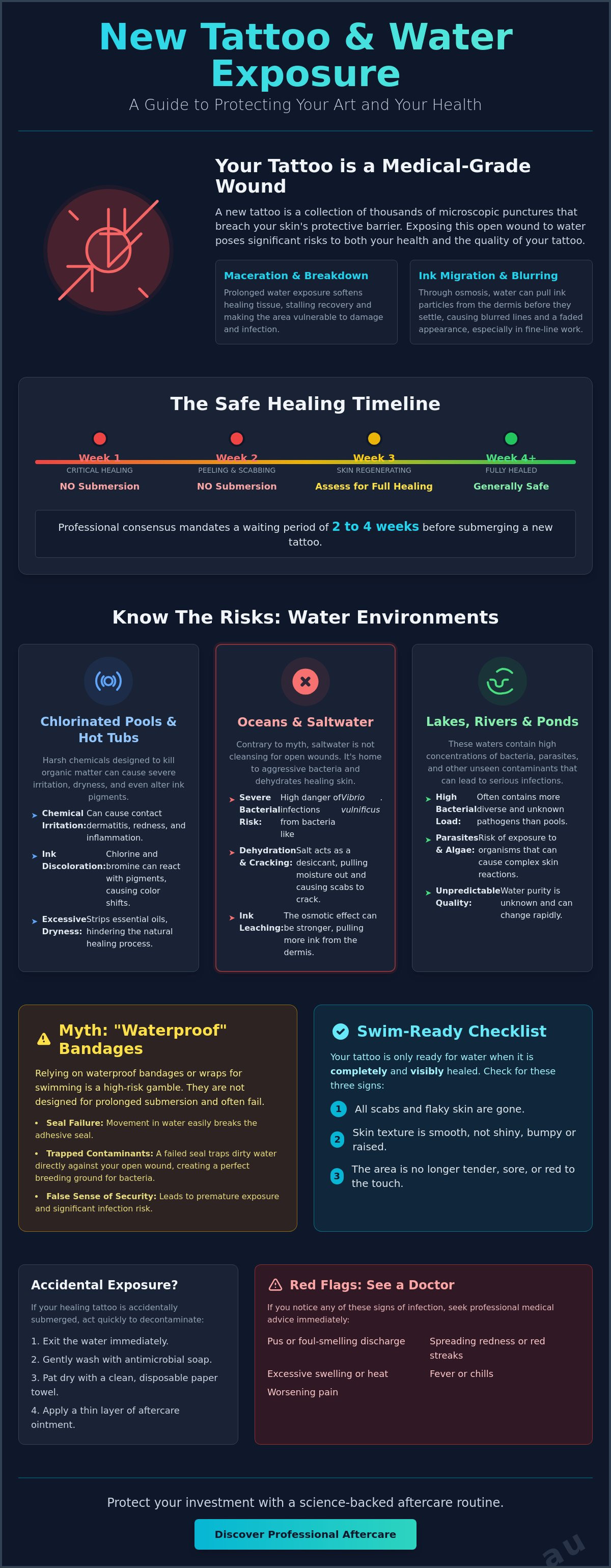
Patience is the foundation of physical integrity. While the desire to return to your fitness routine or leisure activities is natural, your body requires a specific biological window to reconstruct its defenses. The industry-standard minimum for a safe return to the water is between two and four weeks. This duration isn't arbitrary; it aligns with the average rate of cellular turnover and the completion of initial epithelialisation. Adhering to swimming after a tattoo safe practices means waiting until the surface layer is fully sealed. However, this timeline is a baseline rather than a universal rule. Larger, highly saturated pieces, such as heavy blackwork or intricate color realism, involve more significant dermal trauma and typically require the full four-week recovery period, whereas a minimalist fine-line piece might be ready closer to the two-week mark.
Before you consider submersion, you must perform a rigorous physical assessment. A tattoo is only ready for the water when it passes this three-step checklist:
- Zero Peeling: All flaking skin has naturally shed without interference.
- No Scabbing: The surface is entirely smooth with no remaining crusts or hardened areas.
- No "Shiny" Appearance: The skin has lost its waxy, reflective sheen and matches the texture of the surrounding area.
It's vital to remember that surface closure is only the first phase. While the epidermis may feel resilient after a month, internal healing and dermal settling continue for several months. During this time, the ink is still being permanently encapsulated by your immune system.
Weeks 1-2: The Critical Protection Phase
During the first fourteen days, absolute avoidance of submersion is mandatory. This is the period of highest vulnerability for infection and ink leaching. There's a clinical distinction between a quick shower and a soak. While a shower allows water to run over the skin briefly, a soak involves the skin absorbing moisture, which leads to the maceration discussed previously. If your tattoo is accidentally submerged during this phase, rinse it immediately with fresh, distilled water and a mild, fragrance-free cleanser. Pat it dry with a sterile paper towel and monitor the site for any sudden changes in temperature or color.
Weeks 3-4: Assessing Readiness
As you enter the third week, you'll likely notice a "silver skin" phase. This is a layer of extremely thin, new skin that appears slightly translucent. Even if the scabs are gone, this layer is still fragile and lacks the full thickness of mature skin. You can test your readiness by gently running clean water over the area; if you feel any stinging or sensitivity, your body isn't ready for full immersion. When you do return to the water, begin with short, ten-minute sessions. This gradual reintroduction is a core part of swimming after a tattoo safe practices, allowing you to monitor how the tissue responds to the environmental stressors of chlorine or salt before committing to a full workout or beach day.
The 'Waterproof Bandage' Myth: Why Second-Skin Isn't a Shortcut
Medical-grade adhesives have revolutionized the healing process by providing a breathable, protective barrier against external contaminants. However, a dangerous misconception exists that these films permit immediate submersion in pools or oceans. In the context of swimming after a tattoo safe practices, these products are designed for protection against friction and environmental debris, not for the sustained pressure of swimming. Relying on a film for waterproofing is a high-risk strategy that frequently results in "seal failure." As you move through the water, the constant stretching of your skin combined with the pressure of the liquid causes the adhesive edges to lift, often imperceptibly at first.
Once the seal is compromised, the bandage transforms from a protective layer into a biological hazard. This is known as the "incubator effect." Contaminated water enters the pocket, where it becomes trapped against the raw dermis. The warmth of your body creates a perfect breeding ground for bacteria to multiply rapidly, significantly increasing the risk of localized infection or systemic complications. If a leak occurs mid-swim, properly sanitizing the wound becomes nearly impossible without immediate removal and a clinical cleaning protocol. To support your skin's natural defense during the healing window, explore our range of specialized tattoo aftercare products designed for traditional recovery methods.
Adhesive Integrity and Water Pressure
The pressure of swimming, even at the surface, differs significantly from the gentle flow of a shower. Surface tension and limb movement create a mechanical force that pulls at the edges of the adhesive. When water and sweat are trapped under a film, it leads to rapid skin maceration, the softening of tissue mentioned earlier in this guide. This moisture-rich environment prevents the necessary drying of the epidermis, stalling the epithelialisation process. If a bandage fails mid-swim, you can't simply wipe the area; the pathogens are already pressed into the open needle tracks.
Professional Recommendations for Protective Films
The appropriate use-case for aftercare films is daily wear in a dry environment, protecting your investment from clothing friction and pet dander. For those interested in the rigorous standards behind medical-grade films, our resource on The Professional Guide to Tattoo Supplies in Australia: Quality, Safety, and Performance details the technical specifications of quality equipment. You should always consult your artist before attempting any "waterproofing" method, as the specific ink saturation and location of your piece may make you more prone to adhesive reactions. True swimming after a tattoo safe practices prioritize biological healing over temporary convenience, ensuring your art remains vibrant for a lifetime.
Recovery Protocols: What to Do if You Swam Too Soon
Accidental submersion requires immediate, methodical action to preserve the physical integrity of your skin. While we advocate for strict adherence to swimming after a tattoo safe practices, we understand that lapses or environmental accidents can occur. The priority in these moments is to evacuate environmental contaminants before they have the opportunity to colonize the dermal layer. This is a process of clinical decontamination rather than simple cleaning. You're effectively performing damage control to prevent the maceration and infection risks discussed in previous sections from becoming systemic issues.
If you've exposed your new ink to a pool, the ocean, or a natural body of water prematurely, don't wait for symptoms to appear. The window for effective intervention is narrow. By following a structured protocol, you can significantly lower the risk of ink migration or localized inflammatory responses that compromise the final aesthetic result.
Immediate Decontamination Steps
Follow this clinical protocol immediately after any accidental water exposure:
- Rinse: Use sterile water or a saline solution to thoroughly flush the area, removing residual chlorine, salt, or microorganisms.
- Cleanse: Apply a pH-balanced, antimicrobial wash. Avoid generic soaps with heavy fragrances, as these can further irritate the chemically-stressed tissue.
- Dry: Gently pat the area dry using a single-use, sterile paper towel. Do not use cloth towels, which can harbor latent bacteria and lint.
It's vital that you don't over-medicate the site with heavy petroleum-based ointments after a water accident. These products can create an occlusive seal that traps residual moisture and pathogens against the raw skin, potentially accelerating tissue breakdown. Instead, we recommend a period of "dry healing" for 12 to 24 hours. This allows the skin's surface to stabilize and encourages the natural epithelialisation process to resume without interference.
The Role of Professional Aftercare
Once the skin has stabilized and the immediate threat of moisture-trapping is gone, restoring the lipid barrier becomes your primary goal. Specialized tattoo aftercare balms are formulated to support this barrier without clogging pores. We emphasize the importance of using Australian-made, artist-vetted products like those found at Tatt Lab. These solutions are designed to provide the precise nutrients needed for cellular repair while respecting the delicate chemistry of the ink. If you notice spreading redness, localized heat, pus, or a foul odor, these are red flags that require a consultation with a GP. Professional aftercare is a partner in your healing, but it cannot replace medical intervention if a clinical infection is suspected. Explore our range of professional tattoo aftercare solutions to ensure your recovery follows a controlled, predictable path toward a vibrant final result.
Securing Your Skin’s Long-Term Integrity
Your tattoo is a permanent transformation that requires a temporary commitment to biological safety. By respecting the two to four-week healing window, you ensure the dermal layer remains protected from the chemical irritation of chlorine and the aggressive pathogens found in natural water sources. Adopting swimming after a tattoo safe practices isn't about restriction; it's about preserving the precision and vibrancy of your art for a lifetime. You've invested in a specialized procedure, and your aftercare should reflect that same level of meticulousness.
As an artist-owned and operated facility, we understand that the quality of your recovery depends on the tools you use. We provide clinical-grade medical supplies and specialized solutions to support your body's natural defenses. Protect your investment with professional-grade aftercare from Tatt Lab. With express nationwide shipping across Australia, you can maintain a professional routine regardless of your location. Your dedication to proper care today ensures a future of confidence and self-assurance in your skin.
Frequently Asked Questions
Can I swim in a pool 2 weeks after getting a tattoo?
Two weeks is the minimum required duration for initial surface healing, but you must verify that all peeling and scabbing have naturally ceased. If the area remains sensitive or appears shiny, wait the full four weeks to ensure the epidermis has regained its protective thickness. Swimming in a pool requires a fully sealed skin barrier to prevent chlorine from entering the dermal layer and causing chemical irritation or ink degradation.
What happens if I accidentally get my new tattoo wet in the ocean?
Accidental submersion in the ocean introduces a high risk of bacterial exposure, specifically from aggressive pathogens like Vibrio vulnificus. You should immediately rinse the area with sterile water and a pH-balanced antimicrobial wash to remove salt and microorganisms. Monitor the site closely for forty-eight hours for any signs of heat, spreading redness, or swelling, which indicate a potential infection that requires medical attention.
Is it safe to swim with a waterproof tattoo patch or bandage?
It is not safe to rely on waterproof patches for swimming, as limb movement and water pressure frequently cause the adhesive edges to fail. This seal failure creates an "incubator effect," trapping contaminated water against your raw skin and increasing infection risks. These medical-grade films are designed for daily protection against friction rather than pressurized submersion. Practicing swimming after a tattoo safe practices means waiting for biological healing instead of trusting a temporary film.
Does salt water fade tattoos once they are fully healed?
Saltwater does not significantly fade a fully healed tattoo once the pigment is permanently encapsulated within the dermis. The primary threat to long-term vibrancy in coastal environments is actually UV exposure rather than the salt itself. However, salt can still act as a mild exfoliant on the surface layer. Rinsing the area with fresh water after your swim helps maintain the skin's hydration and prevents the dullness caused by salt residue.
How can I tell if my tattoo is 'sealed' enough for swimming?
You can determine if your tattoo is sealed by checking for three specific physical markers: the absence of peeling, the total resolution of scabbing, and a matte skin texture. If the tattoo still looks "shiny" or waxy, it indicates the new skin layer is too thin to provide a clinical barrier against pathogens. This assessment is a vital part of swimming after a tattoo safe practices to avoid premature exposure to environmental stressors.
Can I go in a hot tub or sauna with a fresh tattoo?
You must avoid hot tubs and saunas for at least four weeks because high temperatures open your pores and soften healing tissue. Hot tubs are notorious for harboring bacteria due to their warm, oxygenated environments, which can lead to rapid infection. Saunas cause excessive sweating, which can lead to maceration and may physically push ink particles out of the dermal layer before they are fully settled by your immune system.
What should I do if my tattoo looks blurry after swimming?
If your tattoo appears blurry after swimming, it likely indicates water-induced inflammation or ink migration caused by osmotic pressure. You should immediately stop all water activities and allow the skin to dry and stabilize to prevent further damage. Contact your artist to assess the visual impact once the swelling subsides. If the blurriness is accompanied by pain, pus, or a foul odor, seek medical advice from a GP immediately.
Is chlorine worse for a tattoo than salt water?
Chlorine and saltwater present different biological challenges, but both are equally hazardous to a healing wound. Chlorine acts as a harsh chemical oxidizer that can cause contact dermatitis and alter ink pigments during the recovery phase. Saltwater harbors aggressive bacteria and acts as a desiccant that dries out scabs, leading to deep cracking. Neither environment is "safer" than the other during the initial four-week window of biological vulnerability.


Comments (0)
There are no comments for this article. Be the first one to leave a message!