

Did you know that as of 2026, 88% of professional Australian tattoo artists have stopped recommending traditional petroleum-based products like Bepanthen for healing? When the mercury rises, it's natural to feel a sense of vulnerability about your new investment. You've likely felt the sting of sweat on a fresh piece or worried that the intense Australian sun is already leaching the vibrancy from your ink. Mastering tattoo aftercare for hot weather is less about a list of prohibitions and more about a sophisticated biological management strategy.
We believe that managing a new tattoo in the heat requires a level of precision that respects the body's natural recovery process. By following this specialist guide, you'll gain the clinical clarity needed to maintain skin thermoregulation and prevent bacterial proliferation during our most challenging high-temperature conditions. We will break down the precise protocol for heat-specific care, identify which plant-based formulas actually support cellular repair, and explain how to protect your physical integrity without compromising your aesthetic results.
Key Takeaways
- Understand the biological impact of elevated body temperature on the inflammatory healing phase to better manage fluid weeping and blood flow.
- Learn how to identify sweat as a primary vector for pathogens and implement strategies to prevent skin maceration in high-humidity environments.
- Discover the critical differences between UVA and UVB radiation and how UV exposure physically degrades pigment molecules during the recovery window.
- Master a specialized protocol for tattoo aftercare for hot weather that balances rigorous cleansing with a minimalist approach to balm application.
- Identify why professional-grade aftercare solutions are essential for maintaining physical integrity and ink vibrancy in the unique Australian climate.
Understanding How High Temperatures Affect Fresh Ink
Heat is more than a comfort issue; it's a physiological challenge for your skin's recovery. When you receive a tattoo, your body initiates a complex inflammatory response to heal the micro-trauma. High ambient temperatures act as a catalyst, potentially overstimulating this phase. This acceleration can cause the skin to remain in a state of high inflammation for longer than necessary, delaying the transition to the proliferative phase where new tissue actually forms.
The dermal layer acts as the foundation for your ink. During a heatwave, the skin's ability to maintain its structural integrity is tested. If the skin becomes too warm, the blood vessels dilate, leading to increased plasma leakage. This fluid weeping can physically push pigment particles out of their intended position, leading to "migration" or "blowouts" that compromise the design's sharpness. Understanding the Process of tattooing helps us realize that the ink is suspended in a delicate biological matrix that requires stability to set correctly. Without this stability, the fine lines lose their definition as the body tries to flush the area.
The Science of Dermal Thermoregulation
Your body is a master of temperature control. When external heat rises, the brain signals the cardiovascular system to perform vasodilation. This brings more blood to the surface to release heat. For a fresh tattoo, this increased vascular activity often results in heightened swelling and localized redness. Maintaining a stable skin temperature isn't just about comfort; it's about preventing the over-taxing of the lymphatic system. Effective tattoo aftercare for hot weather focuses on supporting these natural cooling mechanisms without introducing external irritants. Excessive heat can also lead to heat rash, which occurs when sweat ducts become blocked. On a fresh tattoo, this isn't just uncomfortable; it's a direct threat to the healing tissue.
Why Heat Increases Wound Vulnerability
Extreme temperatures alter the skin's barrier permeability. Heat causes the pores to expand and the lipid barrier to soften, making the site more susceptible to environmental pollutants and bacteria. This vulnerability often manifests as an intense itching sensation, which is the body's reaction to both the heat and the healing process. While the urge to scratch is high, it's a sign that the skin is struggling to regulate itself. By mastering tattoo aftercare at a fundamental level, you provide your skin with the biological tools it needs to resist these stressors. Successful tattoo aftercare for hot weather ensures that the healing wound remains a controlled environment, even when the external climate is anything but.
Managing Sweat and Moisture: The Battle Against Bacteria
Sweat is the primary vehicle for transporting opportunistic pathogens directly into the open dermal layer. While perspiration is a necessary cooling function, it creates a high-risk environment for a fresh tattoo. In the context of tattoo aftercare for hot weather, the goal is to manage this moisture before it leads to maceration. Maceration occurs when the skin remains saturated, causing the wound edges to soften and turn white. This compromise in skin integrity can lead to significant pigment loss and increased infection risk, as the softened tissue cannot effectively hold the ink particles in place.
Humidity levels across Australia vary significantly, from the tropical moisture of Northern Queensland to the dry heat of the Red Centre. High humidity prevents sweat from evaporating, which keeps the tattoo site perpetually damp. This warm and moist microclimate is exactly what bacteria require to thrive. Following dermatologist-recommended tattoo care standards involves keeping the area clean and allowing it to air-dry naturally. To cool the skin safely, you should avoid splashing tap water or using communal pools. Instead, stay in climate-controlled environments where your body can regulate its temperature without excessive perspiration.
Preventing Pathogen Proliferation
In high temperatures, a standard twice-daily wash might not be enough. You need to remove salt and protein buildup from sweat more frequently using a pH-balanced, fragrance-free cleanser. This proactive approach ensures the site doesn't become a breeding ground for microbes. The foundation of this safety starts in the studio, where the use of high-quality medical supplies for tattoo artists ensures that the initial healing environment is as sterile as possible. Maintaining this standard at home is your responsibility during the first critical week of recovery.
Clothing and Airflow Management
Your choice of attire acts as a secondary barrier. Synthetic fabrics like polyester or nylon trap heat and moisture against the skin, creating a greenhouse effect that accelerates bacterial growth. Stick to loose-fitting, natural fibers such as cotton or linen. These materials allow for maximum airflow, which helps manage "weeping" by encouraging the formation of a healthy, dry protective layer. If you're concerned about the integrity of your healing process, investing in premium tattoo aftercare products that offer breathable protection is a vital step in your recovery narrative. Friction from tight clothing can also cause heat rash or physical irritation, so prioritize comfort to ensure a steady, predictable progression toward a fully healed piece.
Sun Exposure and UV Protection for New Tattoos
UV radiation is a high-energy disruptor that acts directly on the molecular structure of your skin. While previous sections focused on the physiological stress of heat, sun exposure introduces a different kind of risk: photodegradation. When UV rays penetrate the dermal layer, they physically break down the pigment particles held within the skin's matrix. This is particularly dangerous during the initial recovery phase, as a fresh tattoo is essentially a sun-sensitive open wound. Without the protective barrier of a fully healed epidermis, the ink is defenseless against the aggressive Australian sun.
The damage is caused by two distinct types of radiation. UVA rays penetrate deeply into the dermis, where they compromise the long-term stability of professional tattoo ink, leading to premature fading and loss of detail. UVB rays are responsible for surface-level burning and immediate inflammation. For anyone managing tattoo aftercare for hot weather, understanding this distinction is vital. A "sunburnt" tattoo isn't just a temporary discomfort; it's a permanent alteration of the artwork's integrity. The UV energy accelerates the body's natural attempt to flush away the "foreign" ink particles, resulting in a blurred or muted appearance that even the best touch-ups struggle to fix.
The Sunscreen Dilemma: When is it Safe?
There's a strict clinical rule for early-stage recovery: do not apply sunscreen to a fresh tattoo. Most sunscreens contain chemical filters or fragrances that can cause severe contact dermatitis or chemical burns when applied to open skin. Until the tattoo has finished peeling and a new layer of protective skin has formed, usually around day 14, your only safe options are physical barriers. Seek shade whenever possible and wear loose, dark-colored natural fabrics that block light without trapping heat. This approach is a cornerstone of effective tattoo aftercare for hot weather, ensuring you protect the wound without introducing secondary irritants.
Managing Accidental Sun Exposure
If you realize your new ink has been exposed to direct sunlight for more than a few minutes, you must act to lower the skin's temperature immediately. A tattoo that feels pulsating, excessively hot, or shows an unusual level of redness may be suffering from UV-induced inflammation. You can use a clean, cool compress to soothe the area, but you must ensure the cloth is only damp, not soaking. Never submerge the tattoo in water. If the redness doesn't subside or if you notice blistering that looks different from normal scabbing, it's time to consult your specialist. Rapid intervention helps stabilize the dermal environment and prevents the pigment from migrating due to the localized heat spike.
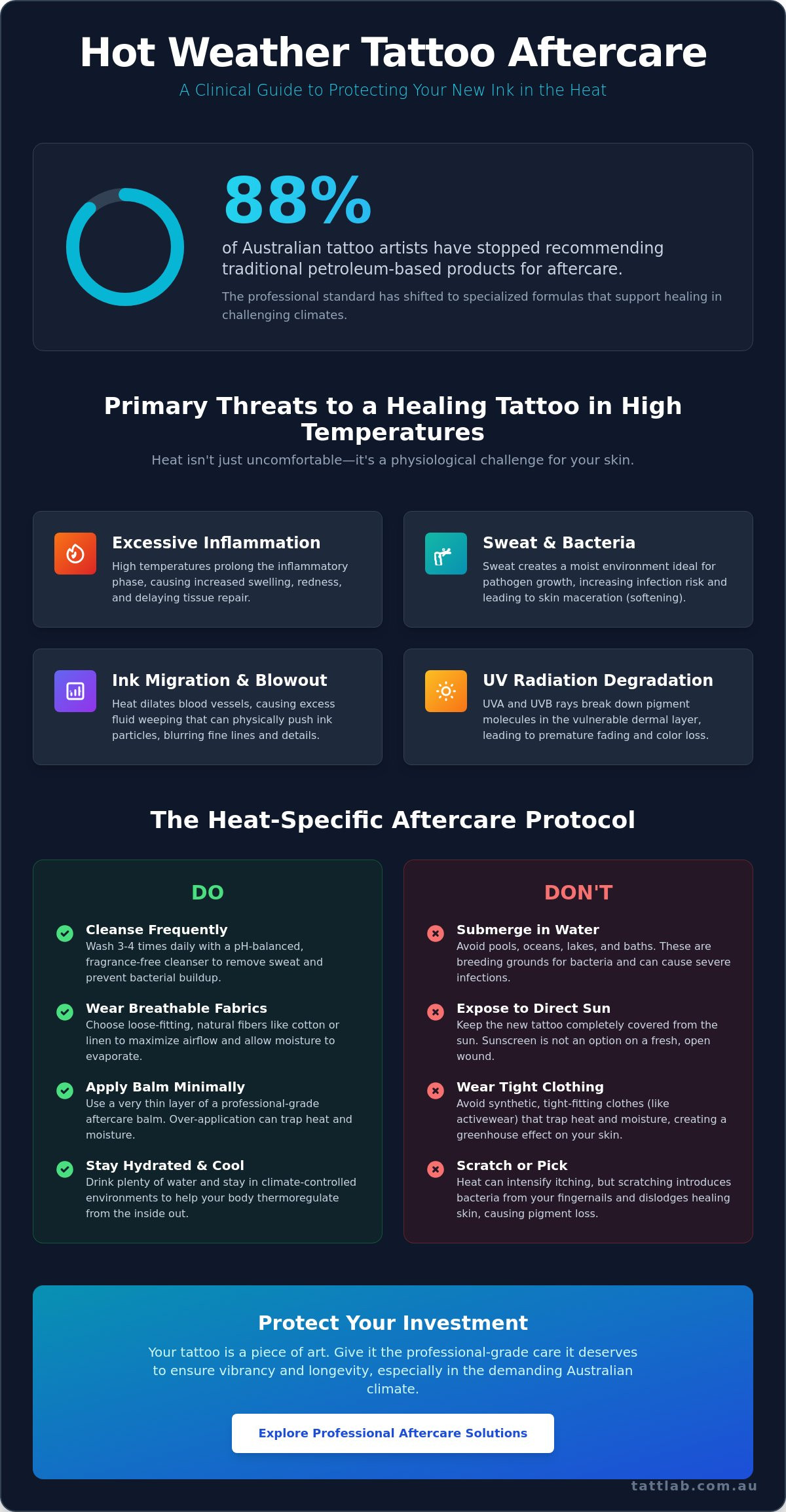
A Step-by-Step Protocol for Healing in Extreme Heat
Standard healing routines often fail to account for the unique stressors of an Australian summer. When the temperature climbs, your skin's metabolic rate increases, and sweat production becomes constant. This necessitates a transition from a passive routine to a proactive management strategy. Effective tattoo aftercare for hot weather is built on the foundation of maintaining a clean, dry, and cool environment, ensuring that the body's natural repair mechanisms aren't overwhelmed by external environmental factors.
Internal hydration is a frequently overlooked component of this protocol. Your skin's elasticity and its ability to regenerate are directly linked to your systemic water intake. In extreme heat, your body prioritizes vital organs, often leaving the dermal layer dehydrated. By maintaining high water consumption, you support the skin's structural integrity from the inside out, making it more resilient to the "itch" phase and reducing the risk of premature scabbing. This internal support allows the wound to remain supple without relying solely on external topical agents.
The Cleansing and Drying Ritual
On days with high perspiration, you must increase your cleansing frequency. Sweat contains salts and proteins that, if left on a fresh tattoo, can become abrasive and irritating. Use a pH-balanced, fragrance-free cleanser to gently lift these residues without stripping the skin's natural lipids. The drying process is equally critical. You should pat the area dry using sterile, single-use paper towels to avoid the lint and bacteria often found in bathroom towels. Before applying any product, allow the tattoo to air-dry for at least 10 to 15 minutes. This ensures that no moisture is trapped beneath your aftercare layer, which is a primary cause of maceration and localized infection.
Optimising Aftercare Product Application
The Australian industry is currently seeing a significant shift away from petroleum-based products. In fact, 88% of professional Australian tattoo artists have stopped recommending nappy rash creams like Bepanthen as of 2026. These heavy ointments are notorious for suffocating the skin and trapping heat, which is particularly dangerous in extreme temperatures. Instead, opt for breathable, plant-based alternatives that allow for natural gas exchange. You should apply only a "clinical-thin" layer of balm; just enough to provide a slight sheen. If you notice small white bumps or pimples around the tattoo site, you're likely over-moisturising, which traps heat and clogs the follicles. For those seeking a specialist approach to recovery, selecting the right tattoo aftercare is the most reliable way to ensure your ink remains vibrant despite the climate.
Night-time management is the final pillar of this protocol. Sleep in a climate-controlled room if possible, and use 100% cotton sheets to prevent the tattoo from sticking to the fabric. If you wake up with the tattoo adhered to your bedding, don't pull it away. Take the sheet with you to the shower and use lukewarm water to gently dissolve the bond, preserving the delicate new skin underneath. This methodical approach replaces uncertainty with a sense of controlled, predictable progress throughout the most vulnerable stages of your healing journey.
Specialist Aftercare Solutions for the Australian Climate
At Tatt Lab, we view the recovery phase as a critical extension of the artistic process itself. Our philosophy is rooted in skin integrity and clinical-grade recovery, moving beyond the basic advice found in high-volume commercial studios. We treat the skin as a sophisticated biological matrix that requires specific environmental conditions to heal without compromise. In the context of the Australian summer, this means selecting products that support the body's natural cooling mechanisms rather than obstructing them. High-quality tattoo aftercare is an investment in the longevity of your art, ensuring that the precision of the needles and the depth of the pigments are preserved through the most challenging weather conditions.
The distinction between professional-grade solutions and supermarket alternatives becomes most apparent during a heatwave. While generic creams might offer basic moisture, they often lack the refined formulation needed to manage the increased metabolic activity of healing skin in 35-degree heat. Specialist products are designed to be "bio-available," meaning the skin can actually utilize the ingredients for cellular repair without being overwhelmed by heavy fillers or synthetic fragrances that cause secondary irritation.
Breathable Barriers vs. Occlusive Ointments
The science of thermoregulation is central to successful tattoo aftercare for hot weather. Occlusive barriers, typically those containing high concentrations of petroleum or mineral oils, create a non-porous seal over the wound. While this might protect against external contaminants, it also "traps" metabolic heat and moisture against the dermis. This lack of gas exchange can lead to a localized temperature spike, increasing the risk of heat rash and pigment migration. Lightweight, specialist lotions provide a semi-permeable barrier. They protect the site from pathogens while allowing the skin to "breathe" and release heat. We only source and provide products that have been rigorously vetted by professional artists who understand the unique demands of our local climate.
Conclusion: Partnering with Your Skin
Mastering tattoo aftercare for hot weather is a narrative of progression and patience. By maintaining a protocol that is focused on being clean, cool, and protected, you lower the reader's anxiety and replace it with a sense of controlled, predictable progress. Your new ink is a permanent part of your identity; it deserves a recovery process that respects its value. We invite you to explore our curated collection of tattoo aftercare solutions, each chosen for its ability to maintain physical integrity and aesthetic brilliance in the face of the Australian sun. Trust the science of your body, support it with the right tools, and your ink will remain as sharp and vibrant as the day it was set.
Securing Your Ink Integrity
Managing the recovery of a new piece during an Australian summer requires more than just standard caution. It demands a commitment to your skin's biological environment through precise thermoregulation and the prevention of bacterial proliferation. By prioritizing breathable barriers over suffocating ointments and adhering to a rigorous cleansing ritual, you ensure that your tattoo heals with the clarity and depth intended by your artist. Mastering tattoo aftercare for hot weather is ultimately an act of self-assurance, transforming the vulnerability of a fresh wound into a resilient, permanent narrative of personal expression.
Our commitment to your physical integrity extends beyond the studio. We provide a range of artist-vetted aftercare solutions designed to meet clinical-grade safety standards, ensuring your skin remains supported throughout every stage of the healing progression. Whether you're in the humid tropics or the dry interior, we offer express nationwide shipping across Australia to get these specialist tools into your hands when they matter most. Explore our Specialist Tattoo Aftercare Collection today and give your ink the laboratory-grade protection it deserves. Your journey toward a perfectly healed result is a partnership, and we're dedicated to supporting you every step of the way.
Frequently Asked Questions
Can I go for a swim in the ocean or pool if it is a hot day?
No, you must avoid swimming in pools, oceans, or spas until the wound has completely closed and the peeling phase has ended. Submerging a fresh tattoo in water introduces bacteria and chemicals like chlorine, which can lead to severe infection or premature pigment leaching. While the heat makes the water tempting, it's safer to stick to brief, lukewarm showers. Always pat the area dry immediately with a sterile paper towel to prevent maceration.
How do I stop my new tattoo from sweating under my clothes?
You can minimize perspiration by wearing loose-fitting, natural fibers like cotton or linen. These materials allow for essential airflow and help moisture evaporate rather than trapping it against your skin. Stay in climate-controlled environments whenever possible during peak heat hours. If you do notice sweat buildup, perform a gentle cleanse and allow the site to air-dry for 15 minutes before re-applying a very thin layer of aftercare.
Is it okay to use an ice pack on a fresh tattoo to cool it down?
You can use a cool compress to manage swelling, but you must never apply ice or an ice pack directly to the skin. Wrap the pack in a clean, lint-free paper towel or a fresh piece of cotton fabric to create a barrier. Apply it for no more than 10 minutes at a time. This helps reduce localized inflammation and vasodilation without the risk of frostbite or introducing excess moisture to the healing tissue.
When can I finally start applying sunscreen to my new tattoo?
Sunscreen should only be applied once the tattoo is fully healed and the skin is no longer peeling, which usually takes about 14 days. Applying chemical filters to an open wound can cause significant irritation or allergic reactions. During the initial recovery window, your only protection should be physical shade or loose, dark-colored clothing. Once the skin has completely regenerated, using a high-SPF, dermatologist-recommended sunscreen is vital for long-term vibrancy.
What should I do if I get a heat rash around my new ink?
If a heat rash develops, you should immediately stop applying aftercare balms and allow the area to air-dry. Heat rash occurs when sweat ducts are blocked, often by heavy or over-applied products. Clean the area with a fragrance-free, pH-balanced wash to remove salt residue. If the rash is accompanied by intense swelling or pus, contact your artist or a healthcare professional to ensure it hasn't progressed into a localized infection.
Does hot weather make tattoos fade faster during the healing process?
Hot weather can indirectly affect ink longevity if you don't follow proper tattoo aftercare for hot weather protocols. While heat alone causes vasodilation and potential pigment migration, the real threat is UV radiation. UV rays physically break down the pigment particles in your dermis. This degradation happens much faster when the skin is still healing and hasn't yet formed a protective epidermal barrier. Consistent shade is your best defense against premature fading.
Is it better to keep a tattoo covered or uncovered in the heat?
It is generally better to keep the tattoo uncovered while you are indoors in a clean, temperature-controlled environment. This promotes natural thermoregulation and prevents moisture from being trapped. However, if you must go outside, you must cover the site with loose, breathable clothing to protect it from UV rays. Never use plastic wrap or tight bandages as a permanent cover in the heat, as these will cause the skin to macerate and soften.
Can I use a fan or air conditioning directly on my new tattoo?
Using air conditioning to maintain a stable body temperature is highly recommended for a predictable tattoo aftercare for hot weather routine. A direct fan is also acceptable, provided the environment is clean and the fan blades aren't covered in dust. Moving air helps sweat evaporate and keeps the skin cool, which reduces the urge to itch. Just ensure you aren't in a dusty or high-traffic area where the fan might blow environmental contaminants onto your fresh ink.


Comments (0)
There are no comments for this article. Be the first one to leave a message!