
The most critical component of a lasting tattoo isn't the precision of the needle or the quality of the pigment; it's the physiological state of the skin itself. Many clients approach their session with a mix of excitement and legitimate anxiety, often feeling overwhelmed by conflicting advice on how to handle shaving, moisturizing, or even sun exposure in the days leading up to the appointment. It's natural to worry about poor ink retention or the potential for unnecessary pain when you aren't sure if your canvas is truly ready.
We believe that superior results are the product of a scientific partnership between your body's readiness and professional-grade clinical standards. In this guide, you'll discover the essential protocols of tattoo skin prep designed to maximize ink saturation while minimizing trauma to the dermis. We'll move beyond surface-level tips to explore the biological factors that dictate how your skin heals, providing you with a clear, methodical roadmap to ensure your personal transformation is as seamless and comfortable as possible. By understanding the science of skin integrity, you can replace uncertainty with a sense of controlled, predictable progress.
Key Takeaways
- Understand why physiological skin readiness is the primary factor in achieving optimal ink saturation and reducing procedural trauma.
- Learn the specific 72-hour timeline for internal hydration and external care to ensure your skin is elastic and receptive.
- Discover how clinical tattoo skin prep standards, including a sterile field and professional-grade sanitisers, protect the integrity of your canvas.
- Identify why sun damage is the leading cause of session complications and how to protect your skin's structural health before the needle hits.
- Transition from amateur advice to a results-oriented approach by using medical-grade supplies that support a streamlined healing process.
Why Skin Preparation is the Foundation of Professional Tattooing
Professional tattooing isn't just about the artist's skill; it's about the canvas's response. We define tattoo skin prep as the systematic optimization of the epidermis and dermis before pigment implantation. This isn't a superficial step. It's a clinical necessity that transforms the skin from a reactive barrier into a receptive medium. When you view the body as a living canvas, you realize that its physiological state dictates the final aesthetic outcome. Proper preparation ensures that the skin is in its most resilient state, ready for permanent transformation.
Hydrated, healthy skin allows for significantly easier needle penetration. Think of it as the difference between carving into dry parchment versus a supple, elastic surface. Reduced resistance means the artist can work with greater precision, using less pressure to achieve the same saturation. This efficiency is vital. When the skin is prepared, it experiences less micro-trauma, which directly lowers the risk of pigment blowouts or "ink rejection," where the body’s immune response aggressively expels the foreign pigment during the initial inflammatory phase.
The Science of the Skin Barrier
The stratum corneum, the outermost layer of the epidermis, serves as your body's primary shield. In a professional setting, effective prep involves softening this layer without compromising its structural integrity. Softening the barrier allows needles to pass through cleanly, reducing the "snag" that often triggers excessive swelling. By managing this layer before the session, we can dampen the body's immediate inflammatory response. Healthy skin cells are better equipped to "lock in" ink particles, ensuring the pigment remains exactly where the artist intended rather than migrating into the surrounding tissue.
Preparation vs. Aftercare: A Continuous Cycle
It's a common misconception that healing starts when you leave the studio. In reality, the recovery process begins days before the first needle stroke. Your pre-session health dictates the speed and success of the inflammatory healing phase. If the skin is already compromised by dehydration or neglect, it can't recover as efficiently. We view this as a continuous cycle of care. By mastering tattoo aftercare and preparation as a singular discipline, you ensure that the tattooing process and safety standards are met with the best possible biological foundation. This proactive approach minimizes downtime and secures the longevity of the art.
The Client Protocol: External and Internal Readiness
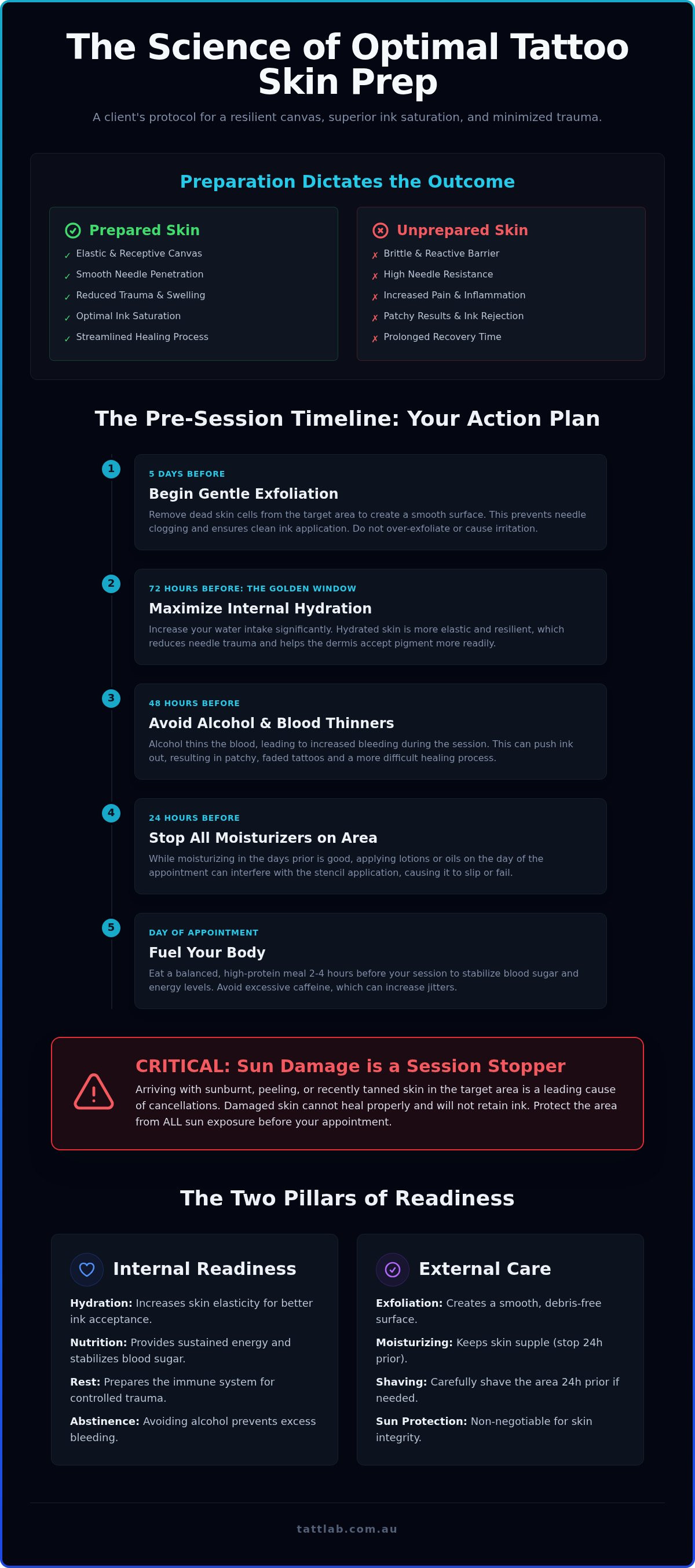
The 72 hours leading up to an appointment represent the golden window for effective tattoo skin prep. During this timeframe, the objective is to optimize the body's biological capacity to receive and retain pigment. Internal hydration is perhaps the most overlooked factor in this process. When you consume adequate water, you increase the "plumpness" and elasticity of the dermis. This makes the skin more resilient against the repetitive motion of the needle, whereas dehydrated skin is brittle and prone to tearing, which complicates the artist's work and prolongs recovery.
A structured approach to tattoo skin prep also involves managing your systemic health. Maintaining stable blood sugar is vital because a tattoo is a physical stressor that triggers a metabolic response. If you enter a session on an empty stomach, your body's ability to manage pain and adrenaline is significantly compromised. Similarly, prioritizing deep rest in the nights leading up to your session ensures your immune system is prepared for the controlled trauma of the procedure. This holistic readiness is a core component of FDA tattoo safety guidelines regarding overall body health and procedural success.
Topical Preparation: Exfoliation and Hydration
Five days before your appointment, begin gentle exfoliation of the target area. Removing the accumulation of dead skin cells prevents them from clogging the needle or interfering with the ink's path into the dermis. While moisturizing is essential during the lead-up to keep the skin supple, you must stop 24 hours before the session. Applying lotions or balms on the day of the appointment creates a barrier that can cause professional Tattoo Stencils to slip or fail to transfer clearly. You should avoid heavy oils or waxes entirely, as these can saturate the pores and make the skin too slick for precision work.
Internal Factors: Nutrition and Circulation
Eat a high-protein, balanced meal approximately 2 to 4 hours before sitting in the chair to provide sustained energy. You should also monitor your intake of stimulants; while a morning coffee is fine, excessive caffeine or energy drinks can lead to jitters and an increased heart rate, making it harder to remain still. Most importantly, avoid alcohol for at least 48 hours. Alcohol acts as a vasodilator and blood thinner. Increased bleeding during the session pushes the ink back out of the skin, which leads to patchy results and poor pigment retention.
Clinical Studio Standards: The Professional Prep Workflow
Once the client enters the studio, the responsibility shifts from personal habits to clinical execution. This transition involves utilizing specialized medical supplies for tattoo artists to maintain an aseptic environment. A professional studio functions much like a surgical suite. The artist establishes a sterile field by covering contact surfaces with barrier film and setting up a tray with single-use components. This stage of tattoo skin prep is the most critical for mitigating the risks and precautions of tattoos. High-quality nitrile gloves are non-negotiable; they provide a superior barrier against pathogens while maintaining tactile sensitivity. Specialized skin sanitisers, such as pH-balanced antiseptic washes, eliminate surface bacteria without stripping the skin’s natural lipids, which prevents the canvas from becoming overly dry or reactive.
The Professional Shave and Cleanse
Even if the client has shaved at home, a professional pass is necessary. Artists use a single-use medical razor to remove vellus hair that can cause needles to deflect or drag. The technique is deliberate, using short strokes to avoid micro-abrasions or razor burn that would cause the skin to swell prematurely. A secondary cleanse follows, typically using a medical-grade soap concentrate to lift loose hair and residual debris from the pores, ensuring a pristine surface for the stencil.
Stencil Application and Skin Priming
Applying the design requires more than just ink and paper. Stencil primers act as a bonding agent between the epidermis and the stencil ink. These solutions must be applied sparingly; too much causes the design to bleed, while too little leads to premature fading during the session. Once applied, a dry time of 10 to 15 minutes is standard to allow the stencil to bond effectively. This patience ensures the design remains intact through hours of wiping, preventing lost detail and protecting the artistic vision.
Final Physiological Assessment
Before the machine is even touched, a final assessment occurs. The artist inspects the area for moles, abrasions, or localized irritations that might require a slight adjustment in placement. They also determine the necessary needle depth based on the specific location; for instance, skin on the forearm behaves differently than skin over the ribs. Skin turgor refers to the skin's ability to change shape and return to normal, and it serves as a key metric for the artist. It dictates the needle speed and hand tension required to achieve clean, saturated lines without causing undue trauma to the dermis.
Common Pitfalls: What to Avoid Before the Needle Hits
Identifying potential session-killers is a vital part of professional tattoo skin prep. Sun damage is the most frequent reason for appointment cancellations. UV radiation alters the skin's cellular structure, often leaving it leathery and resistant to pigment or dangerously fragile and prone to tearing. If you present with even a mild sunburn, most professional artists will refuse to work. The skin is already in a state of intense inflammation. Adding the trauma of a tattoo to sun-damaged tissue leads to excessive swelling, significant pigment loss, and an increased risk of permanent scarring.
Internal chemistry is equally influential. You should avoid blood-thinning medications and supplements like aspirin, ibuprofen, or high-dose fish oil for several days prior to your session. These substances increase the rate of interstitial bleeding. Excessive blood flow acts as a physical barrier that pushes the pigment out of the dermis as the artist attempts to implant it. This results in patchy saturation and a muddy final aesthetic. Similarly, you shouldn't attempt DIY shaving with a standard razor the morning of the session. A single nick can harbor bacteria, creating a localized infection risk that halts the procedure immediately.
Chemical and Environmental Irritants
You must avoid harsh chemical peels or retinol treatments in the target area for at least two weeks before your appointment. These products accelerate cell turnover and can leave the epidermis too thin to handle the repetitive impact of a needle. Fake tan products are another significant concern. These dyes reside in the upper layers of the skin and can react unpredictably with tattoo pigments or obscure the artist's view of your natural skin undertones. If you have chronic conditions like eczema or psoriasis, the area must be completely clear of active flare-ups to ensure the skin can heal without complication.
The Alcohol and Substance Rule
Alcohol consumption is perhaps the most common pitfall in tattoo skin prep. Beyond its blood-thinning effects, alcohol causes "hangover skin," a state of systemic dehydration and heightened neurological sensitivity. This makes the session significantly more painful and the skin more reactive to the needle. We recommend a strict 48-hour sobriety window before your appointment. This ensures your vascular system is stable and your skin is at its most resilient. To ensure your session is supported by the highest clinical standards, artists rely on professional tattoo supplies that prioritize skin integrity above all else.
Elevating Results with Professional-Grade Supplies
The final stage of the preparation narrative isn't found on the skin, but in the studio's inventory. Tatt Lab acts as a dedicated partner for both artists and collectors, ensuring that the technical foundation of every session is built on clinical rigor. While the client manages their internal hydration and the artist executes the sterile setup, the quality of the consumables used dictates the final trajectory of the healing process. We emphasize a results-oriented approach that prioritizes safety and physical integrity, aligning with the highest Australian industry standards. This methodical focus on quality ensures that the meticulous work put into tattoo skin prep is supported from the first needle stroke to the final result.
Sourcing professional tattoo supplies from trusted specialists is the only way to guarantee that the materials entering the dermis are as refined as the technique itself. This commitment to quality ensures that the hard work put into preparation isn't undermined by substandard tools. By integrating medical-grade supplies into the studio workflow, artists protect the long-term vibrancy of their work and the health of their clients. Professional aftercare then completes the cycle, preserving the integrity of the canvas as the body transitions from the inflammatory phase to permanent healing.
Why Quality Matters for Skin Integrity
There's a significant difference between generic pharmacy items and specialized tattoo medical supplies. Standard first-aid products often contain fragrances, heavy oils, or preservatives that can irritate a fresh tattoo or interfere with pigment settling. In contrast, specialized consumables are designed to work in harmony with the body's natural inflammatory response. High-quality needles and inks are engineered for precision, ensuring that once the skin is properly prepped, the implantation is clean and the trauma is localized. We encourage artists to view their supply chain as a vital part of their clinical prep, as the tools are just as important as the technique.
Your Partner in Professional Tattooing
Tatt Lab provides a comprehensive range of professional aftercare and medical consumables tailored to the unique demands of the Australian tattoo subculture. As an artist-owned and operated facility, we understand the meticulousness required for successful outcomes. We offer express nationwide shipping to ensure that studios across Australia have immediate access to the supplies they need to maintain a safe, professional environment. This logistical support allows artists to focus on the art, knowing their technical needs are met with precision. The journey from initial tattoo skin prep to a fully healed masterpiece is a shared narrative of care, and we're here to support every step of that transformation.
Securing the Future of Your Body Art
Mastering the art of tattoo skin prep is a shared responsibility that bridges the gap between a creative vision and a lifelong masterpiece. By prioritizing internal hydration, respecting the 48-hour sobriety window, and avoiding the structural damage caused by UV exposure, you provide your artist with the most resilient canvas possible. These physiological choices directly influence how well your skin accepts pigment and how efficiently it navigates the inflammatory healing phase.
A successful session relies on the synergy between your personal readiness and the clinical standards of the studio. Using medical-grade consumables isn't just a safety protocol; it's an investment in the clarity and longevity of your ink. As an artist-owned and operated specialist, Tatt Lab is dedicated to providing the Australian industry with supplies that meet rigorous safety and quality standards. Whether you're a collector preparing for your next session or an artist refining your workflow, we're here to support your journey with express nationwide shipping.
Explore Professional Tattoo & Medical Supplies at Tatt Lab and take the final step toward a flawless, healthy recovery. Your body deserves the precision of science and the care of a specialist.
Frequently Asked Questions
Can I shave the area myself before my tattoo appointment?
You can, but we recommend extreme caution. DIY shaving often results in micro-nicks that harbor bacteria, which can compromise the sterile field. Most artists prefer to use a single-use medical razor during the session to ensure precision without irritation. If you choose to shave at home, do so 24 hours prior to allow any minor inflammation to subside before the procedure begins.
Why is it important to moisturise my skin in the week leading up to a tattoo?
Moisturising ensures the epidermis remains supple and elastic. Dry, flaky skin provides significant resistance to the needle, which increases procedural trauma and reduces ink saturation. By maintaining a hydration routine for seven days prior, you create a receptive canvas that allows for cleaner lines. However, you must stop all topical applications 24 hours before your session to prevent oils from interfering with stencil adhesion.
What happens if I have a sunburn on the day of my tattoo?
A sunburn is a clinical contraindication for tattooing. UV radiation causes significant cellular damage and systemic inflammation, making the skin too fragile to handle the impact of a needle. If you arrive with sun-damaged skin, your artist will likely postpone the session. Tattooing over a burn leads to excessive interstitial fluid, poor pigment retention, and a much higher risk of permanent scarring or infection.
Should I use numbing cream as part of my skin prep?
You should never apply numbing cream without your artist's explicit approval. These products can alter skin turgor, sometimes making the tissue feel rubbery or artificially swollen. This change in texture makes it difficult for the artist to determine the correct needle depth. Additionally, certain topical anesthetics are subject to strict regulations, so it is vital to discuss your pain management plan during your initial consultation.
Can I drink alcohol the night before getting a tattoo?
You should avoid alcohol for at least 48 hours before your appointment. Alcohol is a vasodilator that thins the blood, leading to excessive bleeding during the session. This blood flow acts as a barrier, pushing the pigment back out of the dermis and resulting in a patchy, faded appearance. Sobriety also ensures your body is properly hydrated, which is a critical component of effective tattoo skin prep.
Does skin prep really affect how long my tattoo lasts?
Comprehensive tattoo skin prep directly impacts the longevity of your art. When the skin is in a healthy, hydrated state, the pigment can be implanted uniformly at the correct depth. This foundation reduces the amount of ink expelled during the inflammatory healing phase. A well-prepped canvas ensures that the pigment settles deeply into the dermis, maintaining its clarity and vibrancy for decades rather than fading prematurely.
Is it okay to use fake tan before a tattoo session?
You should avoid fake tan for at least two weeks before your session. These products deposit dyes into the upper layers of the epidermis, which can interfere with the tattooing process. Not only can the chemicals react with the ink, but the artificial tint also obscures your natural skin undertones. This makes it challenging for your artist to accurately select and blend pigments for the best aesthetic result.
What should I eat on the day of my tattoo to prepare?
Eat a balanced meal rich in protein and complex carbohydrates approximately 2 to 4 hours before your session. Maintaining stable blood sugar is essential for managing the body's natural adrenaline response and pain tolerance. If you have a long appointment, consider bringing a small snack or a juice to maintain your energy. Avoid excessive caffeine, as it can increase your heart rate and make it harder to remain still.


Comments (0)
There are no comments for this article. Be the first one to leave a message!