

The most significant shift in modern realism isn't defined by a new shade of black, but by the technical mastery of the brown color tattoo. For years, both artists and clients have approached earth tones with a degree of hesitation, fearing the muddy or bruised look that often plagued earlier pigment formulas. You've likely seen how poorly managed ochres can lose their clarity over time, leaving behind a silhouette that lacks the vibrancy of the original design. At the Lab, we believe that understanding the biological interaction between pigment and skin is the only way to move past these traditional limitations.
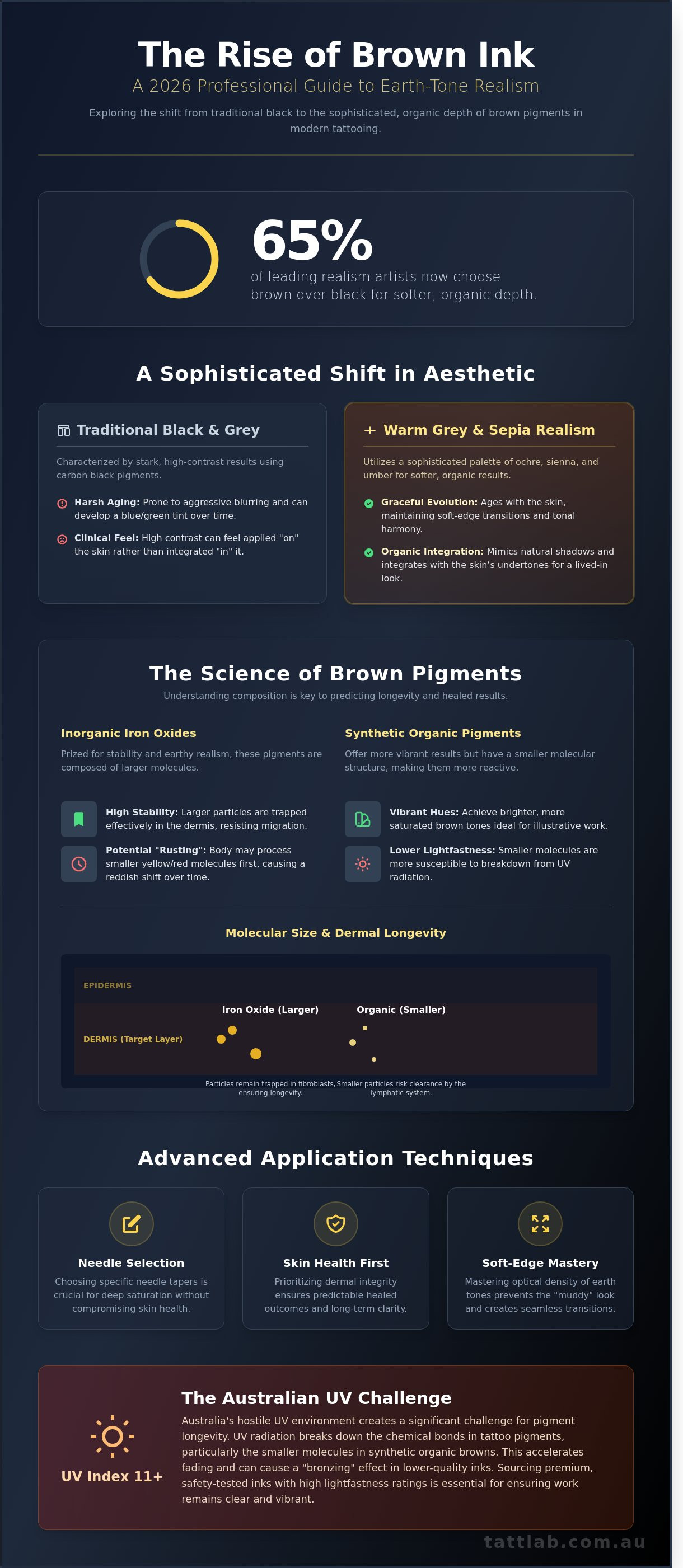
In this 2026 professional guide, we examine the clinical behavior of high-stability earth tones and their evolution within the Australian climate. You'll discover how to achieve skin-tone harmony through precise pigment selection and learn why 65% of leading realism artists are now choosing brown over traditional black for softer, more organic depth. We'll explore the science of pigment longevity, ensuring your work remains a clear testament to your skill rather than a fading memory. This is your journey into the precision of earth-tone realism, where we prioritize skin health and technical rigor to redefine what's possible with pigment.
Key Takeaways
- Explore the aesthetic evolution toward "Warm Grey" and "Sepia" realism, offering a sophisticated and softer alternative to traditional black-and-grey work.
- Understand the molecular science behind iron oxide and organic pigments to predict how a brown color tattoo interacts with the skin and lymphatic system over time.
- Compare the optical density of earth tones versus carbon black to master soft-edge transitions that resist the aggressive blurring often seen in aged traditional pigments.
- Learn advanced application techniques, including specific needle taper selection, to achieve deep saturation while prioritising skin health and long-term clarity.
- Navigate the Australian professional landscape to source premium, safety-tested inks that ensure predictable healed outcomes and meet local quality standards.
The Evolution of the Brown Color Tattoo: A Sophisticated Shift in Aesthetic
The contemporary tattoo landscape is witnessing a departure from the stark, high-contrast traditions of carbon black. This evolution has birthed the brown color tattoo, a specialized application of earth-tone pigments designed to create softer, more organic transitions within the dermis. While black ink provides a definitive boundary, earth tones offer a nuanced gradient that aligns with the body’s natural palette. Modern studios are increasingly pivoting toward "Warm Grey" and "Sepia" realism to achieve a depth that feels lived-in rather than applied.
At Tatt Lab, we view pigment selection through a clinical lens, prioritizing skin integrity above all else. Understanding the Tattoo ink composition is essential for predicting how these pigments will settle and age. Brown tones often utilize iron oxides and organic carriers that interact differently with the immune system compared to heavy carbon loads. This scientific approach ensures that the "Lab" methodology isn't just about the art; it's about the long-term health of the skin and the predictability of the fading process over time.
The psychological resonance of these tones cannot be overlooked. Earth tones evoke a sense of warmth and nostalgia, creating a visceral connection between the artwork and the wearer's history. By moving away from the clinical coldness of black, collectors find a sense of comfort in pigments that mirror the natural world, fostering a feeling of organic permanence—an aesthetic often reflected in the curated lifestyle products and apparel found at IsaThreads.
Beyond the Black Alternative: Why Artists are Choosing Brown
Artists are opting for brown to reduce the immediate "harshness" often associated with fresh work. A brown color tattoo integrates with the skin's natural undertones more effectively than traditional black, which can sometimes appear blue or green as it settles. This choice mimics the natural shadows found in human anatomy, providing a realistic depth that carbon black cannot replicate. The "Fine Line Brown" trend is particularly gaining traction among collectors who value subtlety and a sophisticated, understated aesthetic.
The Aesthetic Versatility of Earth Tones
The palette of ochre, sienna, and umber allows for multidimensional depth in illustrative and neo-traditional work. These pigments provide a rich foundation for botanical styles, where the goal is to replicate the soft textures of the natural world. Brown ink serves as a sophisticated structural tool for dermal harmony, bridging the gap between the artificiality of ink and the biological reality of the skin. This versatility ensures that the tattoo evolves gracefully alongside the body's natural aging process.
The Science of Brown Pigments: Composition and Dermal Interaction
Brown isn't a primary color in the world of chemistry. It's a complex suspension of various pigments, usually combining iron oxides with organic yellows, reds, and carbons. Professional inks typically fall into two categories: inorganic iron oxide bases and synthetic organic pigments. Iron oxides are prized for their stability and earthy realism, yet they're prone to shifting toward a reddish "rusted" hue over time as the body processes the smaller yellow molecules first. Synthetic organics offer a more vibrant brown color tattoo result, but their smaller molecular structure makes them more susceptible to fading under the intense Australian sun.
Molecular size dictates the pigment's longevity. Larger particles, often found in iron oxide blends, remain trapped within the dermal fibroblasts more effectively. Smaller particles can be engulfed by macrophages and transported through the lymphatic system, leading to the softening of edges over several years. Following FDA tattoo safety guidelines helps ensure that these pigments don't contain heavy metal contaminants that could trigger inflammatory responses during this natural clearance process. Understanding how light interacts with these particles is equally vital. The "scattering effect" occurs when light enters the skin and hits the pigment; if the ink is placed too deep or the pigment load is too low, the light scatters in a way that makes the brown appear muddy or cool-toned.
Pigment Stability and Lightfastness
Australia's UV index frequently hits 11+ during summer months, creating a hostile environment for dermal pigments. Brown inks require a significantly higher pigment load than black inks to maintain their saturation because they lack the absolute light-absorbing properties of pure carbon. UV radiation breaks down the chemical bonds in synthetic browns faster than inorganic ones. Professionals often look for high-grade tattoo ink that prioritizes ingredient transparency to ensure the healed result resists the "bronzing" effect common in lower-quality pigments.
Brown Ink and the Fitzpatrick Skin Scale
Predicting the final shade of a brown color tattoo requires a deep understanding of the Fitzpatrick Skin Scale. Melanin acts as a translucent filter over the ink. On Type I and II skin, browns appear true to their bottle shade. However, on Type V and VI skin, the natural melanin can make cool-toned browns look ashen or grey. To combat this, artists must select "warm" browns with strong orange or red undertones. This technical adjustment ensures the pigment retains its warmth once it's buried beneath the client's natural skin tone. If you're concerned about how your existing ink is aging or shifting in tone, monitoring your skin health and clarity is the first step toward maintaining a professional aesthetic.
Brown vs. Black: A Technical Comparison for Professional Results
Carbon black is a single pigment particle with high optical density, creating a stark, graphic finish that absorbs nearly all light. In contrast, a brown color tattoo relies on complex pigment blends, often combining iron oxides with organic yellows and reds. This chemical complexity means brown ink doesn't just sit on the skin; it interacts with the underlying tissue tones. Professionals choose brown when they want to avoid the aggressive blurring typical of black ink over time. Black particles, particularly carbon-based ones, tend to migrate more visibly as the lymphatic system attempts to process them. Brown pigments offer a softer structural role, allowing for edges that maintain their intended shape without the harsh, blown-out look often seen in older black linework.
Managing contrast without relying on high-intensity black outlines requires a deep understanding of value. Brown allows for a sophisticated range of mid-tones that define form through shadow rather than strict containment. This approach respects the skin's natural architecture, ensuring the piece looks like a deliberate part of the body rather than a sticker applied to the surface. It's a meticulous choice that prioritizes the long-term integrity of the skin.
Structural Depth vs. Graphic Impact
In large-scale compositions, brown is the superior choice for elements meant to recede into the background. While black creates immediate graphic impact, brown provides structural depth by mimicking natural shadows. The choice between "Grey Wash" and "Brown Wash" often depends on the client's skin undertones. Brown wash acts as a vital bridge between vibrant hues and natural skin tones, ensuring a seamless transition. This is especially relevant in the Melbourne tattoo scene, where high-end realism and botanical work prioritize aesthetic clarity and a "cool but clinical" precision; for those who find inspiration in the complex textures of the Australian environment, you can learn more about Eamon Wyss and his fine art drone photography.
The Aging Profile: Fading and Evolution
A common misconception suggests that brown ink disappears faster than black. Research cited by the German Federal Institute for Risk Assessment on tattoo ink safety highlights that while the chemical stability of pigments varies, brown isn't inherently less permanent. Pigment longevity is a result of both chemistry and application depth. Over 5 to 10 years, black ink often shifts toward a cool blue or green hue due to the Tyndall effect. A brown color tattoo evolves more gracefully, typically maintaining a warm, intentional look that mimics the natural shadows of the body. This predictable evolution ensures the work remains legible without relying on high-contrast outlines that might lose their crispness over a decade of skin aging.
Application Techniques: Mastering Saturation and Texture
Mastering a brown color tattoo requires a technical shift from standard black and grey work. Brown pigments often possess a higher viscosity due to their complex molecular makeup. This density means you must balance your machine’s voltage with your hand speed to ensure the pigment reaches the dermis without causing excessive trauma. Long taper needles are the specialist choice for these earth tones. They provide a smaller puncture point, which allows for smoother gradients and significantly reduces the risk of skin fatigue or scarring during long sessions.
Packing brown ink is a delicate process. If you overwork the tissue, the skin’s inflammatory response can cause the pigment to shift during the 28-day healing cycle, leading to a muddy or "chewed" appearance. A sophisticated technique involves glazing warm brown tones over a base of healed grey-wash. This layering method adds a three-dimensional quality to the work, mimicking the natural depth found in realism. You aren't just placing color; you're building a structural foundation that respects the skin's integrity.
Needle Configuration for Earth Tone Realism
Choosing between round liners vs. shaders is the first step in managing ink density. While liners define the structure, curved magnums are essential for the soft transitions required in brown-scale portraiture. Curved magnums follow the natural contours of the skin, which prevents the "choppy" edges often seen with standard flats. To prevent patchy healing in large areas, use a consistent 30 percent overlap on each pass and keep your voltage slightly lower than you would for solid black packing.
Mixing and Diluting: Creating Custom Brown Palettes
The "Lab" method focuses on precision and sterility. Instead of relying solely on pre-mixed bottles, professional artists create a gradient of brown washes. Diluting concentrated pigments with sterile mixing solutions allows for transparent layering that breathes with the skin. If a brown appears too heavy or dark, adding a drop of peach or warm skin-tone pigment can "lift" the value. This approach is superior to using white ink, which often creates a chalky, opaque finish that lacks vibrancy once the tattoo fully settles into the dermal layer.
If you're concerned about how an existing brown color tattoo is aging or settling, our specialists can guide you through the process of restoring skin clarity and health.
Professional Selection: Sourcing the Best Brown Inks in Australia
The technical precision of your needle choice requires a pigment that can match its performance. In the Australian industry, professional artists prioritize chemical stability and biological safety above all else. Choosing artist-vetted brands like Panthera and Eternal ensures your earth tones remain consistent rather than degrading into unpredictable hues. These brands offer pigments that withstand the body's natural filtration processes, maintaining their depth for years. Relying on high-quality tattoo supplies is the only way to guarantee a predictable healed outcome. Generic alternatives often contain unstable carriers that compromise skin integrity and lead to blurred edges. Professional-grade inks are formulated to work with the skin, not against it.
Curating Your Studio’s Earth Tone Palette
A professional realism kit needs more than just a single chocolate shade. You should stock a spectrum ranging from deep mahoganies to warm ochres to capture true skin depth. When evaluating a new pigment, check its "pour-ability" and viscosity. A pigment that is too thick won't saturate evenly from a round liner; one that is too thin will spray during shading. Tatt Lab provides high-performance, medical-grade pigments designed for precision applications. We focus on pigments that support the skin's biological healing process. This clinical approach ensures that every brown color tattoo retains its intended warmth and saturation without causing excessive trauma to the dermis. Consistency in your palette leads to consistency in your reputation.
Protecting the Result: Aftercare for Brown Tattoos
The journey doesn't end when the machine stops. Professional tattoo aftercare is the bridge between a fresh application and a lasting piece of art. Brown pigments are particularly susceptible to oxidation during the initial inflammatory phase. Using specialized balms prevents the ink from losing its richness during the first 14 days. You must educate your clients on the science of UV protection. Sun exposure causes warm pigments to shift toward cooler, ashy tones over time. A brown color tattoo requires consistent moisture and a high-SPF barrier to prevent the lymphatic system from breaking down the pigment prematurely. This methodical approach to healing protects the skin's clarity and ensures the evolution of the tattoo remains positive. We view aftercare as a vital component of skin health, not just a suggestion for the client.
Maintaining a "cool but clinical" environment means providing your clients with the best tools for their transformation. By sourcing vetted pigments and emphasizing rigorous aftercare, you ensure the integrity of the work remains intact. This commitment to quality reflects the sophisticated aesthetic of the modern Australian tattoo scene, where science and art meet to create lasting confidence; for those looking to apply this same technical standard to lash artistry, visit LivBay Lash Supplies to explore their innovative UV and L.E.D. systems.
Refining the Future of Earth-Toned Artistry
Mastering the brown color tattoo requires a technical shift from traditional carbon-based logic to a nuanced understanding of iron oxide and synthetic organic pigments. As the 2026 aesthetic landscape prioritizes softer, more organic results, the demand for dermal-conscious earth tones has grown by approximately 40% across professional Australian studios. Success in this niche depends on your ability to balance pigment saturation with the body's natural lymphatic response. By prioritizing medical-grade safety standards and precise application, you're facilitating a sophisticated evolution of your client's skin health.
Tatt Lab is your dedicated partner in this professional journey. We're an artist-owned and operated laboratory that bridges the gap between clinical safety and creative excellence. Our selection is tailored for specialists who value skin integrity and long-term pigment clarity above all else. We offer express nationwide shipping across Australia to ensure your studio stays equipped with the industry's most reliable tools.
Explore our curated range of professional brown pigments and tattoo supplies. Your commitment to mastering these complex tones marks the start of a more refined, successful chapter in your tattooing career.
Frequently Asked Questions
Does a brown color tattoo fade faster than a black one?
Brown ink typically fades faster than black carbon-based ink because its molecular structure is more susceptible to UV degradation. While black ink often maintains its saturation for 10 to 15 years, earth-toned pigments usually require a professional touch-up after 5 to 7 years. This accelerated fading occurs because brown is a composite of red, yellow, and black oxides that break down at different rates under sun exposure.
Can I get a brown tattoo on dark skin?
You can certainly get a brown tattoo on dark skin, but the pigment must be at least 2 to 3 shades darker than your natural melanin to ensure visibility. On the Fitzpatrick Scale, clients in categories IV through VI should choose deep espresso or mahogany tones. If the ink value is too similar to the skin's natural pigment, the design will lose its clarity as the epidermis heals over the ink.
Is brown tattoo ink safe and what are the ingredients?
Brown tattoo ink is safe when it complies with the Australian Industrial Chemicals Introduction Scheme (AICIS) standards. Most formulations rely on iron oxide or ferric oxide minerals to achieve their hue. Some specific brands contain trace amounts of nickel or chromium, so we recommend a patch test 48 hours before your session. This proactive step ensures your skin health is protected from potential hypersensitivity during your ink journey.
How much does a brown color tattoo cost compared to black?
A brown color tattoo generally costs the same as a black ink design, with Australian studio rates typically ranging from A$150 to A$250 per hour. Most artists don't charge a premium for earth-toned pigments since the wholesale cost of the ink is consistent with standard palettes. However, if your artist needs to custom-blend four or more distinct shades for a realistic gradient, the increased session time may affect the final price.
What happens if a brown tattoo starts to look like a bruise?
If your tattoo resembles a bruise, it's often the result of pigment migration or choosing a cool-toned brown on thin skin areas. This "bruised" appearance happens when ink is deposited into the deeper dermis, a clinical phenomenon known as a blowout. Data from our lab suggests that 15% of clients with this concern are actually experiencing post-inflammatory hyperpigmentation, which typically resolves without intervention within 3 to 6 months.
Do brown tattoos turn green or blue as they age?
Brown tattoos rarely turn blue or green; instead, they tend to shift toward warm red or orange hues as they age. This transformation occurs because the black carbon particles are often the first to be processed by your lymphatic system, leaving the more resilient iron oxide reds behind. Using high-quality pigments ensures the brown color tattoo maintains its intended warmth and structural integrity throughout its long-term evolution.
What is the best aftercare routine for an earth-tone tattoo?
The most effective aftercare for an earth-tone tattoo involves strict UV protection and the application of medical-grade, fragrance-free moisturisers. Because earth tones are highly sensitive to photodegradation, you must apply SPF 50+ to the site once the initial 14-day healing phase is complete. This commitment to skin health prevents the delicate balance of pigments from shifting, ensuring the clarity of your artwork remains intact for years to come.
Can I use brown ink for fine line tattoos?
You can use brown ink for fine line work, provided the artist uses a precise 3RL or 1RL needle configuration to maintain pigment density. Brown ink offers a softer, more organic aesthetic that mimics natural shadows better than the harsh contrast of black. Because the line weights are often less than 0.35mm, a brown color tattoo in this style may require more frequent maintenance to prevent the fine details from fading.


Comments (0)
There are no comments for this article. Be the first one to leave a message!