

What if the chemical you rely on for safety is actually the primary trigger for your client's mid-session discomfort? It's a common paradox in professional studios where the drive for sterility inadvertently compromises the skin's biological integrity. You already know that a successful procedure begins with a perfectly prepared canvas, yet the persistent struggle with fading stencils and localized redness suggests that standard prep isn't always optimal. Choosing the right tattoo skin cleaning solutions requires more than just grabbing a familiar bottle; it demands a nuanced understanding of how different agents interact with the skin barrier during the tattooing process.
This guide allows you to master the science of skin preparation and hygiene through a specialist’s lens. We'll examine the technical distinctions between medical disinfectants and specialized procedure soaps to help you maintain a truly sterile field without causing unnecessary trauma. You'll learn how to select products that reduce inflammation and ensure your stencils remain crisp throughout the longest sessions. We're replacing guesswork with a logical, results-oriented framework that supports both your technical precision and your client's physical recovery. By moving toward a more methodical approach, you can ensure that every session is defined by safety, comfort, and predictable progress.
Key Takeaways
- Understand the clinical distinction between surface decontamination and procedural soothing to better protect your client's skin integrity.
- Evaluate the performance of traditional green soaps against modern antimicrobial concentrates to reduce mid-session redness and swelling.
- Optimize your preparation sequence with professional tattoo skin cleaning solutions to achieve superior stencil longevity and clarity.
- Learn to balance effective sanitization with skin hydration by selecting the right alcohol concentrations and hypoallergenic ingredients.
- Explore a curated selection of artist-vetted cleaning agents, from clinical rubbing alcohols to eco-conscious soaps, tailored for professional studio environments.
The Science of Skin Preparation: Why Cleaning Solutions Matter
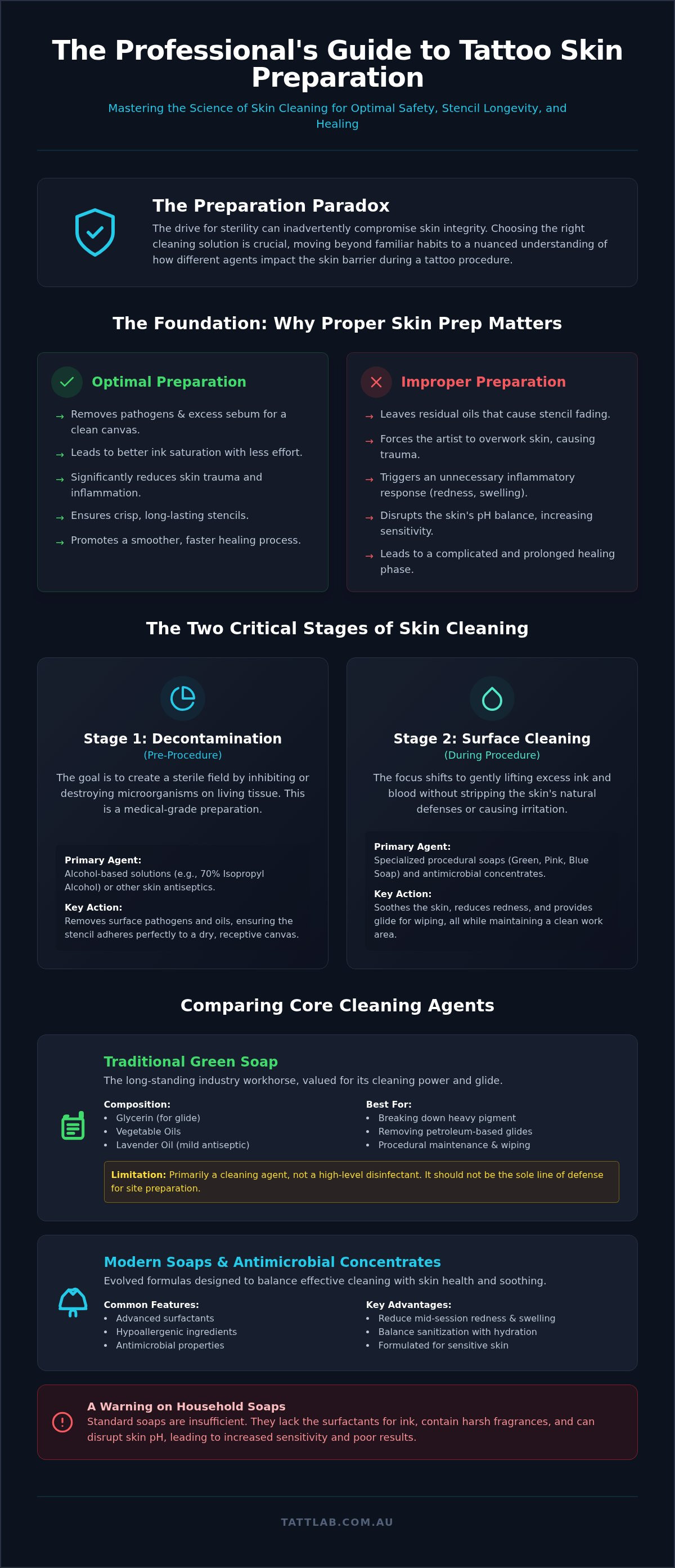
Professional tattooing is a controlled medical procedure that requires a sophisticated understanding of dermal biology. Effective skin preparation is a multi-stage narrative that begins with decontamination and transitions into procedural soothing. By utilizing specialized tattoo skin cleaning solutions, you're doing more than just wiping away dirt. You're systematically removing surface pathogens and excess sebum, the natural skin oils that can act as a barrier to both ink and stencils. This methodical approach mirrors the precision of the work itself, ensuring that the skin's physical integrity is respected from the first contact.
When the skin is properly cleared of biological impediments, the needle encounters a stable, predictable surface. This precision leads to better ink saturation and significantly reduced skin trauma. If the skin is improperly prepped, the artist often has to overwork the area to achieve solid pigment, which triggers an unnecessary inflammatory response. This initial inflammation is the primary precursor to poor healing, making your choice of cleaning agent a direct factor in long-term aftercare success. Professional tattoo skin cleaning solutions are formulated to balance these needs, ensuring the skin remains calm while staying clinically clear.
Decontamination vs. Surface Cleaning
It's vital to distinguish between medical-grade decontamination and the gentle surface cleaning required during the session. A true antiseptic is designed to inhibit or destroy microorganisms on living tissue, whereas procedure-safe soaps are formulated to lift blood and pigment without stripping the skin's natural defenses. In a professional tattoo environment, a sterile field is a meticulously maintained zone where all surfaces and instruments are free from viable microorganisms to ensure the biological integrity of the procedure.
Standard household soaps are insufficient for professional tattooing because they lack the necessary surfactants to break down heavy ink pigments while simultaneously failing to provide the controlled antimicrobial action required for open-wound safety. Many retail soaps also contain harsh fragrances and additives that can disrupt the skin's pH. This disruption leads to increased sensitivity before the needle even touches the client, complicating the session and the subsequent healing process.
The Impact on Stencil Longevity
One of the most frustrating technical hurdles in a session is the premature fading or bleeding of a stencil. This often occurs because residual oils on the skin prevent the stencil carbon from bonding effectively with the epidermis. Utilizing an alcohol-based prep or a dedicated skin cleanser creates a dry, receptive canvas that locks the stencil in place. For a broader look at maintaining these standards, refer to The Professional Guide to Tattoo Supplies in Australia.
Proper preparation ensures that your guide marks remain crisp through hours of wiping, allowing you to focus on the technical execution rather than struggling to find your lines. When you remove the guesswork from your prep, the entire process becomes more predictable. This controlled progress lowers the reader's anxiety and builds immediate trust, as the client sees a professional, clinical approach to their personal transformation.
Comparing Core Cleaning Agents: Green Soap, Pink Soap, and Concentrates
The evolution of the tattoo studio from a gritty subculture space to a clinical environment is mirrored in the chemistry of our soaps. Selecting the right tattoo skin cleaning solutions is no longer just about tradition; it's about understanding how surfactants and soothing agents work in tandem to protect the skin barrier. While the industry has expanded its repertoire, the choice usually comes down to three primary categories: traditional green soap, modern pink or blue soaps, and high-efficiency antimicrobial concentrates.
Traditional Green Soap: The Industry Workhorse
Tincture of Green Soap has served as the baseline for hygiene for decades. Its composition is deceptively simple, typically consisting of glycerin, lavender oil, and vegetable oils. The glycerin provides a necessary glide, allowing the artist to wipe away excess ink without causing friction burns. Lavender oil isn't just for the signature scent. It offers mild antiseptic properties that help calm the skin during the initial stages of the procedure. According to Tattoo Artists, this classic formula remains a favorite because of its unmatched ability to break down heavy pigment and petroleum-based glide products.
However, green soap has its limitations. It is primarily a cleaning agent rather than a high-level disinfectant. While it excels at removing surface debris, it shouldn't be the only line of defense in a medical-grade hygiene protocol. It's a tool for procedural maintenance, best used in conjunction with more rigorous site preparation agents to ensure the biological integrity of the session remains intact.
Modern Antimicrobial Concentrates
The rise of "Pink Soap" and "Blue Soap" represents a shift toward more specialized dermal care. These modern formulas often incorporate advanced surfactants that lift ink more efficiently than traditional oils, requiring fewer wipes and less physical trauma to the epidermis. Many of these solutions are infused with soothing botanicals like Aloe Vera or Witch Hazel. These ingredients work to constrict blood vessels and reduce localized swelling, keeping the skin "quiet" during long sessions. This is particularly beneficial for clients with high skin sensitivity who might otherwise experience significant redness within the first hour.
When choosing between ready-to-use (RTU) and concentrated formats, most professional studios favor concentrates. They offer superior cost-efficiency and allow you to customize your dilution ratios based on the specific task. A stronger mix might be used for the initial wash, while a more diluted, gentle foam is used for the final wipe-down. Regardless of the brand, the most critical rule of dilution is the use of distilled water. Tap water contains minerals and potential contaminants that can compromise the chemical stability and safety of your tattoo skin cleaning solutions. You can browse a curated selection of professional cleaning concentrates to find a formula that aligns with your specific workflow and client needs.
Solutions for Every Stage: Pre-Procedure to Final Wipe
A professional session is a series of biological transitions. Your choice of tattoo skin cleaning solutions must adapt to these shifting needs, moving from aggressive decontamination to supportive, gentle maintenance. This staged approach ensures that the skin remains a resilient canvas, capable of holding detailed work without excessive trauma. By aligning your cleaning protocol with the procedure's lifecycle, you provide a predictable environment for both the artist and the client.
Pre-Tattoo Preparation
Before a needle ever touches the skin, the goal is absolute clinical clarity. 70% Isopropyl alcohol is the industry standard for this phase because it balances rapid evaporation with the ability to penetrate bacterial cell walls more effectively than higher concentrations. This step is vital for degreasing the site, removing the lipids that can cause a stencil to slide or blur. Using pre-saturated skin prep wipes ensures a consistent dose of alcohol across the entire area, reducing the risk of missed spots.
Patience is a technical requirement here. You must ensure the skin is completely dry before applying the stencil. Any residual moisture can trap the carbon ink, leading to lines that bleed and obscure your guide. This initial phase sets the tone for the entire session, establishing a sterile foundation that respects the body's physical integrity and ensures the stencil locks firmly into the epidermis.
Mid-Procedure Wash and Foamers
Once the procedure begins, the focus shifts to managing the skin's inflammatory response while maintaining a clear field of vision. This is where foamers become essential tools. Unlike traditional liquid sprays, foam creates a physical cushion between the wipe and the compromised epidermis. This reduction in friction is crucial for preventing over-wiped skin, which often manifests as localized redness and swelling. Using cooling, anti-inflammatory cleaning agents during this stage helps constrict blood vessels, keeping the canvas calm and receptive to pigment.
Effective management of wash bottles is equally important for studio safety. To prevent cross-contamination, bottles should be covered in barrier film and handled with a no-touch protocol. This methodical approach to hygiene is detailed further in our guide on Medical Supplies for Tattoo Artists: The Professional Studio Safety Guide (2026). By using foamers effectively, you reduce the mechanical trauma of the procedure, which leads to a more comfortable experience for the client and a better outcome for the art.
As the session concludes, the final wipe serves a dual purpose. It must remove all residual blood, plasma, and excess ink while preparing the site for a protective dressing. A gentle, alcohol-free solution is preferred for this stage to avoid stinging the fresh wound. This final act of care is the bridge between the technical procedure and the long-term aftercare journey, ensuring the client leaves the studio with a clean, calm, and protected result.
Key Features to Evaluate: Concentration, Ingredients, and Sensitivity
Selecting the right tattoo skin cleaning solutions requires a balance between antimicrobial efficacy and the biological preservation of the skin barrier. While a solution must effectively remove biological debris, it shouldn't be so aggressive that it triggers a defensive inflammatory response. Every ingredient in your wash bottle contributes to the client's immediate comfort and the long-term clarity of the healed work. Evaluating these features with clinical rigor allows you to provide a more predictable, reassuring experience for your clients.
A significant factor in this evaluation is the presence of fragrances and dyes. While some traditional soaps use lavender or citrus oils for their mild antiseptic properties, fragrance-free options are increasingly prioritized in modern studios to minimize the risk of contact dermatitis. Similarly, the alcohol content in your solutions must be carefully managed. High concentrations of alcohol are essential for initial degreasing, but using them throughout the procedure can dehydrate the epidermis, making the skin "tight" and difficult to work. Modern artists often opt for vegan and cruelty-free certifications, ensuring their consumables align with a holistic approach to wellness and ethical professional standards.
Identifying Skin-Safe Ingredients
When reviewing a formula, you should avoid harsh sulfates and synthetic dyes that can act as allergens. These additives often cause localized redness that artists mistake for needle trauma. Instead, look for solutions built on natural bases like Dr. Bronner’s castile soap, which uses vegetable oils to provide a gentle but effective clean. pH-balanced formulas are particularly valuable because they protect the skin's natural acid mantle. By maintaining this protective layer, you reduce the client's vulnerability to irritation and support a faster transition into the healing phase.
Concentration and Dilution Ratios
Efficiency in the studio is often a matter of getting your dilution ratios exactly right. Most professional concentrates are designed for 1:8 or 1:10 ratios, depending on the desired foam density and cleaning power. Over-concentrating your soap solutions on a fresh tattoo can lead to a "sticky" residue that actually traps bacteria rather than removing it. It also increases the chemical load on compromised tissue, which can sting and cause unnecessary distress.
Conducting a cost-per-procedure analysis often reveals that high-quality concentrates are more economical than pre-mixed liquids, despite the higher initial investment. This methodical approach to your inventory ensures that you never compromise on safety for the sake of budget. To ensure your studio is equipped with artist-vetted consumables, you can shop our professional range of tattoo skin cleaning solutions and find the perfect match for your technical requirements.
Professional Recommendations: Standout Cleaning Solutions from Tatt Lab
Selecting the right consumables is a decision that impacts every session's clinical outcome and aesthetic result. At Tatt Lab, our curation process is driven by an artist-owned perspective, ensuring that every product in our collection meets the rigorous demands of a professional studio environment. We specialize in medical-grade supplies because we understand that physical integrity is the foundation of great art. By offering a curated selection of over 25 professional cleaning products, we provide a one-stop shop for Australian artists who value both safety and technical performance.
For studios that prioritize a natural, versatile base, Dr. Bronner’s castile soap remains a standout recommendation. Its vegetable-based formula allows for precise customization through dilution, making it a sustainable choice for eco-conscious practitioners. Conversely, when the procedure requires absolute clinical reliability, Isocol and our range of medical-grade skin wipes provide the high-level antiseptic action necessary for initial site preparation. These products are vetted for their consistency, ensuring that your decontamination protocol remains predictable from the first client to the last.
Best for Sensitive Skin: Alcohol-Free Options
Managing client comfort often involves moving away from traditional liquid washes toward specialized foam solutions. These alcohol-free foam washes are engineered with advanced surfactants that lift ink and biological debris more efficiently than standard soaps. This technical edge significantly reduces artist fatigue, as the solution does the heavy lifting, requiring fewer repetitive wiping motions. By minimizing mechanical friction, you keep the skin calm and reduce the localized trauma that often leads to mid-session swelling. You can browse our full range of professional skin cleaning solutions here to find a formula that supports your specific workflow.
The Essential Studio Hygiene Kit
A well-organized workstation is a reflection of a meticulous professional. Maintaining a consistent supply of essential tattoo skin cleaning solutions ensures that you never have to compromise your hygiene standards. A comprehensive workstation kit should include:
- Traditional Green Soap: For its unmatched ability to break down petroleum-based glides and heavy pigment.
- Clinical Prep Wipes: Pre-saturated 70% Isopropyl alcohol wipes for rapid, consistent site degreasing.
- Ergonomic Wash Bottles and Foamers: To deliver solutions precisely while maintaining a no-touch, anti-contamination protocol.
Tatt Lab supports the growth of the Australian tattoo community by providing bulk wholesale distribution, ensuring that high-quality, artist-vetted supplies are always accessible. Our commitment goes beyond the procedure itself; we view ourselves as a dedicated partner in your client's transformation. For a deeper look at how your procedural choices impact long-term results, explore our guide on Mastering Tattoo Aftercare: The Professional Guide to Skin Integrity. By integrating these professional recommendations into your daily practice, you replace uncertainty with a sense of controlled, predictable progress.
Refining Your Clinical Standards
Mastering your choice of tattoo skin cleaning solutions is more than a matter of hygiene; it's a commitment to the biological integrity of every client you serve. By transitioning from generic cleaning to a tiered, stage-specific protocol, you ensure that the skin remains a calm and receptive canvas from the initial degreasing to the final wipe-down. We've explored how technical distinctions in ingredients and concentration can significantly reduce inflammatory responses, allowing your artistic precision to shine through without the interference of localized redness or stencil failure.
This methodical approach to dermal care builds immediate trust and positions you as a trusted specialist who values physical safety as much as aesthetic outcomes. Tatt Lab is dedicated to supporting this clinical rigor by providing artist-vetted, medical-grade supplies tailored for the Australian professional market. With fast nationwide express shipping, we ensure your workstation is always equipped with the industry's most reliable consumables.
Shop Tatt Lab’s Professional Skin Cleaning Collection and refine your process with products trusted by professional Australian studios. Your dedication to safety is the bridge to your client's successful transformation.
Frequently Asked Questions
What is the difference between Green Soap and Pink Soap for tattoos?
Green soap is a traditional tincture composed of glycerin and vegetable oils, making it excellent for breaking down petroleum-based glides. Pink soap is a modern antimicrobial alternative that often includes soothing botanicals like Aloe Vera to manage redness. While both are effective tattoo skin cleaning solutions, pink soap is frequently selected for its ability to calm sensitive skin during long sessions, whereas green soap remains the industry standard for heavy pigment removal.
Can I use regular rubbing alcohol to clean skin before a tattoo?
70% Isopropyl alcohol is the clinical standard for initial site preparation and degreasing. It's more effective than 91% or 99% concentrations because the water content allows the alcohol to penetrate bacterial cell walls before evaporating. You must ensure the skin is entirely dry before applying your stencil. Residual alcohol can react with the stencil carbon, causing the lines to blur or fail to bond with the epidermis.
What is the best dilution ratio for tattoo soap concentrates?
The optimal dilution ratio for most professional concentrates is 1:8 or 1:10, depending on your desired foam density. You must always use distilled water for these dilutions to maintain chemical stability and avoid introducing minerals found in tap water. Over-concentrating your soap can lead to a sticky residue on the skin. This residue traps bacteria and can cause a stinging sensation for the client as the procedure progresses.
Are there vegan-friendly tattoo skin cleaning solutions available?
Many professional tattoo skin cleaning solutions are now formulated with vegan and cruelty-free certifications. Tatt Lab prioritizes brands that use plant-based surfactants and vegetable oils, such as Dr. Bronner’s castile soap, rather than animal-derived fats. These ethical choices don't compromise clinical efficacy. They often provide a gentler experience for the client's skin barrier while supporting a modern, holistic approach to professional studio hygiene and wellness.
Why is my client's skin getting irritated during the cleaning process?
Localized irritation is frequently a reaction to synthetic fragrances, harsh sulfates, or the mechanical trauma of excessive wiping. If the cleaning agent isn't pH-balanced, it can disrupt the skin's natural acid mantle and trigger an inflammatory response. This redness is often mistaken for needle trauma. Switching to a fragrance-free, foam-based cleanser helps reduce friction and keeps the skin barrier intact, ensuring a more comfortable session and predictable healing progress.
How do I ensure my wash bottles don't become a source of cross-contamination?
Wash bottles should be treated as high-risk contact points within the sterile field. You can ensure safety by wrapping bottles in barrier film and handling them only with clean, gloved hands. It's critical to maintain a distance between the bottle tip and the procedural site to prevent backsplash. A no-touch protocol, where you apply the solution to a clean wipe rather than directly to the skin, further minimizes the risk of cross-contamination.
Should I use a foam or a liquid spray for mid-procedure cleaning?
Foam is the preferred choice for mid-procedure cleaning because it creates a protective cushion that minimizes friction between the wipe and the compromised skin. Liquid sprays can be harder to control and often require more aggressive wiping to remove excess moisture. Foam allows the active surfactants to lift ink and plasma more efficiently. This methodical approach reduces skin trauma and helps the artist maintain a clear field of vision throughout the session.
What cleaning solutions are best for maintaining stencil longevity?
Alcohol-based solutions are essential for the initial degreasing phase to ensure the stencil carbon bonds firmly with the skin. Once the procedure begins, you should transition to gentle, surfactant-based foams that lift excess ink without the need for heavy scrubbing. Avoiding aggressive wiping is the most effective way to preserve your guide marks. Using high-quality foamers allows the solution to do the work, protecting your stencil's longevity during long sittings.


Comments (0)
There are no comments for this article. Be the first one to leave a message!