

Can a studio remain a sterile, clinical environment while simultaneously embracing a zero-waste philosophy? For many professional artists, the end of a long session is often met with a familiar sense of conflict as the biohazard bin overflows with single-use plastics and contaminated barriers. You aren't alone in feeling that the pursuit of artistic excellence shouldn't come at the cost of environmental integrity. While 95% of shops currently adhere to OSHA bloodborne pathogen standards, the industry is shifting toward a model where safety and sustainability coexist. Reducing waste in a tattoo studio is no longer a fringe goal; it's a necessary evolution in modern practice.
This guide bridges the gap between high-performance medical requirements and ecological responsibility. You'll discover a clear framework for waste segregation that satisfies 2026 regulatory standards while minimizing your studio's footprint. We'll examine the science behind biodegradable needle cartridges and compostable rinse cups to ensure your tools remain medical-grade without the permanent environmental tax. By refining your inventory management and workstation ergonomics, you can transform your studio into a high-end laboratory where science meets health—adopting the same commitment to precision found at The Testing Lab PLC. Let's explore how to streamline your operations for a cleaner, more efficient future.
Key Takeaways
- Implement a "Lean Setup" philosophy to prepare only the exact materials required for each procedure, significantly cutting down on the disposal of unused sterile supplies.
- Discover how reducing waste in a tattoo studio starts with standardizing ink cap sizes and optimizing workstation ergonomics to prevent excess ink and barrier material loss.
- Evaluate high-performance sustainable alternatives, transitioning from traditional plastics to plant-based compostables that maintain clinical-grade barrier integrity.
- Adopt a "Just-in-Time" inventory management system to eliminate the financial and environmental costs associated with expired inks and sterile-dated needles.
- Learn to communicate your sustainability practices to clients using the "Precision Principle," framing eco-conscious choices as a signature of superior professional standards.
The Environmental Footprint of Modern Tattooing
Modern tattooing is a delicate balance between artistic expression and meticulous biological safety. Every procedure generates a footprint that extends far beyond the skin, creating a complex ecosystem of refuse that requires specialized handling. We aren't simply dealing with "rubbish" in the traditional sense; we manage a combination of clinical biohazards, chemical residues from pigments, and high volumes of general packaging. This reliance on single-use items is a professional necessity to mitigate the inherent health risks associated with skin penetration and potential cross-contamination. However, this commitment to safety has historically created a paradox where the pursuit of health results in a significant environmental toll.
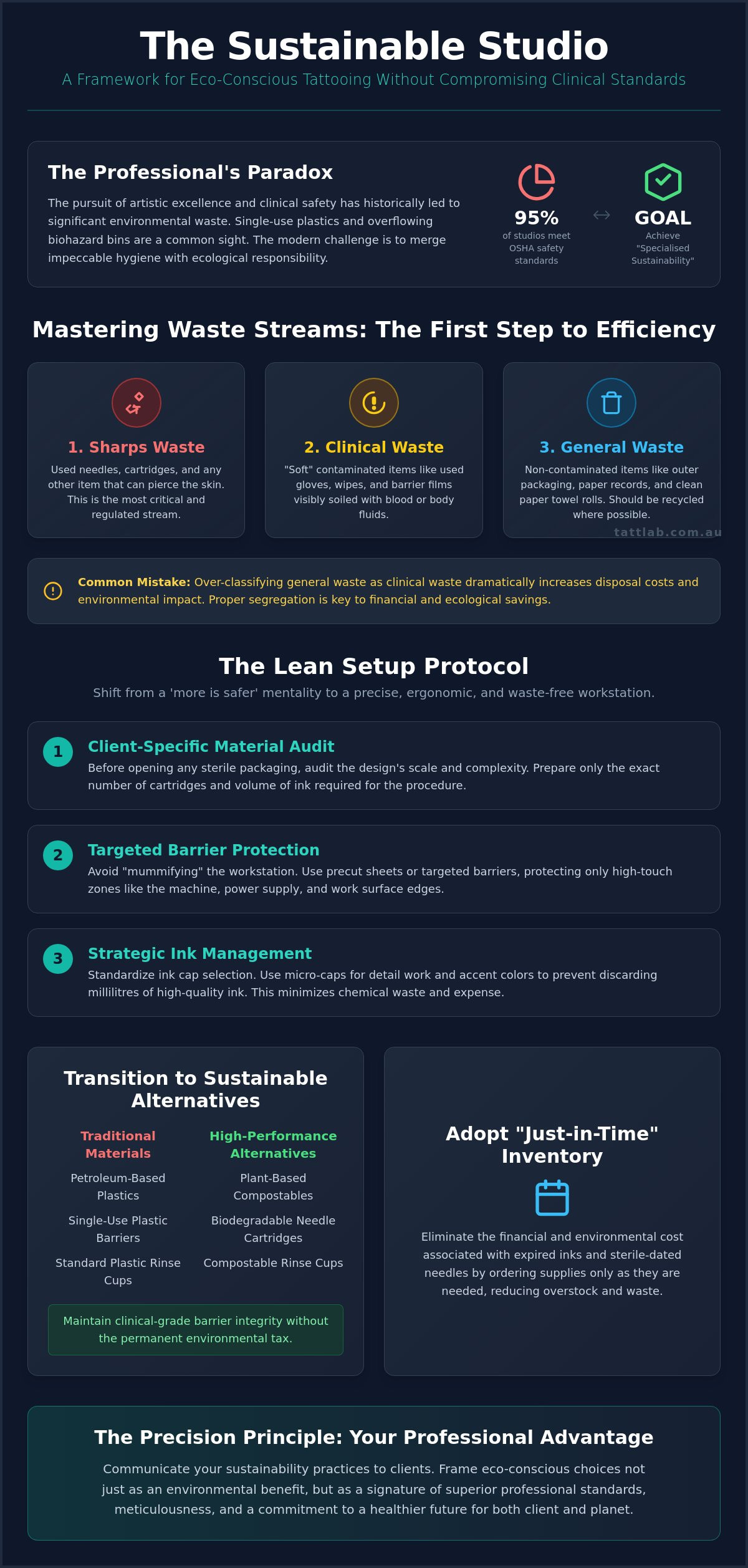
In 2026, the Australian tattoo community is leading a shift toward "Specialised Sustainability." This movement rejects the idea that high-volume waste is an unavoidable byproduct of professional work. Instead, it focuses on the precise management of three primary waste streams. Sharps, including used tattoo needles and cartridges, represent the most critical stream. Clinical waste consists of "soft" items like contaminated gloves and wipes. Finally, general waste covers non-contaminated items such as outer packaging and paper records. Understanding these distinctions is the first step toward reducing waste in a tattoo studio without compromising the sterile field.
Why Traditional Waste Management Fails Studios
Artists often struggle with over-classification due to a lack of clear internal protocols. Fear of non-compliance frequently leads practitioners to toss general waste, like clean paper towel rolls or outer plastic wrapping, into clinical biohazard bins. This is an inefficient practice that drives up studio costs. Clinical waste disposal services are significantly more expensive and energy-intensive to process than general recycling. Beyond the bin, the environmental cost of manufacturing and transporting traditional petroleum-based plastics remains high. Under Australian health standards, clinical waste is specifically defined as waste that has the potential to cause disease or infection, including sharps and materials visibly contaminated with blood or body fluids. Anything falling outside this definition should be diverted to less intensive waste streams.
The Goal: Clinical Integrity Without Excessive Refuse
The "Precision Principle" is our new operational standard. It involves a methodical approach to setup where an artist prepares only the exact volume of materials required for the specific procedure at hand. Reducing waste in a tattoo studio is a direct path to lowering overheads, as accurate waste segregation reduces the frequency and volume of specialized disposal pickups. This approach doesn't just save money; it transforms the studio's identity. Positioning your workspace as a sustainable, low-impact facility serves as a hallmark of a modern, high-end studio. It demonstrates to your clients that you possess the meticulousness required for complex biological work while respecting the wider environment in which you operate.
Streamlining the Workstation: Tactical Setup to Minimise Waste
Many artists approach workstation setup with a "more is safer" mentality, leading to a phenomenon often described as mummifying the studio. While this intent is rooted in protecting environmental health and preventing cross-contamination, excessive barrier film and paper waste actually complicate the procedure. True professional precision lies in the Lean Setup philosophy. This method focuses on prepping only the exact materials required for the specific biological task at hand. By shifting from a defensive, over-wrapped environment to a targeted, ergonomic one, you begin the process of reducing waste in a tattoo studio at the most fundamental level.
Pigment disposal is another area where minor adjustments yield significant results. Standardising your ink cap selection is a simple but effective tactic. Using oversized caps for fine-line detail or small black-and-grey pieces results in millilitres of high-quality ink being discarded. Selecting the smallest viable cap for each colour ensures that your pigments are used efficiently, minimising both chemical waste and expense.
The Five-Step Lean Setup Protocol
- 1. Client-Specific Material Audit: Before opening any sterile packaging, estimate the exact number of Tattoo Cartridges and the volume of ink required based on the design's scale and complexity.
- 2. Targeted Barrier Protection: Replace continuous rolls of plastic wrap with precut sheets or targeted barriers. Protect only high-touch zones like the machine, power supply, and work surface edges.
- 3. Ink Management: Use micro-caps for accent colours and detail work to prevent the "half-full" disposal problem.
- 4. Dry-Run Verification: Ensure every tool, from stencils to skin prep, is within reach before the first needle strike. This prevents the need to break the sterile field and use additional barriers mid-session.
- 5. Post-Session Audit: Briefly review your waste at the end of the day. Identifying items that were prepped but never touched allows for more accurate setup in future sessions.
Ergonomics and Waste Reduction
A well-organised workstation layout is a primary defence against accidental contamination of unused supplies. When your station is cluttered, the risk of a gloved hand brushing against a clean stack of towels or an unopened needle increases, forcing you to discard those items. Utilising high-quality medical supplies for tattoo artists ensures that your barriers and tools perform predictably, reducing the need for redundant "backup" setups. Technique also plays a role in managing consumables. Implementing a "one-wipe" policy by using premium, high-absorbency disposable towels allows you to clean the skin effectively with fewer passes, drastically cutting your daily paper consumption. Reducing waste in a tattoo studio is ultimately a narrative of controlled progress, where every movement is intentional and every material is respected.
Sustainable Alternatives in Medical-Grade Supplies
The transition from traditional consumables to sustainable alternatives is often met with skepticism regarding clinical performance. For years, the industry relied on petroleum-based plastics because they offered predictable barrier integrity and high tensile strength. However, the rise of bioplastics derived from corn starch or wheat straw has provided a viable pathway for artists to maintain safety without the long-term ecological burden. Reducing waste in a tattoo studio requires a critical evaluation of every material that enters the sterile field, ensuring that "eco-friendly" labels don't mask a compromise in biological safety.
Biodegradable nitrile gloves are a significant advancement in this area. These gloves are engineered with organic additives that allow them to break down in landfill environments significantly faster than standard nitrile, yet they retain the same chemical resistance and tactile sensitivity required for intricate work. They represent a sophisticated compromise that respects the artist's need for physical integrity while acknowledging the reality of clinical disposal streams.
Biodegradable vs. Traditional Plastic: A Performance Review
When evaluating plant-based clip cord covers or wash bottle bags, tensile strength is the primary metric for success. A barrier that tears mid-session is a safety failure, not a sustainability win. Current 2026 manufacturing standards have improved the elasticity of compostable materials, making them nearly indistinguishable from traditional polyethylene in a controlled studio environment. It's vital to understand the shelf life of these supplies; because they are designed to break down, exposure to high humidity or UV light can compromise their structural integrity before they are ever used. This evolution extends to the pigments we use, as tattoo ink manufacturers increasingly adopt glass or high-density polyethylene (HDPE) bottles that are easier to integrate into specialized recycling programs.
Selecting High-Performance Cartridges
The engineering of your needle delivery system is a direct factor in your studio's total refuse volume. High-performance cartridges with integrated safety membranes do more than just protect your machine from backflow; they ensure a consistent ink flow that reduces the need for re-working skin. Every time an artist has to re-pass an area due to poor needle precision, they consume more ink, more towels, and more ancillary supplies. Reducing waste in a tattoo studio is often a result of using higher-quality tools that perform correctly the first time. Selecting cartridges with medical-grade plastic housings ensures that the components are manufactured to tighter tolerances, reducing the failure rate that leads to discarded, unused needles. While the biohazard status of used needles limits their recyclability, choosing brands that use fewer composite materials in their housings simplifies the eventual processing of the non-sharp components.
Inventory Management: Preventing Waste Before It Enters the Studio
Operational efficiency is the silent partner of clinical excellence. While much of the conversation around sustainability focuses on the procedure itself, the most significant impact often occurs in the storeroom. Reducing waste in a tattoo studio requires a transition from reactive purchasing to a sophisticated "Just-in-Time" inventory model. This approach ensures that supplies arrive exactly when they are needed, preventing the accumulation of excess stock that eventually degrades or expires. By treating your supply chain with the same meticulousness as a medical facility, you eliminate the "silent" waste that occurs long before a needle ever touches the skin.
Implementing a "First-In, First-Out" (FIFO) system is a fundamental requirement for any high-end studio. This methodical rotation ensures that the oldest sterile-dated items are utilised first, maintaining the integrity of your stock. When logistics are managed with this level of precision, the studio operates as a controlled environment where every item has a purpose and a timeline. This prevents the financial and environmental loss associated with discarding unused, expired medical consumables.
The Hidden Waste of Expired Stock
The shelf life of clinical supplies is a critical factor in studio safety. Products like tattoo aftercare solutions and medical-grade liquids are particularly susceptible to environmental degradation. Exposure to fluctuating temperatures or direct UV light can compromise the chemical stability of these products, rendering them ineffective or, in some cases, hazardous. Maintaining a rigorous log of batch numbers ensures that any manufacturer recalls or safety alerts can be addressed with surgical precision, protecting both the client's health and the studio's professional integrity. Regularly auditing your sterile-dated needles and pigments prevents the accumulation of "dead stock" that eventually contributes to landfill.
Sustainable Sourcing in Australia
The carbon footprint of your studio is heavily influenced by your procurement habits. Frequent, small orders lead to an excessive volume of shipping materials and high transport emissions. Consolidating your requirements into monthly or quarterly smart orders reduces the environmental cost of express shipping and minimises packaging refuse. Choosing Australian suppliers is a strategic decision that supports the local industry while drastically reducing the logistics waste inherent in international freight. Establishing a wholesale account with a trusted partner allows you to streamline your supply chain, ensuring you have consistent access to high-performance tools without the need for redundant shipping. For artists committed to this level of operational discipline, you can source professional-grade supplies that align with a low-waste philosophy. Reducing waste in a tattoo studio is ultimately a commitment to long-term results, where every logistical choice reflects your dedication to physical integrity and environmental respect.
Scaling Sustainability: Building a Low-Waste Studio Culture
Sustainability is not a solitary endeavor; it is a studio-wide standard that requires collective buy-in. When every practitioner in a facility aligns with the same ecological objectives, the cumulative effect on the environment is profound. Reducing waste in a tattoo studio involves moving beyond individual workstation tactics to foster a culture where material efficiency is viewed as a hallmark of professional mastery. This shift transforms the studio into a high-end laboratory where science, health, and environmental stewardship intersect, providing a liberating narrative of progress for both the artist and the client.
Communicating these choices to your clients is a powerful tool for building trust. In an era where demand for sustainable and vegan-friendly options is steadily rising, explaining the rationale behind your eco-friendly barriers or high-performance cartridges positions your work as a premium service. It demonstrates that your meticulousness extends beyond the aesthetic result to include the physical integrity of the planet. By framing sustainability as a mark of quality, you replace uncertainty with a sense of controlled, predictable progress that resonates with a sophisticated urban audience—much like how you might check out Bancrofts Dry Cleaning to ensure your professional attire reflects the same level of meticulous care.
Training for Transition
The apprenticeship process is the ideal environment to instill the "Precision Principle." By setting studio-wide benchmarks for material consumption, such as tracking the number of towels or barriers used per session, you create a tangible metric for improvement. Rewarding apprentices who demonstrate technical skill alongside waste reduction ensures that the next generation of artists values resourcefulness. This methodical approach to education mirrors the precision of the work itself, treating every supply as a valuable biological tool. For more insights on choosing the right equipment, consult our guide on Professional Tattoo Supplies in Australia to see how quality impacts efficiency.
The Tatt Lab Commitment
We recognize that reducing waste in a tattoo studio requires access to supplies that don't compromise on clinical-grade sterility. Tatt Lab is dedicated to supporting sustainable growth by providing artist-vetted tools that balance high-performance results with environmental responsibility. Our nationwide express shipping is designed for maximum logistics efficiency, while our click-and-collect options for local studios eliminate unnecessary packaging refuse entirely. We act as a dedicated partner in your studio's evolution, ensuring you have the specialized medical and biological tools required for success. Upgrade your studio with Tatt Lab’s professional medical and tattoo supplies.
Evolving Your Studio with Intentional Precision
Transitioning to a low-waste environment is a deliberate progression toward professional excellence. By implementing the Precision Principle during workstation setup and adopting a methodical inventory system, you eliminate the silent waste of expired or unused stock. These tactical shifts ensure that your commitment to clinical safety is balanced with ecological responsibility. Reducing waste in a tattoo studio isn't just about changing your bins; it's about refining every movement and logistical choice to reflect a higher standard of care.
As an artist-owned and operated facility, Tatt Lab understands the delicate balance between technical performance and sustainable practice. We provide the medical-grade safety standards your clients expect with the convenience of nationwide express shipping across Australia. Our curated selection of tools supports your journey toward a more efficient, sophisticated operation. Shop Professional Tattoo & Medical Supplies at Tatt Lab to begin your studio's transformation. Your dedication to physical integrity and environmental stewardship is the hallmark of a truly modern specialist.
Frequently Asked Questions
Can I recycle used tattoo needles if I sterilise them first?
No, you cannot recycle used tattoo needles under any circumstances. In Australia, used needles and cartridges are classified as clinical sharps waste the moment they contact biological material. Even if you have access to an autoclave, the metal cannot be processed by standard recycling facilities due to the risk of needle-stick injuries and potential contamination. These items must be placed in puncture-resistant, approved sharps containers for specialized high-temperature incineration.
Are biodegradable tattoo gloves as safe as standard nitrile gloves?
Yes, medical-grade biodegradable nitrile gloves provide the same level of barrier protection as their traditional counterparts. These gloves are engineered with organic additives that allow them to decompose significantly faster in landfill environments without sacrificing tensile strength or chemical resistance. When reducing waste in a tattoo studio, selecting gloves that meet Australian medical standards ensures you aren't compromising your physical integrity for environmental goals.
What is the most effective way to reduce paper towel waste during a session?
The most effective strategy is to switch to high-absorbency, premium disposable towels and adopt a "one-wipe" technique. Lower-quality paper towels often lack the structural integrity to hold moisture, forcing artists to use multiple sheets for a single cleaning pass. By using a single, high-performance towel that effectively absorbs excess pigment and fluids, you can drastically decrease your total paper consumption across every session.
How should I dispose of leftover tattoo ink to avoid environmental contamination?
Leftover ink should be treated as clinical waste and never poured down a drain. Pigments are complex chemical mixtures that can disrupt local water ecosystems if disposed of incorrectly. The professional approach is to use a paper towel to absorb any remaining liquid in your ink caps and then place those materials into your labeled biohazard bags for specialized processing by your waste disposal contractor.
Is it possible to have a 100% plastic-free tattoo studio?
Currently, achieving a 100% plastic-free environment is not possible due to the rigid safety requirements of modern medicine. While bioplastics can replace clip cord covers and wash bottle bags, certain components like sterile packaging and machine internal membranes still require medical-grade polymers. Reducing waste in a tattoo studio is about finding a sophisticated balance through smart substitution and inventory precision rather than total elimination.
Does using an autoclave reduce waste compared to using all disposables?
While an autoclave allows for the use of reusable steel tubes and grips, it introduces significant energy and water consumption. You must also factor in the waste generated by chemical indicators, sterilization pouches, and ultrasonic cleaning solutions. Most modern studios find that utilizing high-quality, single-use disposables is a more predictable way to maintain a sterile field while focusing waste reduction efforts on non-critical supplies.
How do I know if an "eco-friendly" product meets Australian medical standards?
You should verify that any eco-friendly supply is registered with the Therapeutic Goods Administration (TGA) or meets equivalent ISO standards for medical devices. Confirming a product's regulatory status is a vital step in reducing waste in a tattoo studio while maintaining absolute clinical integrity. A reputable specialist supplier will always provide technical data sheets that confirm the material's barrier performance and sterility.
What are the benefits of switching to compostable barrier films?
Switching to compostable barrier films significantly lowers the volume of petroleum-based plastic that your studio sends to landfill. These plant-based alternatives are designed to provide the same level of equipment protection while being capable of breaking down in industrial composting environments. This choice reflects a meticulous approach to studio management, showing clients that you value both their safety and the long-term health of the environment.


Comments (0)
There are no comments for this article. Be the first one to leave a message!