

The most expensive moisturizer in your cabinet could be the very thing that triggers ink fallout if you use it at the wrong stage of biological recovery. When weighing the choice between tattoo aftercare balm vs lotion, many collectors feel paralyzed by the conflicting advice found in studios and across the internet. You've invested hours in the chair and significant resources into your skin's new narrative. It's natural to worry about "holidays" in the pigment or the intense itching that often accompanies the peeling phase.
We view the healing process as a delicate progression where science meets self-assurance. This specialist's comparison demystifies the biological differences between occlusive balms and hydrating lotions to ensure your ink heals with perfect clarity and pigment integrity. You'll learn how to navigate each stage of the inflammatory response—which can be further supported by internal recovery experts like Enas Wellness—from the initial need for a protective barrier to the final requirement for breathable moisture. By the end of this guide, you'll have a clear, professional routine designed to protect your physical integrity and keep your pigment vibrant for years to come.
Key Takeaways
- Understand why a fresh tattoo requires a specific micro-environment to prevent pigment loss and ensure long-term skin integrity.
- Learn how to distinguish between a tattoo aftercare balm vs lotion by identifying which stage of the healing progression requires a protective occlusive barrier.
- Discover the role of emulsified formulas in managing the discomfort of the peeling phase while maintaining the clarity of your pigment.
- Evaluate your specific skin type and the saturation of your ink to customize an aftercare routine that minimizes scabbing and irritation.
- Identify why professional-grade, artist-vetted supplies are superior to generic alternatives for protecting your body's physical integrity and aesthetic outcome.
The Science of Skin Recovery: Balm vs. Lotion
A fresh tattoo is a controlled wound. While the aesthetic result is the focus, your body views the procedure as an intricate disruption of the dermal layer that triggers a complex inflammatory response. To ensure the pigment settles without blurring or fallout, you must maintain a specific micro-environment during the Tattoo healing process. Choosing between tattoo aftercare balm vs lotion isn't merely about personal preference; it's about matching the product's molecular behavior to the skin’s current phase of repair.
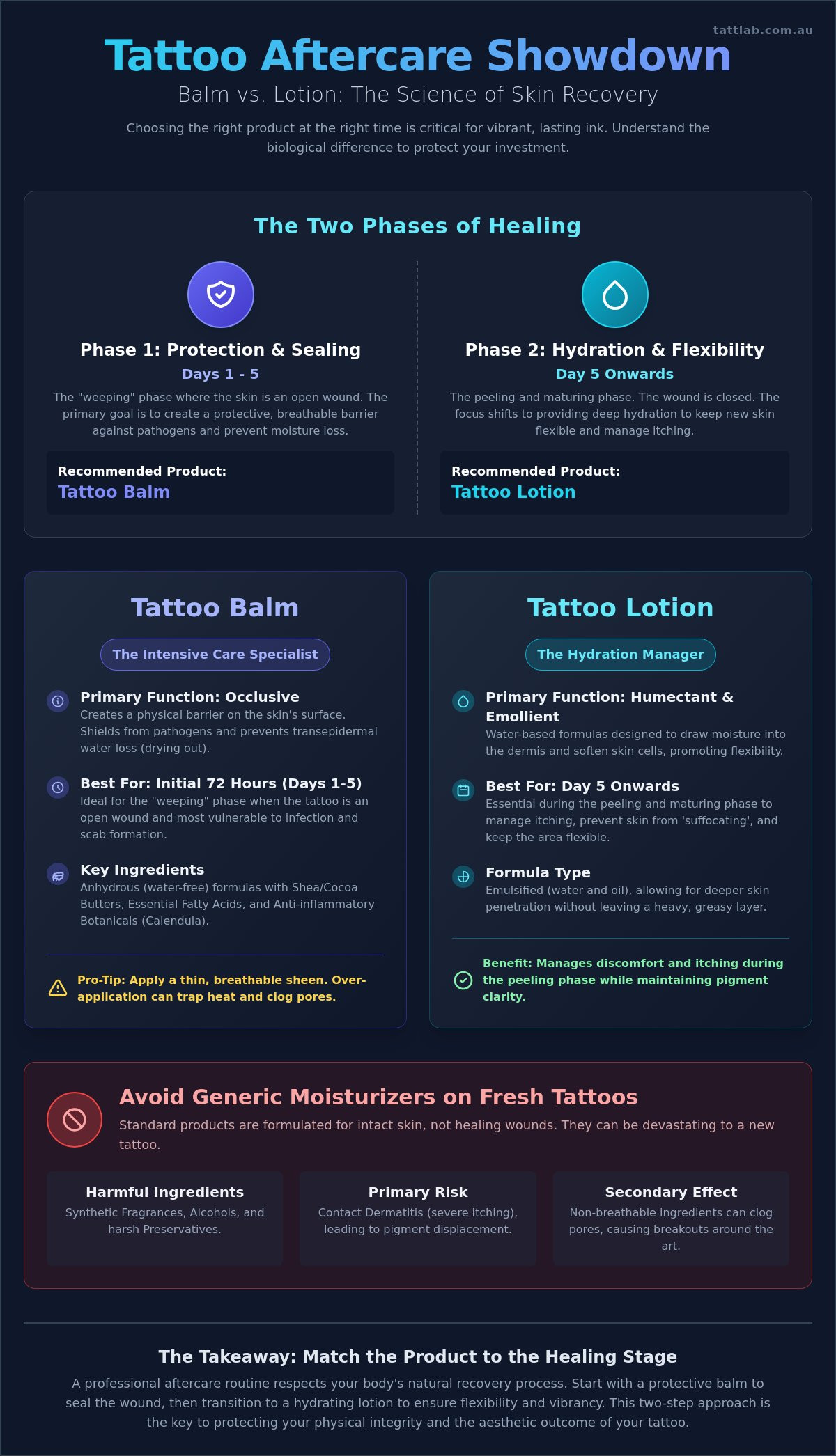
Balms function primarily as occlusives. They create a physical, protective barrier on the skin's surface that shields the vulnerable area from external pathogens and prevents transepidermal water loss. In contrast, lotions act as humectants and emollients. They are designed to draw moisture into the deeper dermis and soften the skin cells. Understanding this biological distinction allows you to support your skin’s integrity rather than working against its natural recovery cycle.
Occlusion vs. Hydration
The initial 72 hours following your session are the most critical. During this "weeping" phase, the skin is highly susceptible to infection and fluid loss. A balm provides the heavy protective layer needed to stabilize the area. We prioritize petrolatum-free oils in these formulas because they allow the skin to "breathe" while maintaining a barrier. Traditional petroleum-based products can trap heat and bacteria, potentially leading to localized inflammation. As the wound closes and enters the maturing phase, the skin's needs shift. This is when water-based lotions become essential. They prevent the "suffocation" of new skin cells, providing the hydration necessary to keep the area flexible without the heavy weight of a thick ointment.
Why "Standard" Moisturisers Fail
Many collectors make the mistake of reaching for a generic supermarket moisturizer. These products are often formulated with synthetic fragrances, alcohols, and preservatives that are harmless on intact skin but devastating to a fresh tattoo. Fragrances are a leading cause of contact dermatitis in healing wounds, which can lead to intense itching and pigment displacement.
Professional tattoo aftercare is specifically engineered to respect skin integrity. Generic heavy creams often fall into the "clogged pore" trap. When pores are blocked by non-breathable ingredients, the skin can develop milia or small breakouts around the tattoo, which complicates the healing narrative. By choosing specialist products, you ensure that every ingredient serves a purpose in the biological progression of your recovery, leading to a settled, vibrant result that lasts a lifetime.
Tattoo Balm: The Intensive Care Specialist
Think of a tattoo balm as a specialized protective seal for your skin's most vulnerable moments. Unlike standard cosmetic products, these are typically anhydrous, meaning they contain no water. Instead, they rely on a concentrated blend of butters and oils to provide a robust, long-lasting barrier. During the initial "weeping" phase, your skin is most susceptible to external contaminants. A high-quality balm stabilizes this environment, reducing the formation of heavy, rigid scabs. This is vital because thick scabbing can physically pull pigment out of the dermis as it sheds, leading to "holidays" or permanent gaps in your finished piece.
The primary advantage in the tattoo aftercare balm vs lotion debate is the duration of protection. Because balms don't evaporate, they remain active on the skin surface for hours. However, this potency requires a disciplined application. A common mistake is applying a thick, visible layer. Over-application can trap body heat and sweat against the wound, potentially leading to heat rash or localized breakouts. A thin, breathable sheen is all that's required to support the recovery. Selecting a product from our curated range of tattoo aftercare ensures you're following a protocol vetted by industry experts for physical integrity.
Key Ingredients to Look For
A professional-grade balm should prioritize ingredients that mimic the skin’s natural biological functions. We look for specific components that offer deep emollient properties without compromising safety:
- Shea and Cocoa Butters: These provide a rich source of fatty acids that soften the skin and maintain elasticity during the initial inflammatory phase.
- Essential Fatty Acids: Ingredients that mimic the skin’s natural sebum help to reinforce the lipid barrier, which is often compromised during the tattooing process.
- Anti-inflammatory Botanicals: Natural extracts like calendula or lavender are frequently included for their ability to soothe irritation and reduce the "heat" felt in a fresh tattoo.
When to Use a Balm
Timing is the most critical factor in successful healing. Following Cleveland Clinic's tattoo aftercare advice, the first few days require the most diligent protection. Balms are the gold standard for Days 1 through 5. This is the window where the skin is actively closing and the risk of infection is at its peak.
Large-scale pieces, such as full sleeves or back panels, benefit significantly from the intensive coverage a balm provides. These sessions involve extensive trauma to the skin, necessitating a more substantial recovery environment. Additionally, if you live in a dry climate, moisture evaporates rapidly from the skin surface. In these environments, the occlusive nature of a balm is indispensable for preventing the tattoo from becoming brittle and cracking before the secondary healing phase begins.
Tattoo Lotion: Maintenance and Long-Term Vibrancy
As your skin moves past the initial inflammatory stage, its biological requirements undergo a significant shift. While the first few days demand the heavy-duty protection of an occlusive barrier, the subsequent phase is defined by regeneration and the need for breathable moisture. This is the pivotal moment in the tattoo aftercare balm vs lotion progression. Lotions are emulsified water-and-oil formulas designed for rapid absorption. They provide the necessary hydration to the maturing skin without the weight of an anhydrous balm, ensuring the area remains flexible as new tissue forms.
One of the primary benefits of transitioning to a lotion is the prevention of the "tight" feeling that characterizes the mid-healing phase. When the epidermis becomes overly dry, it loses its elasticity. This leads to cracking, which can damage the delicate ink settled in the dermis below. By maintaining a consistent hydration routine, you ensure that the skin can move and stretch naturally, protecting the integrity of the artwork during its most transformative weeks.
The Peeling Phase Support
The peeling stage is often accompanied by the notorious "tattoo flu" itch. While it's tempting to scratch, doing so can prematurely pull away skin cells that are still attached to pigment. High-quality lotions soothe this discomfort instantly. Because they are lightweight, they penetrate the surface without disturbing the peeling layers. It's essential to use non-comedogenic formulas during this time. Heavier products can trap oils and dead skin cells, leading to localized breakouts that complicate the final stages of recovery. A clean, fragrance-free lotion provides relief while allowing the skin to shed at its own biological pace.
Daily Ink Maintenance
Your commitment to your tattoo shouldn't end once the skin has closed. In fact, long-term tattoo care is what separates a piece that stays vibrant from one that fades into a dull blur. The ink sits in the dermis, but it's viewed through the epidermis. If the top layer of your skin is dry or damaged, the tattoo will appear muted. Daily application of a professional lotion keeps this "window" clear and hydrated.
Many specialized lotions include Vitamin E and antioxidants to combat pigment oxidation. These ingredients neutralize free radicals that can break down ink particles over time. Additionally, keeping the skin hydrated is the best defense against UV-induced dullness. While sunscreen is the primary tool for sun protection, healthy, well-moisturized skin is more resilient to environmental stressors. For the "aged" tattoos in your collection, a daily lotion routine can restore a sense of depth and clarity that mimics the original result of your session.
Making the Choice: The Tatt Lab Decision Framework
Selecting the right product isn't a static decision made on day one. It's a dynamic process that requires you to evaluate your skin's biological response in real time. When navigating the choice between tattoo aftercare balm vs lotion, we utilize a methodical framework that prioritizes physical integrity. This approach ensures you aren't just following a generic timeline, but are actively managing the specific needs of your recovery based on skin type, ink density, and environmental stressors.
Individuals with naturally oily or acne-prone skin often find that extended balm use leads to follicular congestion. In these instances, a swifter transition to lotion can prevent localized breakouts. Conversely, tattoos featuring heavy saturation or solid blackwork involve significant dermal trauma. These pieces demand the prolonged occlusive protection of a balm to prevent the area from becoming brittle and prone to cracking. The primary indicator for a shift in your routine is the "tightness" of the skin. Once the initial soreness subsides and the area begins to feel constricted rather than wounded, your skin is signaling a need for the deep hydration found in a lotion.
The 5-Day Transition Rule
For the majority of collectors, Day 5 serves as the biological sweet spot for adjusting your protocol. By this stage, the initial "weeping" phase has typically concluded. You'll know your tattoo is ready for a lotion when the surface no longer exhibits fluid discharge and the very first signs of flaking appear. If you struggle with exceptionally dry skin, you can adopt a layering technique. Applying a lightweight lotion for deep dermal hydration, followed by a microscopic layer of balm to seal it, can provide relief without the risk of over-occlusion. To ensure you have the right tools for every stage of your recovery, you can shop our professional tattoo aftercare essentials for nationwide express shipping.
Environmental Considerations in Australia
The Australian climate presents unique challenges that many generic aftercare guides overlook. In high-humidity regions or during the peak of the summer heat, a thick balm can quickly become a liability. It has the potential to trap sweat against the healing wound, which may lead to heat rash or secondary irritation. For those with active lifestyles or outdoor occupations, transitioning to a high-quality lotion sooner is often the safer clinical choice. This prevents "sweat-trapping" while maintaining the skin's flexibility. Protecting your investment means adapting to these external conditions, ensuring your pigment remains settled and your skin barrier stays resilient despite the heat.
The Specialist’s Selection: Professional Aftercare Solutions
The decision between tattoo aftercare balm vs lotion is only half of the equation; the quality of the formulation you choose determines the ultimate clarity of your work. At Tatt Lab, we curate a selection of artist-vetted aftercare solutions that prioritize physical integrity above all else. We understand that a tattoo is an investment in your personal narrative, and the products you apply should reflect that level of commitment. By selecting medical-grade formulas designed specifically for the unique needs of wounded skin, you replace uncertainty with a controlled, predictable recovery.
A common pitfall for many collectors is the use of generic pharmaceutical creams. We specifically recommend avoiding Bepanthen for tattoos in favor of specialist products. While these antiseptic creams serve a purpose in general first aid, they often contain lanolin and heavy petroleum bases that can be overly occlusive. This can lead to clogged pores and "suffocated" skin, which disrupts the natural shedding process. Furthermore, using a dedicated tattoo ink friendly formula ensures that the ingredients won't chemically interact with the pigment particles settled in your dermis, preserving the intended hue and saturation of your artist's work.
Vetted by Australian Artists
Our selection process is rigorous and grounded in clinical performance. As an artist-owned and operated facility, we test every product for its ability to support the skin's biological progression without causing irritation. We look for high-purity ingredients that offer consistent results across various skin types. By providing the Australian industry with access to these professional-grade supplies, we help maintain the high standards of safety and aesthetic excellence that our local subculture is known for. Every recommendation we make is backed by years of hands-on expertise and a deep respect for the tattooing craft.
Final Steps for a Perfect Heal
Regardless of whether your current phase requires the protective seal of a balm or the hydrating breathability of a lotion, the success of your aftercare routine rests on three pillars: wash, dry, and apply. Consistency is the most important factor in preventing complications. A thin, even application performed three times daily is far more effective than a single heavy coating. This disciplined approach keeps the skin flexible and the pigment protected without overwhelming the area.
Your journey from the studio chair to a fully settled masterpiece requires patience and the right biological support. To ensure your next piece heals with the precision it deserves, explore our professional aftercare range today. We offer nationwide express shipping to ensure you have the essentials ready before your skin begins its transformation.
Preserving Your Skin’s New Narrative
Healing a masterpiece is a biological journey that demands the right tools at the right time. By understanding the functional differences in the tattoo aftercare balm vs lotion debate, you've moved from guesswork to professional-grade precision. You now know that initial protection requires the occlusive barrier of a balm, while the regeneration phase thrives on the breathable hydration of a lotion. This methodical approach ensures your pigment stays vibrant and your skin remains resilient.
As an artist-owned and operated specialist, we prioritize medical-grade safety standards in every product we curate. We don't just sell supplies; we partner with you to protect your physical integrity throughout the entire healing progression. Whether you're starting a new sleeve or maintaining a healed collection, having the correct formula on hand is essential for a predictable, high-quality result.
Shop Professional Aftercare at Tatt Lab today and benefit from express nationwide shipping across Australia. Your skin deserves the meticulous care of a specialist as it transforms into a lasting work of art.
Frequently Asked Questions
Is balm or lotion better for a brand new tattoo?
Balm is superior for the initial inflammatory stage of a brand new tattoo. Its occlusive nature creates a protective seal that prevents fluid loss and blocks external contaminants during the first 72 to 96 hours. This intensive protection is vital for preventing heavy scabbing that can lead to pigment fallout.
Can I use regular supermarket lotion on my tattoo?
You should avoid using standard supermarket lotions on a fresh tattoo. These products frequently contain synthetic fragrances, alcohols, and preservatives that can trigger contact dermatitis or disrupt the settling of pigment. Professional aftercare is specifically engineered to respect skin integrity during the wound-healing process.
How many times a day should I apply balm vs. lotion?
Aim for two to three applications daily regardless of the product type. When navigating the choice of tattoo aftercare balm vs lotion, both require a thin, even layer rather than a heavy coating. Consistency in application ensures the skin remains flexible without becoming oversaturated or "suffocated."
Why does my tattoo itch more when I use lotion?
Itching is a natural byproduct of the peeling phase, but if it intensifies after applying lotion, check for hidden irritants. Fragrance-free, professional-grade lotions should soothe the area. If you experience a sudden increase in discomfort, it may be a reaction to synthetic additives found in non-specialist products.
Can I use both balm and lotion at the same time?
You shouldn't typically use them simultaneously as they serve different biological purposes. The tattoo aftercare balm vs lotion choice is usually a progression: balm for protection followed by lotion for regeneration. However, in extremely dry climates, a microscopic layer of balm over lotion can help seal in moisture.
What happens if I put too much balm on my tattoo?
Excessive balm application can lead to the "clogged pore" trap, where body heat and moisture are trapped against the wound. This can cause heat rash, localized breakouts, or milia. A thin, breathable sheen is all that's required to support the skin's natural recovery cycle without causing complications.
Does using lotion make my tattoo fade faster?
Lotion doesn't cause fading; it actually preserves the clarity of your ink. By keeping the epidermis hydrated, you ensure the underlying pigment in the dermis remains visible and vibrant. Regular hydration prevents the skin from becoming dull and opaque, which is the primary cause of a "faded" appearance.
When should I stop using specialized aftercare products?
You can transition to standard high-quality moisturizers once the skin is no longer peeling and feels fully recovered. This stage usually occurs between two and four weeks post-session. Many collectors continue using specialist lotions indefinitely to combat pigment oxidation and maintain the long-term vibrancy of their artwork.


Comments (0)
There are no comments for this article. Be the first one to leave a message!