

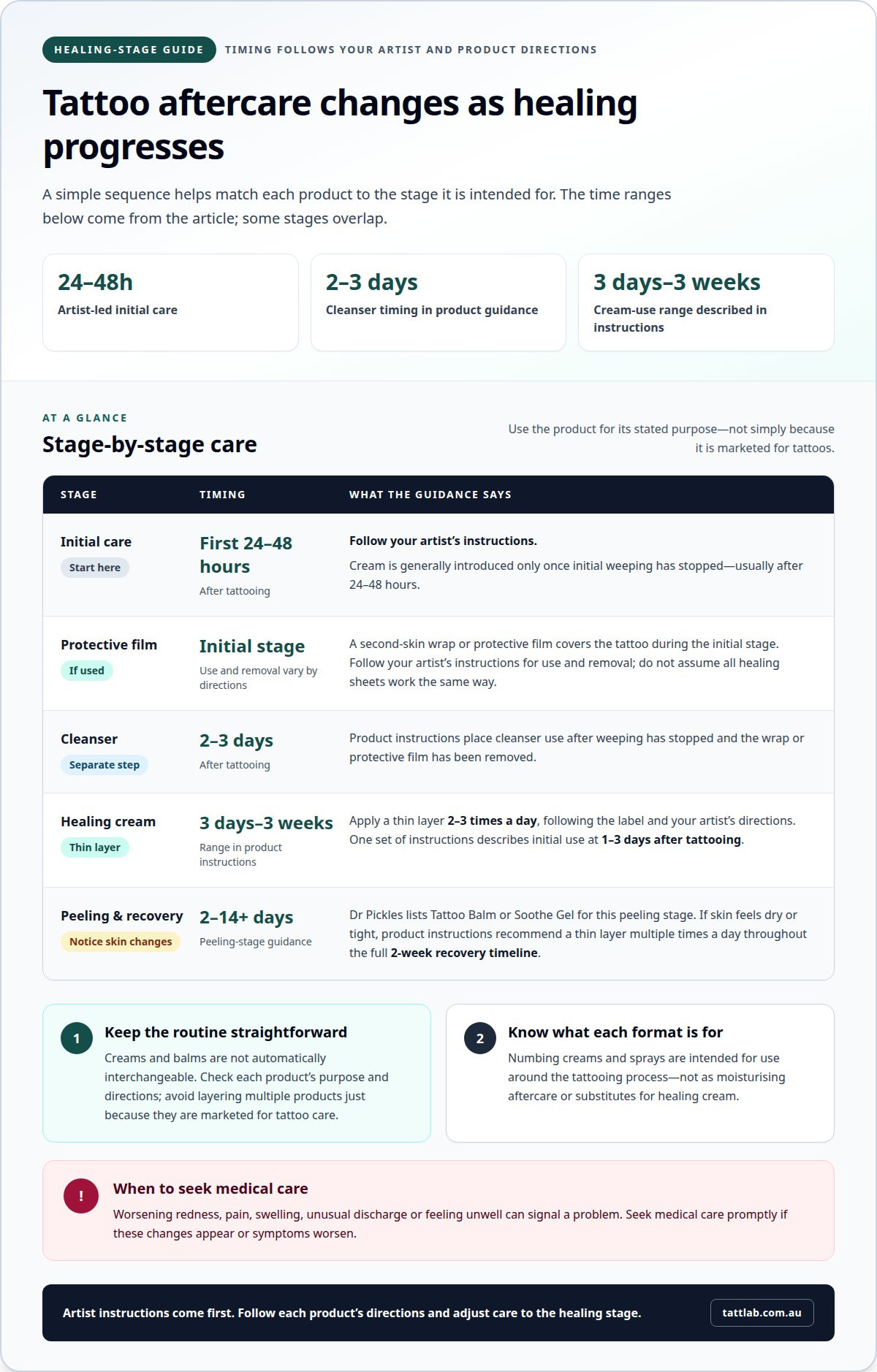
The right tattoo aftercare is less about buying more and more about matching a simple routine to your skin’s healing stage. For tattoo aftercare products in Australia, follow your artist’s instructions during the first 24-48 hours; cream is generally introduced once the initial weeping stops, usually after 24-48 hours. During healing, product instructions recommend a thin layer 2-3 times a day for 3 days to 3 weeks.
Choosing tattoo aftercare products in Australia can raise practical questions: which format to use, what affects the price and when to apply it. This guide explains how creams and moisturisers fit into aftercare, how to compare products and how care changes as a tattoo heals. It also separates claims about where a product is made from what it does, so you can make an informed choice without adding unnecessary steps.
Key Takeaways
- Compare aftercare products by their purpose and format, not price alone, to choose what fits your routine.
- Use moisturising and healing creams in line with the skin’s condition and the product instructions.
- Adjust care as healing progresses, from the initial stage through peeling and recovery.
- Understand what an Australian-made claim tells you, and how it differs from a product’s role in aftercare.
Tattoo aftercare product prices
Prices vary by product type, package size and quantity. Compare products with a similar purpose and size, then consider how each fits your aftercare routine.
Product Sizes and Prices
Check the package size alongside the price. A balm, butter or salve may contain a different amount from a cleanser, so the shelf price alone won’t show how much product you’re getting. Read the product details before comparing.
Then choose a format that suits its intended use. A larger container may cost more upfront, while a smaller one may suit a simple routine. How much you use each time also affects how long it lasts. Follow your artist’s instructions when deciding which product type belongs in your care plan.
Use the same method to compare products online. Note each product’s type and package size, then compare prices for items with a similar purpose and quantity. Finally, check whether each is a balm, cream or cleanser: these formats aren’t direct substitutes.
Prices in Australian Dollars
For Australian prices, look for an amount marked A$ or AUD. Compare prices in the same currency rather than treating a foreign-currency amount as an Australian price. The displayed Australian-dollar price is the starting point for your comparison.
Compare the product and package size, not just the currency symbol. A$ identifies Australian dollars, but doesn’t tell you whether two products contain the same amount or serve the same purpose. Read the product details alongside the price.
Make a shortlist that records each product’s format, package size and Australian-dollar price. This makes differences easier to see without assuming the lowest upfront price is the best fit. Your artist’s care instructions, routine and intended product use all matter.
Price is one factor, not a measure of suitability. Match the product type to the relevant aftercare step, then compare package information to assess value. This keeps your choice focused on what the tattoo’s care routine requires.
Tattoo moisturising and healing cream
Healing cream belongs in the aftercare routine, but timing matters. Follow your artist’s instructions during the first 24-48 hours.
Aftercare Lotions and Creams
Wait until the initial weeping stops before applying cream. Product instructions place this point usually 24-48 hours after tattooing. Apply a thin layer, rather than coating the skin heavily.
During healing, instructions recommend a thin layer 2-3 times a day for 3 days to 3 weeks. The product label and your artist’s directions guide the routine. If the skin feels dry or tight, instructions recommend reapplying a thin layer multiple times a day throughout the full 2-week recovery timeline.
Premium Aftercare Creams
“Premium” describes market positioning, not a healing stage or application schedule. Compare a product’s intended use, directions and package details rather than relying on that label alone.
A cream’s instructions should explain when to begin using it and how much to apply. Follow those directions alongside your artist’s advice. A higher price or polished packaging doesn’t replace a suitable, consistent aftercare routine.
Aftercare Creams and Balms
Creams and balms are topical aftercare formats, but the names don’t make them interchangeable. Read each product’s stated purpose and instructions, then choose a format suited to the current stage of healing.
If a product calls for a thin layer, apply it as directed. Avoid layering multiple products just because they’re marketed for tattoo care. A straightforward routine makes it easier to follow instructions and notice how your skin feels.
Numbing creams and sprays serve a different purpose from moisturising aftercare. They’re intended for use around the tattooing process, not as substitutes for healing cream. Follow the product directions and your artist’s instructions; don’t use a numbing product as a moisturiser.
For a practical sequence, follow your artist’s initial care directions. Once weeping has stopped, use the chosen healing cream as directed. This keeps timing and application aligned with the product instructions.
Aftercare by tattoo healing stage
Aftercare changes as a tattoo heals. Follow your artist’s directions first, then use each product according to its instructions.
How long should you use tattoo aftercare products? Follow the product directions throughout healing; cream instructions describe use for 3 days to 3 weeks, while another recommends a full 2-week recovery timeline.
Worsening redness, pain, swelling, unusual discharge or feeling unwell can signal a problem. Seek medical care promptly if these changes appear or symptoms worsen.
Do Australian tattoo studios recommend specific products or provide them? Studio practices vary. Your artist’s instructions guide your first 24-48 hours, and you can ask whether a wrap or product is supplied.
Healing Wraps and Sheets
A second-skin wrap or protective film covers the tattoo during the initial stage. Follow the artist’s directions for its use and removal. Product instructions place cleanser use at 2-3 days after tattooing, once weeping stops and the wrap or film has been removed.
Don’t assume every healing sheet is the same. Follow the product’s directions and your artist’s advice to determine how it fits your routine.
Healing Guidance and Duration
Use the stages as a sequence, not as a reason to add products. Follow the artist’s specific instructions for the first 24-48 hours. Cream instructions describe an initial-use stage of 1-3 days after tattooing.
Start cleanser 2-3 days after tattooing, once weeping has stopped and the protective film is off. Apply cream as directed during the healing phase, and continue only as the product instructions advise.
Healing Balms
Peeling calls for attention to how the skin feels. Dr Pickles lists Tattoo Balm or Soothe Gel for the 2-14+ days peeling stage. Follow the product directions and apply only as instructed.
If skin feels dry or tight, product instructions recommend a thin layer multiple times a day throughout the full 2-week recovery timeline. Keep care consistent, and seek medical help for worsening symptoms.
Australian-made tattoo aftercare products
An Australian-made claim describes origin, not a product’s role in aftercare. Consider where a product is made separately from how it supports tattoo care. Packaging language can make these distinct questions easy to confuse.
One product description says it is formulated in compliance with Australian TGA packaging standards. That wording refers to formulation and packaging standards. By itself, it doesn’t establish that every ingredient, manufacturing step or the finished product comes from Australia.
Read the exact wording on the product packaging and description. Check whether a claim refers to manufacture, formulation or packaging. For example, “formulated in Australia” and “made in Australia” communicate different things. Don’t treat one as proof of the other.
Origin may matter if you want to support Australian production, or help a studio explain its product choices to clients. However, a local-origin claim doesn’t replace practical details such as intended use, application directions and suitability for the relevant healing stage.
Keep the decision focused on the product’s purpose. First identify whether you need a balm, cream or cleanser. Then consider the directions and any origin statement separately. This helps distinguish a useful aftercare format from a claim about where it was made.
Product descriptions should make that distinction clear: state any origin claim accurately, then explain the product’s role without implying that packaging compliance proves domestic manufacture. Precise wording gives readers a sounder basis for choosing.
For tattoo aftercare options, explore tattoo aftercare products and review each item’s description alongside its intended use. Treat origin wording as one consideration, then match the product to the care instructions for your tattoo.
Tatt Lab: Tattoo Aftercare
Tatt Lab offers Tattoo Aftercare for readers choosing products to support a considered healing routine. After reviewing product formats and application guidance, explore the aftercare selection to find options that align with your needs and the instructions you’re following.
Tatt Lab supplies Tattoo After-care for post-session care, alongside Traditional Needles, Tattoo Cartridges and Tattoo Inks for tattoo professionals. Keep each choice tied to its purpose: follow your artist’s guidance for healing and select studio supplies according to your work.
Explore Tattoo After-care at Tatt Lab to find products for your routine.
Make your next aftercare choice with confidence
Make aftercare manageable, not more complicated. Choose a routine you can follow consistently and keep product directions close at hand. If your needs change as your tattoo heals, revisit the instructions and your artist’s guidance before adding another product.
When choosing tattoo aftercare products in Australia, look beyond packaging and marketing language. Focus on how each product fits your care routine and follow its directions. A steady, informed approach can help you make a clear choice.
Tatt Lab offers Tattoo Aftercare, alongside Traditional Needles and Tattoo Catridges for tattoo professionals. If you’d like to explore aftercare options, contact Tatt Lab about tattoo aftercare.
Take the next step at your own pace, guided by clear product information and your artist’s advice.
Frequently Asked Questions
What tattoo aftercare products are available in Australia?
Options in Australia include healing creams, lotions, balms, butters, tattoo cleansers and protective wraps. Numbing sprays are also available, but serve a different purpose from products used during healing. Choose according to the product’s intended use and your artist’s care directions. For example, a wrap supports the initial covered stage, while a balm or cream is used later as directed.
Which ingredients should you look for in a tattoo aftercare cream or balm?
Start with the ingredient list and product directions, not broad claims such as “natural” or “premium”. No single ingredient checklist suits everyone or every tattoo. Check that the product is intended for tattoo aftercare and that its directions fit your routine. Your artist can help you choose a suitable format.
What ingredients should you avoid on a fresh tattoo?
Avoid any ingredient you know causes an allergic reaction or skin irritation. Read the full label before applying a new product, including the ingredients in balms, creams and cleansers. “Natural” doesn’t automatically mean suitable for your skin. If you have a history of skin allergies or are unsure about a reaction, seek advice from a healthcare professional before use.
How do Australian tattoo aftercare products compare by price and size?
Compare products by format and package size: a balm and cleanser aren’t direct substitutes. Check the quantity on the container alongside its Australian-dollar price, then consider how the directions fit your routine. A larger package may cost more upfront, but size alone doesn’t show whether it suits your needs. Compare like-for-like products before deciding.
How should you clean and moisturise a new tattoo, and how often?
Follow your artist’s initial care directions, then use each product according to its label. Cleanser instructions place its introduction after the tattoo stops weeping and the protective wrap is removed. Apply moisturiser in a thin layer if its directions call for one. The product’s instructions set the application frequency; avoid adding extra applications or products without guidance.
Are tattoo aftercare products safe for sensitive skin or allergies?
Don’t assume a product suits everyone with sensitive skin or allergies. Read the ingredient list and avoid ingredients you know you react to. Being marketed for tattoo aftercare doesn’t establish that a product is right for your individual sensitivities. If you have a significant allergy history or are unsure about an ingredient, seek advice from a healthcare professional before applying it.


Comments (0)
There are no comments for this article. Be the first one to leave a message!