

Your new tattoo isn't just art; it's a controlled dermal wound that requires a precise biological response to become a permanent part of your identity. It's natural to feel a sense of vulnerability after leaving the studio, especially when faced with conflicting advice or the physical discomfort of the healing process. You want to ensure that the precision of the needle work is matched by the rigor of your tattoo aftercare routine. We understand that the fear of infection or ink loss can be overwhelming, but your path to a sharp, vibrant result is rooted in science, not guesswork.
This guide provides a sophisticated framework for selecting the perfect products to protect your skin integrity and ensure your ink stays vibrant for a lifetime. With the FDA now regulating tattoo inks as cosmetics under the Modernization of Cosmetics Regulation Act of 2022, the industry has moved toward a higher standard of clinical safety and reporting. We'll explore the transition to clean-label, petroleum-free formulas and examine how specific ingredients like bisabolol and shea butter support cellular repair. You'll discover a methodical, stage-based protocol that replaces anxiety with a sense of controlled, predictable progress for your skin's long-term health.
Key Takeaways
- Understand how the skin's biological inflammatory phase dictates your choice of tattoo aftercare products. This knowledge is essential to prevent ink fallout.
- Learn to select the appropriate healing format for your specific art. We'll compare the clinical benefits of adhesive barriers, balms, and lotions.
- Discover why professional standards are shifting away from heavy petroleum ointments. Modern protocols prioritize breathability to ensure the skin can respire during recovery.
- Identify the clinical advantages of specialized, vegan-friendly solutions. These formulas support cellular repair without clogging pores or leaching pigment.
- Master a methodical daily cleaning protocol. This routine balances essential hygiene with deep hydration to protect your aesthetic investment.
The Biological Blueprint: Why Professional Aftercare is Non-Negotiable
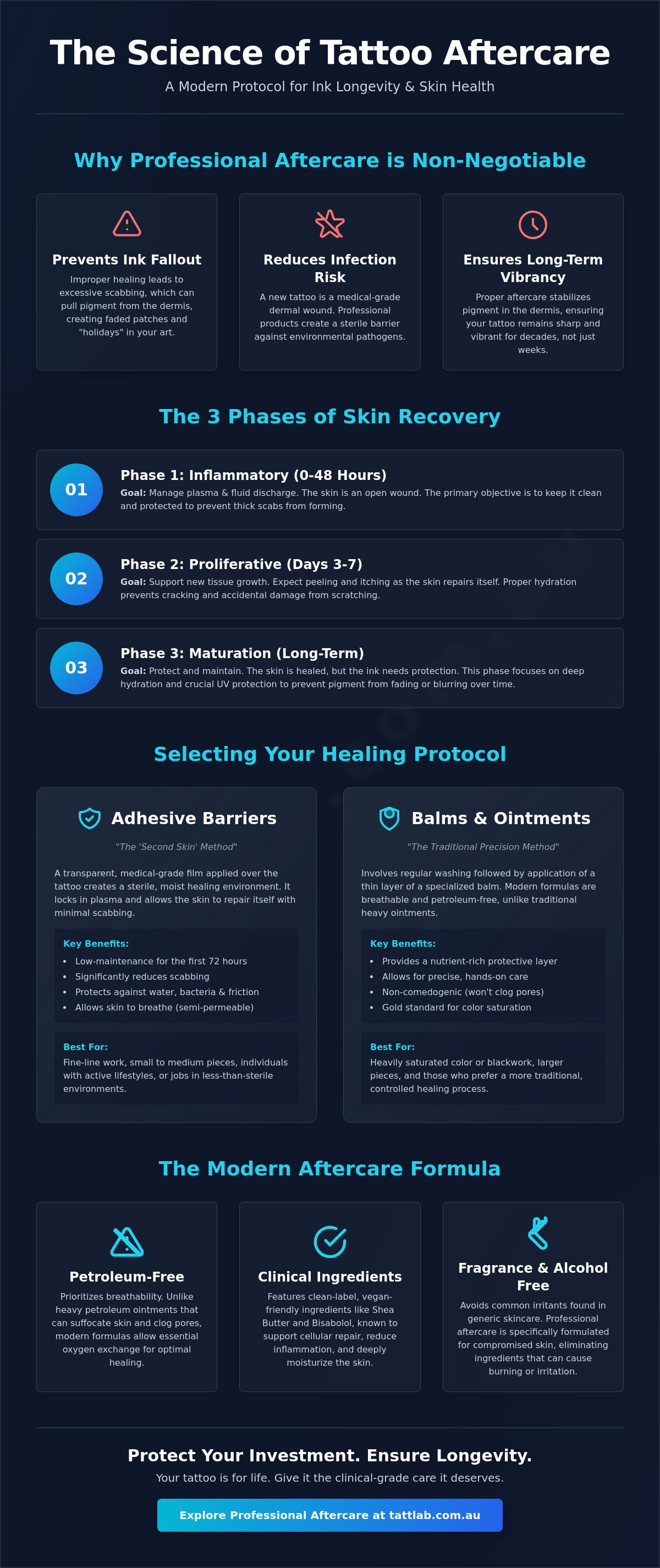
Your body initiates a complex defensive maneuver the moment the needle stops. Think of your new ink not just as a piece of art, but as a medical-grade dermal trauma that requires a specific recovery environment. Professional tattoo aftercare isn't an optional accessory; it's the critical second half of the tattooing process. Without a clinical approach to healing, even the most precise line-work is at risk of degradation. When the skin is breached, it enters an immediate inflammatory phase. This is a biological necessity where the body sends white blood cells to the site to prevent infection and begin tissue repair. However, this same process can lead to ink migration if the skin's barrier function isn't properly supported.
Maintaining this barrier is the difference between a tattoo that heals and a tattoo that lasts. It's vital to distinguish between 'healing' and 'longevity.' Healing refers to the simple closure of the wound, a process the body can often do on its own. Longevity, however, focuses on the stabilization of pigment within the dermis to ensure clarity and vibrancy for decades. Professional-grade protocols ensure the skin recovers its physical integrity without sacrificing the aesthetic outcome you've invested in.
The Role of Skin Integrity in Ink Retention
The clarity of your ink depends heavily on managing transepidermal water loss (TEWL). When the skin's surface is compromised, moisture escapes rapidly, which leads to dehydration and excessive scabbing. This scabbing often pulls pigment out of the dermal layer, resulting in 'holidays' or faded patches in your art. Specialized supplies are engineered to regulate this moisture exchange without suffocating the tissue. Unlike generic skincare, which often contains fragrances or alcohols that irritate fresh wounds, professional tattoo aftercare solutions prioritize cellular regeneration and physical integrity. This methodical support allows the skin to repair itself while keeping the pigment locked in its intended position.
Phase-Based Healing: From Open Wound to Settled Art
The tattoo healing process follows a predictable, phase-based timeline that requires different levels of intervention. During the first 48 hours, the primary goal is managing plasma and fluid discharge. If this fluid dries on the surface, it forms thick scabs that can damage the underlying art. By days 3 to 7, the skin enters the proliferative stage, characterized by peeling and new tissue growth. Supporting the dermal layer during this transition prevents the intense itching that leads to accidental damage. Long-term maintenance then shifts toward UV protection and deep hydration. This keeps the settled pigment from blurring or fading as the skin naturally ages over time.
Selecting Your Protocol: Balms, Ointments, and Adhesive Barriers
Choosing the right medium for recovery is a decision that should be as deliberate as selecting the artist themselves. The specific application style of your ink determines the physiological needs of the skin. A delicate fine-line piece on the inner wrist has different oxygen and moisture requirements than a saturated blackwork sleeve. Selecting the wrong format can lead to excessive scabbing or, conversely, a lack of protection against environmental pathogens. Your tattoo aftercare choice acts as a tailored support system for your body's natural repair mechanisms.
Modern protocols generally split into two methodologies: wet healing and dry healing. Wet healing involves using medical-grade adhesive barriers to lock in the body's natural healing fluids. Dry healing is the traditional approach of regular washing followed by the application of a balm or lotion. While both can be successful, your daily activity level and skin type should guide your choice. For those with active lifestyles or jobs in non-sterile environments, a barrier often provides a more secure shield for the fresh wound. It's about matching the product to the lifestyle and the art.
Adhesive Barriers: The 'Second Skin' Revolution
Transparent adhesive bandages have transformed the industry by creating a controlled, semi-permeable environment. These wraps allow oxygen to reach the skin while preventing water and bacteria from entering the site. This "wet healing" method significantly reduces scabbing by keeping plasma in a liquid state, which supports faster re-epithelialization. If you value a low-maintenance routine, these barriers are often the superior choice for the first 72 hours. They eliminate the need for frequent reapplications and protect your clothing from fluid seepage.
Balms and Ointments: Traditional Precision
For tattoos involving heavy color saturation or traditional shading, nutrient-dense balms remain the gold standard. These products provide a protective layer that mimics the skin's natural lipid barrier. A high-quality tattoo cream should be non-comedogenic to ensure it doesn't clog pores, which can lead to localized breakouts or "ink pimples." Balancing this occlusive protection with breathability is vital. You can find a curated range of high-performance tattoo aftercare solutions designed to support this delicate balance without suffocating the tissue.
According to the Cleveland Clinic, following a structured protocol for professional tattoo aftercare is the most effective way to prevent infection and ensure long-term clarity. Whether you opt for a modern wrap or a traditional balm, the goal remains the same: protecting the physical integrity of the skin while the pigment settles into the dermal layer. Consistency in your chosen method is more important than switching between products mid-stream.
Elite Aftercare Solutions: A Detailed Product Breakdown
Selecting the right tools is the final step in securing your skin's physical integrity. We've curated a selection of professional tattoo aftercare products that meet the rigorous standards of modern dermatology. These aren't generic moisturizers; they are engineered solutions designed to work in harmony with the specific biological needs of compromised tissue. Brands like Hustle Butter Deluxe and Mad Rabbit have redefined the healing narrative by prioritizing ingredient purity and clinical efficacy over mass-market convenience.
Mad Rabbit Tattoo Balm focuses on the long-term preservation of art by harnessing potent antioxidants. These organic oils work to combat the oxidative stress that can lead to premature fading. Meanwhile, Dr. Pickles Tattoo Balm remains a local favorite for its focused, Australian-made quality. It provides a cooling, soothing relief that is particularly beneficial for large-scale work where the inflammatory response is more pronounced. these products represent a shift in the tattoo aftercare market toward holistic wellness, treating the body with the respect its physical integrity deserves.
Natural and Vegan-Friendly Formulations
Hustle Butter Deluxe has earned its reputation as the gold standard by offering a multi-stage solution that can be used before, during, and after the procedure. Its reliance on shea butter, mango, and aloe vera isn't just for texture; these plant-based fats integrate seamlessly with the skin's natural lipids. This synergy promotes faster wound closure while maintaining the elasticity of the tissue. Understanding the chemistry of these formulations is just as important as knowing the professional guide to tattoo ink, as the two must work in tandem to prevent pigment rejection. Clean-label products are essential in 2026, as professionals move away from synthetic fillers that can trigger adverse reactions.
Advanced Protection: Saniderm and Protective Wraps
Saniderm represents the specialist's choice for an uninterrupted healing environment. This medical-grade, transparent film acts as a semi-permeable membrane that locks in the body's natural enzymes while allowing the skin to respire. By sealing the wound against external contaminants, it significantly reduces the risk of microbial infection during the critical first 24 hours. The removal process requires a gentle touch; we recommend peeling the film back slowly under warm, running water to avoid unnecessary tension on the new ink. This prevents the "falling out" of pigment that often occurs with premature scabbing. Once the barrier is removed, transitioning to a secondary moisturizer like Mad Rabbit helps maintain long-term vibrancy through organic oils and antioxidants.
Navigating the Bepanthen Debate and Common Selection Mistakes
For years, Bepanthen was the default recommendation in many studios across the globe. It was accessible and provided a thick protective layer for new ink. However, professional standards have shifted as our understanding of dermal respiration has advanced. Bepanthen is a nappy rash cream designed to create a moisture barrier for infants, not for precision-injected pigment. Its high petroleum content creates an occlusive seal that often suffocates a healing tattoo. This lack of oxygen can lead to leaching, where the body rejects pigment during the initial inflammatory phase, resulting in a duller final appearance.
The "Petroleum Problem" extends beyond just Bepanthen. Heavy ointments trap heat and moisture against the skin. This creates a breeding ground for bacteria and increases the risk of localized infections. It also leads to over-hydration of the tissue. When the skin becomes too soft, the ink can blur, compromising the sharp lines your artist worked so hard to achieve. You want your skin to breathe, not to be drowned in a heavy grease that prevents natural cellular repair.
Hidden enemies like synthetic fragrances and alcohols also frequently sabotage the tattoo aftercare process. Fragrances act as irritants on open wounds, causing unnecessary stinging and redness. Alcohols can dry out the skin prematurely, leading to painful cracking and scabbing that pulls ink away from the dermis. A common mistake is applying too much product in an attempt to speed up the process. You don't need a thick layer; a thin, breathable film is all that's required. Over-moisturizing prevents the skin from forming its own protective barrier and often results in "ink pimples" or clogged pores.
Why Specialist Products Outperform General Antiseptics
Treating a precision wound requires a different biochemical approach than treating a minor abrasion. Specialist tattoo aftercare products are formulated with ingredients that support dermal recovery without the heavy occlusives found in general antiseptics. These products prioritize the physical integrity of the skin while keeping pigment stable. For a deeper look at how these ingredients interact with your skin, read our guide on mastering tattoo aftercare.
The Danger of Cross-Contamination
The format of your chosen product matters as much as the ingredients. Tub-based balms carry a higher risk of cross-contamination compared to squeeze tubes or airless pumps. Every time you dip your finger into a jar, you introduce bacteria into the product. We recommend using medical supplies for tattoo artists, such as nitrile gloves, during the initial cleaning stages to maintain a sterile environment. Store your products in a cool, dry place to ensure the active ingredients remain stable and effective throughout your recovery.
Avoid common healing pitfalls by choosing a protocol backed by clinical science. Explore our professional range to find the right solution for your skin type.
Implementing a Professional Post-Session Routine
The Tatt Lab philosophy views the recovery period as a collaborative partnership between the artist's technical precision and the client's commitment to care. While the application phase is a controlled procedure, the final aesthetic outcome depends on how you manage the skin's biological response in the following weeks. This partnership ensures that the physical trauma of the needle translates into a sharp, permanent narrative of self-assurance. A disciplined tattoo aftercare routine is the essential bridge between a fresh wound and a lifelong aesthetic asset.
Consistency in your daily cleaning protocol is the most effective way to protect your investment. You should treat the area with the same meticulousness a laboratory technician treats a delicate specimen. This methodical approach reduces the risk of environmental contamination and ensures the pigment settles exactly where it was intended. As the skin transitions through its natural repair phases, your role is to provide the optimal environment for cellular regeneration without interrupting the process with aggressive handling.
The First 24 Hours: Critical Steps
The initial hours after leaving the studio are the most volatile for your skin's physical integrity. If you aren't using a medical-grade adhesive barrier, you'll generally need to remove the traditional bandage within two to four hours. Always wash your hands thoroughly with antibacterial soap before touching the area. Use lukewarm water and a fragrance-free cleanser to gently remove plasma and excess fluid. Avoid rubbing the surface, as this can cause micro-tears in the fragile new tissue. Instead, pat the area dry with a clean, single-use paper towel. Apply a very thin, transparent layer of your specialist cream to support the dermal barrier without suffocating it.
Long-Term Care for Permanent Results
Once the initial peeling phase concludes, typically between days 10 and 14, your focus must shift from wound healing to pigment preservation. UV exposure is the primary catalyst for ink degradation and blurring over time. Even after the skin feels fully recovered, the internal settling of ink continues for months. Maintaining skin elasticity through consistent hydration prevents the natural aging process from distorting fine lines or saturated colors. Transitioning to a lighter, antioxidant-rich daily moisturizer ensures the dermis remains resilient against environmental stressors.
To ensure a successful journey, follow this final checklist:
- Wash two to three times daily with mild, pH-balanced soap.
- Always pat dry; never use a bath towel which can harbor bacteria.
- Keep applications thin to allow for essential dermal respiration.
- Avoid submerged water, such as pools or baths, for at least 14 days.
- Prioritize sun protection once the skin has closed.
Browse the full range of professional aftercare here to secure the future of your ink with clinically-backed solutions.
Securing Your Aesthetic Legacy
Your tattoo is a permanent transformation that deserves the highest standard of biological support. By moving beyond outdated advice and embracing a protocol rooted in dermal science, you ensure that every fine line and saturated hue remains as sharp as the day it was applied. We've explored how the right selection of specialized barriers and nutrient-dense balms prevents the pigment rejection that often follows improper wound management. This methodical approach is what separates a fading memory from a lifelong masterpiece.
As an artist-owned and operated facility, we understand the vulnerability of fresh ink. We've meticulously vetted global brands like Hustle Butter and Mad Rabbit to provide you with a curated range of tattoo aftercare that prioritizes physical integrity above all else. With fast express shipping available across Australia, professional-grade recovery is always within reach. You've invested in the art; now, invest in the science that preserves it.
Shop the Professional Tattoo Aftercare Collection to begin your journey toward a vibrant, sharp result. Your skin has been the canvas; now, let science be its guardian. We're here to support your healing every step of the way.
Frequently Asked Questions
How long should I wait before applying tattoo aftercare cream?
You should typically wait until your first wash, occurring two to four hours after your session, before applying any aftercare cream. This window allows the initial plasma to be cleaned away and the skin to respire. Applying product too early can trap bacteria against the open wound. Once the area is clean and dry, a thin layer is sufficient to support the dermal barrier without suffocating the tissue.
Is Bepanthen still recommended for new tattoos in 2026?
Professional standards in 2026 have largely moved away from Bepanthen in favor of specialized tattoo aftercare solutions. While once popular, its heavy petroleum base creates an occlusive seal that can suffocate the skin and lead to pigment leaching. Modern artists prioritize breathable, plant-based formulas that support the skin's physical integrity without the risk of clogging pores or blurring fine lines during the inflammatory phase.
Can I use Saniderm if I have sensitive skin?
Saniderm and similar medical-grade adhesive barriers are generally safe for sensitive skin, but we recommend a small patch test on an unaffected area first. If you have a known adhesive allergy, these products might cause localized irritation or redness. If your skin reacts, transition immediately to a traditional dry healing method using a gentle, fragrance-free balm to ensure the healing process remains controlled and predictable.
What happens if I over-moisturise my new tattoo?
Over-moisturising can lead to ink pimples or localized breakouts caused by clogged pores. When you apply too much product, the skin's ability to respire is compromised, which can lead to excessive softening of the tissue. This environment often attracts bacteria and can cause the pigment to blur or migrate. Always aim for a thin, transparent film that feels hydrated but not greasy to maintain the clarity of the work.
How often should I wash my tattoo during the first week?
We recommend washing your new investment two to three times daily during the first week of recovery. Consistent cleaning with a pH-balanced, fragrance-free soap is essential to remove excess plasma and prevent thick scabbing. Frequent washing beyond this can lead to unnecessary irritation and dryness. Always ensure your hands are sterile before touching the area to maintain a controlled environment for your skin to repair itself.
Is it normal for my tattoo to peel or scab even if I use aftercare?
Light peeling is a natural part of the proliferative stage and should be expected as your body regenerates new skin. However, thick, heavy scabbing is often a sign of dehydration or improper cleaning. While specialized tattoo aftercare products minimize this discomfort, some minor flaking is inevitable as the old epidermis sheds. Never pick or pull at these flakes, as doing so can prematurely remove pigment from the dermis.
When can I stop using specialist tattoo cream and switch to regular lotion?
You can typically transition to a high-quality, fragrance-free regular lotion after the initial two to three weeks, once the skin has fully closed and the peeling has stopped. By this stage, the primary wound healing is complete, and the focus shifts to long-term vibrancy. Specialist creams are engineered for compromised tissue; once the barrier is restored, a lighter daily moisturizer is sufficient to maintain the skin's elasticity and health.
Can I swim or go to the gym after applying a protective bandage?
You should avoid swimming or soaking in water for at least 14 days, even with a protective bandage. While these wraps are waterproof against light showers, full submersion can compromise the adhesive and trap moisture, leading to potential infection. Light gym activity is permissible if the bandage is secure, but avoid heavy sweating or friction on the site. Physical integrity is the priority during these critical early stages of recovery.


Comments (0)
There are no comments for this article. Be the first one to leave a message!