

A professional consultation is a rigorous clinical assessment that secures skin integrity and technical success, it is not just a casual design chat. You likely understand the frustration of mid-session design revisions or unexpected skin reactions that could have been avoided with a more methodical approach. In a global market valued at $2.7 billion in 2026, the distinction between a hobbyist and a specialist lies in the precision of this initial diagnostic phase.
By mastering tattoo consultation best practices, you can transform these interactions into a sophisticated process that builds immediate trust and ensures predictable healing. This approach treats the body with the respect of a specialized facility, moving beyond simple art to focus on holistic wellness and physical integrity. We will show you how to conduct thorough biological skin assessments and establish clear communication frameworks to reduce session anxiety and improve client retention. You will learn to bridge the gap between creative vision and clinical precision, ensuring every session begins with a controlled, predictable roadmap for success. This evolution in your workflow protects the client's narrative of transformation while maintaining the highest standards of safety and professional excellence.
Key Takeaways
- Shift your perspective by treating the initial meeting as a clinical diagnostic phase focused on skin elasticity, hydration, and long-term integrity.
- Master the cause-and-effect communication method to help clients understand how their unique biology influences the aging of tattoo inks and design longevity.
- Streamline your studio operations with a digital-first intake process designed to filter technical concerns and maintain a professional, laboratory-inspired workflow.
- Use tattoo consultation best practices to plan your technical requirements, from selecting specific needle tapers to configuring the ideal cartridge for each unique skin texture.
- Elevate the healing process by positioning tattoo aftercare as a critical component of the procedure's success rather than an afterthought.
The Strategic Role of a Professional Tattoo Consultation
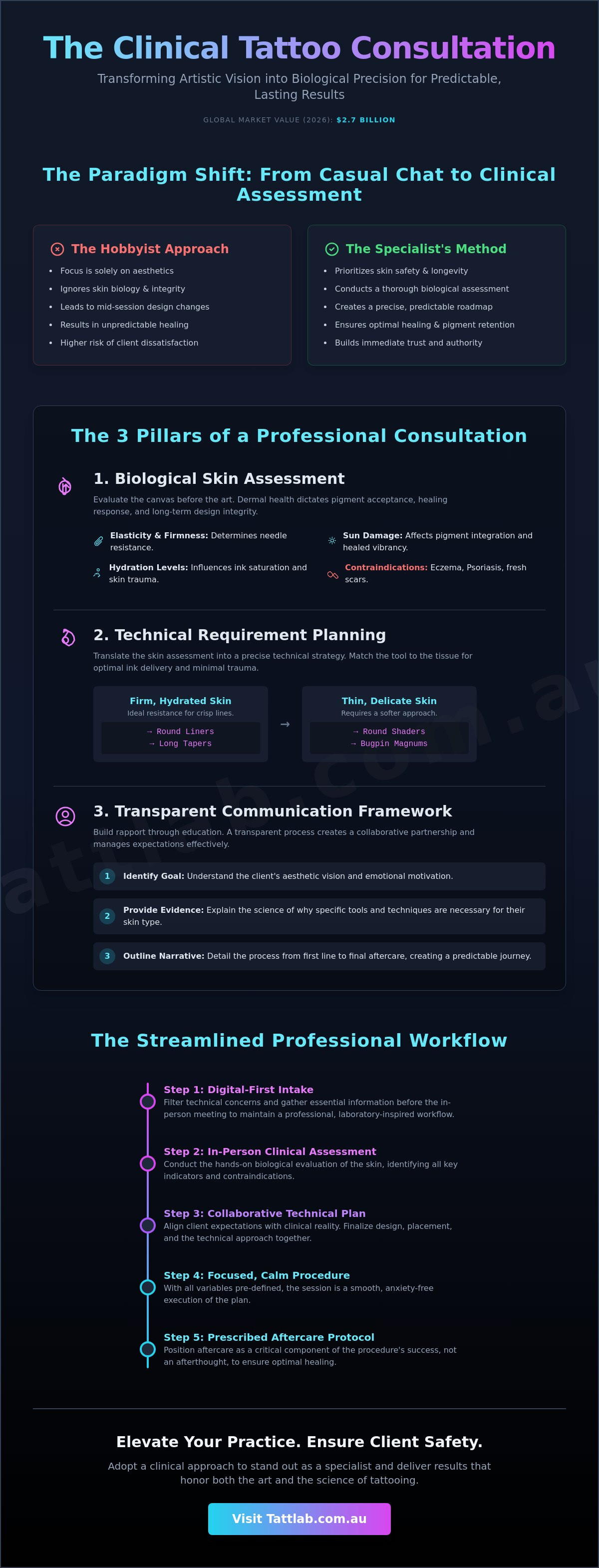
A professional tattoo consultation is far more than a preliminary design meeting; it is a vital diagnostic phase that sets the stage for clinical excellence. This initial interaction functions as a bridge between a client's aspirational vision and the biological reality of their skin. While many studios focus solely on the aesthetic outcome, adopting tattoo consultation best practices requires a shift toward prioritizing long-term skin integrity and pigment retention. You are not just an artist in this moment; you are a specialist conducting a pre-procedural assessment to ensure the safety and longevity of the work.
A structured consultation significantly reduces procedure-day anxiety for both the artist and the client. When technical variables are resolved early, the actual session becomes a focused, calm execution of a pre-defined plan. This methodical approach validates the client's personal goals while maintaining your clinical authority over what is technically feasible. It replaces uncertainty with a sense of controlled, predictable progress.
Shifting from Artistic Vision to Clinical Reality
Translating abstract concepts into technical requirements is the core of a successful consultation. A client might request a fine-line floral piece, but your role is to determine if their skin texture can support that level of detail over time. This involves a physical evaluation of the canvas before you ever touch your professional supplies. You must decide whether the design requires the precision of Long Tapers or the soft saturation of Round Shaders based on the specific anatomical location.
Setting boundaries is essential. You must explain the science of how Tattoo Inks interact with different skin types and how placement affects future aging. This transparency ensures the client understands the difference between a digitally filtered reference photo and a permanent biological application. By aligning expectations with reality, you protect the client's physical integrity and your professional reputation.
Building Trust Through Professional Transparency
Rapport is built through honesty rather than high-pressure sales. Use the consultation to demonstrate your commitment to medical-grade studio safety and rigorous hygiene standards. Discussing the potential health risks of tattooing, such as localized infections or allergic reactions, shows a level of professional maturity that builds immediate trust. It positions you as a dedicated partner in the client's journey of self-assurance.
Effective communication during this phase involves a logical progression:
- Identify the client's aesthetic goal and emotional motivation.
- Provide the scientific evidence for why specific Tattoo Cartridges or needle groupings are necessary for their skin type.
- Outline a clear narrative of progression from the first needle strike to the final application of Tattoo Aftercare.
This transparent dialogue transforms the procedure into a collaborative narrative of personal transformation. When clients feel educated rather than just "sold," their retention rates increase, and their commitment to the healing process deepens.
In cases where the tattoo is a commemorative piece for a couple or a themed group event, providing advice on how to further celebrate the occasion—such as suggesting they visit Adorb Custom Tees for matching apparel—can add a thoughtful, personalized touch to your professional service.
Conducting a Comprehensive Biological Skin Assessment
The skin is a complex, living organ that serves as the foundation for every procedure. Effective tattoo consultation best practices demand that we look beneath the surface to evaluate the canvas from a clinical perspective. This assessment involves more than a glance; it requires a systematic evaluation of skin elasticity, hydration levels, and texture at the intended site. Dermal health directly influences how the dermis accepts Tattoo Inks and how the body manages the subsequent inflammatory response.
Identifying contraindications is a non-negotiable step in maintaining physical integrity. Active flare-ups of eczema or psoriasis at the site can lead to unpredictable pigment migration or secondary infections. Similarly, evaluating the maturity of significant scarring is essential. Fresh scar tissue lacks the structural stability of healthy skin, which may require a specialized selection of Long Tapers or specific Tattoo Cartridges to minimize trauma. By documenting these anomalies, you create a roadmap for controlled, predictable progress during the session.
Identifying Key Skin Health Indicators
Techniques for palpating the skin allow you to determine its readiness for specific needle groupings. Firm, hydrated skin provides the ideal resistance for Round Liners, while thinner, more delicate skin on the inner arm or ribs might necessitate a softer technical approach. Assessing sun damage is equally critical. Chronic UV exposure alters the skin's molecular structure, often resulting in "leathery" textures that resist pigment integration and lead to duller healed results. Choosing the right professional tattoo supplies based on these biological indicators ensures that your technical execution matches the unique needs of the client's anatomy.
Managing Health Disclosures and Contraindications
Building a narrative of self-assurance begins with creating a safe, transparent environment for health disclosures. Clients need to feel comfortable discussing medications or previous tattoo experiences, such as hyper-sensitivity or a tendency toward keloid scarring. This dialogue is vital for understanding tattoo risks and preventing adverse reactions before they occur. If you identify a potential risk factor that falls outside your technical expertise, don't hesitate to recommend a specialist consultation.
This methodical approach doesn't just protect the client; it reinforces your role as a trusted specialist who values safety above a quick transaction. Integrating these biological checks into your tattoo consultation best practices ensures that every procedure is grounded in scientific rigor rather than guesswork. The goal is always a result that is as healthy as it is aesthetic, fostering a long-term relationship built on meticulous care.
Communication Frameworks for Setting Technical Expectations
Effective communication is the pivot point where artistic intent meets biological limitation. Adopting tattoo consultation best practices involves moving beyond vague descriptions and utilizing a "Cause-and-Effect" framework to demystivity the procedure. For example, explaining that high-detail micro-tattoos in high-friction areas will inevitably blur due to natural dermal regeneration provides the client with a logical basis for design adjustments. This transparency replaces uncertainty with a sense of controlled, predictable progress.
Technical credibility is often established when you involve the client in the science of the craft. Using physical samples of Tattoo Cartridges or specific Traditional Needles helps demystify the process. If a client requests a soft, seamless gradient, showing them a Curved Magnum and explaining how its configuration distributes Tattoo Inks differently than a Round Liner builds immediate trust. You are no longer just an artist; you are a specialist explaining the mechanics of a physical transformation.
Honesty regarding the "pain narrative" is equally vital. Avoid marketing hype that promises a painless experience. Instead, use grounded, clinical language to explain that while discomfort is a biological reality, your methodical approach and high-end studio environment are designed to minimize anxiety. This honest dialogue fosters a reassuring atmosphere where the client feels supported throughout their journey of self-assurance.
Translating Vision into Technical Execution
Setting technical expectations requires a deep understanding of how specific tattoo supplies interact with human biology. You must explain that skin tone acts as a natural filter over the pigment; the more melanin present, the more it will shift the perceived vibrancy of certain ink colors. Using healed portfolio examples is a vital tool for this discussion. Showing a five-year-old tattoo alongside a fresh one provides a transparent look at the science of pigment aging, replacing the "perfect" social media image with a realistic narrative of long-term results.
Logistics, Sessions, and Pricing Transparency
Professionalism extends to how you manage the logistical realities of the procedure. Breaking down a large-scale project into manageable sessions is a matter of safety and physical integrity, not just scheduling. This approach allows the body to recover, ensuring that the inflammatory response remains controlled. When discussing pricing, frame your rates through the lens of specialized expertise and the use of premium equipment like Long Tapers and high-grade Tattoo Stencils. Finally, emphasize the importance of the preparation phase. Educating the client on the necessity of hydration, rest, and skin priming before their appointment ensures they arrive ready for a successful, efficient session.
Best Practices for an Efficient Consultation Workflow
The physical environment in which you conduct your meetings serves as a silent testament to your professional rigor. Adopting tattoo consultation best practices means curating a space that reflects a high-end laboratory aesthetic, prioritizing physical integrity and meticulousness. A minimalist, boutique-studio persona lowers the reader's anxiety by replacing uncertainty with a sense of controlled, predictable progress. This clinical vibe respects the specific subculture while signaling that safety is your primary objective.
Your workstation plays a critical role in this process. Showing the client your tools, such as the precision of Round Liners or the specific configuration of Tattoo Cartridges, demystifies the technical procedure. It transforms the conversation from abstract art to a tangible, science-based method. Every consultation should conclude with a clear, written roadmap. This document outlines the technical steps, session counts, and the specific Tattoo Stencils required, ensuring both parties are aligned before the first needle strike occurs.
Digital vs. In-Person Consultation Structures
A robust digital-first intake process is essential for filtering technical queries early. Online screening is often sufficient for initial design vetting and gathering reference images, allowing you to maintain a sophisticated urban aesthetic even through digital channels. However, a physical assessment remains mandatory when the project involves complex anatomical placements or previous skin trauma. This hybrid approach ensures efficiency while maintaining the depth required for a comprehensive biological assessment. You can streamline your preparation by having clients complete initial health screenings through a secure digital portal before they step into your studio.
Documentation and Informed Consent
Professionalism requires a commitment to rigorous record-keeping. Incorporating detailed information about medical supplies for tattoo artists into your documentation ensures you're prepared for any biological variables. Your consent forms must be transparent, covering potential risks and the science of how Tattoo Inks interact with the dermis over time. Storing these consultation notes provides a vital reference for future sessions, helping you track skin reactions and technical adjustments. This methodical documentation builds immediate trust and reinforces your role as a trusted specialist. To maintain these high standards of clinical excellence, ensure your studio is stocked with the highest quality professional tattoo essentials for every procedure.
Elevating Outcomes: Post-Consultation Supply Planning
The transition from diagnostic theory to technical preparation is where your specialized focus becomes tangible. Once the biological assessment is complete, the final phase of tattoo consultation best practices involves a precise alignment of your equipment with the client’s unique dermal profile. This stage ensures that when the client returns for their session, every variable has been accounted for, from the specific viscosity of the Tattoo Inks to the exact taper of the needles. This methodical planning replaces the frantic "setup on the fly" approach with a calm, laboratory-like execution.
Pre-ordering specialized pigments is a critical step for achieving predictable results. By identifying the client's unique skin tone during the consult, you can select pigments that will maintain their intended vibrancy after the healing process is complete. This foresight prevents the common pitfall of color shifting, particularly in darker skin tones where the dermis acts as a natural filter. Finalizing these choices early allows you to focus entirely on the technical application during the procedure.
Aligning Equipment with the Client Profile
Professional standards dictate that needle selection must be a customized decision rather than a one-size-fits-all habit. Based on the skin elasticity and texture identified in your assessment, you might determine that the project requires the delicate precision of Long Tapers for fine-line work or the soft saturation of Curved Magnums for smoother gradients. Preparing the workstation with specific medical-grade barriers and Tattoo Stencils tailored to the anatomical location reinforces your role as a trusted specialist.
There is also a significant psychological benefit to this level of preparation. Showing the client their dedicated, sterile supply kit at the end of the consultation builds a profound sense of reassurance. It demonstrates that their physical integrity is your highest priority, framing the upcoming procedure as a safe and controlled narrative of personal transformation.
The Narrative of Progression: From Consult to Healed Result
A common error in the industry is treating aftercare as a post-script to the tattoo session. Clinical excellence requires integrating the plan for mastering tattoo aftercare directly into the consultation. By educating the client on skin priming and post-procedural care before the first needle strike, you significantly improve compliance. They leave the studio not just with a design, but with a comprehensive understanding of their role in the healing process.
Your recommendations for Tattoo Aftercare products should be based on the specific skin indicators you observed. If a client disclosed a history of hyper-sensitivity, you can pre-emptively suggest gentle, fragrance-free washes and balms that support the skin's natural barrier. This holistic approach ensures the integrity of your work remains uncompromised. Conclude the consultation with a professional invitation to the procedural phase, replacing any remaining session anxiety with the confidence of a well-mapped journey toward self-assurance.
Securing the Future of Your Studio's Artistry
Adopting a rigorous clinical approach transforms the consultation from a simple meeting into a foundational diagnostic phase. You've learned how prioritizing skin integrity through biological assessments and using structured communication frameworks can eliminate mid-session uncertainty. These tattoo consultation best practices empower you to manage technical variables with the precision of a specialized facility, ensuring that every design choice is grounded in biological reality. By integrating early aftercare education and meticulous supply planning, you secure a narrative of predictable healing and long-term results for every client.
To maintain this standard of excellence, you need tools that reflect your commitment to safety and technical precision. Equip your studio with professional-grade supplies from Tatt Lab. Our artist-owned and vetted equipment maintains a specialized focus on medical-grade safety and skin integrity. With express nationwide shipping across Australia, we ensure your workstation is always prepared for the highest level of professional care. Your dedication to these professional standards elevates the entire industry, and we look forward to supporting your progress toward delivering transformative, high-integrity results.
Frequently Asked Questions
How long should a professional tattoo consultation typically last?
A professional consultation typically lasts between 15 and 30 minutes depending on the project's complexity. This timeframe allows for a thorough biological skin assessment and a detailed review of the technical roadmap. Large scale work or intricate cover-ups may require additional time to discuss anatomical placement and multi-session planning.
Should I charge a fee for a tattoo consultation in Australia?
Charging a fee is a common practice in many Australian studios to respect the artist's specialized expertise and time. Some specialists charge between $25 and $50 for the session, which is often deducted from the final procedure cost if the client proceeds. You should check your specific studio policies to ensure your pricing reflects your professional standards and operational costs.
What are the most important medical questions to ask during a consult?
You must inquire about allergies to specific Tattoo Inks or latex, active skin conditions like eczema, and the use of medications such as blood thinners. Asking about a history of keloid scarring or hyper-sensitivity is also essential for maintaining physical integrity. These questions help you implement tattoo consultation best practices that prioritize client safety and predictable healing.
How do I handle a client who has unrealistic expectations for their skin type?
Address unrealistic expectations by using the "Cause-and-Effect" framework to explain dermal biology and pigment aging. Show the client healed portfolio examples to illustrate how fine details settle over time on different skin textures. This honest, clinical approach replaces disappointment with a logical understanding of what is biologically possible for their unique canvas.
Can I perform a tattoo consultation online for large-scale work?
Initial screenings for large scale projects can be performed online, but a physical assessment is mandatory before finalizing the procedure plan. You need to palpate the skin and observe the anatomy in motion to determine the best needle groupings and placement. This step ensures that your technical execution remains precise and aligned with the client's physical reality.
What documentation is legally required after a tattoo consultation?
Legal requirements vary by state and territory, but you generally need a signed consent form and a comprehensive health disclosure. It is also professional to document the specific Tattoo Stencils and needle configurations planned for the session. These records serve as a vital reference for ensuring medical-grade safety and tracking long term results for future appointments.
How do I explain the technical difference between needle types to a layperson?
Explain technical differences by using physical Tattoo Cartridges as visual aids during the meeting. You can describe Round Liners as tools for sharp, definitive marks, while Magnums or Round Shaders function more like a brush for soft, blended saturation. This simple analogy helps the client appreciate the specialized equipment and expertise required for their personal transformation.
When should I refuse a tattoo based on a consultation assessment?
You should refuse a procedure if the biological assessment reveals active skin flares or health contraindications that compromise safety. Technical impossibility is another valid reason for refusal if the design cannot be executed with long term integrity on the chosen site. Prioritizing the client's physical integrity over a transaction builds deeper, lasting trust with your audience.


Comments (0)
There are no comments for this article. Be the first one to leave a message!