

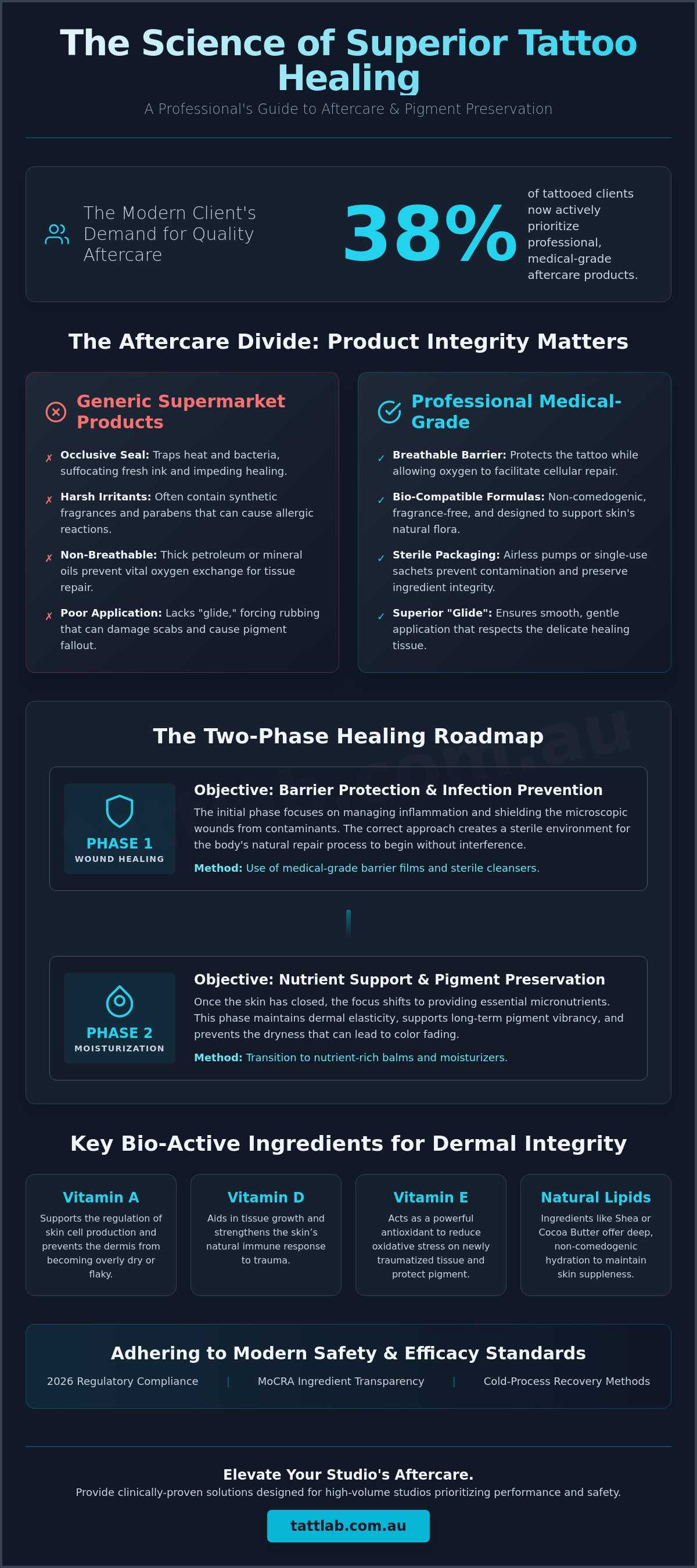
Did you know that 38% of tattooed clients now actively prioritize professional tattoo aftercare products over generic supermarket alternatives? This shift reflects a more informed audience that understands the difference between basic wound healing and the preservation of artistic integrity. As an artist, you know that the final result of your work depends as much on the healing process as it does on your precision with a magnum or liner. It is discouraging to see a masterfully executed piece suffer from pigment fallout or loss of detail simply because a client used a non-sterile barrier or a harsh, antibacterial soap.
We recognize the vulnerability of the skin post-procedure; it is a delicate biological canvas that requires precise environmental control. By reading this guide, you'll discover how to select medical-grade aftercare and studio barriers that protect skin integrity while ensuring long-term pigment vibrancy. We will explore the latest 2026 standards, including the implications of MoCRA regulations on ingredient transparency and the shift toward fragrance-free, cold-process recovery methods. This methodical overview provides a clear framework for implementing a two-phase system that combines clinical barrier protection during the session with nutrient-dense biological support throughout the recovery period.
Key Takeaways
- Distinguish between the critical wound healing and moisturizing phases to provide clients with a clear, science-backed recovery roadmap.
- Evaluate the biological impact of specific vitamins and lipids to select professional tattoo aftercare products that truly support dermal integrity.
- Determine the optimal timing for transitioning from protective barrier films to nutrient-rich balms to prevent fluid weeping and maximize color saturation.
- Standardize your studio workflow with high-precision stencils and specialized cartridges to minimize skin trauma and ensure predictable healing outcomes.
- Explore the AVA Professional Collection to find specialized aftercare solutions designed for high-volume studios that prioritize clinical performance and modern safety.
Beyond the Surface: Why Professional Tattoo Aftercare Products are Essential
Professional aftercare represents a specialized category of medical-grade dermatological support designed to bridge the gap between clinical procedures and home recovery. It isn't merely about keeping the skin soft; it's about managing a controlled biological trauma. Unlike generic lotions, professional tattoo aftercare products are engineered to support the skin's natural regenerative processes without interfering with the newly deposited pigment. At Tatt Lab, our selection process is rooted in scientific rigor, ensuring every product respects physical integrity and prioritizes long-term health over superficial fixes.
Successful recovery follows a predictable, two-phase trajectory. The initial "wound healing" phase focuses on managing inflammation and preventing infection through sterile barriers. Once the skin has closed, the "moisturizing" phase begins, where the objective shifts to maintaining dermal elasticity and pigment vibrancy. Using the wrong product at the wrong stage can compromise the entire piece. For instance, heavy petroleum-based supermarket alternatives often create an occlusive seal that can effectively "suffocate" fresh ink. This traps body heat and bacteria against the wound, potentially leading to sluggish healing or even infection.
The Biology of a Healing Tattoo
During the tattooing process, needles puncture the epidermis to deposit ink into the upper dermis. This creates thousands of microscopic wounds, triggering an immediate inflammatory response. This reaction is natural, but it requires clinical-grade soothing to ensure the body doesn't overreact and reject the pigment. Mastering tattoo aftercare requires a deep understanding of this cellular transition. When you use high-quality professional tattoo aftercare products, you're providing the specific micronutrients the dermis needs to stabilize the ink while the epidermis rebuilds its protective shield.
Professional vs. Retail: The Chemical Difference
The primary distinction between professional formulas and retail ointments is breathability. Many standard retail products contain thick mineral oils or petroleum that sit on top of the skin. While this might work for a minor scrape, a healing tattoo needs to "breathe" to facilitate oxygen exchange, which is vital for tissue repair. Professional balms are formulated to be non-comedogenic, meaning they won't clog pores or cause breakouts around the art. We also ensure our curated range excludes common irritants found in supermarket lotions, such as synthetic fragrances and parabens. These chemicals are frequent culprits behind secondary allergic reactions that can ruin fine line work and cause unnecessary scabbing.
Key Features to Evaluate in Medical-Grade Aftercare
Selecting the right professional tattoo aftercare products requires a discerning eye for biochemical composition rather than just aesthetic packaging. At the core of medical-grade recovery is ingredient transparency. You should look for formulations enriched with specific micronutrients that facilitate cellular repair and maintain dermal elasticity. Natural lipids, such as shea butter, provide a superior moisture barrier compared to synthetic alternatives, ensuring the skin remains supple during the most vulnerable days of recovery. Essential ingredients to prioritize include:
- Vitamin A: Supports the regulation of skin cell production and prevents the dermis from becoming overly dry.
- Vitamin D: Aids in tissue growth and strengthens the skin’s natural immune response.
- Vitamin E: Acts as a powerful antioxidant to reduce oxidative stress on newly traumatized tissue.
- Natural Lipids: Ingredients like shea butter or cocoa butter offer deep hydration without clogging pores.
Antimicrobial agents play a vital role, yet they must be balanced. The goal is to prevent secondary infections while preserving the skin's beneficial flora. Overly aggressive sterilizers can delay healing by stripping the body of its natural defenses. This focus on safety aligns with current FDA tattoo safety guidelines, which emphasize the importance of using uncontaminated, sterile products throughout the entire process. Packaging integrity is equally paramount; professional-grade balms often utilize airless pumps or single-use sachets to ensure the product remains sterile from the first application to the last drop.
The "glide" factor is a practical necessity that specialists often overlook. A product with poor spreadability forces the client to rub or pull on fresh scabs, which can lead to premature pigment loss. When you provide your clients with high-quality professional tattoo aftercare products, you're ensuring a smooth application that respects the delicate nature of the healing tissue. Offering premium aftercare options directly in your studio builds immediate trust and ensures the client leaves with the tools necessary for a successful result.
The Critical Role of Barrier Films
The shift from traditional cling wrap to breathable, adhesive medical films like Saniderm or Elite marks a significant evolution in studio protocols. These films facilitate "wet healing," a method where the body's natural exudates are kept in contact with the wound to accelerate cellular regeneration. While films are excellent for large-scale pieces or high-friction areas, traditional balms remain the preferred choice for clients with adhesive sensitivities or for the later stages of the recovery narrative. Choosing the right modality depends on the specific tattoo style and the client's lifestyle.
Numbing and Preparation Products
Client comfort is no longer an afterthought in the modern studio. Professional numbing solutions allow for longer, more productive sessions without compromising the skin's receptivity to ink. These products, alongside pH-balanced soaps like Green Soap, form the foundation of a professional session. Using a soap that matches the skin's natural acidity prevents the irritation often caused by alkaline retail soaps. For a deeper look at studio hygiene standards, you can explore our guide on medical supplies for tattoo artists to ensure your facility meets the highest clinical benchmarks.
Comparing Aftercare Modalities: Balms, Bandages, and Studio Barriers
The success of a healing tattoo depends on a cohesive ecosystem of protection. While many discussions focus solely on what the client applies at home, a specialist understands that the recovery narrative begins with the clinical integrity of the workstation. True professional tattoo aftercare products encompass everything from the barrier films applied post-session to the biodegradable sleeves that prevent cross-contamination during the tattooing process. By viewing studio hygiene as the first step in the aftercare chain, you ensure that the biological canvas remains uncompromised by environmental pathogens.
Protective wraps and adhesive bandages are the gold standard for the critical first 24 to 48 hours. These films manage fluid weeping by trapping the body's natural healing enzymes against the wound, which significantly reduces the risk of early-stage scabbing. Once this initial phase passes, the protocol shifts toward balms and salves. These products provide the long-term hydration necessary for maintaining vibrant color and dermal elasticity. Following dermatologist-approved tattoo aftercare tips ensures that the transition between these modalities is seamless, protecting the work from external irritants while allowing the skin to breathe.
The Shift to Biodegradable Studio Supplies
Modern studio standards are evolving to prioritize both clinical safety and environmental responsibility. Traditional plastic machine covers and cord sleeves contribute significantly to medical waste; however, they remain essential for preventing cross-contamination. The AVA biodegradable range offers a sophisticated solution for the eco-conscious studio. These barriers provide the same high-level protection for your machinery and your client as traditional plastics, but they break down naturally without leaving a lasting footprint. Implementing these specialized barriers is a proactive step in holistic aftercare, as a sterile environment is the only way to prevent the secondary infections that ruin recovery efforts.
When to Use Each Product: A Professional Matrix
Selecting the right modality requires an assessment of both technique and skin type. Large-scale saturated work, such as heavy blackwork or traditional Japanese, often benefits from extended use of protective films to manage the higher volume of exudate. In contrast, fine line work may only require a short period under a film before transitioning to a light, non-comedogenic balm. The client's skin type also dictates the choice; oily skin requires breathable, thinner lotions, while dry skin may need the richer lipid profile of a specialized salve.
The healing equation is also heavily influenced by the quality of the pigments used. High-quality professional tattoo ink is formulated to be more biocompatible, which reduces the intensity of the initial inflammatory response. When you combine superior ink with the correct professional tattoo aftercare products, the result is a predictable, high-fidelity healing process that respects the physical integrity of the client's skin.
The Professional’s Selection Guide: Building a Studio Protocol
Establishing a standardized aftercare protocol transforms your studio from a creative space into a controlled clinical facility. It's not enough to simply stock professional tattoo aftercare products; you must integrate them into a methodical workflow that begins long before the first needle enters the skin. By assessing your studio’s most common styles, you can determine your primary inventory needs. A studio focused on saturated traditional work using large magnums will require a higher volume of protective films to manage initial exudate, whereas a boutique fine-line studio might prioritize lightweight, non-comedogenic balms that support delicate healing.
Your "Session Prep" should be as rigorous as the tattooing itself. Standardizing your setup with high-quality glides and medical-grade sanitizers ensures the skin's pH remains balanced throughout the procedure. This preparation minimizes trauma and sets the stage for a predictable recovery. To maintain this level of excellence, it's vital to review and restock your inventory regularly. Ensuring you have a consistent supply of tattoo supplies prevents the temptation to use inferior retail substitutes when professional stock runs low. For artists looking to elevate their clinical standards, you can order professional-grade studio supplies directly from our curated collection.
Common Aftercare Mistakes to Avoid
One of the most frequent complications in tattoo recovery is over-moisturizing. When a client applies too much product, they can cause "bubbling," which effectively softens the skin to the point where pigment can be lost. Inconsistent barrier use is another risk; leaving a fresh tattoo exposed to environmental contaminants too early can lead to secondary infections. We also recommend that clients stick to a single professional system rather than mixing brands. This reduces the risk of chemical cross-reactivity between different formulations, ensuring a more stable healing environment for the dermis.
Educating the Client: The Artist’s Responsibility
Providing professional tattoo aftercare products is an act of empathetic support rather than a sales pitch. When you explain the scientific benefits of a medical-grade balm, you're positioning yourself as a trusted specialist who values the client's physical integrity. This transparency builds immediate trust. We suggest providing clear, written instructions that match the specific products you provide in the studio. A professional aftercare kit serves as a tangible reminder of your commitment to the work's long-term vibrancy, replacing client uncertainty with a sense of controlled, predictable progress. This methodical approach ensures that the liberating narrative of their new tattoo isn't overshadowed by the anxiety of a difficult healing process.
Elevating Studio Standards with the AVA Professional Collection
A truly professional aftercare protocol is only as strong as the environment in which the tattoo is created. While we have discussed the biological necessity of topical professional tattoo aftercare products, the hardware used to maintain a sterile field is equally critical. The AVA Professional Collection at Tatt Lab represents a comprehensive range for the modern, high-volume studio, focusing on the intersection of clinical safety and operational efficiency. By integrating specialized barriers and organization tools, you create a 360-degree sterile field that protects the physical integrity of your work from the moment the stencil is applied until the client leaves your studio.
Efficiency in a boutique studio isn't just about speed; it's about maintaining a composed, minimalist aesthetic that builds immediate client trust. The AVA range includes ergonomic ink display stands and precision mixer tools that ensure your workstation remains organized and professional. These details might seem small, but they contribute to a controlled, predictable progress that lowers reader anxiety and reinforces your status as a trusted specialist. When every bottle cover and arm sleeve is part of a unified hygiene system, the risk of cross-contamination is minimized, allowing the skin to begin its recovery narrative without unnecessary complications.
Spotlight: Standout Products in the AVA Range
Within the AVA collection, several innovations stand out for their ability to balance performance with environmental responsibility. The AVA Biodegradable Machine Pen Covers provide durable, leak-proof protection for your hardware while respecting the planet. These covers are essential for preventing the buildup of biological matter on your equipment, which is the first step in ensuring your professional tattoo aftercare products can do their job effectively. Additionally, AVA Tattoo Ink Mixers are indispensable for artists who require smooth gradients and custom palettes, ensuring that pigments are perfectly homogenized before application. For the artist's own safety, AVA Arm Sleeves offer professional-grade protection during long sessions, preventing skin-to-surface contact in the sterile field.
Why Order Your AVA Supplies from Tatt Lab?
At Tatt Lab, we don't just stock items; we curate a laboratory of tools that have been expertly vetted by artists for their reliability and performance. We understand that a high-end studio requires consistent access to medical and tattoo-specific consumables without the pressure of a high-stakes sales environment. By choosing us as your dedicated partner, you benefit from the convenience of a one-stop shop and the reassurance of fast, express nationwide shipping across Australia. This ensures your studio protocol remains uninterrupted, allowing you to focus on the liberating transformation of your clients' skin.
Browse the full AVA Tattoo Supply collection here to refine your studio's hygiene standards and support the long-term vibrancy of every piece you create.
Precision Recovery: Securing the Future of Your Art
The evolution of the industry toward clinical rigor means that the distinction between retail lotions and professional tattoo aftercare products has never been more critical for the modern specialist. By prioritizing ingredient transparency and implementing a two-phase recovery system, you move beyond basic wound care into the realm of advanced dermal preservation. This methodical approach ensures that every drop of ink remains as vibrant as the moment it was deposited. Maintaining a sterile workstation through high-quality barriers isn't just a hygiene requirement; it's the foundational step in a successful healing narrative.
At Tatt Lab, we leverage our artist-owned and operated expertise to curate a laboratory of supplies that meet the highest medical-grade quality standards. Whether you're refining your studio’s hygiene protocol with biodegradable barriers or selecting nutrient-rich balms for your clients, our collection is designed to support the physical integrity of the body. We provide express nationwide shipping across Australia to ensure your facility never lacks the essential tools for predictable, high-fidelity results. Our focus on scientific evidence replaces uncertainty with a sense of controlled progress for both artist and client.
Shop the AVA Tattoo Supply & Equipment Collection to elevate your practice with precision and confidence. Your commitment to excellence today defines the enduring beauty of your work for years to come.
Frequently Asked Questions
Why should I use professional tattoo aftercare instead of Bepanthen?
Professional aftercare is specifically engineered for the unique biological needs of a tattoo, whereas retail ointments like Bepanthen are often too occlusive. These heavy creams can trap body heat and bacteria against the wound, potentially leading to pigment fallout or "bubbling." Using professional tattoo aftercare products ensures the dermis can breathe, facilitating the oxygen exchange that is vital for tissue repair and long-term color saturation.
How long should a client keep a professional protective film on?
Clients should generally keep the initial protective film on for the first 24 hours to manage the initial weeping of plasma and excess ink. After cleaning the area with a pH-balanced soap, a second film can be applied for an additional three to five days. This "wet healing" method keeps the body's natural healing enzymes in contact with the wound, which significantly accelerates cellular regeneration and prevents early-stage scabbing.
Are biodegradable machine covers as durable as traditional plastic ones?
Modern biodegradable machine covers and cord sleeves are engineered to match the durability and puncture resistance of traditional plastics. They provide a robust sterile barrier that protects your hardware from cross-contamination without the environmental impact of single-use plastics. These specialized barriers ensure the workstation remains a clinical facility while aligning with the sophisticated, eco-conscious values of a modern boutique studio.
What ingredients should I look for in a high-quality tattoo balm?
Look for a nutrient-dense profile that includes Vitamins A, D, and E, alongside natural lipids like shea butter or cocoa butter. These specific ingredients support the skin's natural immune response and maintain dermal elasticity during the recovery narrative. You should avoid synthetic fragrances, parabens, and alcohols, as these common irritants can trigger inflammation or secondary allergic reactions in the traumatized tissue.
Can I use numbing cream with any type of aftercare product?
Numbing creams can be used safely alongside professional aftercare, provided the skin is thoroughly cleansed before any healing products are applied. Residual numbing agents must be completely removed to ensure that the subsequent balm or film can bond correctly with the skin. This methodical approach ensures that the client remains comfortable during the session without compromising the biological integrity of the healing process.
How often should clients apply aftercare cream during the first week?
During the first week, clients should apply a thin layer of professional tattoo aftercare products approximately two to three times daily. The goal is to keep the skin supple without over-moisturizing, as excessive product can suffocate the wound and lead to sluggish healing. It's a balance of maintaining hydration while allowing the epidermis to rebuild its protective shield through a controlled, predictable recovery.
What is the benefit of using an ink mixer for professional tattooing?
An ink mixer is essential for ensuring that pigments are perfectly homogenized, which is critical for creating smooth gradients and consistent custom palettes. When ink is properly mixed at a molecular level, it enters the skin more uniformly, leading to a more stable healing process. This precision reduces the likelihood of patchy results, ensuring the final piece reflects the meticulousness of your artistic vision.
How do I know if a client is having an allergic reaction to an aftercare product?
An allergic reaction usually presents as localized redness, persistent itching, or small raised bumps that appear specifically where the product was applied. Unlike the normal warmth and tenderness of a fresh tattoo, a reaction often feels intensely irritated and may occur several days after the session. If this happens, the client should stop using the product immediately to ensure the physical integrity of the skin is maintained.


Comments (0)
There are no comments for this article. Be the first one to leave a message!