

The most critical phase of your artistic process happens when you aren't even in the room. You've spent hours perfecting every line and gradient, only to have a client return weeks later with a faded result because they panicked at the first sign of scabbing. It's a common frustration for specialists who value physical integrity, yet client non-compliance remains the leading cause of compromised work. Mastering the art of explaining tattoo healing to clients is more than a customer service task; it's a professional intervention designed to protect the biological narrative of the skin's restoration.
We understand that repeating the same technical advice can feel tedious, but your expertise is the bridge between a technical procedure and a successful personal transformation. You'll learn how to demystify the science of dermal recovery to reduce touch-up rates and build lasting trust. This guide provides a methodical framework for educating your clients, ensuring they feel like confident partners in the predictable progress of their own healing journey.
Key Takeaways
- Understand the biological mechanisms of dermal trauma and how macrophages interact with ink to better justify your specific aftercare protocols.
- Master the art of explaining tattoo healing to clients by shifting the focus from simple instructions to a science-based narrative of skin restoration.
- Learn to identify the four distinct phases of recovery, helping clients distinguish between normal exudation and genuine red flags like lymphangitis.
- Discover why professional-grade, breathable barriers and specific vitamins are essential for maintaining the physical integrity and longevity of your work.
- Implement a dual communication strategy using verbal and digital guides to ensure long-term compliance and significantly reduce unnecessary touch-up sessions.
The Biology of the Wound: Understanding Skin Trauma
A tattoo is a precise, intentional disruption of the body's largest organ. When explaining tattoo healing to clients, it's helpful to define the process as a controlled, medical-grade trauma to the dermis rather than a simple cosmetic application. Unlike an accidental puncture wound, which is jagged and carries debris, professional tattooing utilizes high-precision tools like Traditional Needles or specialized Tattoo Cartridges to deposit pigment at a specific depth. This technical rigor, combined with the use of sterile Tattoo Inks, ensures the body's immune response works with the art rather than against it.
Once the ink enters the skin, a complex cellular drama begins. Specialized white blood cells called macrophages immediately descend on the site to "clean" the foreign pigment. While they successfully remove smaller particles, the larger ink deposits remain trapped, creating the permanent image. Maintaining the skin barrier is essential during this time; if the barrier is compromised, the body may reject the ink entirely through excessive scabbing or fluid loss. Understanding The Biology of Wound Healing allows you to position aftercare not as a suggestion, but as a biological necessity for preserving artistic integrity.
The Inflammatory Response: Why Redness is Normal
The first 24 to 48 hours are defined by vasodilation. Your client's blood vessels widen to transport repair cells to the area, often resulting in moderate swelling and the weeping of plasma. This is a healthy immune response, not a failure of the procedure. You should guide clients to watch for the progression of these symptoms. While heat and redness are expected initially, they should steadily dissipate. If redness begins to spread away from the site or is accompanied by a foul odor, it signals a shift from healthy inflammation to a potential infection that requires professional attention.
Dermal vs. Epidermal Healing
Clients often mistake a dry surface for a finished heal. While the epidermis, or top layer, may appear sealed within a week, the underlying dermis requires months to fully stabilize. During this period, the pigment is gradually "locked" into the stable dermal layer through a process of cellular encapsulation. This is why long-term protection is vital; the work isn't "done" just because it stops peeling. Skin integrity is the foundation of a lasting tattoo.
The Four Phases of the Tattoo Healing Narrative
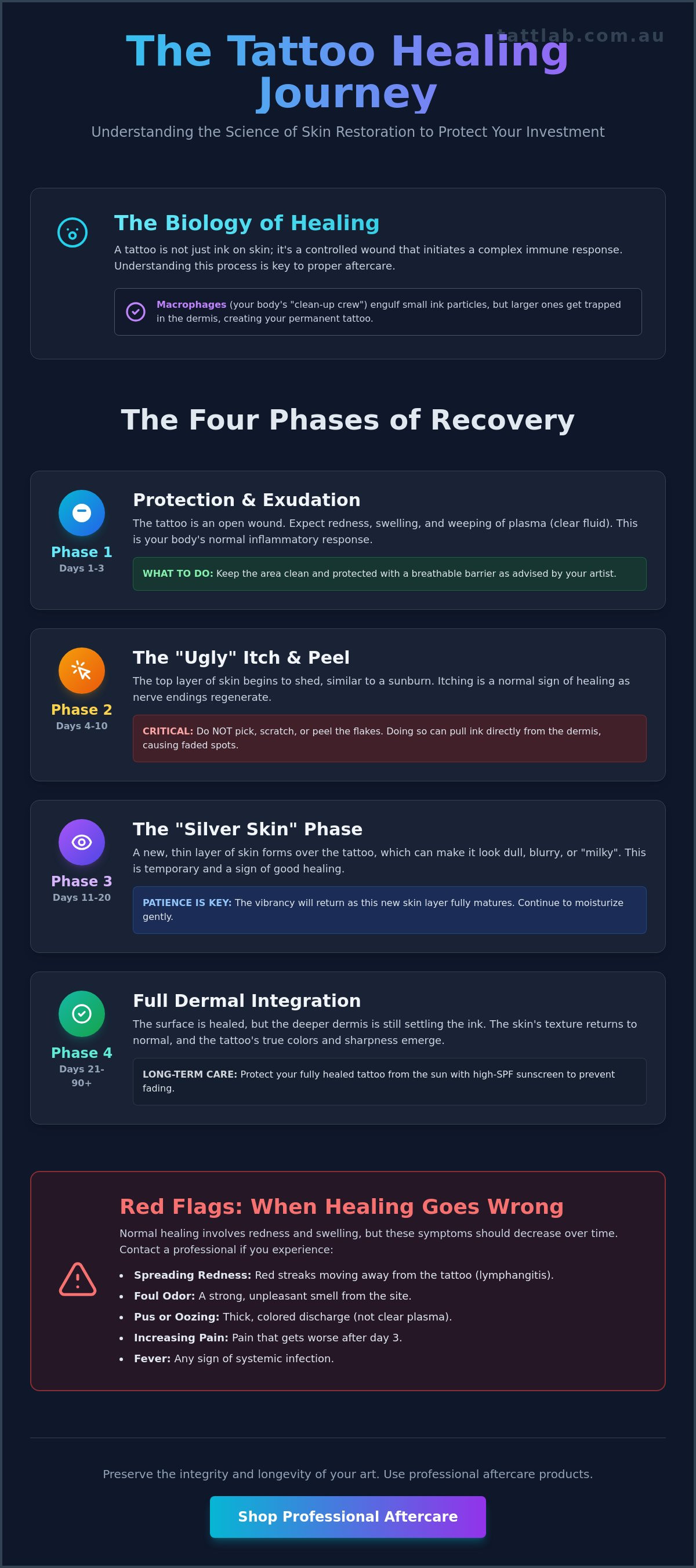
When explaining tattoo healing to clients, providing a clear roadmap transforms an anxious experience into a predictable, manageable journey. While every person's immune system responds uniquely, the biological timeline generally follows four distinct stages. By outlining this Tattoo Healing Process, you empower your clients to recognize healthy progress and avoid the temptation to interfere with the skin's natural recovery. This structured narrative builds the clinical authority necessary to ensure long-term compliance.
- Phase 1: Protection and Exudation (Days 1 to 3). The focus here is managing the initial weeping of plasma and ensuring the wound seals correctly without excessive fluid loss.
- Phase 2: The Peeling and Itching Transition (Days 4 to 10). Often called the "ugly" stage, this is when the old epidermis begins to shed and the immune response triggers localized itching.
- Phase 3: The Silver Skin or "Shiny" Phase (Days 11 to 20). A translucent layer of new skin forms over the site, which can temporarily alter the tattoo's appearance.
- Phase 4: Full Dermal Integration (Days 21 to 90). The pigment finally settles into the deeper dermal layers, and the skin's natural texture and vibrancy are fully restored.
Managing the "Ugly" Stage: Peeling and Scabbing
As the skin begins to repair itself, the top layer will inevitably start to flake, much like the aftermath of a mild sunburn. It's vital to instruct your clients that picking at these scabs or flakes is strictly prohibited. Because the ink is still in a state of flux, pulling a scab prematurely can physically drag pigment out of the dermis. Tell your clients clearly: picking a scab is like erasing the ink. To maintain the physical integrity of the work during this delicate transition, using a dedicated professional tattoo aftercare solution helps keep the area supple and reduces the urge to scratch.
The Silver Skin Phase: Why Tattoos Look Dull
Clients frequently panic during the third week when their once-vibrant tattoo suddenly appears dull, blurry, or "milky." This is a biological necessity known as the silver skin phase. The body has produced a fresh, thin layer of skin that is not yet fully transparent. It's a sign of successful progress, not a sign of fading. Reassure the client that the saturation and crispness will return once the epidermis fully matures and thickens. This phase requires patience, as the body is still working hard beneath the surface to finalize the integration of the pigment particles into the dermal layer.
Effective Communication: How to Teach Compliance
The technical precision of your Round Liners and Magnums ensures a pristine application, but the ultimate longevity of the piece rests on the client's shoulders. When explaining tattoo healing to clients, your goal is to move beyond a simple checklist of "dos and don'ts" toward a shared understanding of biological recovery. By prioritizing the "why" over the "what," you build a foundation of trust that makes compliance feel like a logical choice rather than a chore. Clients are far more likely to follow a protocol when they understand that a specific action protects the physical integrity of the art they've just purchased.
A systematic approach to communication involves both verbal and written reinforcement. While the post-session consultation is vital, the "tattoo fog" of endorphins and adrenaline often leads to poor information retention. Providing a physical or digital guide ensures they have a reliable reference during the critical first 72 hours. To further solidify this partnership, consider a "Day 3" check-in text. This small gesture of empathetic authority allows you to catch potential issues early and reminds the client that you remain a dedicated partner in their healing journey.
Reframing Aftercare as an Investment
Positioning the recovery phase as the "second half" of the tattoo process elevates the client's role from a passive recipient to an active guardian of the work. You aren't just giving them chores; you are helping them protect a significant financial and emotional investment. By using clinical language and focusing on mastering tattoo aftercare, you distinguish your studio as a boutique environment that values safety as much as aesthetics. This professional framing discourages the use of suboptimal "home remedies" that can compromise the final result.
Addressing Common Myths and Misconceptions
Clients often arrive with anecdotal advice from friends, such as using nappy rash creams or heavy petroleum jellies. Address these objections with grounded, scientific evidence rather than dismissal. Explain that while petrolatum-based products were once standard, they can "suffocate" the wound by creating an occlusive barrier that traps heat and bacteria. Instead, advocate for dermatologist-recommended tattoo care principles that favor breathable, medical-grade Tattoo Aftercare. Emphasize that over-moisturizing is just as dangerous as neglect, as it can lead to maceration and ink loss, whereas a balanced, breathable barrier supports natural dermal cell regeneration.
Troubleshooting: Distinguishing Irritation from Infection
Clients often feel a surge of anxiety when their skin begins its recovery. When explaining tattoo healing to clients, you need to provide a clear set of clinical markers to watch for. This methodical approach transforms fear into controlled observation, ensuring your client knows exactly when to relax and when to seek professional help. By demystifying the signs of complications, you maintain your status as a trusted specialist who prioritizes physical integrity above all else.
Specific markers indicate that the body is struggling with a bacterial intrusion rather than standard dermal repair. You should instruct your clients to monitor for these four critical red flags:
- Spreading redness or red streaks: Known as lymphangitis, these lines moving away from the site are a sign that an infection may be entering the lymphatic system.
- Foul odor or discharge: While clear plasma is normal in the first 48 hours, any discharge that is yellow, green, or carries a distinct, unpleasant smell is a concern.
- Systemic symptoms: A fever, chills, or a general feeling of malaise, often called "tattoo flu," suggests the body is fighting a significant inflammatory or infectious battle.
- Radiating heat: It's normal for a new tattoo to feel warm, but if the heat increases after the third day or feels like it's radiating deep from within the tissue, it requires attention.
Normal Irritation vs. Allergic Reaction
The skin can sometimes react to the mechanical process itself or specific components within the pigment. Red Tattoo Inks are particularly known to cause localized sensitivity in some individuals due to their chemical makeup. It's important to differentiate between "over-worked" trauma caused by aggressive application and a bacterial infection. If the irritation is confined strictly to one specific color or the immediate perimeter of the work without spreading, it's likely a localized reaction. In these cases, adjusting the aftercare routine is often sufficient, though a GP should be consulted if the inflammation doesn't subside.
The Danger of "Dry Healing" and Cracking
While over-moisturizing presents its own risks, allowing the skin to become excessively parched is equally dangerous. Deep cracks in the scabbing layer create entry points for secondary infections and can lead to permanent scarring. Clients often describe a sensation of "tightness" as the skin loses elasticity. You can alleviate this by recommending a thin, breathable layer of Tattoo Aftercare to restore suppleness. The foundation of this safety starts in the studio; using high-quality medical supplies for tattoo artists during the initial wrap prevents cross-contamination before the client even leaves your chair.
If your client observes any of the red flags mentioned above, they should contact you immediately for a professional assessment. To ensure they have the best tools for a complication-free recovery, encourage them to shop professional aftercare solutions that support the skin's natural barrier and promote steady progress.
The Professional Choice: Why Specific Aftercare Matters
The final phase of a professional session isn't the last wipe of the skin; it's the selection of the biological support system the client takes home. When explaining tattoo healing to clients, you must clarify that not all moisturizers are created equal. Many drugstore options rely on heavy petroleum bases. These occlusive barriers create a seal that can trap body heat and bacteria, potentially leading to inflammation or maceration. In contrast, professional-grade Tattoo Aftercare provides a breathable barrier. This allows for essential oxygen exchange while stabilizing the moisture levels necessary to reduce the intensity of the "itch" phase.
Vitamins A and D play a critical role in this narrative of dermal cell regeneration. These nutrients support the skin's ability to repair the controlled trauma of the needles without compromising the pigment's saturation. By recommending Australian-made standards, you ensure that the products are manufactured with a level of safety and consistency that matches your own technical rigor. This isn't just about comfort; it's about the physical integrity of the art itself. It ensures the transition from a fresh wound to a settled masterpiece is as seamless as possible.
Vetting Your Studio’s Aftercare Inventory
Stocking recognized professional balms like Dr. Pickles does more than just fill a shelf; it increases client compliance by providing a trusted, easy-to-use solution. You should also emphasize that the journey began with the quality of the professional tattoo ink used during the session. If a client is price-sensitive, explain that the cost of a specialized balm is a fraction of the price of a future touch-up caused by poor healing. High-quality products are a form of insurance for their new investment. They protect the clarity of the lines and the depth of the shading.
Final Checklist for Client Dismissal
Before your client leaves the boutique environment of your studio, ensure they understand the "Three Pillars" of successful recovery: Cleanliness, Moisture, and Protection. This final moment of education solidifies your role as a Trusted Specialist.
- Cleanliness: Use a gentle, fragrance-free wash to remove exudate without stripping the skin.
- Moisture: Apply a thin, breathable layer of professional balm to maintain suppleness.
- Protection: Avoid direct sun exposure and mechanical friction from tight clothing.
Providing the right tools at the point of service removes the guesswork and prevents the use of suboptimal drugstore alternatives. Stock your studio with professional-grade aftercare today to ensure every piece you create heals as perfectly as you intended.
Elevating the Standard of Post-Session Care
Your responsibility to the artwork doesn't end when the machine stops. By shifting the conversation from simple instructions to a detailed biological narrative, you empower your clients to become active guardians of their new skin. Mastering the art of explaining tattoo healing to clients ensures that the precision of your work survives the delicate transition from wound to masterpiece. You've provided the technical expertise; now, provide the educational framework that guarantees a successful long-term result.
Maintaining this level of professional integrity requires access to the highest quality medical-grade supplies. As an artist-owned and operated facility, we understand the nuances of dermal recovery. We supply premium brands like Dr. Pickles and Panthera Ink to help you maintain a clinical edge in your studio. With express nationwide shipping across Australia, you can keep your inventory stocked with the tools your clients need for a predictable, safe recovery. Browse the full range of professional Australian tattoo aftercare at Tatt Lab and continue your commitment to excellence. Your dedication to the healing process is the final step in a truly transformative experience.
Frequently Asked Questions
Is it normal for my tattoo to leak fluid on the first day?
Yes, it's entirely normal for your tattoo to weep fluid during the first 24 to 48 hours. This substance is a mixture of plasma, excess ink, and blood, which is a natural part of the body's inflammatory response. This fluid helps the wound seal and begins the biological repair process. Simply dab the area gently with a clean paper towel and follow your artist's cleansing protocol to ensure the surface remains hygienic.
Can I use Bepanthen or Aquaphor on my new tattoo?
While common in the past, we advise against using petroleum-based products like Bepanthen or Aquaphor. These occlusive barriers can suffocate the skin and trap heat, potentially leading to irritation or ink loss. Instead, use a dedicated, breathable Tattoo Aftercare solution. These specialized formulas support dermal cell regeneration without the risk of clogging pores or trapping bacteria, ensuring the physical integrity of the art is maintained throughout the recovery.
Why does my tattoo look dull and shiny after two weeks?
Your tattoo looks dull because it has entered the "silver skin" phase, which is a sign of successful epidermal maturation. This translucent layer of new skin is not yet fully transparent, making the ink underneath appear milky or blurry. Vibrancy and crispness will return naturally as the skin thickens over the next few weeks. This is a vital part of explaining tattoo healing to clients who may fear their ink is fading prematurely.
How many times a day should I wash and moisturise my tattoo?
You should typically wash and moisturize your tattoo two to three times a day. Over-cleaning can strip the skin of its natural defenses, while over-moisturizing can lead to maceration or "bubbling" of the ink. Aim for a light, thin layer of aftercare that keeps the skin supple but doesn't leave it feeling greasy. Consistency is more important than quantity when you're maintaining the moisture barrier for optimal results.
What should I do if my tattoo starts scabbing heavily?
If your tattoo begins to scab heavily, the most important rule is never to pick or pull at the skin. Heavy scabbing often results from excessive plasma drying on the surface. Keep the area slightly more supple with a professional balm to prevent the scabs from cracking, which can lead to secondary infections. If the scabs feel excessively hot or look yellow, contact your studio immediately for a professional assessment.
Can I go to the gym or swim with a fresh tattoo?
You must avoid swimming and high-intensity gym sessions for at least two weeks. Submerging a fresh tattoo in pools or oceans introduces bacteria to an open wound, while excessive sweating and gym equipment can cause friction and irritation. Wait until the initial peeling phase is complete to avoid compromising the work. Protecting the physical integrity of the site during this window is essential for a complication-free and predictable result.
How do I know if my tattoo is infected or just irritated?
Irritation is usually localized and subsides within a few days, whereas infection often spreads and worsens over time. Signs of infection include spreading redness, foul odors, yellow discharge, or systemic symptoms like fever. When explaining tattoo healing to clients, we emphasize that while some heat is normal initially, radiating heat after the third day is a major red flag. If you suspect an infection, consult a medical professional immediately.
Why is my tattoo so itchy, and can I scratch it?
Itching is a sign that your skin is regenerating, but you must never scratch the area. This sensation is caused by the release of histamines during the peeling phase of recovery. Scratching can tear the delicate new skin and pull pigment from the dermis, leaving permanent gaps in your artwork. If the itch is unbearable, gently pat the area or apply a thin layer of breathable aftercare to soothe the dryness safely.


Comments (0)
There are no comments for this article. Be the first one to leave a message!