

Fine line tattooing is one of the most visually striking styles you can choose, but there’s a widespread myth that needs busting right away. Most people assume that because the designs look delicate and understated, what is fine line tattooing must be a simpler, easier version of the craft. It’s actually the opposite. This style demands a level of technical precision that leaves very little room for error. In this guide, we’ll walk you through the technique, the aesthetic appeal, what the healing process really looks like, and how to make sure your fine line tattoo ages well.
Table of Contents
- Key takeaways
- What is fine line tattooing, exactly?
- Why fine line tattooing is technically demanding
- Aftercare for fine line tattoos
- How long fine line tattoos actually last
- My honest take on fine line tattooing
- Get the right supplies for fine line work
- FAQ
Key takeaways
| Point | Details |
|---|---|
| Ultra-thin needles define the style | Fine line work uses 1RL and 3RL needles to create delicate, minimalist designs with incredible detail. |
| Precision is non-negotiable | Consistent hand speed and pressure are critical because even tiny variations show up immediately in thin lines. |
| Healing looks deceptive | Lines can appear dull or cloudy during weeks two to four, but this is a normal part of the healing process. |
| Placement determines longevity | High-friction areas like fingers and hands fade significantly faster than stable placements like the upper arm. |
| Sun protection is your best friend | Broad-spectrum SPF 30+ is the single most effective way to preserve fine line clarity over time. |
What is fine line tattooing, exactly?
Fine line tattooing, also called single-needle or fineline tattooing in the industry, is a technique that uses ultra-thin needles like 1RL and 3RL to create delicate, minimalist designs that look almost like technical pen drawings on skin. The result is something genuinely different from what most people picture when they think of tattoos. No bold outlines. No heavy fill. Just precise, whisper-thin lines that carry enormous detail.
The aesthetic lends itself to a specific range of designs. Popular fine line tattoo ideas include:
- Botanical illustrations with fine leaf and petal detail
- Delicate script and handwriting-style lettering
- Geometric compositions with precise angles and negative space
- Small symbolic pieces like constellations, arrows, or minimal portraits
- Intricate mandalas with layered linework
What separates this style from traditional tattooing is more than just needle size. Traditional bold work uses thicker lines (roughly 1.5 to 2 mm wide) and relies on the visual weight of the design to carry impact. Fine line work operates at around 0.2 mm, which means the entire aesthetic depends on subtlety, placement, and the artist’s ability to apply ink with almost surgical consistency.
Machine settings matter too. Fine line artists typically run lower voltage on their machines to reduce trauma to the skin and maintain control. It’s a slower, more deliberate process than traditional tattooing, and the results look completely different.
Pro Tip: When browsing fine line tattoo ideas, look at healed photos rather than fresh ones. Fresh tattoos always look crisp. Healed work tells you how well the artist actually executes depth and ink saturation.
Why fine line tattooing is technically demanding
Here’s the thing that surprises most people. Fine line tattooing is harder than it looks, and the difficulty comes down to one unforgiving reality: there’s almost no margin for error.
Traditional tattooing has a relatively generous depth window. Bold lines and shading can absorb small inconsistencies in pressure or speed without the result looking noticeably off. Fine line work does not offer that luxury. The depth window is razor-thin, and the consequences of missing it go in two directions:
- Too shallow: The pigment sits in the upper layers of skin and sheds during healing, leaving patchy, faded lines that look unfinished.
- Too deep: The ink spreads beyond the intended line, causing a blowout. That blurry, ink-spread effect is extremely difficult to correct and can ruin a delicate design permanently.
- Inconsistent pressure: Even minor fluctuations in hand speed or needle pressure show up immediately in lines that are only 0.2 mm wide. There’s nowhere for imprecision to hide.
- Over-working the skin: Going over the same area too many times to compensate for light passes causes trauma, leading to ink loss and scarring rather than better saturation.
“Fine line tattooing requires consistent hand speed and pressure; variability shows immediately due to thin 0.2 mm lines compared to 1.5 to 2 mm traditional lines.”
The skill required to hit that depth window consistently, session after session, is what separates a genuinely talented fine line artist from someone who’s just picked up a thin needle. Multiple slow, patient passes with controlled technique are the standard approach, and that tactile feel for skin response takes years to develop. When you’re choosing an artist, their portfolio of healed work is the only honest measure of their technical ability.
Aftercare for fine line tattoos
Fine line tattoos heal differently from bold work, and understanding what to expect from fine line tattoos during recovery will save you a lot of unnecessary stress.
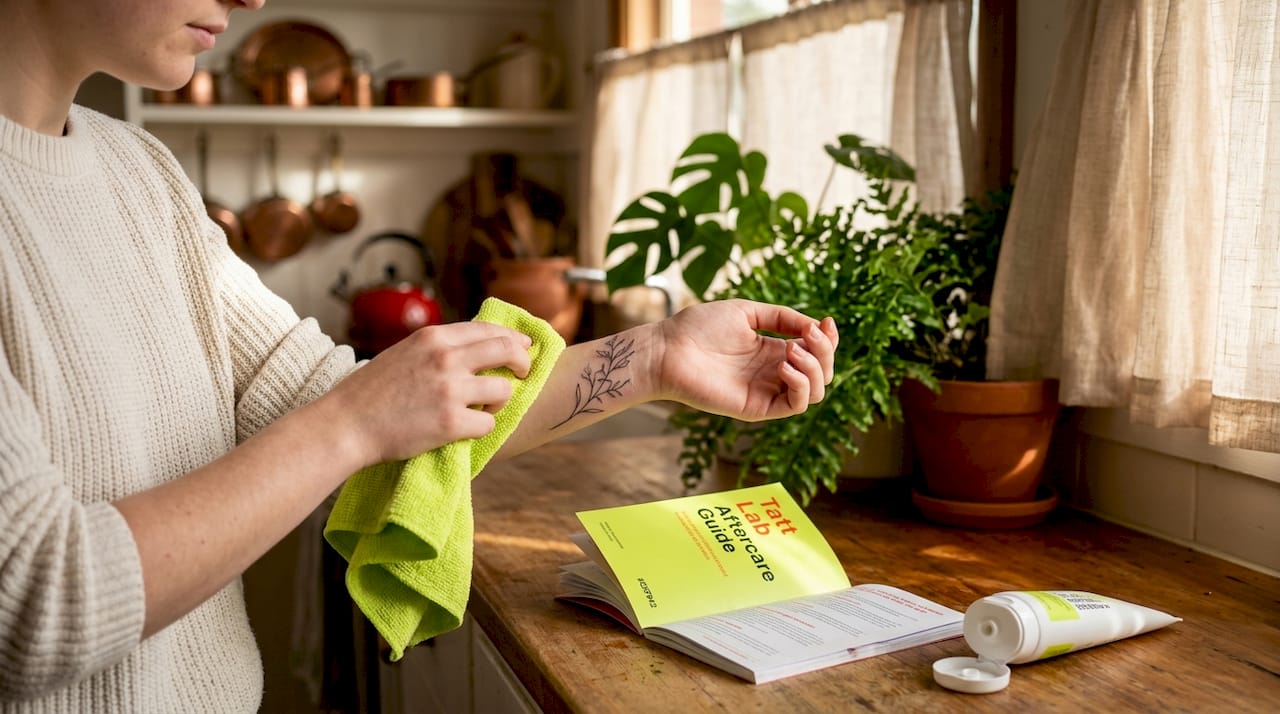
The surface heals faster than you’d expect. Most fine line pieces show surface recovery within one to two weeks, compared to three to four weeks for heavier traditional tattoos. But faster surface healing doesn’t mean you’re done. The deeper layers of skin are still regenerating well into the second month, and this is where most people get caught out.
Here’s what the healing timeline typically looks like:
- Days one to three: Redness and tenderness around the tattoo. Keep it clean and covered lightly.
- Days four to ten: Peeling and flaking. This is normal. Do not pick at it.
- Days eleven to thirty: The tattoo may look dull or cloudy even though it’s regenerating correctly. This stage catches a lot of people off guard.
- Week six onwards: The ink settles and the true healed result becomes visible.
The aftercare routine for fine line work needs to be gentle. Heavy ointments can suffocate the skin and interfere with healing. The recommended approach is gentle cleaning, light moisturising, and avoiding anything that creates friction or moisture build-up over the tattooed area.
Sun protection is non-negotiable. UV exposure is one of the leading causes of faded or blurred fine lines because the thinner pigment deposits in fine line work have a much lower tolerance for UV damage than bold traditional tattoos. Once fully healed, apply broad-spectrum SPF 30 or higher every time the tattoo will be exposed to sunlight.
Pro Tip: Don’t judge your fine line tattoo until at least six weeks post-session. What looks dull or patchy at week three is often perfectly healed by week six. Patience is part of the process.
How long fine line tattoos actually last
Longevity is where fine line tattooing gets genuinely complicated, and it’s worth being honest about what affects it.
The thinner the pigment deposit, the more vulnerable it is to fading. That’s just physics. Fine line tattoos deposit less ink per area than traditional styles, which means UV exposure, friction, and skin ageing all have a more visible impact over time. Placement is the biggest variable you can actually control.
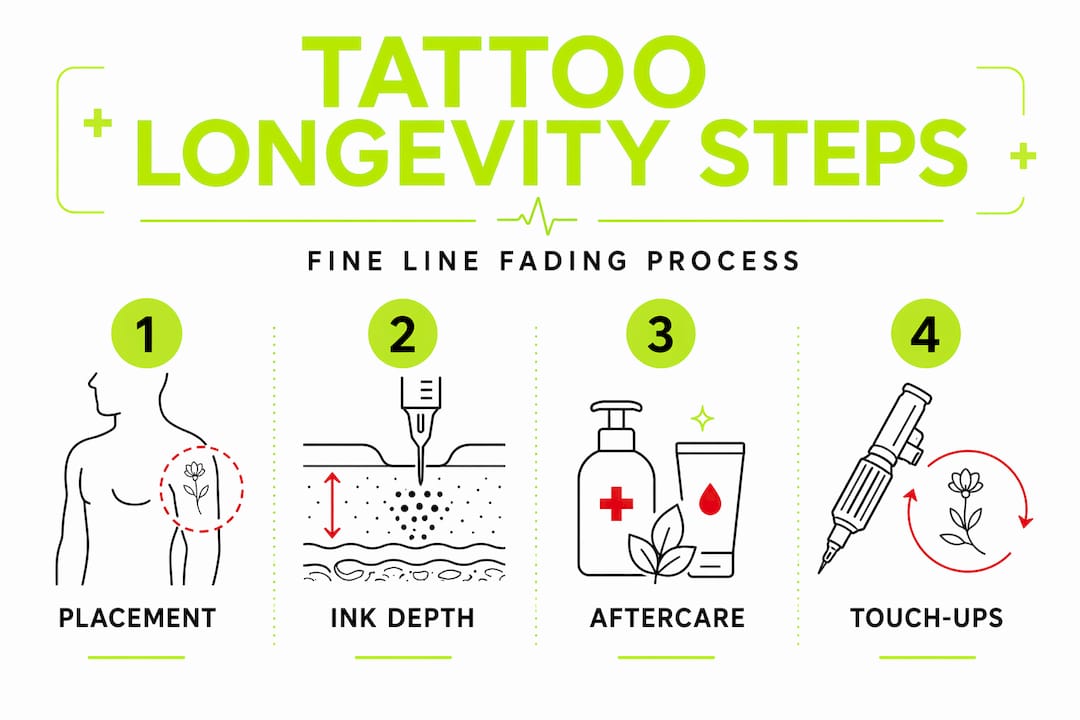
| Placement | Expected longevity | Key risk factor |
|---|---|---|
| Fingers and hands | 3 to 5 years before fading | Constant friction and washing |
| Wrists and inner arms | 5 to 8 years with care | Sun exposure and movement |
| Upper arm and outer forearm | 8 to 12 years with SPF | UV exposure |
| Ribs and torso | 8 to 12 years | Skin stretching over time |
| Upper back and shoulder blade | 10 or more years | Minimal friction and UV |
Size matters too. Very small fine line tattoos can blur or soften faster, particularly on mature or textured skin. Experienced artists will often push back on ultra-small designs or recommend adjusting the line weight to give the piece a better chance of ageing well. If an artist tells you a design is too small to hold up, that’s not them being difficult. That’s good advice worth taking.
Touch-ups are a normal part of owning a fine line tattoo. Planning for a refresh every few years, especially on high-friction placements, is just part of the deal with this style.
My honest take on fine line tattooing
I’ve watched the fine line style go from a niche speciality to one of the most requested tattoo styles in Australia, and I’ll be straight with you about what I’ve observed over that time.
The biggest mistake I see people make is choosing a fine line tattoo because it seems like the “safer” or less intimidating option. It looks subtle, so it must be low-stakes, right? Wrong. The delicacy demands extreme precision and there is genuinely no room for correction the way there is with bolder styles. A slightly off bold line can be worked into the design. A blown-out fine line is a problem.
What I’ve also noticed is that client satisfaction with fine line work is highest when people go in with realistic expectations. They’ve chosen an artist specifically for this style, they’ve looked at healed portfolios, and they understand the healing process before it starts. The people who end up disappointed are usually the ones who chose the cheapest option or picked an artist who does fine line as a side offering rather than a speciality.
My advice: treat the artist selection as the most important decision in the whole process. Look at healed work. Ask about their needle and machine setup. And if you’re set on a placement like fingers or hands, have an honest conversation about longevity before you commit.
Fine line tattooing is genuinely beautiful when it’s done well. It’s also genuinely unforgiving when it’s not.
— Marco
Get the right supplies for fine line work
Whether you’re an artist looking to sharpen your fine line technique or someone who wants the best possible aftercare for a fresh piece, having the right products makes a real difference.

At Tattlab, we stock the needles and aftercare that fine line work actually demands. From bugpin round liner cartridges at 0.25 mm for ultra-delicate linework, to Hustle Butter Deluxe for keeping healing skin nourished without smothering it, every product in our range is chosen by artists for artists. We also carry traditional round liner needles for those who prefer conventional setups. Head to Tattlab to browse the full range and get your supplies sorted with fast Australian shipping.
FAQ
What is fine line tattooing in simple terms?
Fine line tattooing is a tattoo style that uses ultra-thin needles to create delicate, minimalist designs with very thin lines, often resembling pen drawings. It differs from traditional tattooing through its subtlety, precision, and lower machine voltage.
Are fine line tattoos more painful than traditional tattoos?
Fine line tattoos are generally less painful than traditional styles due to shallower needle penetration and lower machine voltage. Many clients describe the sensation as a gentle hum rather than the heavier buzz of bold tattoo work.
How long does a fine line tattoo take to heal?
Surface healing typically takes one to two weeks, but full skin regeneration continues for up to six weeks or more. Lines may look dull or cloudy during weeks two to four, which is a normal part of the healing process.
Who should get a fine line tattoo?
Fine line tattoos suit anyone drawn to minimalist, detailed, or delicate aesthetics. They’re particularly popular with first-timers due to lower pain levels, but the style works well for anyone willing to commit to proper aftercare and realistic expectations around longevity.
Do fine line tattoos fade faster than other styles?
Yes, fine line tattoos can fade faster because they deposit less ink per area, making them more vulnerable to UV exposure and friction. Placement on stable, low-friction areas and consistent SPF use significantly extend how long the tattoo stays crisp.


Comments (0)
There are no comments for this article. Be the first one to leave a message!