

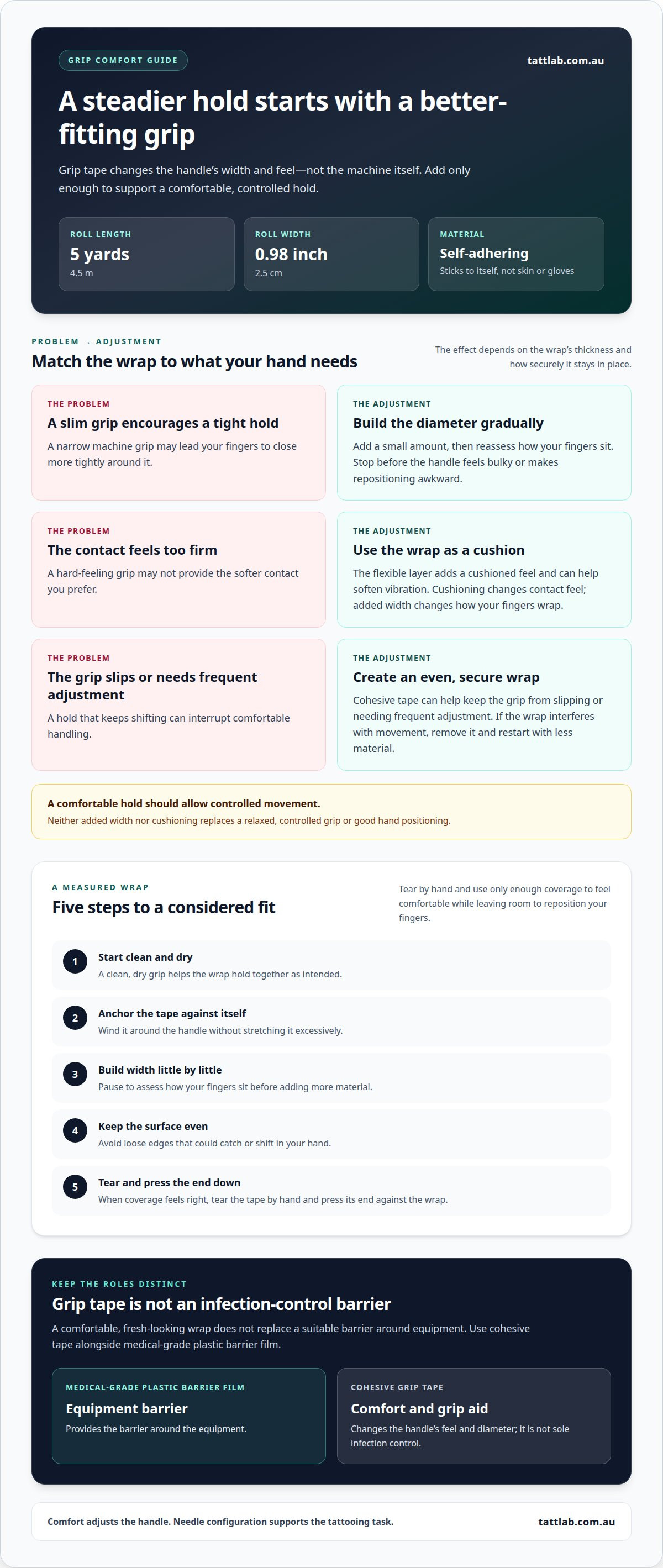
A steadier hold doesn’t have to mean gripping harder. Tattoo grip tape wraps around a machine grip, sticking to itself rather than to skin or gloves, while adding width and a cushioned feel. A 1-inch roll is 5 yards (4.5 m) long and 0.98 inch (2.5 cm) wide.
Tattoo grip tape is a simple way to adjust how a machine sits in your hand, whether you want a broader grip or a softer layer between your fingers and the machine. It can be torn by hand and is designed to come away without pulling at skin or leaving sticky residue on the grip.
This guide explains how tattoo grip tape works, how it can change your hold and how to use it alongside medical-grade plastic barrier film. You’ll also learn when cushioning may help and why tape is a comfort and grip aid, not a substitute for infection-control barriers.
Key Takeaways
- Learn how changing the grip’s thickness can make the machine feel more comfortable to hold without forcing a tighter grasp.
- Understand how cushioning may soften vibration and support steadier handling during a tattoo session.
- See why cohesive tape is a comfort aid, not a replacement for a suitable barrier around equipment.
- Find out when adjusting your grip may help, and when the right needle configuration matters more to your setup.
Tattoo grip tape
A machine grip’s diameter affects how your fingers settle around it. A narrow grip may encourage a tighter hold, while a wider, cushioned surface changes the contact area. Tattoo grip tape lets artists adjust the feel without changing the machine itself. Its non-woven fabric forms a flexible layer around the grip, creating a softer, broader surface for the hand. The result depends on the wrap’s thickness and how securely it stays in place during use.
The material is cohesive, so it adheres to itself rather than relying on glue against the grip. You can wind the strip around a machine to build up the handle’s width, and it can also help cushion vibration. These effects are related but distinct: added width changes how your fingers wrap around the handle, while cushioning changes the feel of contact. Neither replaces a relaxed, controlled grip or good hand positioning.
For a considered fit, use a simple sequence:
- Start with a clean, dry grip so the wrap can hold together as intended.
- Anchor the tape against itself, then wind it around the handle without stretching it excessively.
- Build the width gradually. Pause to assess how your fingers sit before adding more material.
- Keep the finished surface even, with no loose edges that could catch or shift in your hand.
- Tear the tape by hand when you reach the desired coverage, then press the end against the wrap.
Adding tape gradually helps prevent the handle from becoming wider than your hand can comfortably manage. For example, if your fingers close tightly around a slim grip, add a small amount and reassess. If the handle feels bulky or makes repositioning awkward, adding more is unlikely to help. A comfortable hold should allow controlled movement without forcing your fingers into a fixed position.
The wrap can help keep the grip from slipping or needing frequent adjustment. Its self-adhering construction avoids sticky residue on steel grips and surfaces, and it does not pull at skin or hair when removed. This makes handling and removal more straightforward. Still, cohesive bandage is a comfort and grip aid, not an infection-control barrier. Use it with medical-grade plastic barrier film around the equipment.
Barrier film and grip tape have different roles in a tattoo setup. Film provides the equipment barrier; the wrap changes the feel and diameter of the handle. Keep those purposes separate during preparation. A comfortable outer layer does not make the barrier unnecessary, and tape alone should not be treated as protection against contamination. Think of the wrap as a handling-comfort aid, used alongside the appropriate barrier for the machine.
The same cohesive material is used beyond machine grips, including around wrists, fingers, ankles, elbows and knees. These examples show its flexible, self-adhering character, but do not change its role in tattooing. For machine use, consider whether your grip feels too narrow, too firm or prone to slipping. Add the wrap gradually, then notice whether your hold feels more stable and natural. If it interferes with movement, remove it and start again with less material.
Tattoo grip tape is not a substitute for a properly prepared setup: use it with medical-grade plastic barrier film. Cohesive bandages are for comfort and grip, not sole infection control. Keep those roles distinct when preparing equipment, and do not mistake a fresh-looking wrap for the barrier. The film provides the equipment barrier, while the bandage changes the handle’s feel. That distinction matters even when the wrap seems secure and comfortable. A considered setup uses each layer for its intended purpose, rather than relying on a comfort aid for protection it is not designed to provide.
When choosing coverage, bear in mind that each roll of the 1-inch grip tape is 0.98 inch (2.5 cm) wide. The tape can be torn without scissors, which makes it possible to end the wrap at the coverage that feels appropriate. Its soft, flexible layer can be adjusted to suit the hand, but the goal is not to cover more of the grip than necessary. Add only enough to create a comfortable hold and retain room to reposition the fingers. The tape is described as not pulling skin or hair, so removal can be more comfortable; still, take it off gently and prepare the equipment again for the next use. A wrap that feels right should support controlled handling without becoming the focus of the artist’s attention.
Tatt Lab: Long Tapers
Tatt Lab offers Long Tapers for artists refining their needle setup after adjusting how a machine feels in hand. Grip comfort and needle choice address different parts of the setup: tape changes the handle’s feel, while needle configuration supports the tattooing task. If you’re reviewing your supplies as well as your hold, Long Tapers may be worth considering.
Adjusting your grip does not determine which needle suits a particular design or technique. Keep those decisions separate and choose equipment according to the work you’re preparing for. Tatt Lab also offers Tattoo After-care, Traditional Needles and Tattoo Cartridges, so artists can consider related supplies alongside their setup.
For information about Long Tapers or other tattoo supplies, contact Tatt Lab.
Build a setup that feels considered
Your working setup is personal, and small adjustments can help refine how it feels over time. Treat comfort, equipment choice and studio routines as related parts of a considered practice, rather than expecting one change to solve every handling concern. As you shape your kit, Tatt Lab also offers Tattoo After-care, Traditional Needles and Tattoo Cartridges.
If you’re ready to explore options for your machine setup, browse the available grip tape and decide what best suits your preferences. A measured approach lets you make changes with purpose and keep building a setup that supports your work.


Comments (0)
There are no comments for this article. Be the first one to leave a message!