

Safety training has to develop alongside the apprentice, not end at induction. Training apprentices on hygiene and safety means matching instruction and supervision to the work and their stage of learning. In Victoria, employers must adjust supervision to the apprentice’s training stage. In South Australia, safe instruction includes explaining risks, demonstrating tasks, supporting practice, observing progress and giving feedback.
It’s reasonable to want clear guidance on who is responsible, what training is needed and when an apprentice can take on tasks with less direct supervision. This article explains how to build that progression, meet workplace safety duties and provide appropriate training and protective equipment. It also covers key state-specific requirements, helping you distinguish practical good practice from obligations that apply in a particular part of Australia.
Key Takeaways
- Match supervision to the apprentice’s training stage and the risks of each task, then adjust it as their skills develop.
- Make safety responsibilities clear: apprentices should follow workplace procedures, take reasonable care and report hazards, incidents and injuries.
- Build induction and practical safety instruction into the work. In NSW, the Work Health and Safety Act 2011 applies to work health and safety.
- Explain how to use required protective equipment and demonstrate safe work practices before an apprentice begins a task.
Adjusting supervision to training stage
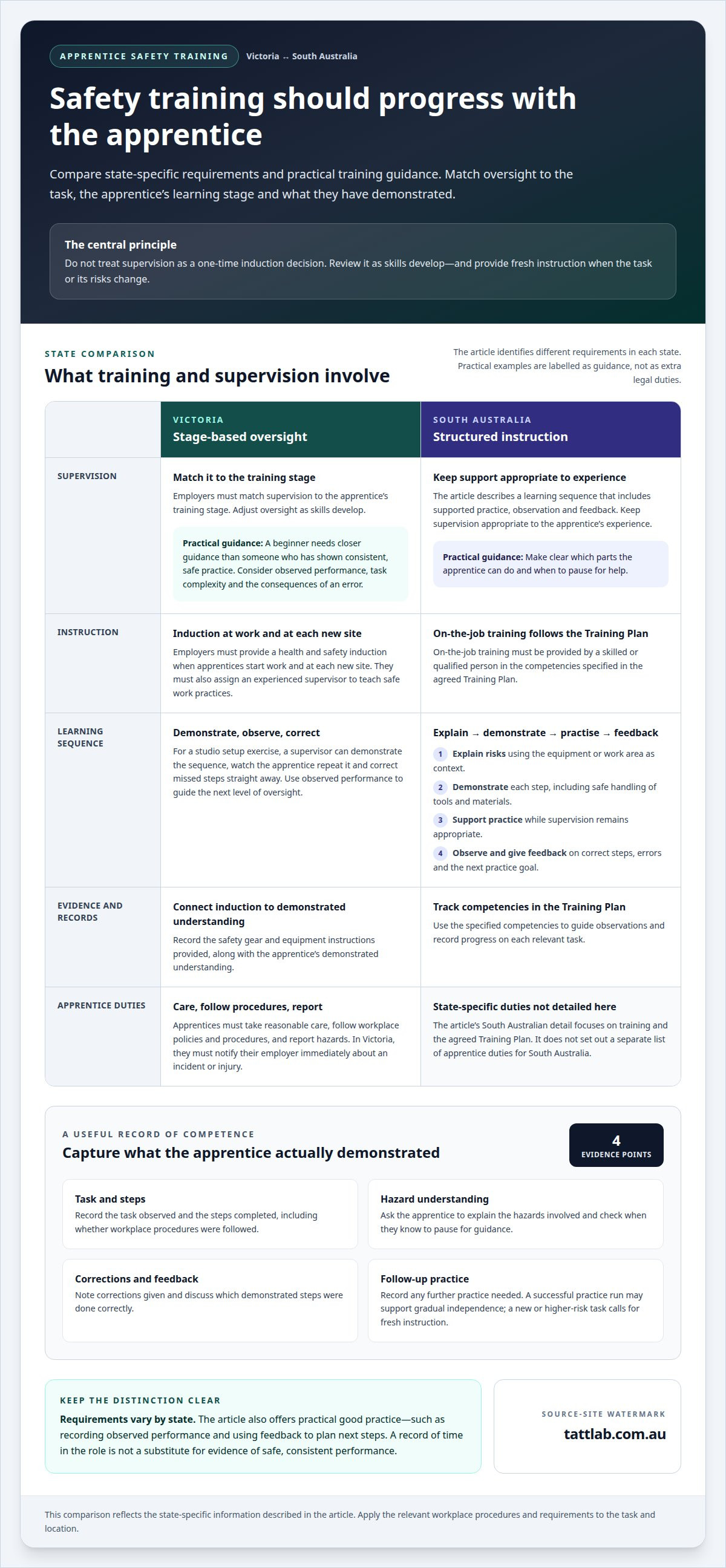
Stage-based supervision means adjusting oversight as an apprentice develops competence. In Victoria, employers must match supervision to the apprentice’s training stage. Supervision is therefore an ongoing decision, not an arrangement fixed at induction. A beginner learning a studio task needs closer guidance than someone who has demonstrated consistent, safe practice.
Direct supervision means the supervisor watches or stays close while the apprentice performs a task. During a studio setup exercise, for example, the supervisor can demonstrate the sequence, observe the apprentice repeating it, then correct any missed steps straight away. The apprentice should know which parts they can do and when to pause for guidance. As their skills develop, adjust oversight based on observed performance, task complexity and the consequences of an error.
South Australian employers should use a clear learning sequence when assigning work:
- Explain the risks. Describe the hazards involved in the task before work begins, using the actual equipment or work area as context.
- Demonstrate the task. Show each step at a pace the apprentice can follow, including the safe handling of tools and materials.
- Support practice. Let the apprentice repeat the task while supervision remains appropriate to their experience.
- Observe and give feedback. Identify what was done correctly, address errors, and clarify the next practice goal.
Competence means the apprentice can perform the assigned task safely and consistently. Employers who hire apprentices commit to providing training, skills, knowledge and mentoring. In practice, record what the apprentice has demonstrated and which tasks still need oversight. A successful practice run may support gradual independence, but a new or higher-risk task calls for fresh instruction.
Make progress visible through specific feedback. After a setup exercise, discuss whether the apprentice followed each demonstrated step and recognised when to ask for help. This structured approach to training apprentices on hygiene and safety ties supervision to evidence of learning, rather than assumptions based on time in the role.
Apprentice safety responsibilities
Safety responsibilities are the actions apprentices take to protect themselves and people nearby. In Victoria, an apprentice must take reasonable care, follow workplace policies and procedures, and report hazards to their employer. These duties apply alongside the employer’s responsibility to provide safe work and appropriate instruction.
Reasonable care means considering how your actions could affect others before starting or continuing a task. For example, an apprentice who spots a damaged tool should stop using it and report the hazard, rather than leave it for the next person. Following procedures also means listening to safety instructions and not improvising with equipment or materials.
Reporting a hazard gives an employer the chance to address a risk before someone is injured. Describe what you observed, where it happened and which task or equipment was involved. If a work area or process seems unsafe, raise the concern promptly and follow the workplace reporting process. Clear details help the supervisor respond to the specific risk.
Incident reporting covers injuries and other workplace events that may need attention. In Victoria, apprentices must notify their employer immediately about an incident or injury. Workers have 30 days from the injury date to report it to their manager, and injuries should be reported in writing. A written account can record when the injury happened, what task was underway and who was notified.
- Take reasonable care: consider the effect of each action on your safety and other people.
- Follow procedures: use the workplace’s required steps and safety instructions.
- Report hazards: tell your employer about unsafe equipment, conditions or work practices.
- Report incidents: notify your employer immediately, then provide a written injury report to your manager.
Section 28 of the Work Health and Safety Act 2011 is cited in relation to the responsibilities of labour hire workers, group training apprentices and trainees. For apprentices, clear communication matters: report a concern to the appropriate employer or supervisor, especially when a host workplace and training arrangement both shape the work. These responsibilities are practical foundations for safe work, not a substitute for training or supervision.
Compliance with legislative standards
Compliance means applying the workplace health and safety duties relevant to the state and task. In NSW, the Work Health and Safety Act 2011 applies to work health and safety, according to NSW Legislation.
Competency Assessment and Documentation
A competency assessment is a structured check that an apprentice can perform required safety tasks correctly. Employers can assess hygiene and safety by observing a task, asking the apprentice to explain its hazards and checking whether they follow demonstrated procedures. Record the task observed, the steps completed, corrections given and any follow-up practice needed.
For example, record whether the apprentice prepares a work area according to workplace procedures, follows the demonstrated sequence and knows when to pause for guidance. In South Australia, on-the-job training must be provided by a skilled or qualified person in the competencies specified in the agreed Training Plan. Use those competencies to guide observations and record progress on each relevant task.
In Victoria, employers must provide a health and safety induction when apprentices start work and at each new site. Record the safety gear and equipment instructions provided, along with the apprentice’s demonstrated understanding. Employers must also assign an experienced supervisor to teach safe work practices. Clear records connect the induction and observed performance with any further instruction needed.
Government Resources and Training Courses
Government safety resources explain workplace duties and provide channels for advice about hazards. Employers can use state regulator information alongside workplace induction and practical instruction. WorkSafe Victoria is Victoria’s official workplace health and safety regulator, and it investigates unsafe workplaces and serious incidents.
In NSW, labour hire workers, group training apprentices and trainees can call SafeWork NSW on 13 10 50 for advice if they have safety concerns and feel uncomfortable raising them with their agency or host PCBU. A work health and safety qualification can also help an apprentice understand the WHS Act and the legal obligations applying to people on-site.
Combine the relevant workplace induction with task-specific instruction and observed practice. In Victoria, apprentices must attend health and safety training and follow safety instructions and advice. In South Australia, employers should explain task risks, demonstrate the work, allow practice, observe progress and give feedback. These steps connect training to the hazards apprentices encounter.
Safety training and personal protective equipment
Safety training turns workplace procedures into repeatable actions, while protective equipment adds a physical layer of protection. In South Australia, employers should assume an apprentice has minimal or no awareness of the work and its risks.
Workplace Hygiene Procedures
Workplace hygiene procedures are the steps used to manage cleanliness and health risks in a specific work setting. Apprentices should learn the procedures that apply to their site, equipment and assigned tasks, rather than rely on assumptions. A studio’s process may differ from another workplace’s, so induction should identify the relevant instructions and demonstrate them in the actual work area.
Show apprentices what to do, where required materials belong and how to follow the workplace’s established process. They can then practise under supervision and receive feedback on missed or unclear steps.
Safety Training
Safety training teaches apprentices to recognise task hazards and follow the required controls. In South Australia, instruction should explain risks, demonstrate the task, provide practice, observe progress and give feedback. This sequence helps a supervisor see whether the apprentice can apply instructions, not just repeat them.
For a new task, explain the risks before work starts, demonstrate the safe process, then observe the apprentice practising. Correct misunderstandings as they arise, especially when equipment or work conditions change.
Personal Protective Equipment
Personal protective equipment, or PPE, is protective gear provided for workplace tasks. In Victoria, apprentices must use the equipment and personal protective gear their employer provides. Training should identify the gear required for the assigned work and explain how to use it according to workplace instructions.
Demonstrate how to use the gear before the task begins, then observe whether the apprentice follows the instructions. PPE supports risk controls; it doesn’t replace task training or safe work procedures.
Risks of Inadequate Training
Inadequate training leaves apprentices less prepared to recognise hazards or follow workplace procedures. In a studio, misunderstanding an instruction could lead to unsafe equipment handling or failure to follow an established hygiene process. Clear demonstrations and observed practice help identify gaps before an apprentice works with less oversight.
SafeWork SA identifies placing a person at risk of injury, illness or death, failing to take steps to avoid worker risks, or failing to meet regulatory requirements as breaches of supervision obligations under the WHS Act. Strengthen practical learning with tattoo studio supplies, alongside workplace instruction and supervision.
Tatt Lab
Tatt Lab supplies professional equipment and aftercare products to tattoo studios and emerging artists. For apprentices, suitable supplies complement practical instruction, supervision and the studio’s hygiene procedures; products don’t replace those essential controls.
Studios can source Traditional Needles, Tattoo Cartridges, Tattoo Inks and Tattoo After-care to support their workflow. The right choice depends on the task and the studio’s established procedures. Apprentices should learn how their workplace selects, handles and uses supplies before taking on related tasks independently.
Turn to Tatt Lab when you need tattoo equipment or aftercare products to support studio operations. For guidance on your product needs, contact Tatt Lab.
Build safer habits into every shift
Build a consistent studio routine. Training apprentices on hygiene and safety works best when learning stays connected to the tasks, tools and procedures they encounter. Make room for questions and revisit instructions when an apprentice moves into unfamiliar work. This creates a clearer path from guided practice to confident, responsible participation.
The right supplies can support studio workflows alongside supervision and instruction. Tatt Lab offers Tattoo After-care, Traditional Needles and Tattoo Cartridges for tattoo professionals and emerging artists. Select products to suit the work, while keeping workplace procedures at the centre of every task.
If you’re planning supplies for your studio, contact Tatt Lab about apprentice training. A steady learning process, supported by suitable equipment and clear guidance, helps apprentices build safer habits step by step.
Frequently Asked Questions
What hygiene and safety training must apprentices receive in Australia?
Apprentices need instruction matched to their work, workplace and level of experience. In South Australia, training should explain task risks, demonstrate the work, provide practice, include observation and give feedback. In Victoria, apprentices must attend health and safety training and follow safety instructions. For a tattoo studio, induction should connect workplace procedures to the equipment and tasks the apprentice will encounter.
What are employers' WHS duties when training apprentices in Australia?
Employers must provide safe work and appropriate training, with specific duties depending on the state. South Australian employers have a primary duty of care to keep apprentices and trainees safe at work. They also need to make instruction relevant to the apprentice’s tasks. Before assigning unfamiliar studio work, for example, explain the risks and ensure the apprentice has suitable supervision.
Which Australian WHS laws and standards apply to apprentice training?
The applicable requirements depend on the state or territory. In NSW, the Work Health and Safety Act 2011 applies to work health and safety, according to NSW Legislation; the Work Health and Safety Regulation 2017 is also cited for NSW. Victoria and South Australia have their own workplace safety requirements. Employers should apply the rules relevant to the apprentice’s workplace and duties.
How should employers teach apprentices to identify hazards and use PPE?
Teach hazard recognition with examples from the apprentice’s actual work area, then explain how to raise a concern. Demonstrate the protective equipment provided for the task and show how workplace instructions apply when using it. In Victoria, apprentices must use equipment and personal protective gear provided by their employer. A supervisor can observe practice and correct misunderstandings before the apprentice proceeds independently.
What safety induction and supervision should apprentices receive before starting work?
Before work starts, provide an induction covering the site’s safety instructions, equipment and protective gear. In Victoria, employers must provide an induction when work begins and at each new site, and assign an experienced supervisor to teach safe practices. In South Australia, apprentices who start while still at school require constant, direct supervision unless a risk assessment determines otherwise.
Are there industry-specific hygiene and safety requirements for Australian apprentices?
Apprentices need to learn the hygiene procedures and safety controls that apply to their industry, workplace and tasks. In a tattoo studio, training should relate to the actual work area, equipment and materials the apprentice handles. The employer should explain relevant studio procedures, demonstrate how to follow them and supervise practice, while meeting the workplace safety requirements that apply in that Australian jurisdiction.


Comments (0)
There are no comments for this article. Be the first one to leave a message!