
What if the smallest piece of plastic on your workstation is actually the most significant barrier between a flawless healing process and a serious cross-contamination event? In the precision-driven environment of a modern Australian studio, your choice of ink cup isn't just a matter of convenience; it's a critical medical decision. You likely understand the frustration of watching expensive pigments dry out during a six-hour session or the subtle anxiety that comes with managing fluid dynamics in a high-traffic space. You deserve a setup that mirrors the meticulousness of your art, ensuring that your physical integrity and your client's safety remain uncompromised.
This professional guide from Tatt Lab will help you master the science of workstation organization through advanced selection and hygiene protocols. We'll explore how to reduce pigment waste and transition toward more sustainable, eco-friendly materials without sacrificing sterility. You'll gain a clear understanding of the 2026 Australian health standards for disposable consumables, moving beyond basic setup to a sophisticated, laboratory-grade workflow. From ergonomic placement to cross-contamination prevention, we'll provide the technical evidence you need to refine your process and achieve predictable, high-end results every time you step into the studio.
Key Takeaways
- Establish a dedicated "clean zone" on your workstation to eliminate cross-contamination risks during pigment transfers.
- Identify the optimal cup ink size and material, from standard polypropylene to modern plant-based polymers, to suit your specific session length.
- Evaluate the transition toward compostable consumables to reduce your studio's environmental footprint without compromising clinical sterility.
- Master precise pouring techniques and depth selection to prevent pigment drying and reduce the waste of expensive professional inks.
- Ensure your studio remains compliant with 2026 Australian health regulations by sourcing safety-vetted consumables from specialist suppliers.
The Critical Role of Ink Cups in Professional Tattooing
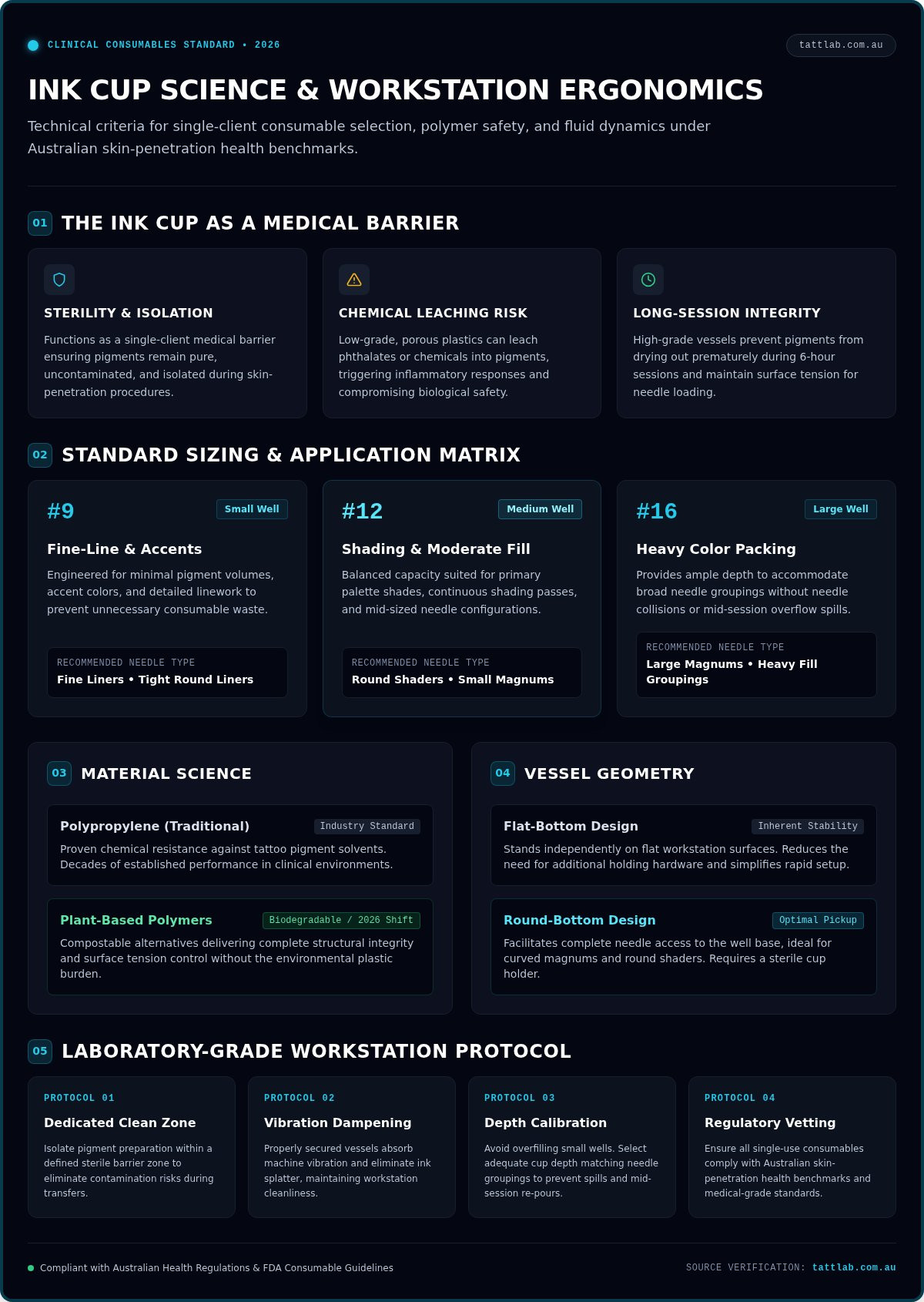
An ink cup is a medical-grade consumable designed to isolate pigments for single-client use. Within the framework of professional tattooing practices, this small vessel acts as a critical medical barrier. It ensures that pigments remain pure and uncontaminated throughout the procedure. Using professional-grade cup ink is superior to generic alternatives because it's manufactured in sterile environments specifically for skin-penetration services. The relationship between cup quality and pigment integrity is particularly evident during long sessions. High-quality cups prevent the pigment from drying out prematurely or reacting with the container material, preserving the vibrancy and consistency of your work from the first pass to the final highlight.
Beyond the Basics: Safety and Sterility
Inferior plastics are often porous or chemically unstable, which can lead to significant complications. Low-grade polymers may leach phthalates or other chemicals into your pigments, compromising the biological safety of the procedure. This is why we emphasize the importance of medical-grade labeling for all studio consumables. In Australia, strict health regulations for skin penetration demand that every item on your workstation meets high safety benchmarks. By 2026, the industry has moved toward a model of total transparency, where the scientific pedigree of your supplies is as important as your technical skill. Choosing vetted supplies protects your clients from avoidable inflammatory responses and builds immediate trust.
Ink Cups as a Workflow Tool
The architecture of your workstation directly influences the precision of your art. A well-designed cup prevents ink splatter and absorbs machine vibration, creating a more stable environment for your needles. Beyond the technical benefits, there's a profound psychological advantage to a meticulously organized palette. A structured setup reflects a calm, modern persona that reassures clients they're in a high-end, laboratory-style environment. You can also significantly reduce pigment waste by selecting the correct cup size for the task. Instead of overfilling large containers for small details, strategic selection allows for better resource management. This methodical approach mirrors the precision of the work itself, turning a simple task into a sophisticated narrative of progress and professional care.
Understanding Ink Cup Varieties: Sizes, Shapes, and Materials
Selecting the correct cup ink configuration involves more than just picking a size. It requires a deep understanding of fluid dynamics and material compatibility. Professional setups typically utilise three standard sizes: #9 (small), #12 (medium), and #16 (large). Traditional polypropylene has been the industry standard for decades because of its chemical resistance. However, 2026 has seen a shift toward high-performance, biodegradable plant-based polymers. These modern cup ink varieties offer structural integrity without the environmental cost of single-use plastics, aligning with a more conscious, modern studio aesthetic.
The way pigment interacts with the inner surface of the vessel is determined by surface tension. High-quality polymers ensure the ink "sits" correctly. This allows for smooth needle loading without excessive bubbling or clinging to the walls. Adhering to FDA tattoo ink safety guidelines is essential when evaluating these materials. Any reaction between the pigment and the cup can alter the chemical composition and safety of the ink being implanted. It's about maintaining physical integrity throughout the entire narrative of the tattoo process.
Choosing the Right Size for the Job
Small (#9) wells are ideal for fine-line work or accent colours where pigment usage is minimal. Medium (#12) and Large (#16) wells provide the volume necessary for heavy saturation and colour packing. This is especially true when using larger magnum needle groupings that require more pigment depth. A common error in studio workflow is overfilling a small cup to avoid a mid-session refill. This often leads to spills. It compromises the sterile field and increases the risk of cross-contamination. Matching the well volume to your needle size ensures a cleaner, more predictable outcome.
Flat-Bottom vs. Round-Bottom Designs
Flat-bottom cups offer inherent stability on flat surfaces. They reduce the need for additional hardware on your workstation. Round-bottom designs, however, are often preferred for their ability to facilitate easier pigment pickup. This is particularly helpful for curved magnums or round shaders where the needle needs to reach the very bottom of the well. These require dedicated ink cup holders to maintain a secure, sterile environment. If you're looking to upgrade your workstation, you can find a curated range of professional tattoo inks and safety-vetted consumables at Tatt Lab. Choosing the right tool reflects the meticulousness of your art and your commitment to long-term results.
Sustainability vs. Sterility: The Future of Consumables
The tattoo industry is experiencing a significant shift in how we view single-use waste. For decades, traditional plastics have been the default for every cup ink setup, creating a substantial environmental footprint that many artists now find difficult to ignore. However, in 2026, professional standards require a balance between environmental ethics and clinical safety. You don't have to choose between your values and your client's health. We're seeing the rise of sophisticated alternatives that bridge this gap, ensuring that physical integrity remains the priority while we reduce our collective impact on the planet. This evolution is not just about being "green"; it's about refining our laboratory-grade environments to be both ethical and efficient.
Compostable Ink Cups: What to Look For
Identifying high-performance eco-friendly materials is the first step toward a more sustainable studio. When sourcing alternatives, look for certified compostable materials such as Polylactic Acid (PLA) or wheat straw. These options must undergo a rigorous performance check to ensure they don't degrade when exposed to alcohol-based pigments. If a cup begins to soften or leach during a long session, it compromises the sterile field and the chemical purity of your pigment. It's also vital to follow strict disposal protocols. Even if a cup is biodegradable, once it's contaminated with blood or pigment, it must be treated as bio-hazardous waste according to Australian health regulations. This methodical approach ensures you're helping the earth without violating CDC cross-contamination prevention guidelines.
The Case for High-Quality Disposables
There are scenarios where traditional medical-grade plastics remain the safest choice for complex procedures. When you're performing high-saturation work that requires absolute structural stability, a high-quality disposable cup provides a predictable, steady result. These materials are non-toxic and vetted for chemical consistency, ensuring no unexpected reactions occur during the tattooing process. For high-volume studios, bulk purchasing these safety-vetted consumables is often the most cost-effective way to maintain a sterile environment. A cost-benefit analysis shows that the precision of professional-grade cup ink vessels reduces the risk of expensive pigment spills. Partnering with a dedicated Australian supplier like Tatt Lab ensures that your workstation is always equipped with artist-vetted tools that meet current clinical standards. This steady progression toward better materials reflects the patience and care you bring to every client interaction.
Workstation Setup: Best Practices for Preventing Cross-Contamination
A sterile workstation functions like a high-end laboratory where science meets health. Establishing a dedicated "clean zone" is the foundation of this professional environment. This area should be strictly reserved for your pigments and cup ink vessels, kept entirely separate from your machine and power supply. By isolating these items from high-touch equipment, you create a controlled barrier against bloodborne pathogens. Managing dip stations and rinse cups requires equal vigilance. Place rinse cups far enough from your pigment palette to prevent accidental splashing, which can carry contaminants across your entire setup. This level of meticulous organization is a critical component of medical supplies for tattoo artists.
The Pouring Protocol
Precision starts before the needle touches the skin. When setting up your palette, maintain a clear distance between the ink bottle nozzle and the cup ink rim. This prevents aerosolized droplets or accidental physical contact from contaminating your bulk pigment supply. Never top up cups mid-session. If you run low, you must set up a fresh, sterile cup to avoid back-flow contamination from a used needle. If a bottle tip accidentally touches a cup, that entire bottle is considered compromised and must be disposed of immediately. This steady, educational approach to hygiene replaces uncertainty with predictable safety, ensuring your client feels the weight of your expertise.
Post-Session Cleanup and Disposal
The conclusion of a session requires as much rigor as the start. In Australia, legal requirements for contaminated waste are strict and non-negotiable. All used ink cups, leftover pigments, and rinse water must be treated as bio-hazardous material. Using solidification agents is a modern, professional way to turn liquid waste into a stable gel. This prevents spills during the transfer to clinical waste bins and protects the physical integrity of your studio environment. Once the "clean zone" is cleared, a final sanitization with hospital-grade disinfectant ensures the workstation is ready for the next narrative of transformation. You can secure all your sterile workstation essentials through Tatt Lab to ensure your studio remains a benchmark for safety.
Sourcing Professional Grade Consumables from Tatt Lab
A high-end studio environment requires more than just generic tools; it demands a partnership with a supplier that understands the precision of the craft. Tatt Lab serves as a dedicated partner for Australian studios, offering an artist-owned perspective that prioritizes clinical authority and safety. Every cup ink vessel and medical-grade PPE item in our inventory undergoes a rigorous vetting process. This ensures that every consumable meets the physical integrity standards required for modern skin penetration procedures. By sourcing artist-vetted tattoo supplies in bulk, you can maintain a sterile, organized workstation while reducing the logistical anxiety of inventory management. Setting up a wholesale account facilitates a predictable, steady supply of consumables, allowing your focus to remain entirely on the art of transformation.
The Tatt Lab Quality Guarantee
Our commitment to safety is grounded in a deep understanding of biological processes and technical rigor. We apply a meticulous selection criteria to all tattoo ink and high-risk consumables. This methodical approach ensures that every product you use supports a liberating narrative of personal transformation for your clients. We understand that a busy studio cannot afford logistical delays. Our national distribution network provides express nationwide shipping, ensuring your laboratory-grade environment is never compromised by stock shortages. You'll receive support from specialists who respect the specific subculture of the industry while prioritizing the clinical vibe of a modern, boutique studio.
Next Steps for Your Studio
Refining your practice starts with a clear assessment of your current workflow. Take a moment to review your consumable waste and hygiene protocols to ensure they align with the latest industry benchmarks. Transitioning to 2026-standard cup ink management tools is a logical step toward a more sophisticated, results-oriented setup. By evaluating your daily setup, you can identify where superior materials reduce pigment waste and enhance client safety. We invite you to explore our curated range of professional equipment designed for the sophisticated urban aesthetic. Upgrade your studio setup with Tatt Lab’s professional range today to ensure your practice remains at the technical edge of the Australian industry.
Elevating Your Studio Standards for 2026
Mastering the technical nuances of your workstation transforms a simple procedure into a sophisticated narrative of safety and skill. You've seen how the right cup ink configuration prevents pigment waste and maintains the physical integrity of your sterile field. By integrating medical-grade safety standards with a meticulous pouring protocol, you ensure that every session reflects the precision of a high-end laboratory. Whether you're transitioning to biodegradable plant-based polymers or refining your setup with flat-bottom stability, your choices define the professional environment your clients trust.
As an artist-owned and operated specialist, Tatt Lab is dedicated to supporting your studio's progression with safety-vetted consumables. We provide express nationwide Australian shipping to ensure your laboratory-grade workflow remains steady and predictable. It's time to replace uncertainty with controlled progress and achieve the long-term results your art deserves. We invite you to Shop Professional Tattoo Ink Cups and Consumables and experience the difference that expert-vetted supplies bring to your practice.
Your commitment to excellence is the foundation of your success. We're proud to be your partner in maintaining a modern, safe, and sophisticated studio environment for years to come.
Frequently Asked Questions
Can I reuse ink cups if they are cleaned in an autoclave?
No, ink cups are strictly single-use medical consumables and should never be autoclaved or reused. The polymers used in standard cup ink vessels aren't designed to withstand the high-pressure steam and heat of an autoclave, which can cause them to melt or release toxic chemicals. Reusing these items violates Australian health standards for skin penetration and poses a severe risk of cross-contamination. Always dispose of them in a clinical waste container immediately.
What is the best way to keep ink cups from sliding on my workstation?
The most professional way to secure your setup is by using dedicated ink cup holders or selecting flat-bottom cup designs. These tools provide a stable, weighted base that prevents accidental spills without compromising the sterility of your workstation. While some artists use adhesives, these can trap bacteria and make sanitization difficult. A clean, organized palette ensures you can focus on the technical procedure with total confidence and laboratory-grade precision.
Are biodegradable ink cups safe for all types of tattoo pigment?
High-quality biodegradable ink cups are safe for most professional pigments, provided they're made from certified plant-based polymers like PLA. You should verify that your specific eco-friendly cups are resistant to alcohol-based pigments, as some lower-grade materials may soften during long sessions. Choosing safety-vetted consumables ensures that no chemical leaching occurs, protecting the physical integrity of the tattoo and the health of your client's skin throughout the healing process.
How many ink cups should I set up for a standard black and grey session?
For a standard black and grey session, you typically need between four and six cups to establish a proper wash gradient. This usually includes one cup for solid black, three to four cups for varying dilutions of grey wash, and one cup for a sterile water rinse. This methodical approach allows for predictable, smooth transitions in your shading. Organizing your cup ink palette this way mirrors the precision required for high-end results.
What size ink cup is best for using large magnum needles?
Large #16 ink cups are the best choice when working with large magnum needles or curved magnums. The wider diameter of the #16 well allows the needle grouping to be fully submerged without touching the sides of the cup, which prevents needle damage and ensures an even pigment load. Using a smaller well for large groupings often leads to splashing and inconsistent saturation, which can disrupt the steady flow of your workflow.
Is it legal to dispose of ink cups in regular studio trash in Australia?
It's illegal in Australia to dispose of used ink cups in regular studio trash. Because these items have been in contact with biological fluids and pigments, they're classified as clinical or bio-hazardous waste. You must dispose of them in a yellow clinical waste bin that meets Australian Standards (AS 3816). Proper waste management is a key part of maintaining a boutique-studio persona that values health and regulatory compliance above all else.
Can I use a drop of Vaseline to secure my ink cups to the table?
Using petroleum jelly to secure cups is a common but outdated practice that can compromise your sterile field. These substances are difficult to fully remove during post-session cleanup and can harbor pathogens if not managed perfectly. It's better to use a sterile, disposable barrier film or a dedicated, autoclavable holder to maintain your cup ink setup. This modern approach keeps your workstation clean and aligns with the sophisticated aesthetic of a professional studio.
How do I prevent my ink from drying out in the cup during long sessions?
To prevent pigment from drying out during long sessions, fill your cups to an appropriate depth. Don't just coat the bottom. You can also use a drop of a professional pigment sealer or a glycerin-based mixing solution to maintain viscosity. Keep your workstation away from direct airflow, such as air conditioning vents, to slow down evaporation. This ensures your pigments remain consistent from the first pass to the final result.


Comments (0)
There are no comments for this article. Be the first one to leave a message!