

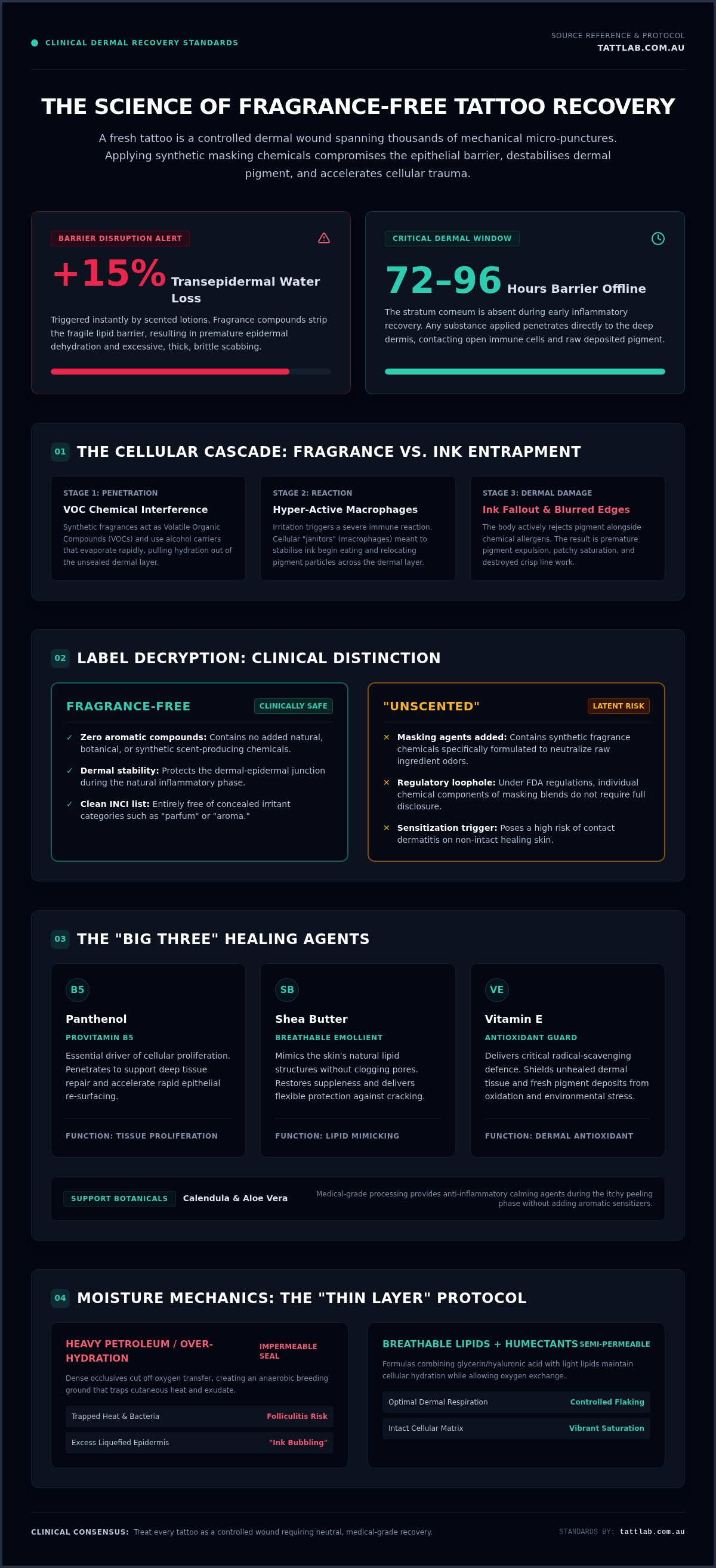
Did you know that applying a scented lotion to a fresh tattoo can trigger a 15% increase in trans-epidermal water loss, stripping the lipid barrier and accelerating excessive scabbing? When your skin is recovering from thousands of mechanical micro-punctures, the epithelial barrier is temporarily compromised and highly reactive. This makes selecting a high-quality fragrance free tattoo moisturizer a clinical necessity rather than a simple preference for your daily aftercare routine.
The science of managing these micro-punctures is central to many advanced aesthetic treatments; for instance, Bruun Beauty provides professional-grade tools designed for similar dermal recovery and rejuvenation processes.
We recognise the vulnerability inherent in the healing phase. You've invested in a permanent piece of art, so it's natural to feel anxious about ink fading or adverse reactions to synthetic masking agents. This guide provides a specialist's perspective on the latest 2026 dermal recovery standards. We'll explain why fragrance-free formulations are critical for protecting the dermal-epidermal junction and show you how to choose artist-vetted products that maintain vibrant saturation while supporting your body's natural healing progression.
Key Takeaways
- Understand why treating a new tattoo as a controlled dermal wound requires a clinical approach to ingredient selection during the critical inflammatory phase.
- Learn to identify the "Big Three" healing agents—Panthenol, Shea Butter, and Vitamin E—to support effective cellular recovery and long-term ink retention.
- Discover the critical regulatory difference between "unscented" labels and a true fragrance free tattoo moisturizer to avoid latent contact sensitizers.
- Master the professional "Thin Layer" protocol to ensure your skin maintains optimal breathability without the risks of over-hydration or "ink bubbling."
- Transition from generic supermarket lotions to artist-vetted, medical-grade aftercare solutions designed specifically for the unique physiology of healing skin.
The Science of Scent: Why Fragrance-Free Matters for New Tattoos
A fresh tattoo is a controlled dermal wound. It requires the same hygiene standards and precision as a minor medical procedure. During the first 72 to 96 hours, your skin lacks an intact stratum corneum, meaning the protective barrier is temporarily offline. This vulnerability demands an aftercare protocol that mirrors the precision of the tattoo application itself. Any substance you apply to the area travels directly into the deeper layers of the dermis, where it interacts with both your immune cells and the newly deposited pigment.
Synthetic fragrances are more than just pleasant smells. They are complex chemical cocktails often functioning as volatile organic compounds (VOCs). On intact skin, these might be tolerable; on a fresh tattoo, they act as aggressive intruders. This chemical interference disrupts the inflammatory phase, which is the body's primary mechanism for ink entrapment. When these VOCs penetrate the compromised tissue, they can trigger contact dermatitis and skin sensitization. This isn't just a minor itch. It's a full-scale immune response that can lead to "ink fallout," where the body rejects the pigment alongside the chemical allergen.
The Biological Impact of Synthetic Fragrances
Many mass-market scents rely on alcohol-based carriers to project their aroma. These compounds evaporate rapidly, pulling essential moisture from the epidermal layer prematurely. This forced dehydration leads to thick, brittle scabbing rather than the light, healthy flaking associated with professional recovery. Professional artists prioritise scent-free environments because they understand that fragrance-induced inflammation delays the skin's natural regenerative rhythm. By avoiding these irritants, you ensure the healing process remains steady and predictable.
Ink Integrity and Dermal Stability
Protecting the dermal-epidermal junction is essential for maintaining crisp line work and saturated colour. Macrophages are the body's cellular janitors. In a neutral healing environment, they help stabilise the ink within the dermal layer. However, when a fragrance free tattoo moisturizer is ignored in favour of scented products, the resulting irritation triggers a hyper-active immune response. These macrophages may begin to "eat" and relocate the ink particles, leading to blurred edges and patchy saturation. Establishing dermal stability requires a minimalist approach that respects the biological precision of the healing process, ensuring long-term vibrancy and physical integrity.
Deciphering the Label: Key Ingredients in Professional Tattoo Moisturisers
Effective dermal recovery relies on a delicate balance between hydration and breathability. It's a science of layers. Humectants, such as glycerin or hyaluronic acid, act as moisture magnets by pulling water into the skin. In contrast, occlusives form a protective seal to prevent that moisture from evaporating. While traditional petroleum jelly is a powerful occlusive, its density often compromises oxygenation. For a healing tattoo, an impenetrable seal can trap heat and bacteria, potentially leading to folliculitis or "ink bubbling." Professional-grade formulas prioritise breathable lipids that support the skin's physical integrity without suffocating the pores.
The "Big Three" ingredients for optimal tattoo healing include Panthenol, Shea Butter, and Vitamin E. Panthenol, or Provitamin B5, is essential for cellular proliferation and deep tissue repair. Shea butter provides a non-clogging emollient layer that mimics the skin's natural oils, while Vitamin E offers antioxidant protection against environmental stressors. In the Australian industry, medical-grade purity is the baseline. Using artist-vetted supplies ensures these ingredients are free from the contaminants found in generic cosmetics, providing a stable environment for your new ink to settle.
Fragrance-Free vs. Unscented: The Critical Difference
There's a clinical distinction between these two labels that every collector should understand. A true fragrance free tattoo moisturizer contains no scent-producing chemicals at all. Products labelled as "unscented" are often deceptive; they frequently contain masking fragrances used to neutralise the unpleasant smell of raw ingredients. These masking agents are common triggers for irritation and allergic reactions. According to FDA fragrance ingredient regulations, manufacturers are not always required to disclose the individual components of a fragrance blend. To protect your skin, check the INCI list for hidden aromatic compounds like "parfum" or "aroma," which indicate a risk of latent sensitization.
The Role of Botanical Extracts
Modern aftercare often incorporates Calendula and Aloe Vera as scent-neutral soothing agents. These extracts provide anti-inflammatory benefits that calm the skin during the itchy peeling phase. However, the quality of the extract matters. Medical-grade processing ensures these botanicals are free from pesticides or harsh solvent residues. By choosing specialist tattoo aftercare, you're opting for a refined healing narrative where science meets botanical health. This neutral environment allows your body to focus entirely on pigment retention and epidermal resurfacing, ensuring your art remains as crisp as the day it was applied.
Professional Aftercare vs. Supermarket Lotions: A Comparative Analysis
While it's tempting to reach for a generic bottle of lotion at the pharmacy, the chemical composition of mass-market products often contradicts the needs of healing skin. These lotions are designed for intact, healthy tissue, not for the specific demands of a controlled dermal wound. Specialist balms offer a significantly higher concentration of active healing agents compared to their pharmacy counterparts. This density means your skin receives more of what it needs—like Panthenol and Vitamin E—and fewer water-based fillers that offer little biological value. Because pro-grade products are so nutrient-dense, you only need a sheer layer to achieve results, making the cost-per-use surprisingly efficient over the course of a standard two-week healing cycle.
The Problem with Mass-Market Fillers
Cheap lotions frequently rely on parabens and phthalates to maintain shelf stability. While these chemicals keep the product fresh, they can be detrimental to fresh ink. These additives, along with low-grade mineral oils, can clog pores and lead to a "suffocation" effect where the skin becomes macerated and soft. Breathability is a non-negotiable factor in dermal recovery. Tattoos need oxygen to support cellular metabolism and healthy scabbing. Choosing a dedicated fragrance free tattoo moisturizer replaces synthetic fillers with breathable lipids that protect the wound without trapping heat or bacteria. This approach aligns with dermatologist-backed tattoo aftercare guidelines, which emphasise light, consistent moisturising to support recovery without causing irritation.
Purity Standards in Australian Tattoo Supplies
Purity is a hallmark of the Australian tattoo supply industry. Professional artists prefer brands that operate with a medical-grade mindset, ensuring every batch is manufactured in sterile conditions. This commitment to physical integrity is why Australian-vetted supplies are more reliable than unverified international imports. Specialist tattoo aftercare avoids the "suffocation" effect by focusing on biocompatible ingredients that mirror the skin's natural lipid structure. This ensures a predictable healing narrative from the initial application to the final result. For a deeper dive into the specific stages of dermal recovery and how to maintain your ink's longevity, consult our guide on Mastering Tattoo Aftercare: The Professional Guide to Skin Integrity and Healing.
The Artist's Protocol: How to Moisturise Without Over-Hydrating
Precision is everything during the recovery phase. Applying a high-quality fragrance free tattoo moisturizer is only half the battle; the method of application determines whether your skin breathes or suffocates. We recommend a "less is more" philosophy. Your skin's primary job is to regenerate its barrier, and excessive product can actually hinder this biological progression by trapping heat and moisture against the wound. This leads to maceration, often referred to as "soggy scabs," which can pull pigment out of the dermis and lead to patchy results.
Step-by-Step Application Mastery
Consistency begins with hygiene. Always wash your hands thoroughly with medical-grade supplies before touching your tattoo. Once the area is clean, pat it dry using a fresh, lint-free paper towel. Never rub the skin, as friction can disrupt the delicate new cells forming at the surface. Before applying the moisturiser, warm a small, pea-sized amount between your fingertips. This improves spreadability, allowing you to glide the product over the area without dragging the skin. The goal is a subtle sheen, not a thick, greasy film.
Frequency should mirror your skin's current state. During the initial transition from the weeping phase to the peeling phase—typically around Day 4—you may only need to apply moisturiser 2 to 3 times per 24-hour cycle. If you notice small white bumps or follicular pustules, you're likely over-moisturising. These are signs that the skin's pores are blocked, trapping bacteria and sweat. If the tattoo feels "wet" or the scabs look translucent and soft, skip the next application and let the area air-dry until it regains a matte appearance.
Adjusting for Skin Type and Environment
The Australian climate plays a significant role in your aftercare rhythm. In high-humidity environments, your skin naturally retains more moisture, meaning you should lean toward a lighter application. Conversely, if you have naturally dry skin or are spending time in air-conditioned spaces, you might require a slightly more frequent schedule. At night, avoid the temptation to wrap the tattoo in plastic or heavy bandages. Instead, wear loose, breathable cotton clothing to protect your sheets while allowing the skin to oxygenate. To ensure you have the right tools for this delicate process, explore our curated range of professional aftercare designed for the Australian artist and collector.
Curated Excellence: Tatt Lab’s Specialist Fragrance-Free Selection
Tatt Lab operates at the intersection of clinical science and artistic integrity. As an artist-owned and operated facility, we view aftercare as a vital extension of the procedure itself. We don't stock general-purpose lotions. Instead, we curate a range of medical-grade consumables that have been rigorously tested in professional studio environments. This focus ensures that every balm or cream we provide supports the physical integrity of your skin while protecting the long-term vibrancy of your ink. Our philosophy is grounded in the belief that the healing process is a critical part of the artistic narrative, requiring the same level of meticulousness as the needle work itself.
Choosing a fragrance free tattoo moisturizer from a specialist supplier offers a level of safety that general retailers cannot match. Supermarket shelves are filled with products designed for mass appeal, often prioritising scent and shelf-life over biological compatibility. Our selection process is different. We evaluate formulations based on their lipid structure, breathability, and the complete absence of latent sensitizers. This methodical approach removes the guesswork for the client, replacing uncertainty with a sense of controlled, predictable progress. We act as a filter, ensuring only the most biocompatible ingredients reach your recovering tissue.
The Specialist Difference
We select specific brands like Hustle Butter and Dr Pickles because they align with our commitment to high-performance recovery. These products are formulated with bioactive, petroleum-free carriers that respect the dermal-epidermal junction. By using the same professional-grade supplies that elite studios rely on, you're giving your skin the best possible environment for cellular regeneration. Every item in our catalogue meets rigorous professional standards, ensuring your healing narrative remains one of transformation and self-assurance. This boutique-studio approach prioritises long-term results over quick fixes, maintaining a clinical yet contemporary vibe that respects the specific subculture we serve.
Securing Your Aftercare Essentials
We understand that the first few days of healing are critical. To support this window of vulnerability, we offer nationwide express shipping across Australia. This ensures that premium, artist-vetted aftercare is accessible exactly when you need it, regardless of your location. Our role is to act as a dedicated partner from your initial purchase to the final result, providing the educational resources necessary for a successful outcome. Prioritising your skin health with a professional-grade fragrance free tattoo moisturizer is the final step in securing the longevity of your art. To begin your recovery with confidence and clinical precision, explore our specialist aftercare range today.
Securing Your Ink’s Future through Clinical Precision
The transition from a fresh procedure to a settled masterpiece is a narrative of patience and precision. Choosing a high-quality fragrance free tattoo moisturizer is a clinical necessity that respects the biological complexity of your skin's recovery. By avoiding the volatile compounds found in generic lotions, you're protecting the dermal-epidermal junction and ensuring your ink remains as vibrant as the day it was applied. We've established that medical-grade purity and the "thin layer" protocol are the benchmarks for professional-standard healing.
Establishing a reliable aftercare routine is about more than just surface-level aesthetics; it's about physical integrity and long-term self-assurance. Tatt Lab provides an artist-vetted selection of supplies that meet rigorous medical-grade safety standards. Our curated range supports every stage of your dermal progression, removing the anxiety of poor product choices. Take the guesswork out of your recovery with specialist solutions designed for the unique Australian environment. Shop Professional-Grade Fragrance-Free Aftercare at Tatt Lab and enjoy fast nationwide shipping across Australia. Your art deserves a neutral, supportive environment to settle into its permanent home.
Frequently Asked Questions
Is fragrance-free tattoo moisturizer better than scented versions?
Yes, it is superior for dermal recovery. Scented products contain volatile organic compounds that irritate compromised skin. A fragrance free tattoo moisturizer eliminates these allergens, reducing the risk of contact dermatitis. This neutral environment allows the body to focus on pigment entrapment during the inflammatory phase. Professional artists recommend fragrance-free options to prevent "ink fallout" and ensure the physical integrity of the dermal-epidermal junction remains intact during the healing process.
Can I use regular fragrance-free body lotion on my tattoo?
While regular fragrance-free lotions are safer than scented ones, they often contain low-grade mineral oils or water-based fillers. These mass-market ingredients lack the nutrient density of specialist balms. Specialist products are formulated specifically for broken skin, providing breathable lipids like shea butter and panthenol. Regular lotions can sometimes "suffocate" a new tattoo, leading to maceration or "ink bubbling" if the formula isn't specifically designed to support medical-grade wound healing.
How many times a day should I apply fragrance-free moisturizer?
You should typically apply a sheer layer two to three times per 24-hour cycle. This schedule usually begins after the initial weeping phase has subsided, often around day four. Applying a fragrance free tattoo moisturizer too frequently can lead to over-hydration, which softens scabs and risks bacterial growth. The goal is to maintain a subtle sheen on the skin without creating a thick, greasy film that blocks oxygen from reaching the recovering tissue.
What happens if I use a moisturizer with fragrance on a fresh tattoo?
Using scented products on an open dermal wound can trigger histaminic swelling and severe irritation. Fragrance molecules penetrate the compromised epithelial barrier, causing stinging and potential allergic contact dermatitis. This immune response can lead to excessive macrophage activity, where your body's cells relocate the ink particles. The result is often blurred lines, patchy saturation, and delayed scabbing, which compromises the final aesthetic outcome and the physical integrity of your permanent art.
Does 'unscented' mean the same thing as 'fragrance-free' in aftercare?
No, these labels represent different chemical profiles. A fragrance-free product contains no scent-producing chemicals at all. Conversely, "unscented" products often contain masking fragrances used to hide the natural chemical odours of the raw ingredients. These masking agents are frequent allergens that can irritate a new tattoo. Specialists advise collectors to read the INCI list carefully for terms like "parfum" or "aroma" to ensure a truly neutral and safe healing environment for their skin.
Are natural oils like coconut oil a good fragrance-free alternative?
Natural oils are often too occlusive for the early stages of tattoo recovery. While coconut oil is fragrance-free, it can clog pores and trap heat, leading to folliculitis or "ink bubbles." Specialist balms use refined botanical extracts processed for medical-grade topical application. These formulations provide the necessary lipids in a breathable structure. It's safer to use artist-vetted supplies that are specifically engineered to support the skin's natural regenerative rhythm without the risk of suffocation.
When can I stop using specialist tattoo moisturizer and switch to regular lotion?
Stinging usually indicates that the skin's barrier is still highly sensitive or the product contains hidden irritants. If you're using a mass-market lotion, it may contain alcohols or preservatives that react with the open wound. Even some natural extracts can cause a reaction if they aren't medical-grade. If stinging persists with a specialist balm, you might be applying it too early in the healing process or using too much friction during the application itself.


Comments (0)
There are no comments for this article. Be the first one to leave a message!