

Your everyday lotion might not be right for fresh ink. A light, fragrance-free moisturiser may suit a healing tattoo, while a suitable aftercare balm may be used in the early stages. Avoid scented lotions and thick products that could irritate or cover healing skin. The best tattoo moisturiser options for you depend on how far your tattoo has progressed through healing.
It’s understandable to want to moisturise straight away, especially when new skin feels tight, dry or itchy. The key is to match the product to the tattoo’s healing stage and apply only a thin layer, rather than treating every lotion, balm or oil as interchangeable.
This guide explains when a regular lotion may be appropriate, how moisturising needs change as your tattoo heals, and when a balm or natural oil may fit into aftercare. You’ll also learn which product qualities matter for fresh ink and which ingredients to avoid while the skin is healing.
Key Takeaways
- Choose a light, fragrance-free moisturiser for healing skin, and avoid active treatments such as retinol, benzoyl peroxide and hydrocortisone.
- Adjust your routine as the tattoo heals: use gentle cleansing and a thin layer of aftercare, rather than applying more product than the skin needs.
- Compare early-healing ointments by their ingredients, especially if you’re sensitive to lanolin.
- Keep petroleum jelly off a healing tattoo, and wait until the skin has sealed before considering coconut oil.
- Look for simple, nourishing formulas, then continue moisturising healed skin and protect it from direct sun.
1. Can I use normal moisturiser or lotion on my tattoo?
Yes, a regular lotion may suit a healing tattoo if it’s lightweight and fragrance-free. Check the ingredient label rather than relying on packaging claims such as “natural” or “sensitive skin”. Freshly tattooed skin is healing, so a rich body butter or heavily perfumed lotion may feel uncomfortable or irritate the area.
Start with a simple formula. Fragrance and essential oils can sting or trigger reactions on healing skin, so avoid scented body butters and perfumed lotions. Shea butter, coconut oil and aloe vera can moisturise tattooed skin, but an ingredient that suits healed skin may not suit a fresh tattoo. Timing and formula both matter.
Be cautious with products made for other skin concerns. Hydrocortisone itch-relief creams and acne treatments containing retinol or benzoyl peroxide aren’t suitable for a healing tattoo. These active ingredients target inflammation or acne, not tattoo aftercare, and may irritate newly healing skin.
- Sudocrem: Avoid it for tattoo aftercare. Its thick, zinc-heavy barrier may limit airflow and trap heat and moisture.
- Fragranced lotion: Skip added fragrance and essential oils while the tattoo heals, as they may sting or cause a skin reaction.
- Active treatments: Keep hydrocortisone, retinol and benzoyl peroxide products away from healing tattooed skin.
In Australia, tattoo moisturisers don’t have one standard price. Cost varies by product type, pack size and retailer. Compare the amount in the container and the ingredient list rather than choosing by a “tattoo” label alone.
Suitable options include a light, fragrance-free lotion or a purpose-made tattoo aftercare product with a simple moisturising formula. You can look for these through Australian pharmacies or tattoo-supply retailers. Choose by ingredients and texture, not by claims that a product will heal the tattoo.
Use this label check before applying any lotion: look for fragrance-free wording, then scan the ingredient list for perfume, essential oils, retinol, benzoyl peroxide or hydrocortisone. If the product contains one of those ingredients, set it aside during healing. A quick ingredient check helps you avoid applying a treatment designed for a different skin concern.
For a healing tattoo, choose a product that moisturises without leaving a heavy coating. Apply a thin layer of a suitable fragrance-free lotion rather than piling on rich ointments or butter. If the skin becomes irritated, stop using that product and avoid adding another active or scented formula.
Once your tattoo is fully healed, your skin may tolerate a wider choice of moisturiser. Until then, keep the routine simple: gentle cleansing, a light fragrance-free moisturiser, and no acne or itch-treatment actives on the tattoo. This makes it easier to identify which ingredients your skin accepts during healing.
2. Moisturising through different tattoo-healing phases
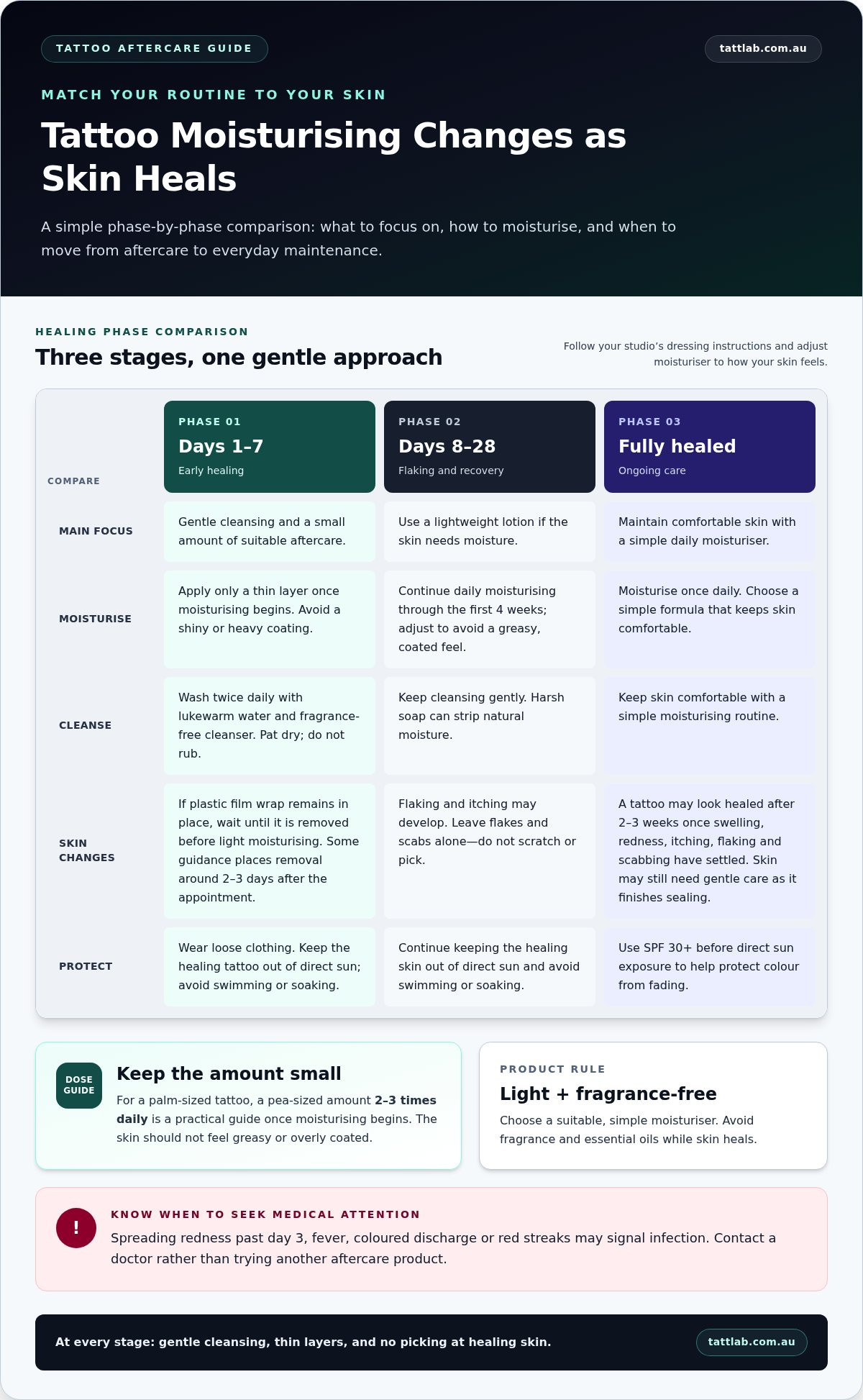
Let your routine progress with your skin. During days 1 to 7, the priority is gentle cleansing and a small amount of suitable aftercare. Follow your studio’s dressing instructions. If a plastic film wrap remains in place, wait until it’s removed before starting light moisturising. Some guidance places removal around 2-3 days after the appointment.
Once moisturising begins, use a thin layer rather than leaving a shiny coating. For a palm-sized tattoo, a pea-sized amount 2 to 3 times daily is a practical guide. Wash the area twice a day with lukewarm water and fragrance-free cleanser, then pat it dry. Rubbing can irritate the surface, while harsh soap can strip natural moisture. To choose the best tattoo moisturiser options for you, consider how your skin feels after cleansing and whether the product absorbs comfortably.
As flaking and itching develop, resist scratching or picking at scabs. From days 8 to 28, switch to a lightweight lotion if the skin needs moisture. Continue daily moisturising through the first 4 weeks, adjusting the amount to avoid a greasy, coated feel. Aftercare products support hydration; your body does the healing.
A tattoo may look healed after 2 to 3 weeks, once swelling, redness, itching, flaking and scabbing have settled. Skin can still need gentle care as it finishes sealing. Once healed, apply moisturiser once daily to maintain comfortable skin. For colour protection, cover healed ink with SPF 30+ before direct sun exposure, since UV exposure can contribute to fading. As your tattoo moves from active healing to maintenance, the best tattoo moisturiser options for you may shift from a lighter aftercare lotion to a simple daily moisturiser.
Too much moisturiser can leave the tattoo overly coated and uncomfortable. A reaction may show as new irritation after applying a product; stop using that formula and avoid adding another scented or active product. For healed tattoos, choose a simple moisturiser that keeps skin comfortable, and use SPF 30+ whenever the tattoo is in direct sun to help protect colour.
Keep this checklist in mind during aftercare:
- Clean the tattoo twice daily with lukewarm water and fragrance-free cleanser.
- Pat dry, then apply a thin layer of suitable moisturiser.
- Wear loose clothing and keep the healing tattoo out of direct sun.
- Avoid swimming or soaking while the skin is healing.
- Leave flakes and scabs alone, even when itching starts.
Stop applying a moisturiser that causes irritation. Spreading redness past day 3, fever, coloured discharge or red streaks require medical attention because they may signal infection. If these signs appear, contact a doctor rather than trying another aftercare product.
For a simple next step, compare tattoo moisturiser options by texture and ingredients, then choose a light formula suited to the healing phase.
3. Aquaphor and Bepanthen for early healing
For a new tattoo, choose a gentle, fragrance-free aftercare balm during the first week. Aquaphor and Bepanthen are familiar names, but their formulas and textures aren’t interchangeable. Read the label, follow your tattoo artist’s aftercare instructions, and apply only a thin layer to clean, dry skin.
Aquaphor contains roughly 41 percent petrolatum, which gives it a rich, protective texture. That consistency means a small amount can spread over the tattoo, but too much may leave skin coated. Use a pea-sized amount on a palm-sized tattoo 2 to 3 times a day during the first week, keeping the layer light rather than glossy.
Bepanthen is another product people consider for early aftercare. Check the exact ingredient list and fragrance information before using it, because the product name alone doesn’t tell you whether the formula suits your skin. If you have sensitive skin, a fragrance-free balm with a short, familiar ingredient list is a more considered choice than a scented lotion or body butter.
Pay attention to lanolin. If you’ve reacted to it before, avoid products that list it. If you don’t know whether you’re sensitive, don’t test several new ointments on freshly tattooed skin. Choose one suitable product and watch for irritation.
During the first few days, ointment can help keep healing skin from becoming excessively dry, but it shouldn’t seal the area under a thick coating. Clean the area gently, pat it dry, then smooth on a small amount with clean hands. If the surface stays greasy, use less next time. As healing progresses, a lighter lotion may feel more comfortable than a rich balm.
Choose between Aquaphor, Bepanthen or another balm by checking three things: fragrance, lanolin and texture. A fragrance-free option is preferable during early healing; a lanolin-free formula matters if you’re sensitive to lanolin; and a light application avoids an unnecessary coating. Ointments and lotions don’t heal the tattoo themselves. Their role is to support skin moisture while your body heals.
- Aquaphor: Contains roughly 41 percent petrolatum, so use a thin layer.
- Bepanthen: Read the specific formula’s ingredient label before applying it.
- Either option: Stop using it if irritation develops, and avoid adding another new product.
A suitable moisturiser for a new tattoo is a gentle, fragrance-free balm that agrees with your skin. During the first week, use only a small amount and avoid switching products repeatedly. A simple routine makes it easier to notice a reaction.
4. Coconut oil and petroleum jelly use
Coconut oil and petroleum jelly behave differently on a fresh tattoo. Coconut oil can hydrate tattooed skin, but it’s best avoided during the first 7 to 10 days. Petroleum jelly, including Vaseline, creates a waterproof seal. That barrier may slow healing and raise infection risk, so don’t use it on a healing tattoo.
Timing matters with coconut oil. Wait until around week 3-4 after tattooing, and only consider it once the skin has fully sealed. A tattoo that still has open or flaking areas hasn’t reached that point. Using oil too early can leave you applying a product to skin that’s still healing.
After the skin has sealed, coconut oil is one possible moisturising ingredient, not a required step. Ingredients such as coconut oil, shea butter and aloe vera can moisturise tattooed skin. Choose a simple, unscented formula and stop if it causes discomfort. Scented body products add fragrance, which can sting or trigger a reaction on sensitive skin.
Vaseline is different from a light moisturiser. Its occlusive layer is designed to keep water from passing through, which can trap heat and moisture over a healing tattoo. Petroleum jelly isn’t a substitute for a thin layer of a suitable tattoo aftercare product. Avoid coating fresh ink with it, even if the skin looks dry.
Use this timing guide to make the distinction clear:
- First 7 to 10 days: Avoid coconut oil on the new tattoo.
- Before the skin seals: Don’t apply natural oils to open or healing areas.
- Around week 3-4: Consider coconut oil only after the tattoo is fully sealed.
- During healing: Avoid Vaseline and other petroleum jelly coatings.
Use clean hands and apply products carefully. Wash your hands before touching the tattoo, then use a small amount of an appropriate moisturiser. Don’t layer coconut oil over ointment or petroleum jelly. Multiple coatings make it harder to tell whether the skin is hydrated or simply covered.
If coconut oil causes irritation, stop using it and return to a simple, fragrance-free moisturiser. Don’t respond by adding scented oils, butter or another new product. Keeping your routine consistent makes it easier to identify what caused discomfort. Petroleum jelly remains unsuitable during healing, even if another product has irritated your skin.
Once healed, choose between coconut oil and lotion based on how your skin responds. Coconut oil may provide hydration, while a lightweight lotion can feel less occlusive. Neither option protects tattoo pigment from sunlight; use SPF 30+ on healed ink before direct sun exposure. Keeping these roles separate helps you moisturise without treating oil or petroleum jelly as a healing shortcut.
5. Qualities of a tattoo moisturiser for fresh tattoos
A suitable fresh-tattoo moisturiser should feel light, spread easily and leave no thick coating. A heavy layer can make the skin feel covered rather than comfortably hydrated. Look for a simple formula designed to moisturise, not a product promising to heal the tattoo. Your body heals the skin; aftercare helps limit dryness.
Start with the ingredient label. Choose fragrance-free products for the first 2 to 3 weeks of tattoo healing, since fragrance may cause skin reactions. Avoid scented formulas and essential oils, even when they’re marketed as gentle or natural. A short, clear label also makes it easier to identify a product if irritation develops.
Texture is a practical way to assess a product. A lightweight lotion should absorb without leaving a glossy film, while a rich butter or ointment may feel too occlusive for some fresh tattoos. Apply a thin layer after gentle cleansing, then assess whether the skin feels moisturised or coated. More product doesn’t mean better aftercare.
Are fragrance-free or hypoallergenic moisturisers recommended for tattoos? Yes, choose fragrance-free products during the first 2 to 3 weeks of healing because fragrance may trigger skin reactions. Treat “hypoallergenic” as a label, not a substitute for checking ingredients and your skin’s response.
For a formula with a nourishing feel, aloe vera and colloidal oatmeal are ingredients used in moisturising lotions during weeks 2-3 of healing. They can suit a lightweight routine as the skin moves through flaking and dryness. The deciding factors remain fragrance-free ingredients, a comfortable texture and whether the skin tolerates the product.
Use this quick label check before applying a new product:
- Fragrance: Choose fragrance-free rather than scented lotion or body butter.
- Texture: Prefer a light lotion that spreads in a thin layer.
- Active ingredients: Avoid retinol, benzoyl peroxide and hydrocortisone on healing skin.
- Skin response: Stop using a product if irritation appears after application.
Follow your tattoo artist’s aftercare instructions if they differ from a general routine. Once healed, maintenance changes: moisturise regularly and protect exposed colour with SPF 30+ before direct sun. For a formula that fits your aftercare routine, browse tattoo moisturisers and compare their ingredients and textures.
Tatt Lab: Tattoo Aftercare
Tatt Lab offers Tattoo Aftercare products to support moisture and comfort after getting a tattoo. Use the range to put your ingredient checklist into practice, comparing options with your tattoo’s healing stage and your skin’s sensitivities. Keep following your tattoo artist’s aftercare instructions, and choose a product that fits those directions rather than adding several new formulas at once.
For tattoo professionals and artists, Tatt Lab also offers Traditional Needles, Tattoo Cartridges, Tattoo Inks and Tattoo Stencils. These supplies support tattoo work, while aftercare products help care for skin after an appointment.
Visit tattlab.com.au to explore Tatt Lab’s Tattoo Aftercare options.
Make your aftercare routine work for you
Good aftercare is less about collecting products and more about choosing a routine you can follow consistently. Keep your approach simple as your skin changes, and notice how it responds to each product. This helps you make informed adjustments without introducing several new formulas at once.
Finding the best tattoo moisturiser options for you means matching product texture and ingredients to your skin’s needs, while keeping your tattoo artist’s care instructions in view. If you’re ready to compare options for your routine, explore Tatt Lab’s Tattoo Aftercare range.
Take the next step at a pace that feels right. A considered routine gives your skin room to progress and helps you care for your tattoo with confidence.
Frequently Asked Questions
Can I use normal moisturiser or lotion on my tattoo?
Yes, you can use a regular lotion if it’s light and fragrance-free. Check the ingredient list, not just the front label: “natural” doesn’t automatically mean suitable for freshly tattooed skin. For example, a perfumed body lotion may sting, while a plain, fragrance-free formula may feel more comfortable. Follow your tattoo artist’s aftercare directions if they specify a particular routine.
What actually makes a good tattoo aftercare product?
A good aftercare product moisturises without leaving your tattoo under a thick, greasy coating. Look for a simple, fragrance-free formula that spreads comfortably in a thin layer. It should suit the healing stage and your skin’s sensitivities, rather than promise to make the tattoo heal. If a formula causes irritation, stop using it instead of layering another product over it.
Can I put Vaseline on a new tattoo?
No, avoid Vaseline on a healing tattoo. Petroleum jelly forms a waterproof seal that may trap heat and moisture. It isn’t a substitute for a light moisturiser. If the tattoo feels dry, use a suitable aftercare lotion in a thin layer rather than adding a thick coating. Keep petroleum jelly away until the tattoo has fully healed.
Is coconut oil good for tattoos?
Coconut oil can moisturise tattooed skin, but avoid using it on a new tattoo during the first 7 to 10 days. Consider it only around week 3-4, once the skin has fully sealed. If the tattoo still has flaking or open areas, wait. After healing, stop using coconut oil if it causes irritation, and choose a fragrance-free alternative your skin tolerates.
What about natural oils?
Ingredients such as coconut oil, shea butter and aloe vera can moisturise tattooed skin. “Natural” describes an ingredient’s origin, not whether it suits everyone or every healing stage. Avoid coconut oil on a fresh tattoo and wait until the skin has sealed before considering it. Choose an unscented product and stop using it if irritation develops.
What ingredients should you look for in a tattoo moisturiser?
Look for a fragrance-free formula with moisturising ingredients such as aloe vera or colloidal oatmeal. These ingredients appear in lotions recommended for weeks 2-3 of healing. Check the full label, since a product may contain other ingredients that don’t suit your skin. A short ingredient list can also make it easier to identify the cause if a reaction occurs.
How often should you moisturise a new tattoo, and how much should you apply?
For a palm-sized tattoo, use a pea-sized amount of moisturiser 2 to 3 times daily during healing. Spread it gently so the skin has a thin layer, not a shiny coating. Clean the area before reapplying, and pat it dry rather than rubbing. The right amount can vary with the tattoo’s size and how dry the skin feels.
Which ingredients should you avoid on a healing tattoo?
Avoid fragrance and essential oils, which may sting or trigger skin reactions. Keep hydrocortisone itch-relief creams and acne products containing retinol or benzoyl peroxide off healing tattooed skin. Avoid Sudocrem, whose thick, zinc-heavy barrier may trap heat and moisture. When comparing products, inspect the ingredient list instead of relying on claims such as “gentle” or “natural”.


Comments (0)
There are no comments for this article. Be the first one to leave a message!